
Celebrating the Avant-Garde of Speculative Fiction: The 2026 Grand Prix de l’Imaginaire Winners Announced
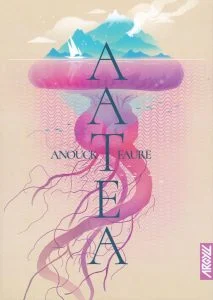
MONTPELLIER, FRANCE — In a move that has galvanized the international speculative fiction community, the jury of the Grand Prix de l’Imaginaire (GPI) officially announced the winners of the 2026 awards on May 18. Recognized as the oldest and most prestigious literary prize for "the imaginary" (science fiction, fantasy, and horror) in the French-speaking world, the GPI continues its decades-long tradition of honoring excellence across a diverse spectrum of categories, ranging from traditional novels to graphic design and translation.
The announcement marks a pivotal moment in the 2026 literary calendar, setting the stage for the formal trophy presentation scheduled for May 23. The ceremony will take place at the historic Comédie du Livre in Montpellier, a centerpiece of French literary culture that draws thousands of bibliophiles, publishers, and authors annually.
The Prestige of the Grand Prix de l’Imaginaire
Established in 1974 by Jean-Pierre Fontana at the Clermont-Ferrand science fiction convention, the Grand Prix de l’Imaginaire was originally titled the Grand Prix de la Science-Fiction Française. Over the half-century since its inception, the award has undergone a significant evolution, broadening its scope in 1992 to encompass the "Imaginaire"—a French umbrella term that elegantly gathers science fiction, fantasy, and the fantastic (horror/slipstream) under one banner.
The 2026 awards represent the pinnacle of this evolution. By recognizing both Francophone works and international literature translated into French, the GPI serves as a vital bridge between cultures, highlighting the global nature of speculative storytelling while fiercely defending the quality of French-language prose.
Chronology: From Deliberation to Celebration
The journey to the May 18 announcement began months ago with an exhaustive selection process. The GPI is unique among many genre awards for its jury-led structure, which emphasizes critical merit and literary depth over popular voting.
- The Longlist and Deliberations: Throughout the preceding year, the ten-member jury meticulously reviewed hundreds of eligible titles published in the French language. This included original Francophone works and translations of foreign masterpieces.
- The First Round Nominations: Earlier in the spring, the jury released their first-round nominations, a list that traditionally serves as a "must-read" guide for fans of the genre.
- The Winner Announcement (May 18): The jury concluded their final deliberations in mid-May, resulting in the list of laureates released this week.
- The Awards Ceremony (May 23): The winners will be honored in person at the Comédie du Livre in Montpellier. This event is not merely a prize-giving ceremony but a significant cultural gathering featuring panel discussions, signings, and public readings.
Supporting Data: The Jury and Categories
The integrity of the GPI is upheld by its permanent jury, a group of distinguished authors, critics, and scholars who serve long tenures to ensure consistency in the award’s standards. The 2026 jury was presided over by the esteemed Joëlle Wintrebert, a legendary figure in French science fiction.
The 2026 Jury Members:
- Joëlle Wintrebert (President): A prolific novelist known for her feminist and socially conscious science fiction.
- Olivier Legendre (Vice-President): A respected voice in genre criticism.
- Jean-Claude Dunyach (Treasurer): A multi-award-winning author and mathematician, often cited as one of the most significant French SF writers of his generation.
- The Jury Panel: Sylvie Le Jemtel, Sylvie Allouche, Audrey Burki, Lloyd Chéry (a prominent journalist and podcaster), Catherine Dufour (a multi-GPI winner herself), Benjamin Spohr, and Nicolas Winter.
The awards are divided into ten primary categories, reflecting the multifaceted nature of the publishing industry:
- Roman Francophone (French-language Novel): Focusing on original works from France, Quebec, Belgium, Switzerland, and Africa.
- Roman Étranger (Foreign Novel): Celebrating the best of international speculative fiction translated into French.
- Nouvelle (Short Fiction): Split into Francophone and Foreign categories, recognizing the vital role of the short form in genre innovation.
- Roman Jeunesse (Youth Novel): Also split between domestic and foreign works, highlighting the booming market for Young Adult speculative fiction.
- Prix Jacques Chambon (Translation): A specialized prize named after the legendary editor and translator, honoring the linguistic skill required to bring foreign "imaginary" worlds to French readers.
- Prix Wojtek Siudmak (Graphic Design): Named after the famed Polish-French artist, this award recognizes the visual artistry of book covers and illustrations.
- Essai (Non-fiction/Essay): Rewarding scholarly work, biographies, or critical analyses of the genre.
- Prix Spécial (Special Prize): Often awarded for a career’s work, a specific publishing project, or a unique contribution to the field that falls outside standard categories.
Official Responses and Cultural Impact
While the individual winners often express a mixture of humility and exhilaration, the broader industry response to the 2026 list has been one of validation. For publishers, a GPI win is often accompanied by a significant "sticker effect"—the addition of the GPI seal on book covers frequently leads to a measurable surge in sales and interest from foreign publishers looking to acquire translation rights.

Industry analysts note that the GPI remains a "tastemaker" award. In a market increasingly saturated by digital self-publishing and algorithmic recommendations, the GPI jury provides a curated, human-centric assessment of literary quality. The inclusion of the Prix Jacques Chambon for translation is particularly praised by the European Writers’ Council, as it highlights the invisible labor of translators who facilitate the cross-pollination of ideas.
Lloyd Chéry, a member of the jury and a vocal advocate for the genre in mainstream media, has frequently noted that the GPI’s mission is to "de-ghettoize" speculative fiction, proving that stories of the future or the fantastic are as worthy of literary scrutiny as any contemporary realist novel.
Implications for the Future of the "Imaginaire"
The 2026 winners reflect several emerging trends in the global literary landscape.
1. The Globalization of the French Market:
The "Foreign Novel" and "Foreign Short Fiction" categories continue to showcase a shift away from purely Anglo-American dominance. In recent years, the GPI has increasingly recognized works from Asia, Eastern Europe, and Latin America, reflecting a more polycentric view of speculative fiction.
2. The Rise of Environmental and Social Speculation:
Preliminary reviews of the 2026 winners suggest a strong lean toward "Climate Fiction" (Cli-Fi) and "Solarpunk," as well as works addressing social stratification and artificial intelligence ethics. The GPI has a history of rewarding fiction that grapples with the existential anxieties of the era, and the 2026 selection appears to be no exception.
3. Recognition of the Visual and Academic:
By maintaining categories for graphic design and essays, the GPI reinforces the idea that the "Imaginaire" is a holistic culture, not just a collection of stories. The 2026 Essay prize, in particular, highlights a growing academic interest in genre fiction within French universities, once a bastion of classical literary resistance.
Looking Ahead to Montpellier
As the literary world turns its eyes toward the Comédie du Livre on May 23, the 2026 Grand Prix de l’Imaginaire stands as a testament to the enduring power of the human imagination. In an age of rapid technological change, these awards remind us that the most profound insights into our reality often come from the exploration of the impossible.
The upcoming ceremony in Montpellier is expected to be a celebratory affair, bringing together the "old guard" of French SF with the "new wave" of diverse, digital-native authors. For the winners, the prize is more than a trophy; it is an induction into a storied lineage of creators who have shaped the way we dream about the future.
For more information on the Grand Prix de l’Imaginaire and a full list of past winners, visit the official GPI archives at NooSFere.


Leave a Comment