Christopher Nolan Sets Sail on The Odyssey, Aims to Chart Uncharted Waters in Greek Mythology
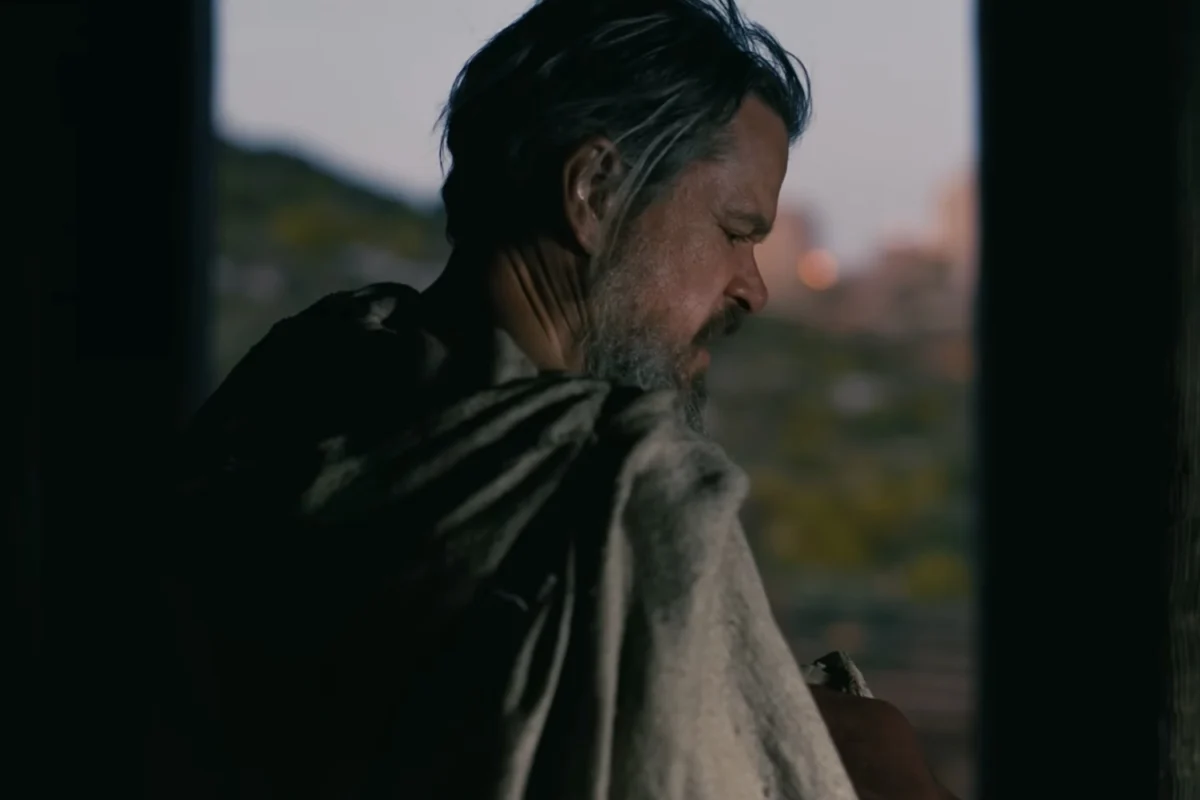
Los Angeles, CA – Renowned director Christopher Nolan, celebrated for his intricate narratives and visually stunning epics, is poised to redefine the cinematic landscape of ancient mythology with his upcoming film, The Odyssey. In a revealing interview with Vulture, Nolan articulated a bold vision for Homer’s timeless epic, identifying a significant "gap" in the modern film industry’s approach to Greek mythology. His forthcoming adaptation, slated for release on July 17, promises a grounded, character-driven journey that seeks to infuse the fantastical with a deeply human intimacy, an approach Nolan believes has been largely absent from previous attempts to bring these legendary tales to the big screen.
The director’s comments have ignited considerable discussion within film circles, as Nolan positions The Odyssey not merely as another historical drama or fantasy spectacle, but as a deliberate effort to establish a new paradigm for a genre he contends doesn’t truly exist in its most compelling form. "The genre of Greek mythology doesn’t really exist in movies," Nolan stated, laying bare his central thesis. "What I saw with The Odyssey is a gap that hadn’t been filled." This assertion, coming from a filmmaker synonymous with pushing boundaries, suggests a transformative interpretation of one of Western literature’s foundational texts.
The Long Voyage: A Chronology of Greek Mythology in Cinema
To fully appreciate Nolan’s ambitious claim, it’s crucial to contextualize the historical trajectory of Greek mythology within the cinematic medium. While the genre may not have achieved the consistent mainstream prominence of superhero films or science fiction, its roots run deep, intertwining with the very origins of narrative cinema.
Early Epics and the Peplum Era
The allure of ancient Greece captivated filmmakers from the silent era, offering grand narratives, heroic figures, and dramatic conflicts perfectly suited for the nascent art form. Early attempts often focused on historical figures or events with mythological undertones, laying the groundwork for what would become known as the "peplum" genre, or sword-and-sandal films. Italian cinema, in particular, embraced this style during the 1950s and 60s, producing a deluge of films featuring muscle-bound heroes like Hercules and Maciste. These films, while often visually inventive for their time, typically prioritized spectacle and action over nuanced character development or profound thematic exploration. They were often B-movies, designed for entertainment rather not high art.
The Harryhausen Revolution and Its Limitations
The true golden age for mythological creatures on screen arrived with the pioneering stop-motion animation work of Ray Harryhausen. Nolan himself acknowledges Harryhausen’s genius, referencing films like 1963’s Jason and the Argonauts and the original 1981 Clash of the Titans as foundational inspirations. Harryhausen’s creations, from the skeletal warriors of Jason to the formidable Medusa of Clash, brought a tangible, if stylized, sense of wonder to these ancient stories. He effectively visualized the "mythical aspects" that had previously proven too challenging for filmmakers.
However, even Harryhausen’s groundbreaking work operated within the technological constraints of its era. As Nolan explains, "Hollywood made all these incredible movies about the classical period of antiquity, but it was left to geniuses like Ray Harryhausen to visualize the more mythical aspects." The integration of these fantastical elements often felt like separate set pieces rather than an organic part of the film’s fabric. "For a long time, it wasn’t technically viable to make this kind of film and give as much weight and validity to a fantastical story as you did to a non-fantastical story," Nolan observes, pinpointing the inherent challenge. The technical limitations meant that the fantastical elements, particularly the divine interventions and monstrous encounters, often stood apart from the human drama, preventing a truly cohesive and immersive mythological experience.
Post-Harryhausen: A Genre Adrift
Following Harryhausen’s era, the Greek mythology genre struggled to find a consistent footing. While there were occasional forays, such as the Percy Jackson film series or the remakes of Clash of the Titans in 2010 and Wrath of the Titans in 2012, these often failed to capture critical acclaim or ignite lasting audience enthusiasm. These modern attempts frequently leaned heavily on CGI for spectacle, yet often lacked the narrative depth or unique visual identity that could elevate them beyond generic action-fantasy. They often presented the gods as bickering, almost cartoonish figures, further alienating audiences from the gravitas and philosophical weight inherent in the original myths. The genre seemed stuck between being too fantastical to be taken seriously and not fantastical enough to be truly imaginative. The "gap" Nolan identifies is precisely this: a lack of substantial, critically resonant, and genre-defining entries that treat these stories with the epic scope and emotional complexity they deserve.
Nolan’s Vision: Bridging the Gap with Intimacy and Grounded Realism
Nolan’s approach to The Odyssey appears to be a meticulous dissection of these historical shortcomings, coupled with a deep understanding of modern cinematic capabilities. He aims to fill the aforementioned "gap" by applying his signature style – a blend of grand scale, intricate plotting, and a grounded realism even within fantastical or speculative premises – to the ancient world.
The "Ur-text" Problem and a Fresh Perspective
One of the primary challenges Nolan addresses is what he terms the "Ur-text" problem. This refers to foundational stories that are so popular and ubiquitous that they risk feeling "stale" or overly familiar to contemporary audiences. Homer’s Odyssey, with its countless retellings, scholarly analyses, and cultural references, certainly falls into this category. Nolan, however, doesn’t view this familiarity as a deterrent but rather as an opportunity for reinterpretation. His solution is not to reinvent the narrative wholesale but to find a fresh lens through which to experience it, focusing on the internal journey and human struggle that lie at its core.
He seeks to strip away layers of conventional cinematic representation to reveal the raw, human drama that has captivated readers for millennia. Instead of merely recounting events, Nolan aims to delve into the psychological toll of Odysseus’s twenty-year journey, the burden of leadership, the longing for home, and the sacrifices made along the way. This emphasis on the character’s internal landscape is a hallmark of Nolan’s work, often seen in protagonists grappling with profound psychological and emotional dilemmas amidst grand external conflicts.
The Lord of the Rings Blueprint and Beyond
Nolan readily credits Peter Jackson’s The Lord of the Rings trilogy as a "game-changer," acknowledging its profound impact on both the technological viability of fantasy films and the vision required to make them "proper blockbusters." Jackson’s films demonstrated that fantastical worlds could be rendered with unprecedented realism and gravitas, proving that audiences would embrace epic, long-form narratives if executed with meticulous craft and respect for the source material.
However, Nolan intends to push beyond this benchmark. While Lord of the Rings embraced its high fantasy elements, The Odyssey presents a different challenge: how to depict a world where gods intervene and monsters roam, yet still maintain a sense of palpable reality for the characters. Nolan’s innovation lies in making the mystical elements feel less like external forces and more like an intrinsic part of the characters’ lived experience. This means presenting the fantastical not as a jarring departure from reality, but as an integrated aspect of the ancient Greek worldview.
A New Pantheon: Downplaying the Gods
Perhaps the most radical departure in Nolan’s vision is his deliberate decision to downplay the on-screen appearances of the Olympian gods. In many previous adaptations, the gods are depicted as omnipresent, often petty, and frequently visually extravagant entities, observing and manipulating human affairs like pieces on a chessboard. Nolan finds this approach "alienating."
"For me, having these remote gods with chess pieces or whatever, all the things you’ve seen in the past, felt alienating," Nolan states. His solution is to present the divine not through frequent, literal manifestations, but through the perspective of the mortal characters. In his film, only one god, Athena, is slated to appear on screen. This singular appearance will be carefully crafted to reflect how ancient Greeks might have perceived divine intervention – perhaps as a fleeting vision, an undeniable intuition, or a powerful force manifesting indirectly.
"It’s not so much about trying to be realistic; it’s just trying to see the gods the way these characters would have seen them," Nolan clarifies. This nuanced approach allows the film to retain the mythological grandeur of the source material without sacrificing the emotional intimacy he seeks. By limiting direct divine appearances, Nolan can heighten the sense of human agency and the immense burden on Odysseus, making his struggle feel more immediate and profound. The gods become less of a direct plot device and more of an ambient, awe-inspiring presence, influencing the world rather than constantly dominating it. This perspective aligns with a more anthropological understanding of ancient religions, where gods were part of the natural and social fabric, rather than always being physically present.
Technology and Intimacy: The Modern Toolkit
The technological advancements since Harryhausen’s era, and even since The Lord of the Rings, are crucial enablers for Nolan’s vision. Modern CGI, combined with sophisticated practical effects and virtual production techniques, allows for the seamless integration of fantastical creatures and environments without sacrificing realism. Nolan, a staunch advocate for practical effects, will likely leverage these tools not for pure spectacle, but to build a believable, lived-in world for Odysseus. The terrifying Cyclops, the enchanting Sirens, the treacherous Scylla and Charybdis – these will likely be rendered with a visceral tangibility that grounds them within Odysseus’s harrowing journey, making his encounters feel genuinely perilous rather than merely fantastical.
This technological prowess, paradoxically, serves Nolan’s pursuit of intimacy. By making the fantastical elements feel real, the emotional stakes for the characters confronting them become higher. The audience can connect more deeply with Odysseus’s fear, courage, and resilience when the threats he faces are rendered with convincing authenticity. The vastness of the epic journey becomes intimately tied to the internal struggles of its protagonist, a hallmark of Nolan’s narrative craftsmanship.
Implications: A New Dawn for Ancient Epics?
Christopher Nolan’s The Odyssey carries significant implications, both for the director’s own illustrious career and for the broader landscape of cinematic adaptations of classical literature.
Redefining a Neglected Genre
If Nolan succeeds in his endeavor, The Odyssey could indeed fill the "gap" he identified, establishing a new standard for Greek mythology films. His approach – favoring intimacy and a grounded, character-centric perspective over mere spectacle – could inspire a wave of more thoughtful and substantial adaptations of ancient myths and epics. It might encourage filmmakers to delve into the rich psychological and philosophical depths of these stories, moving beyond superficial action-adventure tropes. This could open doors for other directors to tackle neglected classics, confident that audiences are ready for sophisticated interpretations of foundational narratives.
Nolan’s Evolving Filmography
For Nolan himself, The Odyssey represents a fascinating expansion of his thematic interests. While his films often explore themes of time, memory, perception, and reality, they are invariably anchored by compelling human dramas. The Odyssey offers a perfect canvas for these explorations, presenting a protagonist haunted by the past, struggling with the concept of home, and navigating a world where the line between reality and myth is constantly blurred. This project could solidify his reputation not just as a master of complex narratives and visual spectacle, but as a profound interpreter of human experience across diverse genres.
The Enduring Legacy of Myth
Ultimately, Nolan’s venture into The Odyssey is a testament to the eternal legacy of Greek myths. These stories, passed down through generations, continue to resonate because they grapple with universal human themes: love, loss, heroism, betrayal, the journey home, and the search for meaning. By treating The Odyssey as a true epic, imbued with both grand scale and intimate human drama, Nolan aims to unlock its profound power for a new generation of cinema-goers.
The anticipation surrounding The Odyssey is palpable. Audiences and critics alike will be keenly watching to see if Christopher Nolan can indeed deliver a Greek mythology film that not only captures the grandeur of Homer’s vision but also imbues it with the emotional weight and grounded perspective he champions. The film’s release on July 17 will mark a pivotal moment, potentially charting a new course for how ancient epics are brought to life on screen.