Christopher Postlewaite: A Philadelphia Lens on Identity, Place, and the Ephemeral
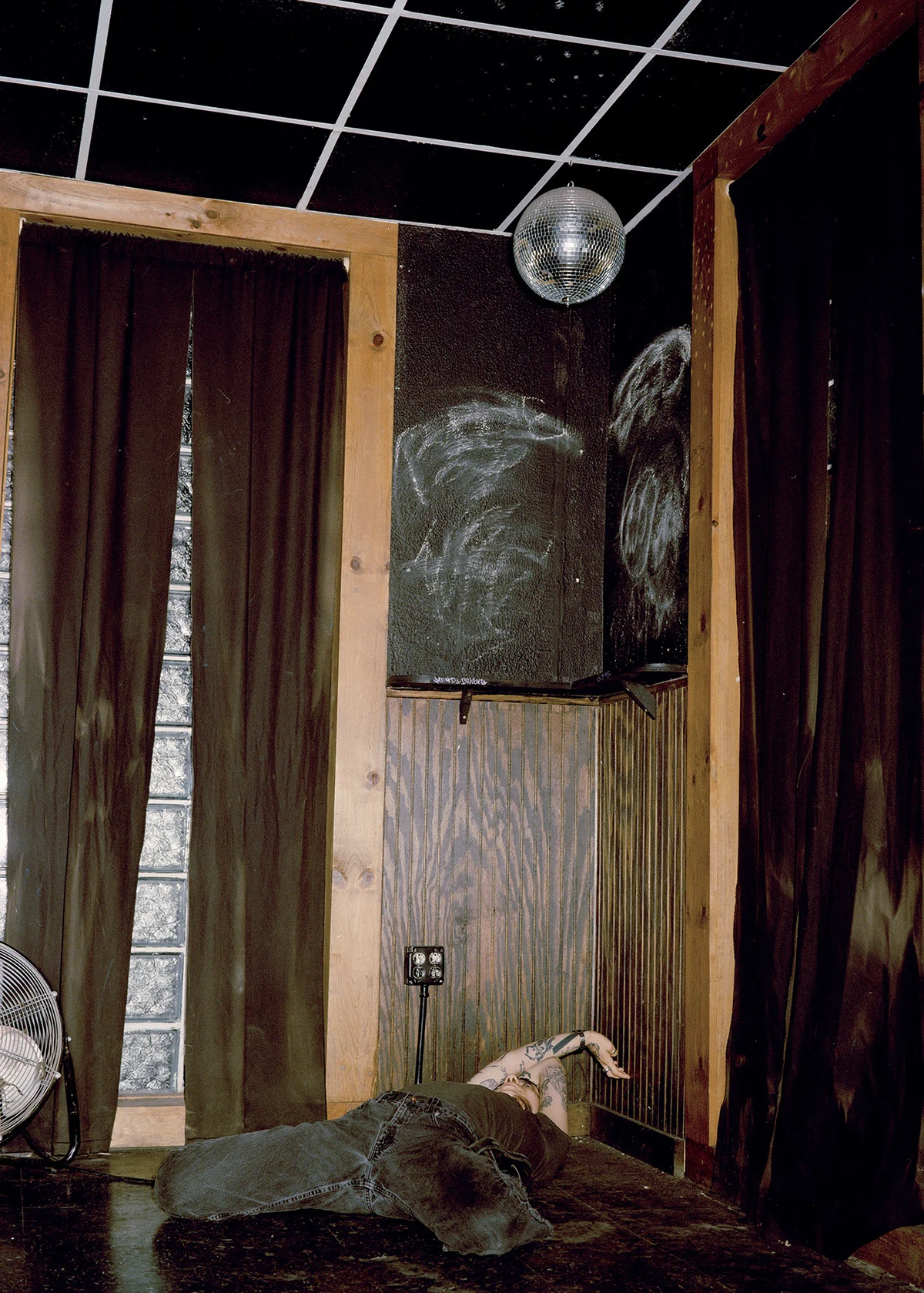
Philadelphia, PA – In the vibrant and ever-evolving landscape of Philadelphia’s art scene, the work of photographer and musician Christopher Postlewaite emerges as a compelling exploration of contemporary existence. Currently rooted in the City of Brotherly Love, Postlewaite’s photographic practice, informed by rigorous academic training and a deep engagement with his immediate environment, offers a nuanced perspective on the interplay between personal experience, social connections, and the profound influence of place. His art, characterized by a unique blend of staged and observational imagery, delves into themes of belonging, subcultural identity, and the fluid nature of self-presentation, creating a visual language that is both intimate and universally resonant.
The Genesis of a Photographic Vision
Christopher Postlewaite’s journey into the realm of visual arts is marked by a solid foundation in academic excellence. He holds a Bachelor of Arts (BA) and a Bachelor of Fine Arts (BFA) from SUNY Purchase, an institution renowned for its strong arts programs. This was further complemented by a Master of Fine Arts (MFA) from the prestigious Yale School of Art, a testament to his dedication and talent in the field. These academic pursuits have equipped Postlewaite with a sophisticated understanding of art history, critical theory, and the technical mastery required to translate his conceptual ideas into potent visual narratives.
Postlewaite’s current base in Philadelphia is not merely a geographical footnote but a central pillar of his artistic output. He describes his work as being “centered around my experience of living in Philadelphia.” This intimate connection to his surroundings forms the bedrock upon which his photographic projects are built. His approach is deeply collaborative, often involving those within his immediate social circle – his spouse, friends, and acquaintances of friends. This deliberate choice to engage with his community imbues his photographs with an authentic and lived quality, moving beyond detached observation to a shared exploration of reality.
A Chronology of Artistic Engagement: From Personal Circles to Public Spaces
Postlewaite’s photographic endeavors can be understood as a continuous dialogue between the intimate and the public, the planned and the serendipitous. His practice is not confined to a singular style or subject matter but rather a dynamic weaving together of diverse visual threads.
Staged Encounters and Social Narratives
A significant component of Postlewaite’s work involves staged images created within his social circle. These are not simply posed portraits but carefully constructed scenarios that probe the nuances of human connection and individual expression. By collaborating with his subjects, Postlewaite invites them to participate in the narrative, blurring the lines between photographer and photographed, and between fiction and reality. This collaborative spirit allows for a deeper exploration of how individuals present themselves within their social contexts, the subtle performances they undertake, and the ways in which these performances are shaped by their relationships and environments.
Observational Glimpses of a Shifting Landscape
Complementing these staged encounters are observational images that capture the ephemeral moments and overlooked details of his Philadelphia environment. These are the photographs that describe the everyday, the seemingly mundane elements that, upon closer inspection, reveal a deeper significance. This includes seemingly simple subjects such as his neighbor’s dog, a common sight that can, in Postlewaite’s hands, evoke a sense of familiarity and domesticity.
The inclusion of specific locations, like the now-defunct Foto Club, a members-only after-hours bar that tragically burned down in April, adds a layer of poignant temporality to his work. This establishment, a space for social gathering and perhaps clandestine activities, now exists only in memory and in Postlewaite’s photographs, highlighting the transient nature of physical spaces and the cultural significance they hold. Similarly, the image of a letterboard used as a group portrait in Cousin Danny’s, a former strip club, speaks to the layering of histories and the transformation of spaces over time. These locations, once vibrant with their own distinct subcultures, are now subjects of photographic documentation, serving as touchstones for memory and the passage of time.
The Photobooth as Metaphor
Postlewaite himself articulates a compelling metaphor for his artistic intent: the photobooth. He states, "I’m interested in my work like that of a photobooth—as a space where performance and self-presentation dovetail, where fictions, realities and adhoc patinas orbit as one." This analogy is particularly insightful. Photobooths are designed for quick, often spontaneous, self-representation. They are spaces where individuals can adopt different personas, experiment with expressions, and create idealized or humorous versions of themselves. The resulting images, while often presented as truthful captures, are inherently performative.
Extending this analogy, Postlewaite’s photographs function as more than mere documentation. They are akin to the multiple frames of a photobooth strip, each offering a slightly different perspective or a variation on a theme. Within these frames, the carefully constructed performances of his subjects intersect with the raw, unscripted realities of their lives. The "adhoc patinas" he mentions refer to the organic layering of experience, history, and material culture that imbues places and people with a unique character. These patinas, whether literal (like the weathered facade of a building) or metaphorical (like the accumulated experiences of a friendship), contribute to the rich tapestry of his visual narratives.
Supporting Data: Thematic Intersections and Methodological Approaches
Postlewaite’s work is underpinned by a consistent exploration of several key themes, consistently approached through his unique methodology.
Relationship to Place: Philadelphia as a Living Canvas
The significance of Philadelphia in Postlewaite’s art cannot be overstated. It is not just a backdrop but an active participant in his visual storytelling. His photographs capture the city’s diverse neighborhoods, its architectural styles, its social dynamics, and its often-overlooked details. From the urban grit of an empty corner store to the more intimate settings within his community, Postlewaite’s lens highlights how place shapes identity and experience. He seems particularly drawn to the liminal spaces of the city – those areas that exist between the well-trodden paths, the forgotten corners, and the rapidly changing urban fabric. His description of a "transcendent puddle two blocks from my home in South Philadelphia" exemplifies this keen eye for the extraordinary within the ordinary, suggesting that profound beauty and meaning can be found in the most unexpected of places. This focus on place suggests an engagement with the idea of "genius loci," the spirit of a place, and how it influences the lives of its inhabitants.
Subculture and Identity Formation
Postlewaite’s engagement with his social circle naturally leads to an exploration of subcultures and the ways in which individuals define themselves within them. Whether it’s the specific communities that frequented Foto Club or the implied subcultural nuances of gathering in a former strip club, his work hints at the diverse social strata that make up a city like Philadelphia. He appears interested in how shared interests, aesthetics, and social practices contribute to the formation of identity. The "members only" aspect of Foto Club, for instance, suggests an exclusive or specialized community, and his documentation of such spaces can be seen as an attempt to understand the boundaries and allure of these groups. This is further amplified by his use of a letterboard as a group portrait, a method that emphasizes collective identity and shared messaging within a specific context.
Self-Presentation and the Performative Self
The photobooth metaphor directly addresses Postlewaite’s fascination with self-presentation. In an era increasingly mediated by digital platforms and curated online personas, the physical act of presenting oneself in a photograph becomes a complex negotiation between authenticity and performance. Postlewaite’s staged images, in particular, allow him to delve into this dynamic. He observes how individuals construct their identities, how they choose to be seen, and how these choices are influenced by their relationships, their environment, and the very act of being photographed. The "fictions" and "realities" that orbit each other in his work suggest that self-presentation is rarely a simple dichotomy but a complex interplay of invented narratives and genuine experiences.
Official Responses and Critical Reception
While direct “official responses” to a photographer’s individual artistic work are uncommon in the traditional sense, the inclusion of Christopher Postlewaite’s work in exhibitions, publications, and online platforms serves as a form of critical reception and validation. Galleries, art critics, and curators act as gatekeepers and interpreters of artistic merit. The fact that his work is being presented and discussed within artistic circles suggests a recognition of its significance and conceptual depth.
Academic institutions like SUNY Purchase and Yale School of Art, by providing him with his educational background, have implicitly acknowledged his talent and potential. Their rigorous programs serve as an initial form of endorsement, preparing artists to engage with the professional art world. His website, which serves as a primary platform for showcasing his portfolio, acts as a digital exhibition space, inviting viewers and potential collaborators to engage with his vision. Online art publications and blogs that feature his work further contribute to this critical discourse, offering analyses and interpretations that shape public perception and understanding of his art. The inclusion of his website link within the provided text itself indicates a professional presentation and an invitation for wider engagement, a common practice in art world dissemination.
Implications: The Evolving Nature of Art and Identity
Christopher Postlewaite’s artistic practice carries significant implications for how we understand contemporary photography, the nature of identity in the digital age, and the profound connection between individuals and their environments.
Photography as a Tool for Unpacking Reality
In a world saturated with images, Postlewaite’s work serves as a reminder of photography’s enduring power to dissect and interpret reality. His blend of staged and observational approaches challenges the notion of objective truth in photography, instead presenting a more nuanced understanding of how we construct and perceive our realities. By collaborating with his subjects and meticulously observing his surroundings, he creates images that are both deeply personal and universally relatable, inviting viewers to question their own perceptions of self and place.
The Fluidity of Identity in a Constantly Shifting World
Postlewaite’s exploration of self-presentation is particularly relevant in today’s socio-cultural landscape. As individuals navigate an increasingly complex and interconnected world, the ways in which they construct and express their identities are constantly evolving. His work suggests that identity is not a fixed entity but a fluid construct, shaped by our relationships, our environments, and our own performative choices. The ephemeral nature of places like Foto Club, and the way they are captured and preserved in his photographs, mirrors the transient nature of certain aspects of identity and social connection.
The Enduring Significance of Place
The profound emphasis on Philadelphia in Postlewaite’s work underscores the continuing importance of place in shaping human experience. In an era of increasing globalization and digital connectivity, it is easy to overlook the grounding influence of our immediate surroundings. Postlewaite’s keen eye for the details of his urban environment—from the dog next door to the forgotten corner store—highlights how our physical spaces are imbued with meaning, memory, and a sense of belonging. His ability to find the "transcendent" in the ordinary suggests a deep appreciation for the unique character of place and its power to shape our lives.
In conclusion, Christopher Postlewaite’s photographic oeuvre stands as a testament to the power of artistic inquiry rooted in lived experience. Through his nuanced lens, he invites us to consider the intricate tapestry of our relationships, the ever-shifting landscape of our identities, and the profound influence of the places we call home. His work is a vital contribution to the ongoing conversation about what it means to be present, to connect, and to understand ourselves in the complexities of the 21st century.