"City of Stone" by K.T. Holder: A Deep Dive into Found Family, Political Intrigue, and the Quest for an Empire’s Soul
K.T. Holder’s "City of Stone" emerges as a compelling new voice in the fantasy landscape, weaving an intricate tapestry of magic, political machinations, and the enduring power of human connection. Positioned to captivate readers who appreciate the expansive world-building of Brandon Sanderson and the intricate character work of Brent Weeks, Holder’s debut novel has garnered significant attention, praised for its emotional depth and its ability to subtly draw readers into a richly imagined world. This article delves into the narrative core of "City of Stone," examines the varied critical responses from an esteemed panel of judges, and explores the broader implications of its unique approach to epic fantasy.
Main Facts: The Epic Scope of K.T. Holder’s "City of Stone"
At the heart of "City of Stone" lies the sprawling, eponymous metropolis, a realm where magic is not merely a force but a measure of might, and ancient shadows conceal perilous secrets. The narrative centers on Kasperi Ironstone, a protagonist whose journey from desperation to destiny forms the crucible for an entire Empire’s fate. Kasperi’s initial act of heroism—stealing to ensure a better life for his younger brother, Soli—unwittingly sets him on a path fraught with peril and monumental responsibility.
His subsequent eight-year incarceration in the dreaded labor camps marks a transformative period, from which he emerges into a world teetering on the precipice of war. This perilous global stage is further complicated by the revelation that his long-lost brother, Soli, has risen to lead a burgeoning rebellion. Kasperi, alongside a burgeoning band of "unlikely allies," finds himself thrust into a high-stakes game of political intrigue, tasked with navigating a treacherous landscape of sabotage and betrayal. Their mission is clear: expose a hidden traitor and unite a fractured realm before an unstoppable invading army plunges it into irreversible chaos.
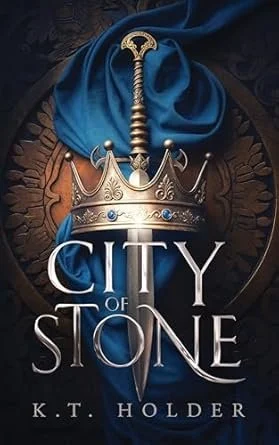
The personal stakes are immeasurable, particularly when a shocking betrayal strikes dangerously close to home, forcing Kasperi to confront an agonizing choice. He must decide whether to prioritize the profound bond with his brother or embrace his duty to an Empire that may demand his ultimate sacrifice. This central dilemma—the tension between personal loyalty and broader responsibility—is a driving force, promising an action-packed tale that explores the unbreakable bonds of family within a grand epic fantasy framework. The novel’s striking cover art, depicting a towering, intricate city, hints at the vastness and complexity of the world within its pages, inviting readers into a realm where every stone might hold a secret.
Unveiling the Narrative: A Chronology of Kasperi Ironstone’s Journey
The narrative arc of "City of Stone" is meticulously crafted, charting Kasperi Ironstone’s evolution from a desperate youth to a potential savior. The story unfolds with a series of pivotal events that shape Kasperi’s character and propel the overarching plot forward.
The Inciting Incident: A Brother’s Sacrifice
The genesis of Kasperi’s saga is rooted in a deeply personal act of sibling devotion. The narrative opens with Kasperi’s desperate attempts to shield his younger brother, Soli, from the harsh realities of their existence, primarily by ensuring his survival and protecting him from the clutches of local gangs. This protective instinct leads Kasperi to a pivotal, life-altering decision: he attempts to steal, a desperate measure to secure a better future for Soli. However, this act of self-sacrifice results in his capture, leading to an arduous eight-year sentence in the Empire’s notorious labor camps. This period, though largely unseen in the immediate narrative, profoundly shapes Kasperi, forging him into a resilient, albeit scarred, individual. It is here that he likely forms the foundational bonds with some of his future "found family," learning the harsh lessons of survival and the subtle nuances of resistance.
A World on the Brink: Emergence and Rebellion
Upon his eventual release, Kasperi is confronted with a world dramatically transformed from the one he left behind. The Empire, once seemingly monolithic, now teeters on the brink of an devastating war, its internal divisions exacerbated by external threats. More personally, Kasperi discovers that his beloved younger brother, Soli, has not merely survived but has ascended to a position of leadership within a burgeoning rebellion against the very Empire that imprisoned Kasperi. This revelation sets up a profound emotional and ideological conflict for Kasperi, forcing him to reconcile his past loyalties with his brother’s present radicalism. The bond of brotherhood, once a simple act of protection, now becomes a complex knot of political allegiance and moral quandary.
The Web of Intrigue: Allies, Traitors, and the Unstoppable Army
As the threat of an "unstoppable army" looms, Kasperi finds himself at the nexus of a grand geopolitical struggle. He quickly forms an alliance with a diverse group of individuals—his "unlikely allies"—each bringing unique skills and perspectives to their shared cause. Together, they are tasked with navigating a treacherous labyrinth of political intrigue, where loyalties are fluid and betrayal lurks in every shadow. Their immediate objective is to uncover the identity of a hidden traitor whose machinations threaten to destabilize the realm from within. The mission is not merely to defeat an external foe but to mend the internal fractures of the Empire, striving for a unity that seems increasingly elusive.
The stakes escalate dramatically with a "shocking betrayal" that hits Kasperi close to home, intensifying his personal struggle. This moment of profound crisis forces Kasperi to make an ultimate decision: will he choose the unwavering bond with his brother, potentially at the cost of the Empire’s future, or will he embrace a greater duty, possibly sacrificing his deepest personal connection for the salvation of the realm? This climactic choice underscores the novel’s thematic exploration of duty versus desire, personal love versus collective good, and the heavy burden of leadership in a world on the brink of collapse.
Supporting Data: Critics Weigh In on "City of Stone"
"City of Stone" has undergone scrutiny by a diverse panel of judges, eliciting a range of enthusiastic praise and thoughtful critique. The collective sentiment, however, points to a novel with significant potential and a distinct emotional core that resonated deeply with many.
The Heart of the Story: Found Family and Emotional Resonance
A recurring and overwhelmingly positive theme among the judges was the novel’s profound exploration of "found family." Maureen, a self-proclaimed "sucker for found family," highlighted how this element contributed significantly to her enjoyment. Julia echoed this sentiment, noting the book’s "strong emotional core" and a cast that is "easy to care about," attributing much of this to the "clear love for found family and loyalty." She particularly appreciated how the bonds between characters, originating from disparate backgrounds and experiences in the brutal labor camps, felt "natural and warm." Julia celebrated the "banter, friendship, and quiet loyalty" as some of the book’s greatest strengths, noting they were powerful enough to carry her through the entire narrative. Stacey further reinforced this, stating that while "certainly not perfect," the "found family story had so much going for it I could ignore almost anything that needed a little polish." She emphasized that the novel’s core was not its magic, but its "people and relationships," a characteristic she deeply admired. This consensus indicates that K.T. Holder has masterfully crafted a narrative where human connection and the formation of chosen bonds serve as the unwavering emotional anchor.
World-Building and Pacing: A Dynamic Tapestry
Beyond its emotional depth, "City of Stone" was commended for its skillful world-building and dynamic pacing. Maureen lauded the novel for establishing its intricate world "without info-dumps," meticulously laying out "various cities and towns, along with their political machinations and affiliation to our heroes." While admitting some minor ambiguities regarding the magic system, she affirmed having "a decent handle on it," suggesting a subtle integration of arcane elements. Maureen also praised the pacing as "great," noting that "something was always afoot," even during the seemingly monotonous scenes in the labor camps. The concluding chapters, in particular, were described as "frenetic," indicative of a narrative that builds momentum towards a thrilling climax. Kerry’s experience further substantiated the book’s engaging pace; after an initial immersion period of "15-20%," she became "engrossed and ended up reading it in one sitting," driven by a desperate need to know "what happened next." This testimonial speaks volumes about the novel’s ability to hook readers and maintain a compelling narrative flow.
Nuance in Character and Social Commentary
The judges also identified several nuanced aspects of character development and subtle social commentary that elevated "City of Stone." Julia, in particular, appreciated Kasperi’s journey of "unlearning," observing how he gradually moved away from empire-centric language and adopted respectful terminology for other peoples. This "quiet adjustment," framed not as a grand moral statement but as a simple act of "learning and respecting what matters to others," was highlighted as a genuine and comforting aspect of the reading experience. Julia further praised the book’s "light on romance" approach, which she found refreshing. She pointed to a specific scene where a character’s assumption of romantic interest was gently corrected, followed by an apology and acceptance, showcasing a "gentle and kind" interaction. This treatment, where "LGBT existence isn’t turned into a source of drama," but rather handled with "a moment of rethinking and adjustment between people who care about each other," underscored a "baseline of acceptance and willingness to learn" that resonated positively.
Stacey highlighted the character of Emilia, a "Controller," praising her "cool magic" and, more importantly, her emotional journey of learning to "FEEL for the people she’s seeing around her." This arc contributed significantly to the novel’s focus on human relationships. Kerry added another intriguing layer by giving a "big shout out to the druids," describing them as "not your average tree huggers, some are seriously disturbed and disturbing," hinting at a darker, more complex magical underbelly. Maureen further observed "layers upon layers of plotting," with each major player—Kaz, Emelia, Cassandra, Francisco—possessing distinct plans and agendas, creating a rich tapestry of motivations. Julia also found the Empress’s POV chapters engaging, depicting her as "lonely, sharp, and deeply frustrated by entitlement and patriarchy," which added crucial "political weight" and illuminated the difficulties of enacting change within a resistant system.
Points for Refinement: The "Rough Edges" and Missed Potential
Despite the widespread praise, "City of Stone" was not without its areas for potential refinement. EG offered a contrasting perspective, confessing to being "so bored" by the 50% mark. Her critique centered on repetitive character dynamics, which she felt "spelled out over and over again," leading to "quite obvious" plot twists. She also found characters she initially deemed interesting to be "just angry or childish," causing her to lose interest. This viewpoint, while distinct, offers a valuable counterpoint to the general enthusiasm.
Julia, while overall positive, also noted what she termed "rough edges." She observed that the book "does sometimes feel a bit too easy," with conflicts resolving "quickly" and answers appearing "just when they’re needed." The opposing POV arc, while strong in concept, felt like it "moved a little too quickly," suggesting that "more depth and polish" could elevate it further. Stacey echoed this sentiment, acknowledging that the book, though highly enjoyable, "certainly not perfect," and "all that it needs, a little finesse, a little trim and it will be really good!" These critiques, often framed as "frustration from caring," suggest that while the novel’s foundation is solid and its heart is strong, a bit more refinement could unlock its truly excellent potential.
Official Responses: The Judging Panel and Contest Context
The comprehensive reviews of "City of Stone" were provided by a distinguished panel of judges as part of what appears to be a significant literary contest or review cycle, hosted by Fantasy-Faction. The panel, comprised of fourteen individuals including Adawia Asad, Eva Geraghty, Evelyn Grimald "E.G." Stone, Julia Kitvaria Sarene, Karen Lucia, Kerry Smith, Kit Caelsto, Maureen Neuman, Robert Max Freeman, Sara Rosevear, Sherry Cammer, Stacey Markle, Tianna Twyman, and Yaniv Rosenfeld Cohen, brought a diverse range of literary preferences and critical perspectives to their evaluations.
The detailed feedback from such an extensive and varied group of readers underscores the importance of the contest and the rigorous evaluation process authors undergo. Their collective insights, both laudatory and constructively critical, serve to not only highlight the strengths of emerging works like "City of Stone" but also provide invaluable guidance for authors in honing their craft. Queries regarding the contest or submissions are directed to the editor, Jennie Ivins, via her Bluesky and Threads profiles, indicating a modern, accessible approach to literary community engagement and professional communication. This structured review process lends significant credibility to the judges’ assessments and positions "City of Stone" within a competitive and discerning literary environment.
Implications: What "City of Stone" Means for the Fantasy Genre
"City of Stone" by K.T. Holder, through its nuanced narrative and compelling character work, carries several significant implications for the contemporary fantasy genre, particularly as it continues to evolve beyond traditional archetypes.
Redefining Epic Fantasy Tropes
While "City of Stone" embraces many hallmarks of epic fantasy—a sprawling empire, a magical system, impending war, and a chosen protagonist—it deftly redefines or enriches these tropes. The comparison to Brandon Sanderson and Brent Weeks hints at a similar scope and intricate plotting, yet Holder distinguishes the work through its profound emphasis on "found family" and emotional clarity. Unlike some epic sagas that prioritize grand battles and political maneuvering above all else, "City of Stone" grounds its monumental stakes in deeply personal relationships and moral quandaries. The quiet moments of learning, acceptance, and recalibration among characters, as highlighted by Julia, present a refreshing counterpoint to the typical genre focus on power struggles. This approach suggests a growing trend in fantasy to blend the epic with the intimate, offering readers not just escapism but also resonant explorations of human experience within fantastical settings.
The Power of Character-Driven Narratives
The consistent praise for the novel’s characters and relationships underscores the enduring power of character-driven narratives, even in genres traditionally associated with expansive world-building. Judges repeatedly emphasized how the strong emotional core and the genuine bonds between characters were primary drivers of their engagement. This focus on "people and relationships" as the "core of the novel," as Stacey noted, indicates that readers are increasingly drawn to stories where the internal lives and interpersonal dynamics of characters are as compelling as external conflicts. "City of Stone" demonstrates that a truly captivating fantasy novel can be built on the foundation of relatable, evolving characters whose journeys of self-discovery, learning, and loyalty resonate deeply, making the grander stakes feel more immediate and impactful.
Future Prospects for the Series
The enthusiastic reactions from judges like Kerry and Stacey, who immediately downloaded subsequent books, and Maureen, who eagerly awaits the next installment, point to a strong and promising future for the "City of Stone" series. The novel’s ability to create an immersive experience that compels readers to continue the journey is a powerful indicator of its long-term potential. Furthermore, Julia’s "frustration from caring" about the book’s "rougher edges" suggests that with further "depth and polish," the series could ascend to truly "excellent" status. This feedback offers K.T. Holder a clear pathway for refinement, allowing subsequent books to build upon the established strengths—the engaging characters, the compelling world, and the resonant themes—while addressing areas where the narrative might benefit from further development or complexity. "City of Stone" therefore stands not just as a strong debut but as the promising genesis of a fantasy saga poised to captivate a broad readership and leave a lasting mark on the genre.