
The Monumental Library of a Modern Classicist: A Deep Dive into David Butterfield’s Vast Collection
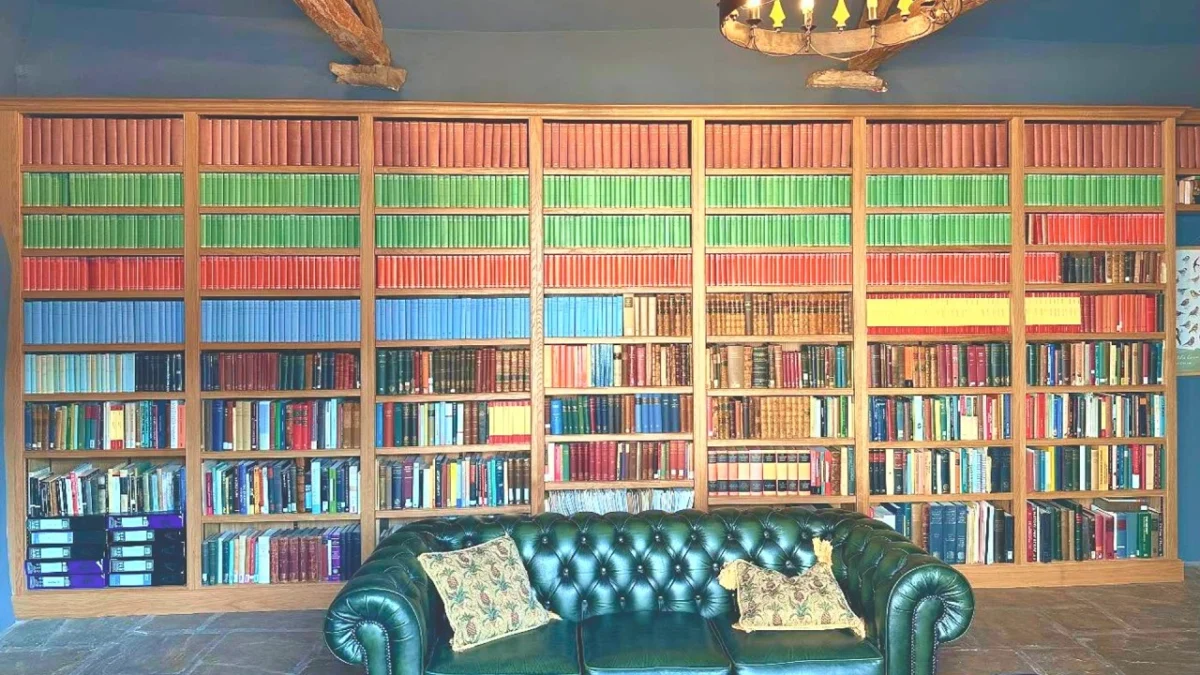
June 1, 2026 – In an era where classical languages like Latin and Ancient Greek are increasingly relegated to the margins of educational curricula, a passionate advocate and prodigious collector is making a compelling case for their enduring relevance. David Butterfield, a renowned classicist and Provost of Ralston College in Savannah, Georgia, has opened the doors to his extraordinary personal library, a testament to a lifetime dedicated to the study and preservation of classical texts. A recent two-and-a-half-hour video tour, captured by YouTuber Timothy Kenny, offers an unprecedented glimpse into what is described as the largest bookshelf tour ever attempted, showcasing a collection that not only fills a house but also embodies a profound intellectual journey.
This exploration delves into the significance of Butterfield’s library, examining the broader context of classical education, the meticulous nature of his collection, his academic trajectory, and the implications of such a vast personal archive in the 21st century.
The Enduring Appeal of the "Dead" Languages
The debate surrounding the inclusion of Latin and Ancient Greek in modern education has been a persistent one. For generations, the argument has been made that these "dead" languages, while historically significant, occupy valuable curriculum space that could be better allocated to contemporary languages like Spanish or Mandarin, languages with demonstrable global utility. However, as even these widely spoken languages face pressures of declining enrollment, the study of classical languages has begun to acquire a counter-cultural allure.
The argument for their continued study is multifaceted. Far from being entirely defunct, Latin forms the bedrock of the Romance languages and has profoundly shaped the vocabulary and grammatical structures of English. A deep understanding of Latin, scholars contend, can unlock a more nuanced comprehension of one’s native tongue. Similarly, Ancient Greek, the language of philosophy, drama, and early scientific inquiry, offers direct access to foundational texts that have shaped Western thought and culture. To truly grasp the lineage of ideas and the evolution of language, a connection to these ancient tongues remains invaluable.
A Bibliophile’s Journey: The Scope and Scale of Butterfield’s Collection
David Butterfield’s personal library is not merely a collection of books; it is a meticulously curated ecosystem of classical scholarship. According to Butterfield himself, mastering both Latin and Ancient Greek is an endeavor that requires dedicated study, and the surviving body of texts associated with these languages is substantial. His library, as revealed in the video tour, is a physical manifestation of this vast intellectual landscape.
The extensive video, produced by Timothy Kenny, who has previously documented the impressive libraries of other bibliophiles, goes beyond a simple walkthrough. It aims to capture the sheer magnitude of Butterfield’s holdings, which include the complete Loeb Classical Library, a prestigious series of ancient Greek and Latin texts with parallel English translations; the I Tatti Renaissance Library, focusing on the humanist tradition; and the Pauly-Wissowa, a comprehensive encyclopedic dictionary of classical antiquity. The scale of this undertaking is staggering, representing years of dedicated searching, acquiring, and organizing.
From Cambridge to Savannah: A Classicist’s Academic Path
Butterfield’s intellectual journey is as compelling as his collection. After spending two decades at the venerable institution of Cambridge University, he embarked on a transatlantic move, transitioning from one of the oldest centers of higher learning to a decidedly newer one. He is now the Provost and Professor of Latin at Ralston College in Savannah, Georgia, an institution that welcomed its inaugural cohort of students in 2022.
Ralston College’s master’s degree program, with its strong emphasis on ancient, medieval, and modern literature and art considered foundational to Western civilization, appears to be an ideal environment for a scholar like Butterfield. His passion for collecting predates his current academic role, with reports indicating he was already winning accolades for his library shortly after his own undergraduate studies.
In a 2008 interview, Butterfield expressed an ambitious goal: "I can’t see myself relaxing until I have accumulated around 10,000 books." The current state of his library, as depicted in Kenny’s video, shows him having more than doubled that initial target, housing approximately 20,000 volumes. This remarkable accumulation speaks to an unwavering dedication and a deep-seated intellectual drive, often referred to as "thymos" – a spirit of ambition and striving.
The Pursuit of Completeness: Oxford’s Very Short Introductions and Beyond
Butterfield’s collecting philosophy extends beyond the grand series of classical texts. He is also in the process of completing his collection of Oxford University Press’s "Very Short Introductions" series. This particular pursuit, which he estimates to be about 80% complete, reflects a broader intellectual curiosity. He describes the series as offering "a really good view of whatever the topic or person is," a sentiment that resonates with anyone seeking to gain a foundational understanding of diverse subjects.
His decision to collect these volumes was driven by a genuine interest in a wide array of topics, admitting, "I am interested in almost everything." This expansive curiosity, coupled with the discipline to systematically acquire such a broad range of material, is a hallmark of a dedicated scholar. Even within this broad interest, specific passions emerge, particularly in the area of manuals for writing Greek and Latin prose and verse. These texts, often containing the marginalia and doodles of past students, offer a tangible connection to the history of learning and the human experience of grappling with these ancient languages.
Implications for Education and Scholarship in the Digital Age
The existence of a personal library of this magnitude in the 21st century raises important questions about the future of scholarship and education. In an age increasingly dominated by digital resources, the physical book retains a unique power and presence. Butterfield’s collection is not merely an aggregation of information; it is a curated repository of knowledge, a testament to the enduring value of print and the tactile experience of engaging with texts.
The video tour serves as more than just a spectacle for bibliophiles. It is a powerful advocacy tool for classical studies, demonstrating the depth and breadth of the material available and the passion of those dedicated to its study. For students considering the merits of learning Latin or Greek, witnessing the sheer volume and diversity of texts available can be a compelling motivator. It underscores that these are not obscure, forgotten languages but vibrant conduits to a rich intellectual heritage.
Furthermore, Butterfield’s commitment to Ralston College, a newer institution focused on foundational aspects of Western civilization, suggests a growing trend towards institutions that prioritize a deep engagement with the humanities. As the academic landscape evolves, the preservation and promotion of classical knowledge, embodied by collections like Butterfield’s, will likely play an increasingly vital role in shaping future generations of thinkers and scholars.
The "largest bookshelf tour ever filmed" is more than just a record of an impressive book collection. It is a powerful statement about the enduring legacy of classical languages, the dedication of passionate scholars, and the profound impact of a life devoted to the pursuit of knowledge. David Butterfield’s library stands as a beacon, illuminating the path for those who seek to understand the foundations of our modern world through the timeless wisdom of antiquity.

Leave a Comment