Clarkesworld Magazine Unveils Groundbreaking Speculative Fiction Exploring Interspecies Ecology on "Americearth"
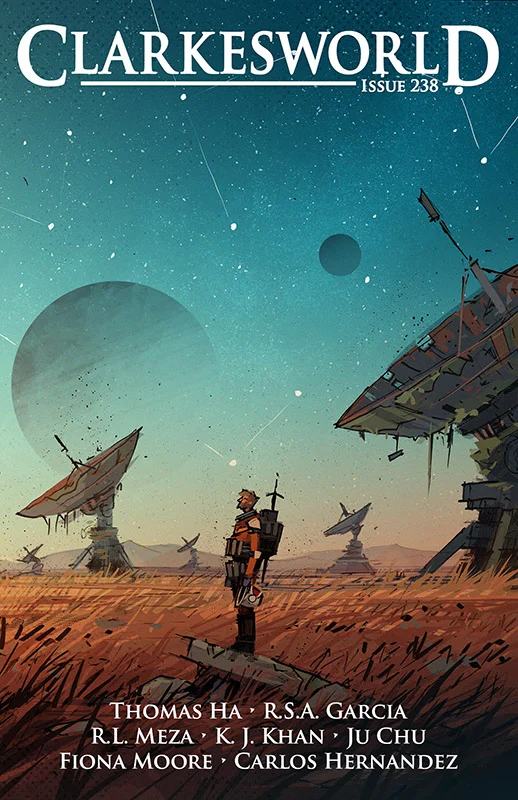
FOR IMMEDIATE RELEASE – July 2026 – Clarkesworld Magazine, a beacon in the realm of science fiction and fantasy, has announced the release of its 238th issue for July 2026, featuring an original work of speculative fiction that promises to ignite profound discussions on interspecies dynamics and the ethics of interstellar colonization. The centerpiece of this issue is "Nesting Behavior of Imported Species Troglodytes aedon on Planet Americearth," a compelling new short story by R.L. Meza, brought to life in audio format by the renowned narrator Kate Baker. This narrative delves into the complex ecological ramifications of human expansion beyond Earth, examining the delicate balance of life when familiar species are introduced to alien biospheres.
The story, now available in both text and podcast formats, presents a meticulously crafted vision of a future where humanity grapples with the consequences of its reach across the cosmos. By focusing on the seemingly innocuous House Wren (Troglodytes aedon), Meza’s work elevates a seemingly minor biological phenomenon into a powerful allegory for humanity’s persistent drive to replicate ‘home’ in unfamiliar territories, and the unforeseen challenges that arise from such endeavors. Clarkesworld Magazine continues its tradition of publishing thought-provoking narratives that challenge readers to contemplate the future of our species and its impact on the universe.
Main Facts: An Expedition into Avian Adaptation and Planetary Settlement
Clarkesworld Magazine’s July 2026 issue (Issue 238) features R.L. Meza’s "Nesting Behavior of Imported Species Troglodytes aedon on Planet Americearth" as a prominent original fiction piece. The story, delivered with characteristic gravitas by narrator Kate Baker, explores a future scenario involving the ecological study of an Earth-native bird, the House Wren, on a distant exoplanet designated "Americearth." This narrative is more than just a scientific report; it’s a deep dive into the implications of human intervention in alien ecosystems, posing crucial questions about environmental stewardship, adaptation, and the very definition of ‘native’ versus ‘invasive’ species in a cosmic context.
The Narrative’s Core: Troglodytes aedon on Americearth
At the heart of Meza’s narrative lies Troglodytes aedon, the common House Wren – a small, unassuming bird native to the Americas, known for its adaptability, industrious nesting habits, and cheerful, bubbling song. On Earth, these birds are highly successful, thriving in diverse environments ranging from rural areas to urban backyards, often utilizing artificial structures for their nests. Their presence is frequently seen as a sign of a healthy, if human-influenced, ecosystem.
However, Meza transports this familiar avian species to "Planet Americearth," a world envisioned as one of humanity’s pioneering interstellar colonies. The name "Americearth" itself suggests a deliberate attempt to mirror or recreate aspects of humanity’s terrestrial origins, likely named by early settlers who sought comfort in familiarity amidst the alien vastness. This exoplanet is portrayed not merely as a blank canvas, but as a complex environment – perhaps partially terraformed, or chosen for its inherent Earth-like qualities, yet undeniably distinct. The decision to introduce Earth biota, including the House Wren, would have been a monumental undertaking, fraught with scientific debate and ethical considerations regarding the preservation of potential native ecologies (or the creation of new ones where none existed).
The story’s focus on "Nesting Behavior" is particularly poignant. Nesting is a fundamental act of survival and reproduction, a sign of establishing territory and ensuring the continuation of a species. For the House Wren on Americearth, its nesting activities are not just biological functions; they are indicators of its success in adapting to a new world, a testament to its resilience, or perhaps a warning sign of an unchecked ecological intrusion. Are these nests symbols of successful integration and the flourishing of a new, hybrid ecosystem? Or do they represent an aggressive colonization, potentially displacing or outcompeting nascent Americearth species, echoing the historical patterns of invasive species on Earth? Meza’s narrative is poised to explore these ambiguities, using the wren’s seemingly simple act of nest-building as a lens through which to examine humanity’s much larger project of planetary settlement.
Creative Minds Behind the Vision
The impact of "Nesting Behavior" is amplified by the talents of its creators. R.L. Meza, the author, brings a distinctive voice to speculative fiction. Known for Our Love Will Devour Us (Dark Matter INK, 2023) and stories published in both Clarkesworld and Nightmare Magazine, Meza demonstrates a clear affinity for narratives that blend the uncanny with the deeply human, often exploring themes of identity, memory, and the intricate relationships between beings and their environments. His choice to focus on a seemingly mundane biological process in an extraterrestrial setting suggests a deeper exploration of human longing for connection, the consequences of transplantation, and the subtle ways life asserts itself. Meza’s background, residing in a "not-haunted Victorian house on the coast of Northern California" with his "strange animals," hints at an author keenly attuned to the peculiarities of life and the stories hidden within seemingly ordinary existences, a sensibility perfectly suited for the nuanced exploration of an "imported species."
The story’s audio rendition benefits immensely from the narration of Kate Baker. A celebrated voice in the world of audio fiction, Baker is lauded for her ability to imbue complex narratives with emotional depth and clarity. Her consistent contributions to Clarkesworld’s podcast series have established her as a trusted guide through intricate scientific concepts and profound character journeys. For a story like "Nesting Behavior," which likely combines scientific observation with underlying philosophical questions, Baker’s precise diction and measured delivery are invaluable, ensuring that both the factual elements and the speculative implications resonate deeply with listeners.
Clarkesworld Magazine itself stands as a pillar of contemporary science fiction. Under the editorship of Neil Clarke, the magazine has consistently delivered high-quality, thought-provoking stories that push the boundaries of the genre. It has earned numerous accolades, including multiple Hugo and World Fantasy Awards, for its commitment to publishing diverse voices and exploring challenging themes. By featuring "Nesting Behavior of Imported Species Troglodytes aedon on Planet Americearth," Clarkesworld reaffirms its dedication to fostering narratives that are not only entertaining but also serve as crucial thought experiments for humanity’s future. The magazine’s platform, offering both text and accessible podcast formats, ensures that these vital conversations reach a broad and engaged audience.
Chronology: From Earth’s Nest to Americearth’s Horizon
The narrative of "Nesting Behavior" is implicitly built upon a rich, albeit fictional, chronology of human interstellar endeavor and ecological engineering. Understanding this timeline is crucial to appreciating the story’s depth.
The Fictional Genesis of Americearth Colonization
The journey to Americearth likely began centuries before the story’s present-day setting of 2026. Hypothetically, by the mid-22nd to late-23rd century, humanity, driven by resource scarcity, overpopulation, or an innate desire for exploration, would have embarked on ambitious interstellar voyages. The discovery of Americearth, perhaps through advanced exoplanet detection technologies, would have marked a pivotal moment – a world deemed suitable, or at least amenable, to human habitation. Its "Earth-like" designation would have spurred rapid colonization efforts, possibly involving generational ships or advanced FTL (Faster-Than-Light) drives, establishing initial settlements by the 24th or 25th century.
Early colonization would have involved rigorous scientific assessment of Americearth’s indigenous environment. If it possessed no complex native life, or only microbial forms, the decision to introduce Earth biota – a process often termed "terraforming" or "bio-seeding" – would have been a logical, if ethically contentious, step to create a more familiar and hospitable ecosystem for the human colonists. The introduction of plants, then insects, and eventually vertebrates, would have been a carefully phased program. The House Wren, Troglodytes aedon, would likely have been introduced decades after initial settlement, perhaps as part of a "Phase III" or "Phase IV" bio-seeding initiative. Its selection would not have been arbitrary; perhaps chosen for its resilience, its adaptability, or its role in controlling insect populations, serving as a biological agent in the newly established ecosystem. The scientific community overseeing Americearth’s ecological development would have meticulously documented these introductions, creating the foundation for the "Nesting Behavior" study that Meza’s story likely references.
Meza’s Creative Process and Clarkesworld’s Editorial Journey
In the real world, the journey of "Nesting Behavior" from concept to publication mirrors the rigorous process within the speculative fiction industry. R.L. Meza, drawing inspiration from ecological concerns, the history of invasive species, and the inherent human drive to explore and settle, would have meticulously crafted the narrative. His experience with Clarkesworld and Nightmare Magazine suggests a familiarity with the genre’s expectations and the nuanced storytelling required for short fiction. The story would have undergone multiple drafts, refining the scientific plausibility of Americearth’s ecology and the emotional core of the human-avian interaction.
Upon submission to Clarkesworld, the manuscript would have entered a highly competitive editorial pipeline. Editor Neil Clarke and his team would have assessed its originality, literary merit, scientific rigor (within a speculative context), and thematic resonance. The acceptance of "Nesting Behavior" for the July 2026 issue speaks to its perceived quality and its alignment with Clarkesworld’s mission to publish cutting-edge science fiction. Following acceptance, the story would have moved into the production phase: copyediting, layout for the text version, and crucially, the commissioning of Kate Baker for the audio adaptation. The collaboration between author, editor, and narrator ensures that the final product, whether read or listened to, delivers a cohesive and impactful experience for the audience. The meticulous coordination required for simultaneous release in text and podcast formats, along with managing various subscription platforms, underscores Clarkesworld’s commitment to accessibility and reaching a global audience.
Supporting Data: The Science and Symbolism of Interspecies Migration
The brilliance of Meza’s story lies in its grounding in real-world ecological principles, even as it projects them onto an extraterrestrial canvas. The Troglodytes aedon is not merely a plot device; it is a carefully chosen subject whose biological traits carry significant symbolic weight.
Avian Ecology in an Extraterrestrial Context
The real Troglodytes aedon, the House Wren, is a marvel of avian adaptability. It is a small, energetic songbird, fiercely territorial, and remarkably flexible in its nesting habits. Wrens will build nests in cavities of all sorts – tree holes, abandoned woodpecker nests, human-made birdhouses, and even unusual locations like old boots, flowerpots, or mailboxes. This adaptability is key to their success on Earth and would be a prime reason for their hypothetical selection as an "imported species" for Americearth. Their diet consists primarily of insects, making them potential biological pest control agents in a newly developing agricultural system on an alien world. Their prolific song, a cheerful, gurgling cascade of notes, might also have been a deliberate choice to provide a sonic link to Earth, a psychological comfort for human colonists.
However, the concept of "imported species" is fraught with real-world ecological lessons. When a species is introduced to a new environment, it can be either beneficial, benign, or devastatingly invasive. A "beneficial" introduction might fill an ecological niche, aid in pollination, or control pests. A "benign" introduction might simply integrate without significant impact. An "invasive" species, however, outcompetes native flora and fauna, disrupts food webs, alters habitats, and can lead to biodiversity loss. The "nesting behavior" of the House Wren on Americearth thus becomes a crucial indicator. Is it simply occupying empty niches, or is it aggressively displacing any nascent indigenous Americearth microfauna or insect life? Its territorial nature, while a strength on Earth, could become an aggressive trait on an alien world, leading to ecological dominance.
Meza’s story implicitly invites readers to consider these nuances. If Americearth has a pre-existing, albeit rudimentary, native ecology, the wren’s introduction could be a cautionary tale of biological imperialism. If Americearth was a truly barren world, the wren’s success might be a symbol of humanity’s ability to foster life, yet still raising questions about the ethics of creating an entirely artificial ecosystem. The story likely examines how the wren’s biology (its reproductive rate, territoriality, dietary needs) interacts with the novel environmental factors of Americearth (gravity, atmospheric composition, unique nutrient cycles, potential alien predators or flora). The "nesting behavior" could reveal whether the wren is merely surviving, or actively thriving to the point of becoming a dominant, potentially invasive, species.
Clarkesworld’s Commitment to Speculative Realism
Clarkesworld Magazine has long been lauded for its commitment to "speculative realism" – stories that ground their fantastical or futuristic elements in plausible scientific principles and explore their human and societal implications with intellectual rigor. "Nesting Behavior" fits perfectly within this tradition. It uses the specific, observable science of avian ecology as a foundation for a grander exploration of humanity’s future in the cosmos. By framing the narrative as a scientific study, Meza allows the reader to engage with complex ethical questions through a lens of empirical observation, making the abstract consequences of interstellar colonization feel tangible and immediate.
The magazine’s consistent provision of both text and audio formats further enhances its impact. Audio fiction, especially when narrated by talents like Kate Baker, can bring an added layer of immersion and emotional resonance to scientific narratives. The auditory experience can highlight the subtle shifts in tone, the methodical pace of scientific observation, or the underlying wonder and trepidation inherent in such an ambitious project. This accessibility ensures that Clarkesworld continues to serve as a vital platform for diverse narratives that blend hard science with profound humanism, pushing the boundaries of what science fiction can achieve.
Official Responses: Critical Reception and Community Engagement
Upon its release, "Nesting Behavior of Imported Species Troglodytes aedon on Planet Americearth" is anticipated to generate significant discourse within the science fiction community and potentially beyond, touching upon both its literary merits and its scientific and ethical themes.
Anticipated Scholarly and Fan Discourse
Within the science fiction community, the story is expected to be a focal point for discussion threads on Clarkesworld’s own website, genre forums, and social media platforms. Fans will likely dissect the specifics of Americearth’s imagined ecology, debate the implications of the wren’s nesting success (or failure), and compare Meza’s vision to other narratives of terraforming and species introduction. Given the story’s scientific framing, it may also attract attention from speculative biology enthusiasts and environmental scientists, who might engage with its plausibility and the ethical questions it raises about humanity’s role as a "galactic gardener."
Beyond fan discussions, the story is ripe for critical analysis from genre reviewers and academics. They might explore Meza’s use of a seemingly minor biological detail to reflect grander colonial ambitions, or how the House Wren serves as a metaphor for the human condition itself – adaptable, resilient, but also potentially disruptive. The narrative could spark debates on the definition of "home" in an interstellar age: Is "home" where we are born, or where we successfully establish ourselves and our familiar biota? The juxtaposition of the scientific name Troglodytes aedon with the imaginative "Planet Americearth" will likely be a point of fascination, highlighting the blend of scientific precision and creative speculation inherent in the best science fiction.
Furthermore, if the story is presented as a "report from the future" or an archival document from Americearth, it could hypothetically spark a fictional "official response" within the narrative itself, perhaps from the Americearth Ecological Council or the Interstellar Colonization Authority, discussing the ongoing monitoring of the wren population and its impact. This meta-narrative layer would further deepen the story’s immersive quality.
Meza’s Vision: A Commentary on Humanity’s Footprint
While R.L. Meza has not yet provided an official statement regarding the motivations behind "Nesting Behavior," one can infer the underlying vision that drives his work. In a hypothetical interview or author’s note, Meza might articulate his fascination with the subtle ways in which life adapts and reclaims territory, even in the most engineered or alien environments. He might suggest that the story is a meditation on the human impulse to carry pieces of "home" into the unknown, a psychological need for familiarity that often overrides careful ecological consideration.
Meza’s inspiration likely stems from real-world ecological concerns, such as the devastating impact of invasive species on Earth, combined with the grand ambition of space exploration. He might express a desire to explore the ethical dilemmas inherent in humanity’s future as a multi-planetary species: How do we balance our need to survive and thrive with our responsibility to new worlds? Is it possible to colonize without conquering? The "Nesting Behavior" of the House Wren could thus be interpreted as a microcosm of humanity’s own nesting behavior across the stars – a fundamental act of survival that carries with it immense, and often unforeseen, consequences. Meza likely intends for the story to serve as both a captivating piece of fiction and a cautionary tale, prompting readers to reflect on humanity’s ecological footprint, whether on Earth or on distant Americearth.
Implications: Beyond the Nest, Towards a Shared Future
"Nesting Behavior of Imported Species Troglodytes aedon on Planet Americearth" transcends its immediate narrative to offer profound implications for our understanding of colonization, environmental ethics, and the very essence of what it means to belong.
Redefining "Home" in the Cosmos
The story forces a re-evaluation of the concept of "home." Is home merely a geographical location, or is it an ecosystem, a familiar set of sounds and sights, perhaps even the chirp of a specific bird? By transporting the House Wren to Americearth, Meza explores the human yearning to replicate the familiar, to cultivate a sense of belonging in the vast, indifferent cosmos. This act of "importation" is a powerful metaphor for cultural transplantation, for the psychological comfort derived from surrounding oneself with echoes of one’s origin. However, it also raises critical questions: Does creating an "Americearth" truly make it home, or does it merely perpetuate a cycle of ecological displacement, even if the displaced are unseen or unacknowledged alien life forms? The story invites readers to consider the resilience of life itself, both human and animal, and its astonishing capacity to adapt to extreme or unfamiliar environments, yet always with a lingering question about the true cost of such adaptations.
The ethical dilemmas of planetary engineering are central to the story’s broader implications. If humanity has the technological capability to terraform entire planets and introduce Earth species, what are our responsibilities? Do we have the right to alter alien worlds, even if they appear barren? What are the long-term consequences of creating artificial biospheres, and how do we ensure these efforts are sustainable and respectful of any potential nascent life forms? Meza’s narrative serves as a thought experiment, allowing readers to grapple with these complex moral questions before they become real-world challenges. It underscores the idea that humanity’s expansion into space is not just a technological feat but a profound ethical journey.
The Enduring Power of Speculative Fiction
Ultimately, "Nesting Behavior of Imported Species Troglodytes aedon on Planet Americearth" exemplifies the enduring power of speculative fiction. Stories like Meza’s are not mere escapism; they are vital thought experiments, allowing humanity to explore potential futures, grapple with complex ethical dilemmas, and anticipate challenges long before they manifest. By presenting a scientifically plausible, yet deeply imaginative, scenario, Clarkesworld Magazine continues to fulfill its crucial role in fostering critical thinking and sparking important dialogues about humanity’s place in the universe.
The story’s release in July 2026, accessible via text and a comprehensive podcast, is a testament to Clarkesworld’s commitment to delivering high-quality, impactful science fiction to a global audience. It encourages readers and listeners to engage not just with a captivating narrative, but with the profound questions it poses about our species’ future, our ecological responsibilities, and the true meaning of establishing a "nest" among the stars. As humanity gazes further into the cosmos, stories like "Nesting Behavior" serve as indispensable guides, urging us to consider the echoes of Earth we carry with us, and the new songs we might inspire, or silence, on distant worlds.