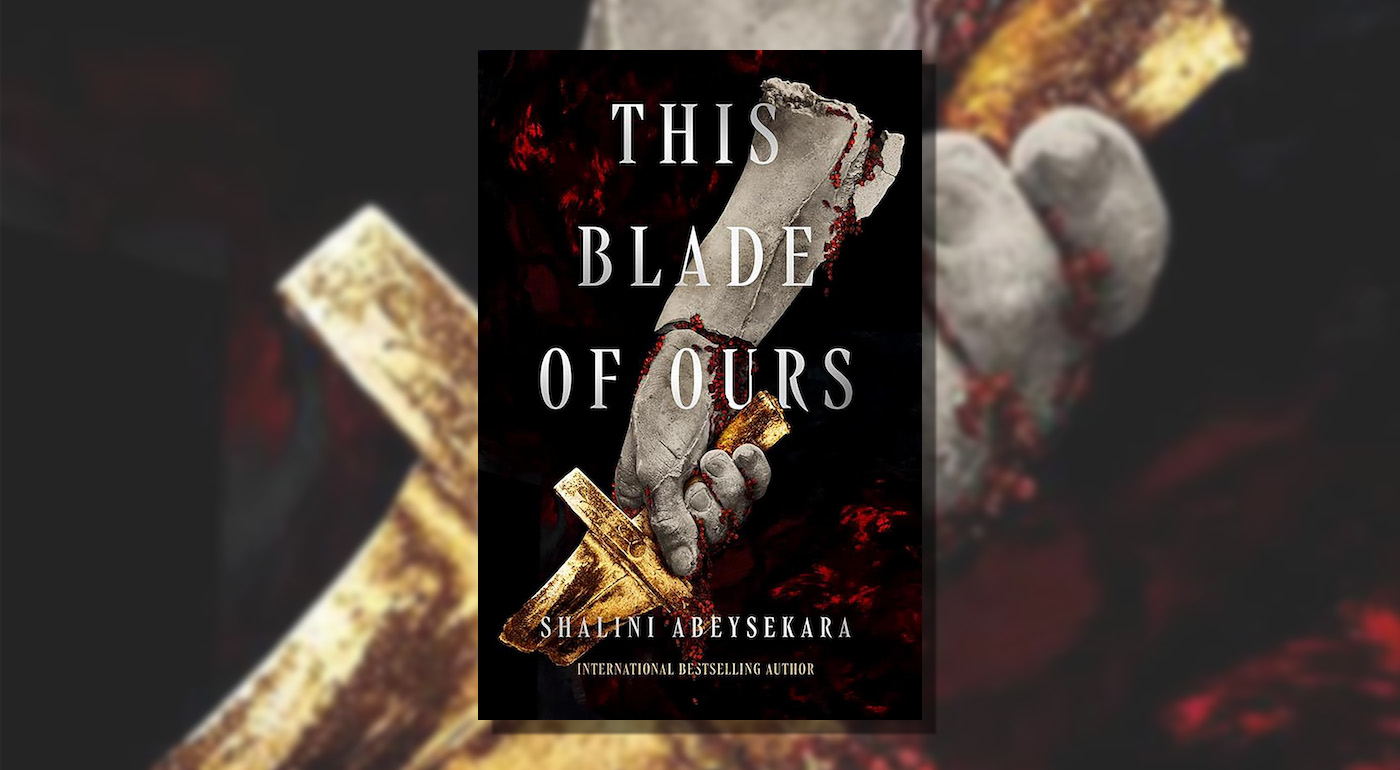
Darkness Descends: Shalini Abeysekara Unveils the Epic Conclusion to Her Dark Romantasy Duology, This Blade of Ours
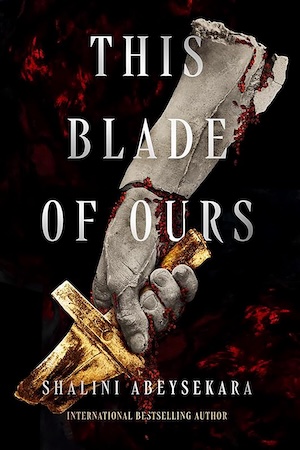
NEW YORK, NY – [Current Date] – Union Square & Co. is poised to unleash the highly anticipated finale of Shalini Abeysekara’s captivating dark romantasy duology. On June 30th, readers will delve into the treacherous world of This Blade of Ours, the gripping conclusion that promises to plunge protagonists Sarai and Kadra into an even deeper maelstrom of political intrigue, divine wrath, and personal sacrifice. Following the critically acclaimed This Monster of Mine, this final installment is set to redefine the boundaries of loyalty, love, and the true cost of power.
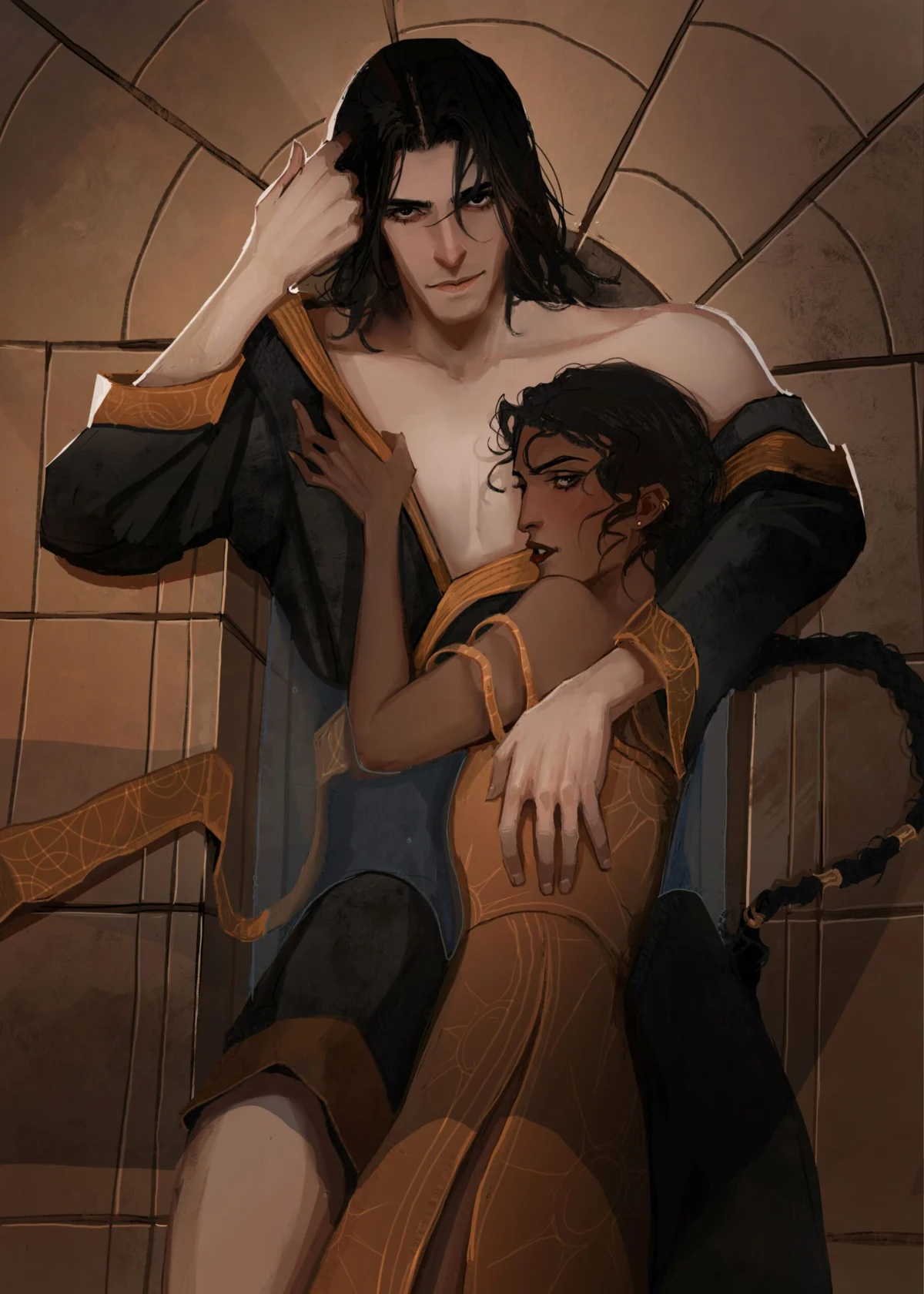
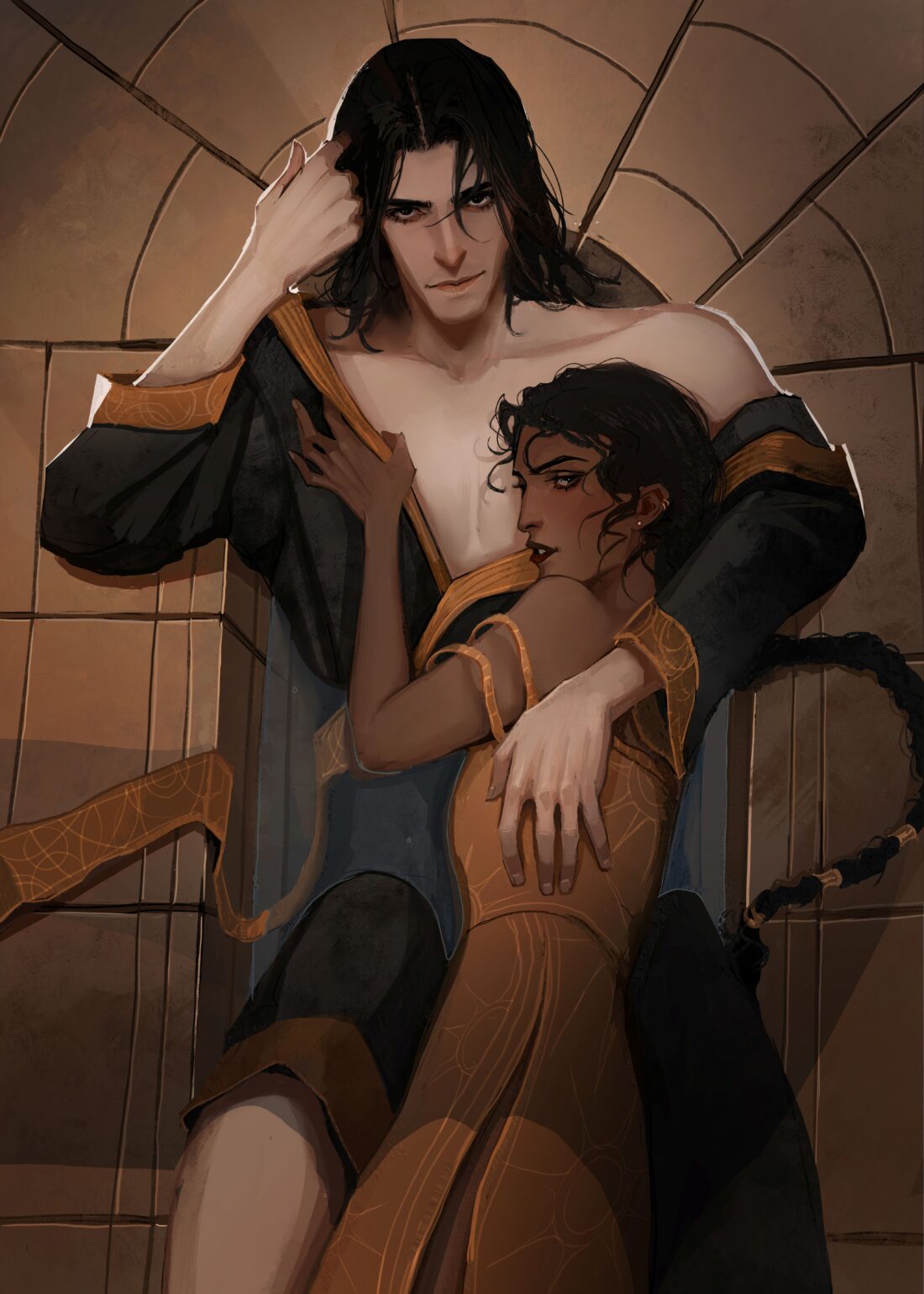
The announcement comes with an exclusive excerpt of the prologue, offering a chilling glimpse into the desperate measures taken by a key character as the world of Ur Dinyé teeters on the brink of collapse. Complementing this sneak peek are stunning character artworks of Sarai and Kadra, brought to life by the talented artists Avendell and Bella Bergolts, further immersing fans into Abeysekara’s intricately crafted universe.
The Unfolding Crisis: Main Facts
This Blade of Ours, the second and concluding volume in Shalini Abeysekara’s dark romantasy series, is scheduled for release by Union Square & Co. on June 30th, 2026. The narrative continues the tumultuous journey of Sarai and Kadra, who, having exposed government corruption in an event known as "the Great Unravelling," now face a new wave of societal scorn and supernatural threats. The novel promises a high-stakes confrontation between the protagonists, a crumbling nation, and an ancient, malevolent power.
The central conflict revolves around Sarai’s desperate quest to clear her name amidst accusations of angering the gods, leading her to Ur Dinyé’s perilous frozen north, a region shrouded in both ice and Kadra’s hidden past. As historical tensions between the north and south ignite, a formidable religious order, spearheaded by the terrifying Noceo bu Kader, rises to seize control. Kader, whose very voice is a weapon, represents a new, terrifying adversary. Sarai and Kadra must navigate a landscape fraught with danger, where love and loyalty are tested against the backdrop of a nation succumbing to fear and cruelty, all while the watchful, unforgiving gods loom large.
A Descent into Chaos: Chronology of Ur Dinyé’s Peril
The saga of Sarai and Kadra began with This Monster of Mine, introducing readers to the complex world of Ur Dinyé, a land grappling with deep-seated corruption and societal unrest. The events of "the Great Unravelling" served as a cataclysmic turning point, exposing the rot within the government and fundamentally altering the power dynamics of the realm. While initially heralded for their bravery, Sarai and Kadra’s heroic actions have, paradoxically, led to public backlash. Citizens, it seems, preferred them as defiant underdogs rather than figures of change, their newfound authority met with resentment rather than gratitude.
In the wake of this political upheaval, Ur Dinyé finds itself besieged by a series of terrifying omens. A deadly plague sweeps across the land, decimating populations and sowing widespread panic. Simultaneously, a pervasive madness takes hold, afflicting individuals who rant incoherently of an impending "reckoning," hinting at a cosmic imbalance or divine judgment. These twin calamities fuel accusations against Sarai, branding her as the one who has incurred the wrath of the gods.
To confront these accusations and seek answers, Sarai embarks on a perilous journey to the remote and unforgiving frozen north of Ur Dinyé. This desolate landscape holds not only the potential for exoneration but also the key to unlocking Kadra’s closely guarded secrets, secrets that may be intrinsically linked to the current crisis. The historical animosity between the northern and southern regions of Ur Dinyé, long dormant, flares anew, exacerbated by the prevailing chaos.
It is amidst this mounting turmoil that a powerful and ruthless religious order, the Elsarian Order, makes its move. Capitalizing on the widespread fear and instability, they seize control, led by the enigmatic and terrifying figure of Noceo bu Kader. Kader’s unique and deadly ability—a voice capable of killing—makes him an unparalleled threat, solidifying the order’s grip through sheer terror.
The prologue of This Blade of Ours takes place against this backdrop of national collapse, introducing a desperate, unnamed protagonist (strongly implied to be Sarai) seeking a radical solution. She journeys into the desolate Xäršmand Desert, searching for the fabled Lost Temple within the Kaycakh Range. This ancient temple, once a sanctuary where devotees of Lord Time gleaned glimpses of the future, was destroyed centuries ago after its Seers delivered an unfavorable prophecy to a tyrannical king. The protagonist’s ninety-night search culminates in the discovery of the temple’s hidden entrance, guarded by a potent, malevolent magic that recognizes her "blood" and warns her away.
Undeterred, and enduring immense pain, she performs a forbidden ritual, drawing the Tenth-Tier Urdish rune "Zuvrai" (Time) with her own blood. This act, dangerously taxing and inherently unsustainable, rapidly drains her life force. As ghosts of the massacred Seers mock her, the mountain itself yields, revealing the temple’s dark, corpse-strewn interior. Racing against her rapidly dwindling time, she navigates the decaying halls, her path illuminated by ancient, self-igniting torches.
She reaches the heart of the temple: a grand courtyard open to the sky, centered by a shattered altar bearing the imprint of a god’s hand. Here, she slices her palms and draws a complex series of runes—"Safsher" (Sword), "Tuhig" (Void), "Zefis" (Weave), "Khon" (Blood), "Frazam" (End), "Layk" (Unity), "Sayag" (Shadow), and finally, "Nibas" (Sleep). Just as she is about to succumb, blue-green flames erupt, signaling the success of her desperate gamble. She has summoned Faragathe, the "Heretic Priestess," a Naaduir (minor goddess) of Time, who was once human but now exists as a terrifying, multi-eyed entity of starlight, bone, and tar.
Faragathe, a figure of immense, otherworldly power and chilling detachment, reads the protagonist’s thoughts. The goddess, herself a victim of the Elsarian Order’s historical revisionism and brutalization, listens as the protagonist pleads for her aid. The request is not for personal gain but for vengeance: for Faragathe to shroud the land, drive its people mad, and destroy the corrupt capital of Edessa, forcing the Elsarian Order to restore her name to their holy texts. Faragathe, recognizing a shared desire for retribution and a deeper purpose beyond mere vengeance, agrees to "stand behind" the mortal, binding herself to her cause. The prologue concludes with the protagonist’s solemn vow of servitude to Faragathe, sealing a pact that promises to reshape Ur Dinyé through violence and shadow.
World-Building and Artistic Collaboration: Supporting Data
Shalini Abeysekara’s This Blade of Ours is a masterful example of the dark romantasy genre, blending intricate world-building with intense emotional stakes and a pervasive sense of moral ambiguity. The world of Ur Dinyé is richly imagined, a tapestry woven with ancient histories, powerful magic systems (runes, divine summoning), and complex political landscapes. The introduction of the Naaduir and Elsar pantheons, particularly the chilling portrayal of Faragathe, adds a layer of cosmic horror and divine manipulation that elevates the narrative beyond typical fantasy tropes. Abeysekara delves into themes of historical revisionism, the corrupting influence of power, and the blurred lines between monster and martyr, as reflected in the protagonist’s desperate internal monologue.
The genre of dark romantasy has seen a significant surge in popularity, attracting readers who appreciate narratives that do not shy away from the darker aspects of human nature, challenging ethical dilemmas, and complex, often morally grey, romantic relationships. This Blade of Ours appears to embrace these characteristics wholeheartedly, promising a story where love is tested under extreme duress and the protagonists are forced to make impossible choices with devastating consequences.
The visual representation of Sarai and Kadra through character art by Avendell and Bella Bergolts significantly enhances the reader’s immersion. Avendell, a Munich-born artist with a background in traditional and digital art, found her niche in book illustration during the Covid lockdown, bringing a unique perspective to her work. Bella Bergolts, a seasoned professional digital artist, specializes in fantasy illustrations, book covers, and character design. Their collaborative efforts in visualizing the protagonists help solidify their presence in the reader’s imagination, offering a tangible connection to the characters and the world Abeysekara has created. These artworks serve not only as aesthetic enhancements but also as interpretive guides, offering insights into the characters’ personalities and the aesthetic of Ur Dinyé.
Union Square & Co.’s commitment to this duology underscores the growing demand for sophisticated dark romantasy. Their support for Abeysekara’s vision highlights a trend in publishing towards narratives that are both emotionally resonant and intellectually challenging, pushing the boundaries of traditional fantasy.
Anticipation and Vision: Official Responses (Inferred)
While specific official statements from the author and publisher regarding This Blade of Ours are not publicly available at the time of this writing, we can infer the sentiment surrounding such a significant release.
Shalini Abeysekara, through her intricate narrative, likely aims to explore the profound consequences of power, vengeance, and the enduring human spirit in the face of insurmountable odds. One might imagine her commenting: "Bringing Sarai and Kadra’s journey to its conclusion in This Blade of Ours has been an intense and deeply personal experience. I wanted to delve into the very heart of what it means to fight for justice when the world itself seems to conspire against you, to explore the sacrifices one makes when caught between love and the desperate need to save a crumbling nation. This book pushes my characters to their limits, forcing them to confront not only external threats but also the darkness within themselves. It’s a story of reckoning, both personal and divine, and I hope readers find it as compelling to read as it was to write."
From the publisher’s perspective, Union Square & Co. would undoubtedly express immense pride and excitement for the duology’s finale. A representative might state: "We are incredibly proud to present This Blade of Ours as the stunning conclusion to Shalini Abeysekara’s dark romantasy duology. Since This Monster of Mine, readers have been captivated by Sarai and Kadra’s compelling story and the rich, dangerous world of Ur Dinyé. This final installment delivers on all fronts: breathtaking action, profound emotional depth, and a narrative that will keep readers on the edge of their seats until the very last page. Shalini has crafted a truly unforgettable series, and we believe This Blade of Ours will solidify her position as a formidable voice in the fantasy genre."
Early buzz from advanced readers and critics would likely highlight the book’s immersive world-building, the complex character arcs, and the escalating tension. Reviews might praise Abeysekara’s ability to weave together political drama, ancient magic, and a poignant love story, creating a finale that is both satisfying and thought-provoking.
The Path Forward: Implications for Ur Dinyé and Beyond
The release of This Blade of Ours carries significant implications for both the fictional world of Ur Dinyé and the broader landscape of contemporary fantasy literature. For Sarai and Kadra, the stakes have never been higher. Their survival, and indeed the fate of their entire nation, hinges on their ability to outwit a religious order backed by a man whose voice can kill, and to navigate the treacherous political currents exacerbated by divine intervention. The pact made in the prologue, binding a desperate mortal to an ancient, vengeful goddess, foreshadows a future where the lines between right and wrong, hero and villain, become irrevocably blurred. The resolution of their love story amidst this chaos will undoubtedly be a central emotional anchor for readers.
Beyond the immediate narrative, Abeysekara’s duology contributes to a growing trend in fantasy that embraces darker themes and morally ambiguous protagonists. It challenges readers to consider the true cost of revolution, the burden of leadership, and the complex relationship between humanity and the divine. The ending of this duology could potentially open doors for spin-off series, exploring other facets of Ur Dinyé or its neighboring lands, or delve deeper into the lore of the Elsar and Naaduir.
Ultimately, This Blade of Ours is positioned to be more than just a conclusion to a story; it is an exploration of legacy, the cyclical nature of power, and the enduring hope that even in the darkest of times, courage and connection can light a path forward. Readers eager to witness the epic climax of Sarai and Kadra’s journey are encouraged to secure their copy of This Blade of Ours on June 30th and revisit This Monster of Mine to fully appreciate the intricate tapestry Abeysekara has woven. The future of Ur Dinyé hangs in the balance, and the gods, as always, are watching.