
DPVR Unveils Project Titan: The Ambbitious Leap Toward Compact, High-Resolution PC Mixed Reality
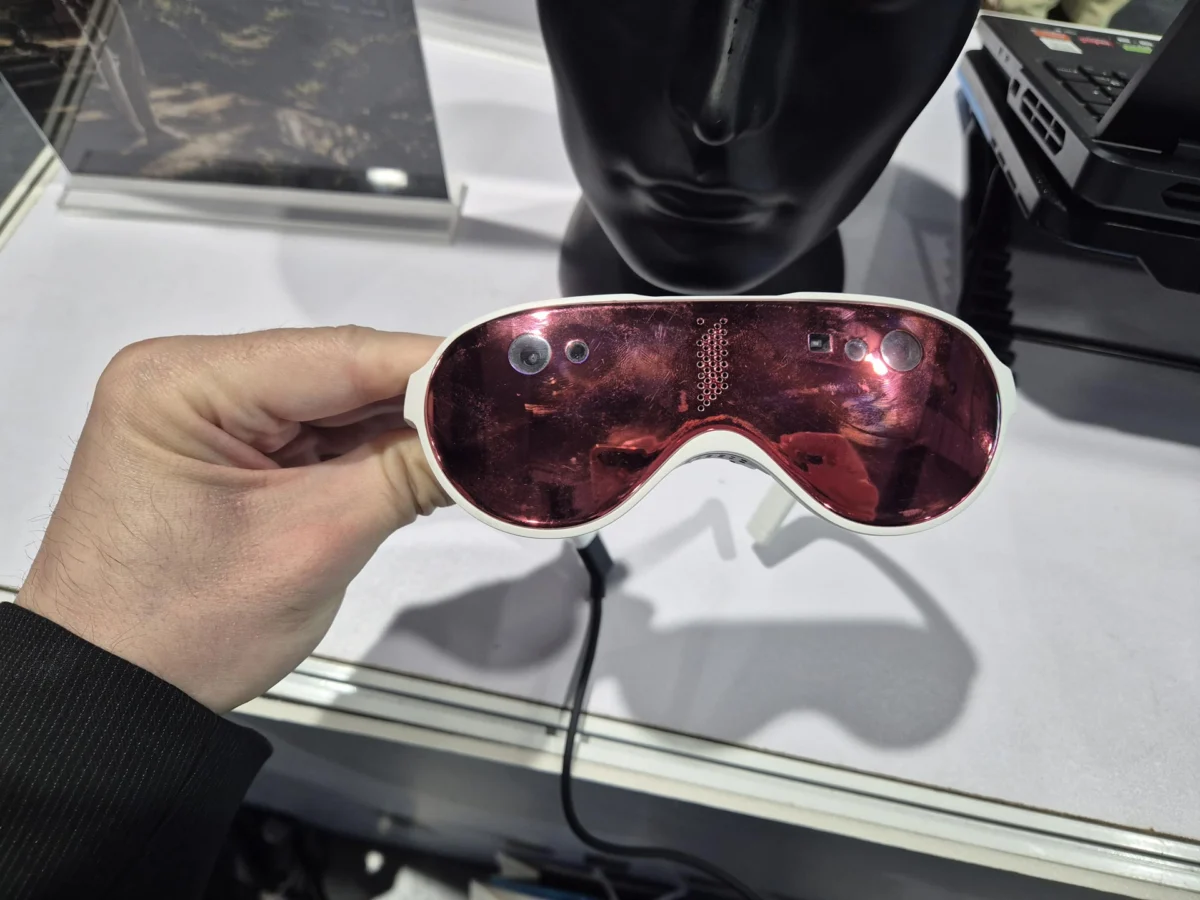
The landscape of virtual and mixed reality is currently undergoing a seismic shift. While the industry has long been dominated by the "shoebox-on-the-face" form factor—bulky, heavy, and often isolating—a new generation of hardware is emerging that prioritizes ergonomics without sacrificing the high-fidelity performance demanded by PCVR enthusiasts. At the recent VR AR Expo China, DPVR, a titan of the Chinese XR market, officially announced its latest endeavor: Project Titan.
Project Titan represents more than just a new product; it is a declaration of intent. DPVR aims to deliver a PC-tethered mixed reality (MR) headset that mirrors the form factor of oversized sunglasses while pushing the boundaries of visual clarity with 4K-per-eye resolution. However, as with all cutting-edge technology, the path from prototype to consumer reality is fraught with engineering hurdles and strategic pivots.
Main Facts: A Glimpse into the Future of PCMR
DPVR (Deepoon VR) may not be a household name in the Western consumer market compared to Meta or HTC, but its influence in the East is undeniable. For years, DPVR has been the primary supplier for China’s massive educational and enterprise sectors, often leading the market in shipments of 3DOF and 6DOF headsets. With Project Titan, the company is pivoting toward the high-end "prosumer" and enterprise markets globally.
The core value proposition of Project Titan lies in its technical ambitiousness. The headset is designed to be a "Small but Powerful" PC Mixed Reality device. Key specifications targeted for the final release include:

- Form Factor: Ultra-compact, sunglasses-style design.
- Display: Dual 4K MicroOLED panels, offering a significant leap over current industry standards.
- Field of View (FOV): A targeted 100-degree FOV, balancing immersion with the limitations of compact optics.
- Platform Compatibility: Dual support for Windows PC and Android ecosystems.
- Processing: Powered by the Gravity X100 chip, utilizing a split-rendering architecture.
Chronology: From Reference Design to Global Stage
The journey of Project Titan is closely intertwined with the evolution of reference designs within the Chinese hardware ecosystem. To understand where Project Titan is going, one must look at where it started.
The VR AR Expo Reveal
One week ago, at the opening of the VR AR Expo China, DPVR took center stage to announce the codename "Project Titan." The announcement was met with significant intrigue, particularly due to the aesthetic of the device. It lacked the traditional head straps and bulky plastic housing of its predecessors, looking more like a piece of high-fashion eyewear than a piece of computing hardware.
The Prototype Phase
During the expo, attendees were given the opportunity to interact with early prototypes. However, a crucial distinction was made during these sessions. The hardware present on the floor was not the final iteration of Project Titan but was instead based on the GravityXR reference design.
Industry observers noted that the prototype felt identical to the Gravity X100 reference units seen earlier in the year. This initial phase utilized 2.5K displays and a restricted 75-degree FOV. The "Titan" project is essentially the commercial evolution of this reference design, aiming to double the resolution and significantly widen the optics before its official launch.

The Roadmap to 2027
DPVR has set a long-term trajectory for the device. While many companies rush to release half-baked hardware, DPVR CEO Sunny Chen has indicated a more measured approach. The official commercial launch is currently slated for CES 2027. This timeline allows the company nearly two years to refine the thermal management, finalize the 4K MicroOLED integration, and build out the necessary software stack for seamless PCMR integration.
Supporting Data: The Engineering Challenges of Miniaturization
The transition from a "shoebox" to "sunglasses" is not merely an aesthetic choice; it is a rigorous engineering challenge. DPVR is grappling with two primary factors: heat dissipation and optical efficiency.
The Thermal Threshold
During initial "hands-on" sessions with the prototype, testers reported a significant issue: the center of the glasses reached temperatures described as "lava-hot." In a device this small, the heat generated by the Gravity X100 chip and the high-density displays has nowhere to go.
To combat this, DPVR is implementing a split-processing model. By offloading roughly 50% of the computational burden to the host machine (the Windows PC), the headset’s internal silicon can run cooler. This strategy is essential for a device meant to be worn directly against the face without the benefit of large, active cooling fans.

The MicroOLED Advantage
The decision to use 4K MicroOLED displays is the primary driver of the device’s high expected price point. Unlike traditional LCD or OLED panels used in larger headsets, MicroOLEDs are built directly onto silicon wafers. This allows for incredible pixel density (PPI) in a tiny footprint. However, the yields for 4K MicroOLED panels remain low, and the costs remain high, positioning Project Titan firmly in the premium tier of the market.
Comparison of Specs: Prototype vs. Target
| Feature | Prototype (GravityXR Ref) | Project Titan (Target) |
|---|---|---|
| Resolution | 2.5K per eye | 4K per eye |
| FOV | ~75 Degrees | ~100 Degrees |
| Weight | Extremely Lightweight | Under 200g (Target) |
| Cooling | Internal Only (Overheating) | Split-Processing / PC-Offload |
Official Responses: Insights from DPVR Leadership
In discussions during the event, DPVR CEO Sunny Chen provided clarity on the company’s vision and the hurdles they face. Chen was candid about the current state of the hardware, confirming that the units shown were indeed the GravityXR reference designs intended to demonstrate the potential form factor rather than the final performance.
On Pricing and Market Position
When questioned about the retail price, Chen refrained from providing a specific figure but emphasized the cost of components. "Two 4K MicroOLED displays are going to be expensive," Chen noted. This confirms that DPVR is not looking to compete with the mass-market pricing of the Meta Quest 3, but is instead targeting the "prosumer" niche currently occupied by devices like the Bigscreen Beyond or the Apple Vision Pro.
On the "Sunny" AI Ecosystem
Beyond Project Titan, Chen highlighted DPVR’s broader push into AI-integrated wearables. The company is developing six models of AI glasses featuring an assistant named—coincidentally—"Sunny." This ecosystem approach suggests that DPVR is looking to bridge the gap between lightweight AR/AI glasses for daily use and high-end VR/MR for immersive work and play.

Implications: What Project Titan Means for the XR Industry
The announcement of Project Titan serves as a bellwether for several major trends in the extended reality industry.
1. The Death of the "Shoebox"
If DPVR can successfully deliver 4K resolution in a sunglasses form factor, it will put immense pressure on other manufacturers to shrink their hardware. The "cool factor" and comfort of a lightweight device cannot be overstated; it reduces "VR friction," making users more likely to jump into sessions if the hardware doesn’t feel like a chore to wear.
2. The Persistence of PC-Tethered VR
Despite the industry’s massive swing toward standalone VR (led by Meta), Project Titan reaffirms the necessity of the PC for high-fidelity experiences. By tethering to a PC, DPVR avoids the weight of a massive battery and the thermal constraints of a mobile processor, allowing them to focus entirely on the display and optics.
3. The "Reference Design" Economy
The fact that Project Titan is built upon a GravityXR reference design highlights the collaborative nature of the Chinese tech hub. Companies like GravityXR provide the silicon and foundational blueprints, allowing brands like DPVR to focus on industrial design, ergonomics, and market-specific software features. This "Lego-block" approach to hardware development is what allows Chinese firms to iterate at a pace that often outstrips Western competitors.

4. Strategic Patience
By aiming for a 2027 release, DPVR is showing a rare level of strategic patience. They are waiting for the MicroOLED market to mature and for split-rendering software to become more robust. If they succeed, they could arrive at CES 2027 with a product that is not just a prototype, but a polished, category-defining device.
Conclusion
DPVR’s Project Titan is a bold, albeit early, glimpse into the next era of mixed reality. It promises the holy grail of XR: "Invisible" hardware that provides "Impossibly" clear visuals. While the "lava-hot" prototypes and the two-year wait time remind us that we are still in the experimental phase of this technology, the pedigree of DPVR suggests that they are a company capable of crossing the finish line.
As we look toward 2027, the industry will be watching to see if DPVR can transform its "Titan" from a promising reference design into a tool that changes how we perceive the boundary between the physical and digital worlds. For now, Project Titan remains a high-stakes bet on the future of miniaturization.



Leave a Comment