
SPFBO 11 Round One: The Third Five to Fall Conclude Their Journey, Spotlight on Indie Fantasy Talent
MAY 25, 2026 – As May draws to a close, so too does the initial phase of Round One for the highly anticipated 11th annual Self-Published Fantasy Blog-Off (SPFBO). With only one week remaining in this pivotal month, the Fantasy-Faction judging panel has announced its "Third Five to Fall," marking another significant milestone in the arduous but rewarding contest. This announcement brings the current tally of eliminated books to fifteen, leaving a crucial segment of the initial 300 entries vying for semi-finalist spots.
The SPFBO, a brainchild of acclaimed author Mark Lawrence, was established to shine a much-needed light on the vast and often overlooked talent within the self-published fantasy genre. Each year, independent blogs and review sites volunteer to judge a portion of the entries, providing invaluable exposure and constructive feedback to authors who might otherwise struggle to gain traction in a crowded marketplace. The current round, overseen by the dedicated team at Fantasy-Faction, exemplifies the meticulous and thoughtful process inherent in the SPFBO.
The Rigors of Round One: A Gateway to Recognition
Understanding the SPFBO Mechanism
The Self-Published Fantasy Blog-Off is more than just a competition; it’s a community-driven initiative that has become a cornerstone of the indie fantasy landscape. Conceived by Mark Lawrence, the contest aims to discover exceptional self-published fantasy novels and bring them to a wider audience. With 300 books entered annually, the scale of the undertaking is immense, requiring a distributed judging system where numerous fantasy blogs each take on a selection of entries. Fantasy-Faction is one such esteemed blog, tasked with sifting through its allocated portion to identify potential gems.
The process for Round One is designed to be thorough yet efficient. Judges are not expected to read every book cover-to-cover, but rather to evaluate them based on a range of criteria, often focusing on the opening chapters to assess writing quality, plot hooks, character engagement, and overall promise. The goal is to identify books that demonstrate strong potential and deserve further consideration, eventually narrowing down to semi-finalists and, ultimately, a grand prize winner.
The Philosophy of Evaluation: Subjectivity and Encouragement
A core tenet of the SPFBO, frequently reiterated by judging panels, is the inherently subjective nature of reading. As Fantasy-Faction highlights in its announcement, "All reading is subjective." This vital disclaimer underscores that a book’s elimination from the contest is not a definitive judgment on its quality or an indictment of the author’s talent. Rather, it reflects whether the book resonated with a specific panel of judges at a particular time, based on their individual tastes and the contest’s criteria.
The judging process is explicitly non-sequential; books are not read or eliminated in any particular order, nor are they ranked from "worst to best." This approach ensures fairness and prevents any pre-conceived notions from influencing the evaluations. The primary objective, beyond identifying a winner, is to provide visibility. Even books that do not advance gain valuable exposure through the reviews and summaries published by the judging blogs.

Fantasy-Faction’s statement extends profound gratitude to all participating authors, acknowledging the immense courage it takes to submit one’s work for public scrutiny. This sentiment is crucial, as the SPFBO aims to be a supportive environment for indie authors, offering not just a platform but also constructive engagement. Readers are actively encouraged to explore any of the "fallen" books if their descriptions align with personal interests, reinforcing the idea that one reader’s "fall" can be another’s "favorite read."
The Third Quintet to Conclude Their SPFBO Journey
This latest announcement from Fantasy-Faction details the five books that have concluded their journey in SPFBO 11, Round One. Each entry brought its unique voice and world to the judges, and while they did not advance, their participation highlights the incredible diversity and creativity flourishing within the self-published fantasy realm.
Sweet & Wild by Alex Larkspur: A Tale of Mystical Romance
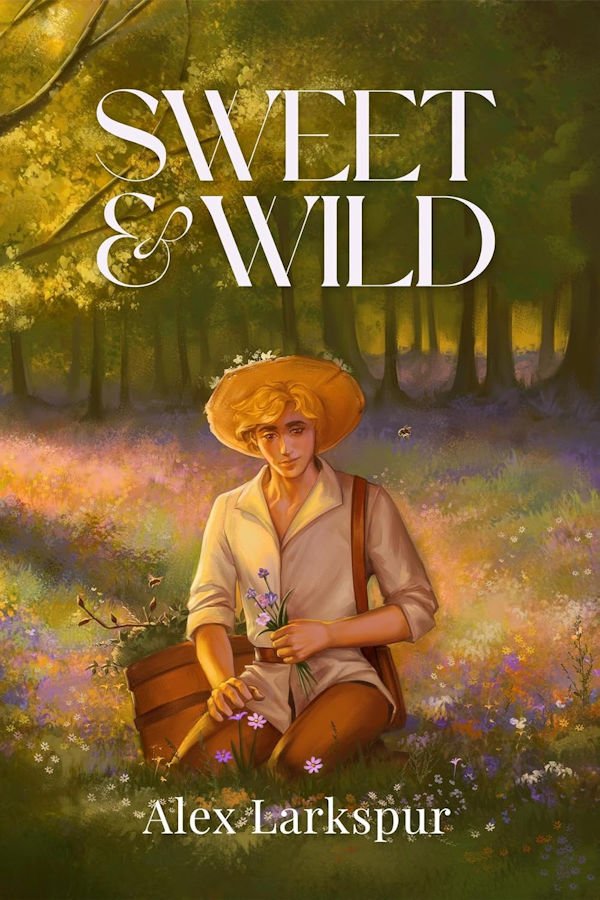
Synopsis: Alex Larkspur’s Sweet & Wild introduces readers to Micah Harlow, a protagonist seeking a fresh start in the quaint town of Roseyard, nestled on the precipice of an enigmatic forest. Driven by hope, Micah ventures into the woods, not merely to forage but to honor its guardian spirit with an offering. What unfolds is far from ordinary: the spirit manifests, taking an unusual interest in Micah, aiding his foraging and dedicating time to his company. The town of Roseyard, however, presents its own set of complexities. Its inhabitants view the forest spirit as a "beast" and appear to be under the sway of a powerful, affluent individual. Micah finds himself drawn deeper into the forest’s magic and its spirit’s world, simultaneously navigating the intricate social landscape of Roseyard, all while attempting to mend his own "damaged heart."
Judges’ Feedback: The core of Sweet & Wild lies in the burgeoning romantic entanglement between Micah and the forest spirit, a subgenre—fantasy romance—that often divides the Fantasy-Faction judging panel. In this instance, however, the book united the judges, albeit in a "negative way." The primary concern was a perceived lack of chemistry between the two leads, which failed to ignite the necessary spark for a compelling romance. A more significant issue arose from the age and power dynamics at play. The judges expressed "slight discomfort" with the much older, magical entity’s relationship with the comparatively young hedge witch, finding the imbalance problematic. While the "older magical entity falls for young human" is a popular trope in certain romance subgenres, its execution in Sweet & Wild "just didn’t work" for the panel.
Implications and Reader Appeal: The judges’ feedback highlights the delicate balance required when employing tropes with inherent power imbalances. While some readers actively seek out "age gap" or "power dynamic" romances, the success often hinges on how these dynamics are explored, challenged, or subverted to ensure consent, respect, and genuine connection. For readers who enjoy gentle, mystical settings, tales of personal healing, and are perhaps less sensitive to the specific power dynamics that concerned the judges, Sweet & Wild might still offer a charming escape into a magical forest romance.
Shattered Peace by Megan Russ: A Post-Apocalyptic Fantasy of Elven Warriors
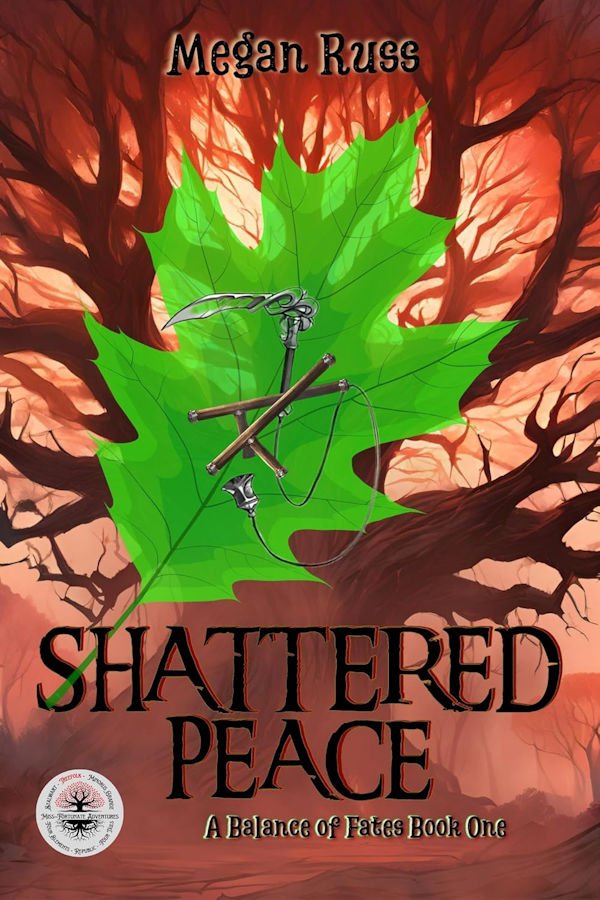
Synopsis: Megan Russ’s Shattered Peace plunges readers into Aearth, a world scarred by a "Great War" 3000 years prior. This cataclysmic event resulted in the loss of magic, which the Gods sealed into the world itself before abandoning it. Secreted within an ancient forest stands a colossal tree, housing a monastery where future generations of warriors are rigorously trained. The narrative follows two freshly graduated monks: an enigmatic elven outcast guarding a secret and a rare free human determined to prove his worth. As they embark on their individual journeys to find their place in the world, a looming darkness threatens Aearth, raising the stakes for these nascent heroes.
Judges’ Feedback: The Fantasy-Faction panel found Shattered Peace to possess a "good premise," particularly praising the intriguing concept of "Elves learning to be warrior monks in a ruined world." The main characters also garnered positive attention from the judges. However, the story’s overall flow was described as "a bit slow," and the plot ultimately "didn’t hold our attention as much as we’d hoped." This resulted in the decision to not advance the book.
Implications and Reader Appeal: This critique often points to pacing issues, where even strong worldbuilding and compelling characters can be undermined by a narrative that struggles to maintain momentum. In a contest where judges are sifting through hundreds of books, a strong, engaging pace from the outset is often crucial. For readers who appreciate intricate worldbuilding, unique takes on classic fantasy races like elves, and prefer a slower, more contemplative narrative build-up rather than rapid-fire action, Shattered Peace could still prove to be an engaging read. It promises a rich history and a contemplative journey for its protagonists.
Heroes of Valhalla by C. K. Kesterson: A Familiar Echo from Norse Lore
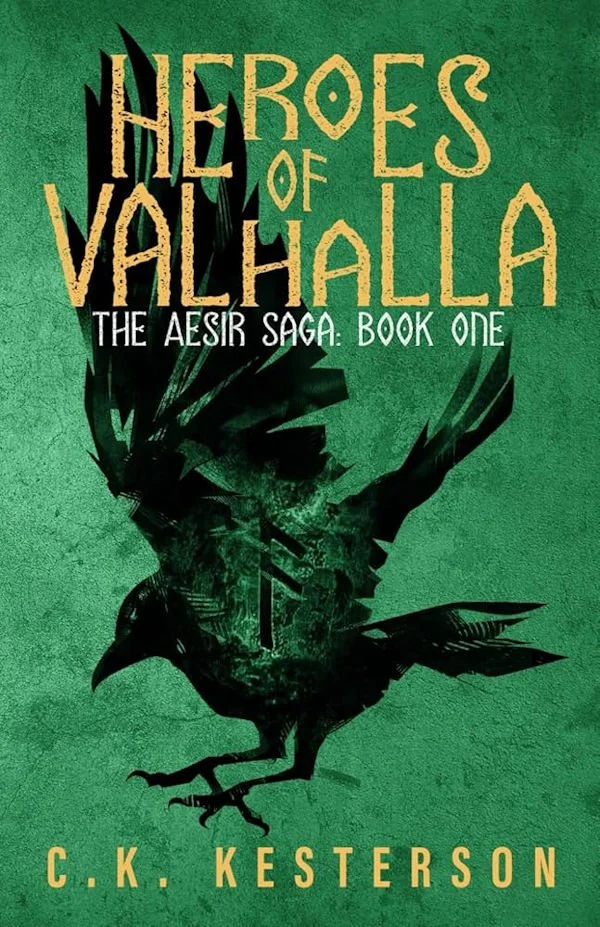
Synopsis: In C. K. Kesterson’s Heroes of Valhalla, the northern lands have plunged into an era of profound darkness, abandoned by both empire and old gods. Amidst this desolation, the Kingdom of Asgard stands as a "light in the darkness," a bastion of civilization and a sanctuary for heroes. However, the shadow of war looms large. Driven by ancient prophecy, Odin, the revered king of Asgard, tirelessly seeks a hero capable of averting the impending destruction that threatens his realm.
Judges’ Feedback: The judges noted the inherent appeal of authors reinterpreting Norse mythology within their fantasy worlds. Heroes of Valhalla was deemed "well written" and followed "all the usual suspects" in its mythological framework. However, the panel’s primary challenge was a lack of strong emotional connection; while they "didn’t find anything they hated in the story," they also "didn’t find anything they absolutely loved either." This neutral response ultimately meant the book did not possess the unique spark needed to advance in a highly competitive field.
Implications and Reader Appeal: The feedback on Heroes of Valhalla highlights a common hurdle for authors drawing from established mythologies: balancing faithfulness to the source material with the need for fresh perspectives and innovative storytelling. While Kesterson’s work is well-crafted, the absence of a distinct, standout element prevented it from capturing the judges’ fervent enthusiasm. Dedicated fans of Norse mythology who appreciate faithful, well-executed retellings and explorations of familiar pantheons might find much to enjoy in this narrative, particularly if they seek a comfortable, immersive journey into a beloved mythos without expecting radical departures.
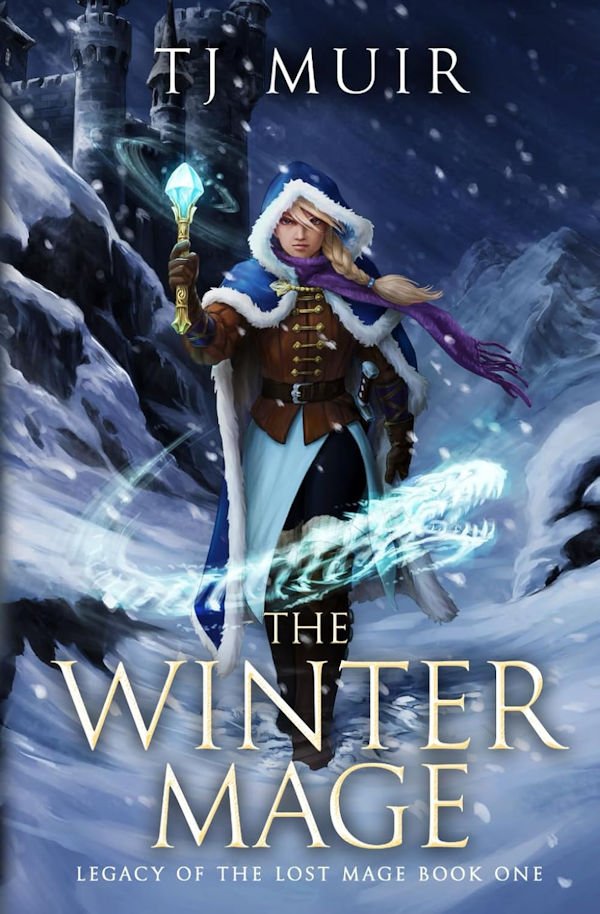
The Winter Mage (Legacy of the Lost Mage #1) by TJ Muir: Magic’s Resurgence and Hidden Dangers
Synopsis: The Winter Mage, the first installment in TJ Muir’s "Legacy of the Lost Mage" series, is set centuries after the "Night of Ashes" and the brutal "purge of the Arcana," events that drove magic into hiding. Now, magic is slowly re-emerging, though true power remains feared, hunted, and buried beneath historical ruins. Kadaris, undeterred, refuses to let it remain hidden. She has dedicated her life to mastering magic, relentlessly pursuing any teacher, book, or spell available. Her path is self-forged, irrespective of obstacles. When whispers of rogue mages and forbidden magic lead her into an investigation, Kadaris unearths something far more perilous than herself: an ancient relic imbued with the lost power of a forgotten age. However, she is not alone in her hunt. Rogues, bandits, and unseen adversaries close in, and even those she trusts may harbor their own agendas. As the struggle for the relic intensifies, Kadaris must confront the true cost of the magic she craves and how far she is willing to go to protect it.
Judges’ Feedback: The narrative structure of The Winter Mage, employing split point-of-views (POVs) between Kadaris, a mage whose magic is outlawed, and a budding warrior training in martial arts, was noted as keeping the story "interesting." The judges were "hooked at the very beginning," and many expressed an overall liking for the premise. However, two significant factors ultimately hindered its progression: "heavy worldbuilding" and "a decent number of editing errors." While the ambitious worldbuilding offered depth, its density likely impacted pacing or accessibility, and the editing errors detracted from the immersive experience, preventing the judges from enjoying the story "the way we’d hoped."
Implications and Reader Appeal: This feedback underscores the critical importance of balancing intricate worldbuilding with narrative clarity and polish. While a rich world is a hallmark of fantasy, overwhelming readers with exposition can be counterproductive. Similarly, editing quality is paramount in self-published works, as it directly impacts professionalism and reader engagement. Despite these critiques, readers who revel in complex magic systems, political intrigue surrounding forbidden powers, and dual-perspective narratives, and who are forgiving of minor editing inconsistencies, may find The Winter Mage to be a compelling and rewarding journey into a world grappling with magic’s resurgence.
Legacy Bound (Legacies #1) by Elizabeth Daly: A Blend of Epic Fantasy and Romantasy
Synopsis: Elizabeth Daly’s Legacy Bound, the inaugural novel in the "Legacies" series, is described as a medieval epic fantasy with romantasy elements, set against a backdrop of brewing rebellion. Mages, forcibly bound to the Queen, yearn for freedom, while any unbound mages face execution. Isobel, an empath, conceals her powers, living in constant dread. She has dedicated her life to protecting her younger brother, William, while desperately seeking a cure for the demonic corruption slowly consuming him. William, a former soldier, seeks redemption, having renounced his violent past and embraced "the Light." He battles an internal struggle, fearing the consequences should he lose control. Prince Marcus, the Queen’s youngest grandson, is a free-spirited royal, determined to savor his remaining year, his time running short due to an undisclosed affliction. A chance encounter with Isobel, however, forces him to re-evaluate his hedonistic lifestyle. With the lines between friend and foe blurred and their past actions closing in, Isobel, Marcus, and William find themselves on the run, embroiled in a desperate race to prevent an uprising that threatens to shatter the empire. Their journey forces them to confront whether they can break free from the shackles of their past or remain forever bound.
Judges’ Feedback: Legacy Bound presented a classic SPFBO challenge: a blend of genres. While it incorporated romance, it leaned more heavily into its epic fantasy foundations. The judges were "split on the characters themselves," with some not connecting with them, while others appreciated their interactions, particularly the sibling dynamic between Isobel and William. The story and setting were characterized as "standard fantasy fare." A significant point of contention arose from the ending’s twist, which the judges felt "might not be to the taste of many romantasy readers." This divisive element, combined with the mixed feelings on characters, prevented the book from advancing.
Implications and Reader Appeal: The "romantasy" genre, a fusion of romance and fantasy, often entails specific reader expectations regarding character relationships, emotional arcs, and satisfying romantic conclusions. A twist that subverts these expectations, particularly in a way that is not well-received, can be a risky narrative choice. The "standard fantasy fare" description suggests that while competently executed, the world or plot elements might not have offered enough novelty to stand out. However, for readers who appreciate an epic fantasy with strong character-driven conflicts, a focus on familial bonds, and are open to an ending that might challenge conventional romantasy tropes, Legacy Bound could offer a unique and perhaps thought-provoking experience. It promises a narrative that dares to diverge from typical romantic expectations within a familiar fantasy framework.
The Road Ahead: What’s Next for SPFBO 11
With the "Third Five to Fall" now announced, the Fantasy-Faction team has processed a significant portion of its allotted books. This leaves a remaining 15 entries in their queue for Round One. The anticipation now builds towards the selection of semi-finalists, who will then receive dedicated, in-depth reviews – a highly coveted outcome for any self-published author.
Readers eager to follow the unfolding drama of SPFBO 11 can track the progress of all 300 initial entries, including those reviewed by other judging blogs, on the official SPFBO website maintained by Mark Lawrence. This central hub provides comprehensive updates and a directory for discovering new indie fantasy talent.
The Backbone of Evaluation: Meet the SPFBO Judges
The integrity and thoroughness of the SPFBO rely heavily on the dedication and diverse perspectives of its volunteer judges. The Fantasy-Faction panel for SPFBO 11 comprises a distinguished group of avid readers and genre enthusiasts: Adawia Asad, Eva Geraghty, Evelyn Grimald "E.G." Stone, Julia Kitvaria Sarene, Karen Lucia, Kerry Smith, Kit Caelsto, Maureen Neuman, Robert Max Freeman, Sara Rosevear, Sherry Cammer, Stacey Markle, Tianna Twyman, and Yaniv Rosenfeld Cohen. Their collective insights, varied tastes, and commitment to fairness ensure a robust and comprehensive evaluation process, reflecting the broad spectrum of reader preferences within the fantasy genre. Further details on each judge’s individual preferences and reading habits are available on the Fantasy-Faction website, providing transparency to the judging process.
Broader Implications for Self-Published Authors and the Genre
The Value of Visibility
For self-published authors, participation in SPFBO, regardless of the outcome, is a win. Even the "Third Five to Fall" have received a platform that many indie authors can only dream of. Their books have been read, analyzed, and reviewed by a respected blog, leading to increased visibility and potential new readers. The detailed feedback, while sometimes difficult to hear, is invaluable for growth and refinement. It offers insights into reader reception, highlights areas of strength, and pinpoints opportunities for improvement, contributing significantly to an author’s long-term development. SPFBO acts as a powerful launchpad, often propelling authors who "fall" in early rounds to find their niche audience and continue building successful careers.
The Evolving Landscape of Fantasy Publishing
The SPFBO consistently demonstrates the vibrancy and innovation within self-published fantasy. The diverse range of submissions—from traditional epic fantasy to nuanced romantasy, unique takes on mythology, and post-apocalyptic settings—showcases authors who are unafraid to experiment and push genre boundaries. This contest plays a crucial role in democratizing publishing, allowing unique voices and narratives to emerge without the gatekeeping of traditional publishing houses. It highlights the growing importance of indie authors in shaping the future of the fantasy genre, driving new trends, and catering to an ever-expanding readership hungry for fresh stories. The SPFBO, through its rigorous evaluation and promotion, curates this diverse output, helping readers navigate the vast landscape of self-published works to find their next favorite read.
Conclusion
As SPFBO 11 progresses, the Fantasy-Faction team extends its heartfelt thanks once more to the authors of the "Third Five to Fall" for their courage and dedication. Their entries contribute significantly to the rich tapestry of self-published fantasy, and their journey within the contest, though concluded, marks just one chapter in their broader authorial careers. The remaining 15 books promise further exciting discoveries as the contest marches towards its semi-finalist announcements.
Readers are encouraged to delve into the descriptions provided for Sweet & Wild, Shattered Peace, Heroes of Valhalla, The Winter Mage, and Legacy Bound. Remember, the subjective nature of reading means that what didn’t advance in a contest might be precisely what resonates with your personal taste. Happy reading, and good luck to all the authors still in the running!
Further Resources and Contact Information
For comprehensive details on SPFBO 11, including the full list of 300 books and updates from all judging blogs, please visit the official SPFBO website. General information about the SPFBO contest can be found here.
Any queries regarding Fantasy-Faction’s judging process or the SPFBO in general should be directed to the editor, Jennie Ivins, via DM on Bluesky or Threads.
Featured image by Ruslan Sikunov via Unsplash.



Leave a Comment