Embracing the Unseen Threads: Why Folklore is More Relevant Than Ever
Folklore, often relegated to the dusty shelves of academic curiosity or dismissed as quaint relics of a bygone era, is experiencing a quiet renaissance. Far from being mere "flim flam" or tales spun to lull children to sleep, these pervasive rituals, traditions, and customs subtly shape our daily lives, dictating everything from celebratory gestures to the precise method of brewing a cup of tea. It is a universal language of human experience, an intricate web of shared understanding that binds communities and connects us to the rhythms of the natural world.
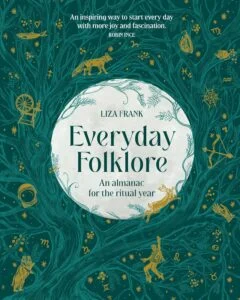
This resurgence of interest is eloquently championed by author Liza Frank, whose transformative personal journey into the heart of ritual year folklore culminated in her insightful new book, Everyday Folklore: An Almanac for the Ritual Year. Having immersed herself in these practices daily from St Distaff’s Day 2020 to Twelfth Night 2021, Frank argues passionately that folklore is not an esoteric pursuit for a select few, but a vital, accessible conduit to a richer, more engaged existence for everyone. For those who typically observe folklore from the sidelines, Frank issues a compelling call to action: consciously incorporate a little bit of folklore into your life. As she puts it, "feel the folklore fear and do it anyway."
The Genesis of a Folkloric Life: A Personal Chronology
Liza Frank’s extensive engagement with the ritual year was no academic exercise but a deeply personal, year-long immersion that formed the bedrock of Everyday Folklore. From the turning of the calendar pages between St Distaff’s Day on January 7th, 2020, and Twelfth Night on January 6th, 2021, Frank meticulously documented and participated in the myriad customs that mark the passage of time. This intensive period, which she dubbed "The Everyday Lore Project," was a deliberate attempt to move beyond passive observation and actively integrate folkloric practices into her contemporary life.
Her methodology involved a daily commitment to understanding and enacting traditions tied to specific dates, months, or seasons. This wasn’t about rigid adherence to ancient beliefs, but rather an experimental exploration of how these practices resonated in a modern context. It encompassed everything from engaging with local seasonal festivals to recreating historical recipes, observing natural phenomena, and even performing seemingly outlandish rituals, like conducting an exorcism at midnight by spitting black beans and walking backwards, as practiced during the Roman Lemuralia.
This chronological commitment allowed Frank to experience firsthand the profound impact of living a "folklorishly" life. It provided a structured framework for appreciating the cyclical nature of the year, fostering a deeper connection to her surroundings, and discovering unexpected sources of joy and meaning. The project evolved from a personal challenge into a practical guide, demonstrating that anyone can tap into this rich heritage, regardless of their prior knowledge or perceived inclination. Her experiences underscore that folklore is a living, breathing entity, constantly adapting and offering relevant insights into human existence.
Five Compelling Reasons to Engage: Supporting the Folkloric Argument
Frank’s journey and the subsequent publication of Everyday Folklore are predicated on a strong belief in the transformative power of active folkloric engagement. She distills her observations into five key benefits, each offering a compelling reason to step off the sidelines and into the vibrant world of tradition.
1. Reclaiming Time and Cultivating Presence
In an era defined by relentless acceleration, the first and perhaps most profound benefit of engaging with folklore is its capacity to slow down the relentless march of time. While no charm can literally halt the clock, the deliberate observance of the ritual year acts as a powerful antidote to modern life’s frantic pace. We often lament how days bleed into weeks, and weeks into months, only to find the year has vanished, leaving us with a vague sense of unfulfilled time.
Folklore, by its very nature, demands presence. When you participate in practices intrinsically tied to a specific date, month, or season, you are compelled to pause, observe, and connect. Wassailing apple trees in January, a tradition meant to ensure a bountiful harvest, isn’t just a quaint custom; it’s an act of hopeful anticipation that grounds you in the agricultural cycle and invests you in the future. Counting fogs in August to predict winter snowfalls transforms a simple weather pattern into a playful prognostication, fostering a mindful engagement with the environment.
Beyond specific rituals, the practice of lunar plantings, or simply observing the subtle, ongoing transformation of hedgerows from barren branches to budding life, then to fecund fullness, and back to stark simplicity, compels a deeper appreciation for the year’s passage. This conscious observation cultivates a heightened awareness of the world around us, slowing our internal rhythm and opening us to a sense of wonder and possibility often lost in the digital blur. It’s a profound way to reclaim agency over our experience of time, making each season, each month, feel distinct and significant.
2. An Abundance of Celebration and Joy
Life is peppered with birthdays, anniversaries, and established holidays, but the ritual year offers an almost endless capacity for marking the passage of time with joyous excuses for celebration. Folklore expands our celebratory calendar exponentially, providing opportunities to fete virtually anything imaginable.
Beyond the familiar, the ritual year unveils a trove of quirky and meaningful observances. Do you have a fondness for trees? There are multiple days dedicated to their veneration. A peculiar fascination with belly buttons? Entire festivals in June and July are devoted to "innies and outies." Enthusiasts of specific spirits can mark their calendars for Gin Day (second Saturday of June), Rum Day (July 31st), or Wine Day (August 19th). Pop culture devotees aren’t left out, with dedicated days for Back to the Future, Star Trek, and the ubiquitous Star Wars Day ("May the Fourth be with you").
Some celebrations even revolve around the absence of an event, such as the relief and merriment that ensues when it doesn’t rain on St Swithin’s Day, breaking the predicted 40-day downpour. Then there are the personal triumphs: the giddiness of completing a specific folkloric task, like counting seven stars on seven consecutive nights to have a wish granted. Folklore injects an effervescent quality into daily life, transforming mundane moments into opportunities for connection, playfulness, and shared festivity, reminding us that joy can be found in the most unexpected corners of tradition.
3. A Remedy for Modern Ennui and Boredom
In an age where entertainment is perpetually at our fingertips, the specter of boredom and ennui can still loom large. Folklore offers a dynamic, engaging antidote, providing a wealth of activities that stimulate creativity, encourage physical activity, and connect us to our local heritage.
Consider the humble leftover Christmas cake. Rather than discarding it, one could emulate the spirited residents of Manitou Springs, Colorado, by staging a Great Fruitcake Toss in January – a wonderfully eccentric way to extend holiday cheer and banish post-festive doldrums. Culinary adventurers can challenge themselves to recreate historical ritual year recipes, from "Heg Peg Dumps" to "Harvest shot" or "knotting-sowins." Even a simple batch of scones for National Cream Tea Day (June 26th) becomes an act of folkloric engagement, though Frank’s humorous anecdote about the pitfalls of plum duffs (especially with vegetarian suet and a favorite tea towel) serves as a cautionary tale.
For those with a flair for the dramatic, folklore offers countless opportunities for costume and performance. Imagine embodying the King for a weekend at the Porthcawl Elvis Festival in September, or donning a badger costume to celebrate St Piran’s Day in March. Adrenaline junkies can find their thrill in events like the Cooper’s Hill Cheese-Rolling in May, where participants chase a wheel of cheese down a perilously steep incline, or the Dorking Wife Carrying Race in March, an obstacle course requiring strength and teamwork. Frank’s "year of living folklorishly" revealed that there is always something to do, even if it’s as unusual as a midnight exorcism with black beans. These activities combat boredom by inviting participation, creativity, and a healthy dose of the absurd.
4. Unearthing Curiosities and Expanding Knowledge
Beyond personal engagement, delving into folklore is an excellent way to accumulate a fascinating trove of facts and stories, making one a formidable opponent in any pub quiz. Folklore is a repository of peculiar, often surprising, information that illuminates cultural beliefs and human ingenuity.
Did you know, for instance, that some research suggests spiders exhibit a preference for classical music over techno? This intriguing tidbit not only offers a quirky insight into arachnid behavior but also, in a folkloric context, carries a warning: an increase in indoor spiders around March is said to augur rain, perhaps prompting one to keep an umbrella handy.
Another captivating example comes from the world of space travel: since the early 1970s, Baikonur cosmonauts have traditionally watched The White Sun of the Desert, a 1970 Russian Civil War comedy, the day before their missions for good luck. This isn’t just a quirky superstition; it’s a deeply ingrained ritual that speaks to the human need for comfort and control in high-stakes environments.
Then there are bats, creatures often maligned as messengers of the Devil in folklore. Yet, a deeper dive reveals their crucial ecological role as primary pollinators of agave plants. Without these winged wonders, the world might swap its Margaritas for Manhattans, highlighting how folklore often intertwines with practical, ecological knowledge. Venturing down the folklore rabbit hole inevitably unearths countless such nuggets, enriching our understanding of the world, its creatures, and the diverse tapestry of human beliefs.
5. Forging Personal Narratives and Shared Tales
Ultimately, one of the most enduring rewards of embracing folklore is the acquisition of unique tales to tell. Some folklore is undeniably bonkers – a quality that, far from invalidating beliefs, often makes it all the more compelling. As Frank playfully notes, anyone stalking a Leicestershire churchyard on June 1st to see if St Wistan’s hair sprouts amongst the headstones is "my kind of people."
The more deeply one engages with folklore, the more unusual personal stories one accumulates. These aren’t just anecdotes; they are personal encounters with the mystical, the quirky, and the profound. Imagine recounting the time you thought you caught a whiff of demonic sulphur while gathering nuts in September, or swearing that a cabbage leaf miraculously reduced a boil on your neck. Perhaps you even had a vision of your true love after slipping a sprig of rosemary and a crooked sixpence under your pillow on St Luke’s Eve (though, as Frank wryly observes about her own vision of Mark Hamill, he hasn’t called yet).
These experiences become threads in the fabric of your own life story, unique narratives that connect you to ancient practices and offer endless conversation starters. They foster a sense of belonging, both to a community that shares these traditions and to the broader human experience of seeking meaning in the world. A word to the wise, however: while discovering no vampire activity among your gardening implements might be an impressive personal triumph, some anecdotes are best saved for a second date. These tales are not merely entertainment; they are the living proof of a life consciously lived, informed by curiosity and a willingness to explore the rich, often strange, heritage of humanity.
The Academic and Societal Resonance of Folklore: Expert Perspectives
While Frank’s approach is rooted in personal engagement, her work resonates deeply with academic understandings of folklore’s enduring significance. Folklorists, anthropologists, and cultural historians recognize folklore not as mere superstition, but as a vital lens through which to understand human societies, their values, and their adaptations to the world.
From an academic standpoint, folklore provides invaluable "data" on human behavior, belief systems, and cultural evolution. As G. E. Warshaver noted in Western Folklore (1991), folklore, even in its postmodern manifestations, reflects fundamental aspects of human experience. It’s not just about ancient rites; it encompasses contemporary urban legends, internet memes, and the informal rituals of workplaces or subcultures. This broad scope demonstrates folklore’s dynamic nature, constantly evolving while retaining core functions.
Societally, engaging with folklore offers profound benefits. It acts as a powerful adhesive for community cohesion, fostering shared identity and collective memory. Participating in local festivals, seasonal customs, or storytelling circles strengthens social bonds and transmits cultural knowledge across generations. In an increasingly globalized and homogenized world, folklore provides a crucial anchor to local distinctiveness and heritage.
Moreover, academic research often highlights the psychological benefits of ritual. Whether it’s the comfort derived from traditional routines or the sense of control offered by symbolic actions, rituals can reduce anxiety, enhance resilience, and provide a framework for navigating life’s uncertainties. The cosmonauts’ ritual of watching The White Sun of the Desert before launch, as reported by the BBC, is a perfect illustration of this human need for ritual in high-stress situations. Far from being "flim flam," these practices address fundamental human needs for meaning, connection, and a sense of order.
The Broader Implications of a Folkloric Life: A Call for Cultural Reconnection
The implications of consciously integrating folklore into our lives extend far beyond individual amusement or intellectual curiosity. By embracing the rituals, traditions, and customs that surround us, we contribute to a larger cultural tapestry, ensuring its vibrancy and continuity for future generations.
Firstly, a folkloric life encourages a deeper connection to nature and the cyclical rhythms of the earth. In an increasingly urbanized world, observing seasonal customs—from wassailing to counting fogs or simply appreciating the hedgerow’s transformation—re-establishes a vital link to our ecological surroundings. This fosters environmental awareness and a more grounded existence.
Secondly, it promotes cultural preservation. Every time an individual participates in a traditional craft, tells a local legend, or bakes a ritualistic food, they become a living conduit for heritage. In an era where many traditions are at risk of fading, individual engagement is a powerful act of safeguarding cultural memory and diversity.
Thirdly, it cultivates empathy and understanding. Exploring the folklore of different cultures or even different regions within one’s own country can broaden perspectives, revealing shared human concerns and diverse approaches to life’s fundamental questions. The varied New Year’s Days celebrated across different traditions, for example, highlight the universal human desire for fresh starts, expressed in a multitude of ways.
In summary, Liza Frank’s Everyday Folklore is more than just an almanac; it’s a manifesto for a more engaged, mindful, and joyful way of living. It invites us to see folklore not as an archaic curiosity, but as an ever-present, dynamic force that offers profound benefits for personal well-being, community cohesion, and cultural resilience.
As the New Year approaches, perhaps the most meaningful resolution one can make is to consciously weave a bit of folklore into the fabric of daily life. Be curious, challenge assumptions, try new things, and perhaps even forge new traditions. While January 19th is often cited as the day resolutions are most likely to falter, the beauty of the ritual year is its multitude of fresh starts. With countless New Year’s Days scattered throughout the calendar, there will always be ample opportunity for a do-over, ensuring that the journey into a folkloric life is always open to renewal and endless discovery. Everyday Folklore: An Almanac for the Ritual Year stands as an indispensable guide for anyone ready to take that first step.