
The Ghost Town of Windows: Why 1.4 Billion Users Resulted in Zero Sales for One Indie Developer
Main Facts: The Statistical Impossibility of the Microsoft Store
In the digital age of video game distribution, the "reach" of a platform is often cited as its most valuable asset. For developers, the logic is simple: the more eyes on a storefront, the higher the probability of a sale. However, a revelation shared by independent developer Martin Nerurkar, founder of Sharkbomb Studios, has highlighted a staggering disconnect between user volume and commercial conversion within the Microsoft ecosystem.
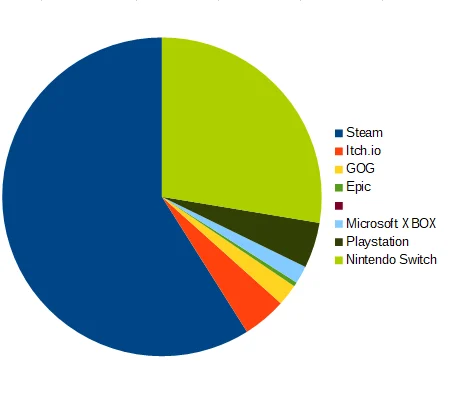
On August 5, 2022, Nerurkar released sales data for his critically acclaimed digital deck-builder, Nowhere Prophet. The data, presented as a revenue breakdown by platform, revealed a healthy distribution across several major storefronts. However, the most striking piece of information was not what was on the chart, but what was missing. Despite being available on the Microsoft Store—a marketplace pre-installed on over 1.4 billion monthly active Windows devices—the game had failed to sell a single copy on that specific platform.
This "zero-sale" phenomenon occurred despite the game moving approximately 20,000 units across other platforms. The discrepancy raises existential questions about the viability of the Microsoft Store as a retail hub for independent creators and exposes a profound failure in Microsoft’s attempt to challenge the dominance of Steam and the Epic Games Store.
Chronology: From Launch to the "Zero Sale" Revelation
The journey of Nowhere Prophet serves as a microcosm for the broader struggles of the PC gaming retail landscape over the last several years.
2019: The Initial Launch
Nowhere Prophet launched in mid-2019 to positive reviews, praised for its unique "dustpunk" aesthetic and deep tactical gameplay. At launch, the focus was primarily on Steam, the de facto home for PC indie gaming. Like many developers, Nerurkar sought to diversify the game’s availability, eventually bringing the title to consoles and the Microsoft Store to capture the widest possible audience.
2020–2021: The Windows 10/11 Expansion
During this period, Microsoft aggressively marketed its 1.4 billion Monthly Active Users (MAU) figure. The company underwent several internal pivots, rebranding the "Windows Store" to the "Microsoft Store" and attempting to streamline the user interface. For a developer like Nerurkar, listing a game on this store seemed like a low-risk, high-reward strategy. If even 0.001% of that 1.4 billion-user base discovered the game, it would represent a massive windfall.
August 5, 2022: The Data Disclosure
Three years after its initial release, Nerurkar shared his findings on social media. The chart indicated that while Steam and consoles provided the lion’s share of revenue, the Microsoft Store remained a total vacuum. Nerurkar’s tweet was blunt: "And if you’re wondering why the Microsoft Store isn’t on this graph, that’s because we haven’t made a single sale there in this entire time."
The revelation went viral within the developer community, prompting a wider discussion on whether the Microsoft Store is a viable marketplace or merely a technical requirement for Game Pass integration.
Supporting Data: The 1.4 Billion Disconnect
To understand the gravity of "zero sales," one must look at the sheer scale of the environment in which Nowhere Prophet was hosted.
The Footfall Comparison
According to Microsoft’s official "By the Numbers" reporting, Windows 10 and 11 power more than 1.4 billion devices. By comparison, Steam—the market leader—boasts approximately 120 million to 130 million monthly active users.
Statistically, the Microsoft Store has a "footfall" nearly ten times larger than Steam. Yet, for Nowhere Prophet, the conversion rate on the Microsoft Store was 0%, while on Steam, it was high enough to sustain the studio and justify a multi-year development cycle.
The Revenue Split
While Nerurkar did not provide exact dollar amounts for every platform, he estimated total sales at 20,000 copies. In the indie world, 20,000 units for a niche deck-builder is considered a solid success. The fact that not a single one of those 20,000 buyers chose the Microsoft Store—even by accident—suggests that the platform is not just unpopular, but effectively invisible to the core gaming demographic.
The Discovery Problem
Industry analysts point to "discovery algorithms" as the primary culprit. On Steam, games are surfaced to users based on tags, play history, and "New and Trending" lists. On the Microsoft Store, Nowhere Prophet was buried under a deluge of utility apps (like calculators and PDF readers) and high-budget AAA titles. The store’s inability to categorize and promote mid-tier indie titles effectively renders them unfindable without a direct link.

Official Responses and Industry Context
While Microsoft did not issue a specific response to Nerurkar’s tweet, the company’s actions around that time suggested an internal acknowledgment of the store’s failings.
Microsoft’s Strategic Pivot
In late 2021 and throughout 2022, Microsoft began a massive overhaul of its PC gaming strategy. They moved away from forcing developers to use the restrictive Universal Windows Platform (UWP) format, allowing standard .exe (Win32) games to be listed. This was an admission that the previous technical hurdles had alienated developers.
Furthermore, Microsoft’s messaging shifted heavily toward Xbox Game Pass for PC. The company essentially stopped marketing the Microsoft Store as a place to buy games, instead positioning it as a place to subscribe to them.
Developer Sentiment
Nicholas Lovell, founder of Gamesbrief and a veteran analyst of the games business, noted that the Microsoft Store suffers from a "split personality." Lovell argues that the store "can’t work out whether it is a retail store for $59.99 games or an app store offering safe, free, quality-of-life apps for Windows."
Other indie developers echoed Nerurkar’s experience. The consensus in the developer community is that unless a game is included in the Game Pass subscription service, listing it on the Microsoft Store provides almost no organic discovery. The store is viewed not as a marketplace, but as a "backend repository" for Game Pass downloads.
Implications: The Future of Digital Distribution
The "Zero Sales" incident involving Nowhere Prophet carries significant implications for the future of the PC gaming market and Microsoft’s role within it.
1. The "Game Pass or Nothing" Dilemma
For indie developers, the Microsoft ecosystem is increasingly becoming an "all or nothing" proposition. If a developer secures a deal to be on Game Pass, they receive an upfront payment and exposure to millions of subscribers. However, if they are not on Game Pass, the Microsoft Store offers virtually no path to success. This creates a dangerous dependency where Microsoft becomes a gatekeeper rather than a facilitator of a free market.
2. The Persistence of the Steam Monopoly
Despite the massive resources of Microsoft and the aggressive "free game" tactics of the Epic Games Store, Steam’s position remains unchallenged. Steam has succeeded by building a social ecosystem—reviews, forums, friend lists, and workshops—that the Microsoft Store lacks. Gamers don’t just go to Steam to buy a game; they go there to "live" their gaming life. Microsoft’s failure to build a similar community around its store means that even with 1.4 billion users, it cannot compete for the "mindshare" of the actual gamer.
3. The Utility vs. Entertainment Conflict
The Microsoft Store continues to struggle with its identity. On a smartphone, the App Store is the primary way users interact with their device. On a PC, the "Store" is often seen as an annoyance or a source of bloatware. Until Microsoft can decouple the "utility" aspect of Windows (updates, drivers, calculators) from the "entertainment" aspect (gaming), the storefront will likely remain a ghost town for premium software sales.
4. The Technical Debt of the User Experience
Historically, the Microsoft Store has been plagued by technical issues, including failed downloads, cryptic error codes, and difficulties in accessing game files. While many of these issues were addressed in the Windows 11 update, the "brand damage" among PC enthusiasts is deep. Nerurkar’s data suggests that even if the store is now technically functional, the consumer trust required to facilitate a purchase simply isn’t there.
Conclusion
The case of Nowhere Prophet is a sobering reminder that "potential reach" is a vanity metric if it is not backed by effective discovery and a clear brand identity. Microsoft sits on one of the largest captive audiences in the history of computing, yet it has failed to convert that audience into a meaningful customer base for independent creators.
For developers like Martin Nerurkar, the lesson is clear: diversification is important, but not all platforms are created equal. As long as the Microsoft Store remains a confused hybrid of a utility closet and a subscription backend, it will continue to be a place where even 1.4 billion users can result in zero sales. The "opportunity" Microsoft is letting pass by isn’t just about the revenue from a single indie game—it’s the loss of an entire retail ecosystem that they are uniquely positioned to lead, yet consistently fail to navigate.


Leave a Comment