The Jedi Paradox: How Star Wars Galaxies’ Most Anticipated Feature Became Its Undoing
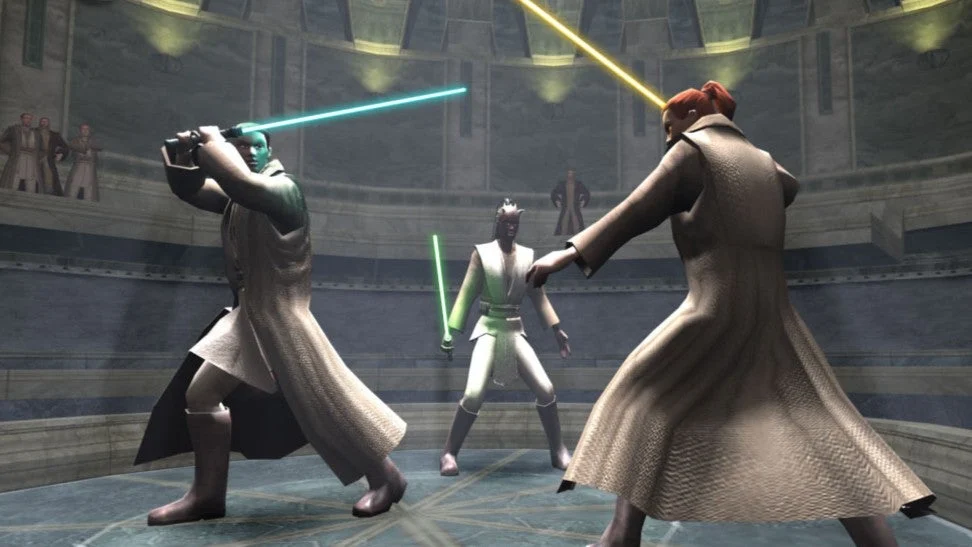
The allure of wielding a lightsaber and commanding the Force is an almost universal fantasy, deeply ingrained in the collective consciousness thanks to decades of Star Wars storytelling. For developers of video games set in this beloved galaxy, the inclusion of playable Jedi characters is not merely an option, but an imperative. Yet, as the tale of Star Wars Galaxies illustrates, this seemingly straightforward aspiration proved to be a monumental challenge, fraught with design dilemmas that ultimately, in the words of former director Raph Koster, "fatally sabotaged" the ambitious MMO.
Launched in 2003 by Sony Online Entertainment (SOE), Star Wars Galaxies aimed to deliver an unparalleled open-world Star Wars experience. Its sprawling universe, set in the turbulent era between A New Hope and The Empire Strikes Back, presented a unique conundrum: a galaxy desperately trying to hunt down the last vestiges of the Jedi Order, while simultaneously promising players the ultimate Star Wars fantasy – becoming a Jedi. This inherent contradiction, coupled with the immense pressure to balance such an iconic and powerful class within a complex MMO ecosystem, led to a series of design decisions that, in retrospect, proved to be the game’s Achilles’ heel.
The Unattainable Dream: The Jedi Conundrum
From the outset, the development team recognized the immense appeal and inherent difficulty of incorporating Jedi into Star Wars Galaxies. Raph Koster, who served as director on the project, recently shared his insights in an interview with Noclip, detailing the arduous journey of conceptualizing and implementing the Jedi class. "It’s too powerful a fantasy not to serve it in some way," Koster stated, reflecting on his own childhood immersion in the Star Wars universe. "We knew, from the MMO background, that this was a massive problem."
The core of the problem lay in the established lore of the period. As Koster explained, the galaxy was in a state of extreme paranoia regarding Force-users. The Empire was actively hunting them, and their numbers were believed to be dwindling. "The entire galaxy is turning itself upside down to hunt down just one Jedi," he elaborated. This narrative constraint meant that Jedi were meant to be exceptionally rare, almost mythical figures. Yet, for a commercial MMO, the promise of becoming such a powerful and iconic character was a significant selling point. "It’s meant to be uber-powerful. There aren’t supposed to be any," Koster articulated the paradoxical situation.
The developers also grappled with the expectation that players would have access to this coveted class. "It’s a contractual obligation to set it there," Koster mentioned, referring to the game’s placement within the Star Wars timeline. This meant they couldn’t simply draw upon the expanded universe, which at times depicted larger, hidden Jedi communities. They had to reconcile the scarcity of Jedi in the established narrative with the player’s desire to embody one.
Roads Not Taken: The Stealth Jedi and the Peril of Permadeath
Faced with this formidable challenge, SOE explored several unconventional avenues to introduce Jedi without disrupting the game’s balance or trivializing the experience of other classes. One particularly fascinating, albeit ultimately abandoned, concept involved a "social stealth" approach, drawing inspiration from characters like Obi-Wan Kenobi in his Tatooine exile.
"You basically have two choices there," Koster outlined. "One is to not make them super powerful. Make Jedi be on par with Han Solo, which is not really fair or accurate to the movies, right? It just wasn’t really how they’re portrayed." The alternative, he continued, was to embrace their immense power but introduce significant trade-offs.
This led to the development of an ambitious concept that Koster himself admitted he would have "absolutely loved to see in the game." The idea was to create a second character slot specifically for Jedi, which would be subject to permadeath. This "Ironman mode" for Jedi would force players into a constant state of vigilance, actively avoiding detection by the Empire. As players grew more powerful, the stakes would escalate dramatically, with bounty hunters and eventually even Darth Vader himself hunting them down. "Once Darth Vader came for you, you were just going to die," Koster recalled. "It was like, you had to play the game of trying to stay hidden and not attract the attention of the Empire."
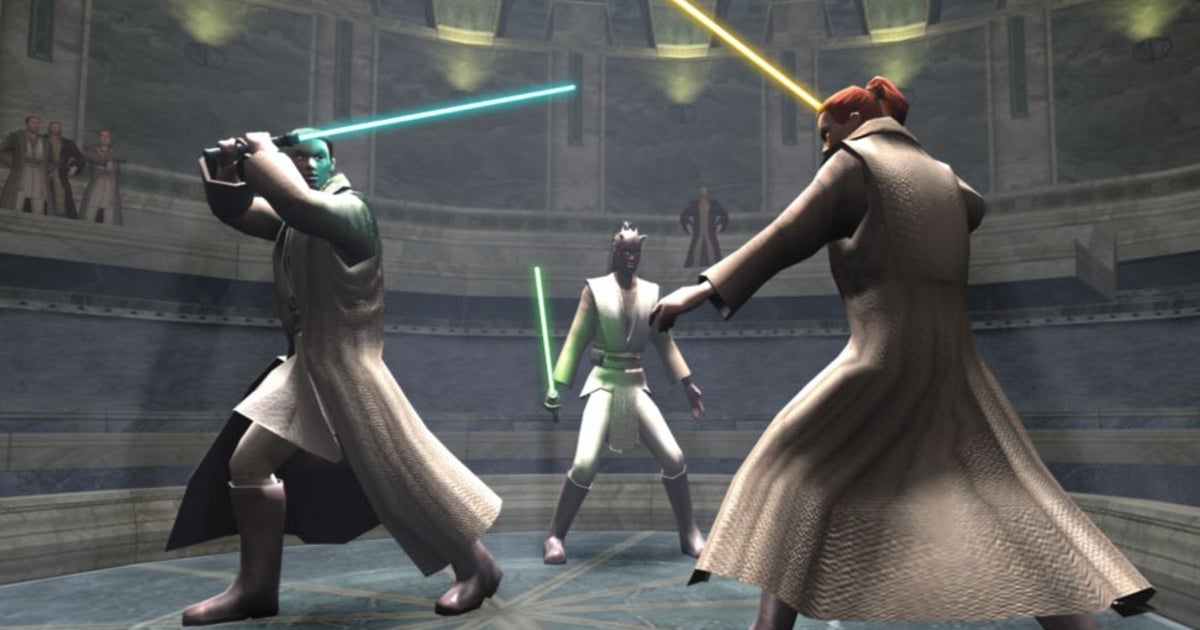
This "stealth game" approach, where players would manage a "visibility meter" and carefully use their Jedi powers, was designed to incentivize a cautious playstyle. The core idea was to see "how long can I keep my guy alive" by remaining undetected. However, this concept met with significant resistance from both the development team and the player base. The prospect of permadeath, especially in an era where internet connectivity was far less stable, was a major deterrent. "People really didn’t want permadeath," Koster explained. "They’re like, what happens if I get a little bit of internet lag? Which was much worse of a problem back then than it is today."
In an effort to mitigate this fear, the team considered offering a morbid but potentially compelling reward: the ghosts of slain Jedi characters could be conjured as trophies by other characters, serving as bragging rights for those who had repeatedly braved the perils of Jedi existence. "We kept trying to design things like, it’s OK if you die, you keep your Jedi slot, but you get a blue glowie, so then you can conjure them up, even on your other character, your main one," Koster said. "You can conjure up an assortment of them… It’s sort of like bragging rights. Check me out, I’ve done it eight times." Ultimately, the concept was deemed "too weird an idea" and faced too much pushback, consigning the "digital charnelhouses full of grinning Anakin holograms" to the realm of what-ifs.
The "Hidden Path": An Invisible Labyrinth of Progression
With the permadeath Jedi concept shelved, SOE reverted to the idea of a "hidden path" for unlocking Jedi abilities. The initial vision was a complex, multi-faceted progression system that would only reveal itself to the most dedicated and well-rounded players. This "personality test," as Koster described it, involved players completing hundreds of diverse activities, "ranging from everything like dancing a jig, to climbing the top of a tall mountain, to crafting a sandwich."
The rationale was that true Jedi training required a broad understanding and mastery of the game’s mechanics and the Star Wars universe itself. "If you were somebody who only did combat, you probably wouldn’t hit all of these activities," Koster explained. "Only extremely well-rounded players would hit all of the different categories." Each player would receive a unique, randomized checklist of these activities, kept invisible even to most developers to prevent leaks and maintain the element of mystery.
However, as the game’s launch loomed, the sheer complexity of implementing such a system became apparent. "We found that we didn’t have the time and the database capability to track all of those different actions," Koster admitted. The team was under immense pressure, with the game built in less than three years and facing a tight development schedule.
The "Monumental Mistake": Skill-Based Unlocks and Marketing’s Demands
A solution was proposed by the game’s producer and lead server programmer: simplify the unlock criteria by tying it to the game’s existing skill system. Players could already dabble in a vast array of skills, and tracking these was a manageable task. "It was towards the end of a long day," Koster recounted. "I was exhausted. They were exhausted. We were all working 12 to 14 hour days, including weekends, for nine continuous months at that point. And I signed off on it. And it was a monumental mistake."
The fundamental flaw in this approach was that it made the Jedi path far too transparent. Instead of an obscure and elusive quest, it became a solvable puzzle. The skill-based system was "very easy to reverse engineer… from a very small amount of hints," Koster stated. While many players still struggled to decipher the clues, it was largely because they were playing the game as intended – specializing in roles that suited their playstyle, rather than attempting to master every available skill.
This is where the friction between development and marketing became acute. The marketing department, eager to capitalize on the Jedi fantasy and boost sales, began pressuring the development team for a clear timeline of when the first Jedi would emerge. "When will we see the first Jedi? Because we wanna goose sales by Christmas," Koster recalled the marketing team’s demands.

The developers realized that with players naturally specializing, the first Jedi unlock could take as long as a decade. This was unacceptable to sales. As a result, the team resorted to introducing more concrete in-game hints, subtly nudging players towards specific skills. This, however, backfired spectacularly. Players quickly deduced that all the hints pointed towards skills, and the logical conclusion was that mastering every skill was the fastest route to becoming a Jedi.
The Fallout: Player Dissatisfaction and Commercial Decline
The consequence of this forced specialization was widespread player dissatisfaction. Koster described the situation as "chaos." Players who enjoyed raising pets were suddenly forced to hunt and cook them. Those who preferred crafting and cozy gameplay found themselves compelled to venture into dangerous combat zones. Combat-focused players were condemned to "dance in a cantina."
"All the players who enjoyed raising pets suddenly found themselves having to kill them and cook them. And all the players who enjoyed cooking and hanging out and playing cozy gameplay in a nice safe space found themselves having to run out and fight giant monsters. And all the people who enjoyed fighting giant monsters found themselves condemned to go dance in a cantina."
According to Koster, this "monumental mistake" had a profound impact on Star Wars Galaxies‘ commercial performance. "The lure of being a Jedi was so powerful that everybody wanted it. But the quality of your day-to-day experience plummeted. And as a result, we started to see that the audience that had been growing stopped growing. And it wasn’t because of less people joining the game. It was because they were lasting less time because they were being told by the game’s systems to play the game in ways they didn’t like."
Legacy and Enduring Influence
Star Wars Galaxies eventually met its official end in 2011, but its legacy endures, particularly through its passionate fan community who have kept private servers alive and continue to develop content. The story of its Jedi problem, as recounted by Raph Koster, serves as a compelling case study in the complex art of game design, particularly when dealing with iconic intellectual properties and the inherent tensions between player fantasy, narrative integrity, and commercial viability.
The Noclip interview offers a wealth of further insights into the intricacies of running MMOs and understanding human behavior. While the dream of a stealth-focused Jedi in Star Wars Galaxies may remain a tantalizing "road not taken," the lessons learned from its challenging development continue to resonate within the industry. The enduring appeal of the Jedi fantasy, and the developers’ struggle to authentically and harmoniously integrate it into the fabric of an MMO, remains a powerful testament to the enduring magic of the Force, and the persistent challenges of bringing it to life in interactive entertainment. The hope lingers that perhaps, one day, game developers will heed the call and explore the full potential of the "Jedi Incognito X Force Banquo" approach, offering players the nuanced and thrilling experience of a truly hidden master.