
From Musical Sandboxes to Intergalactic Stewardship: Really Interactive Unveils ‘Janet’s Planets’
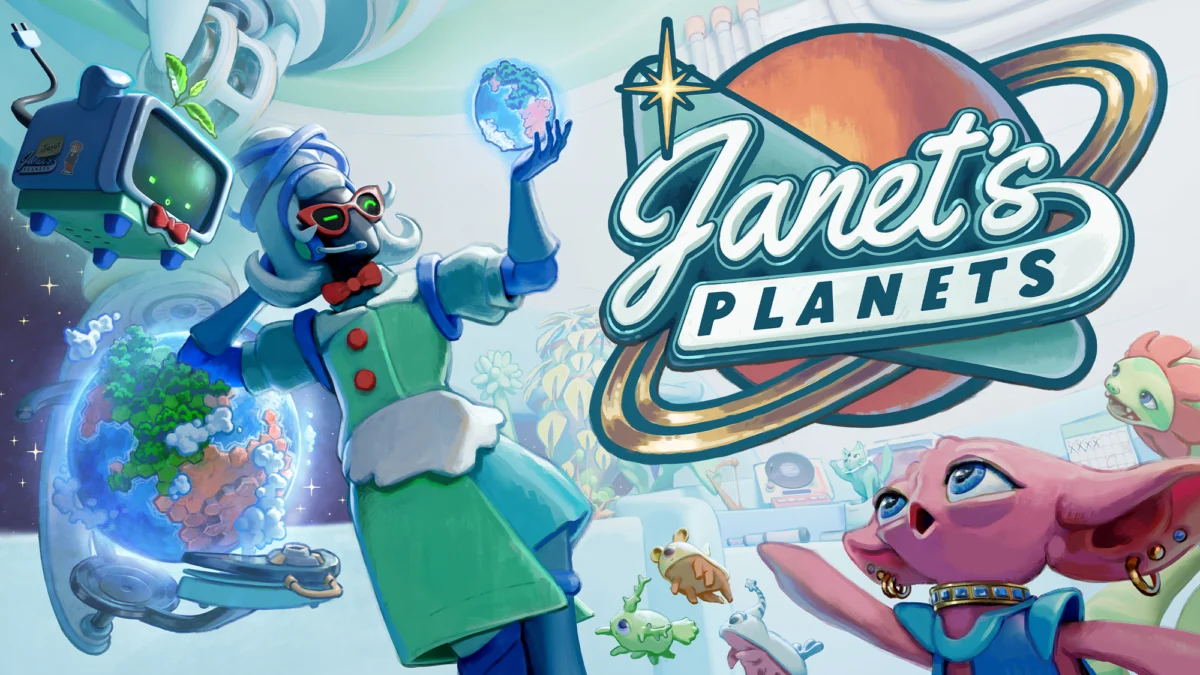
The virtual reality (VR) landscape is undergoing a significant shift. As hardware capabilities evolve with the introduction of high-fidelity headsets like the Meta Quest 3, the software library is diversifying beyond the traditional boundaries of rhythm games and first-person shooters. Leading this charge into new creative territories is Really Interactive, the Stockholm-based indie studio renowned for the critically acclaimed musical sandbox Virtuoso. During the recent "Creature Feature & Friends Showcase," the developer officially pulled back the curtain on its next ambitious project: Janet’s Planets.
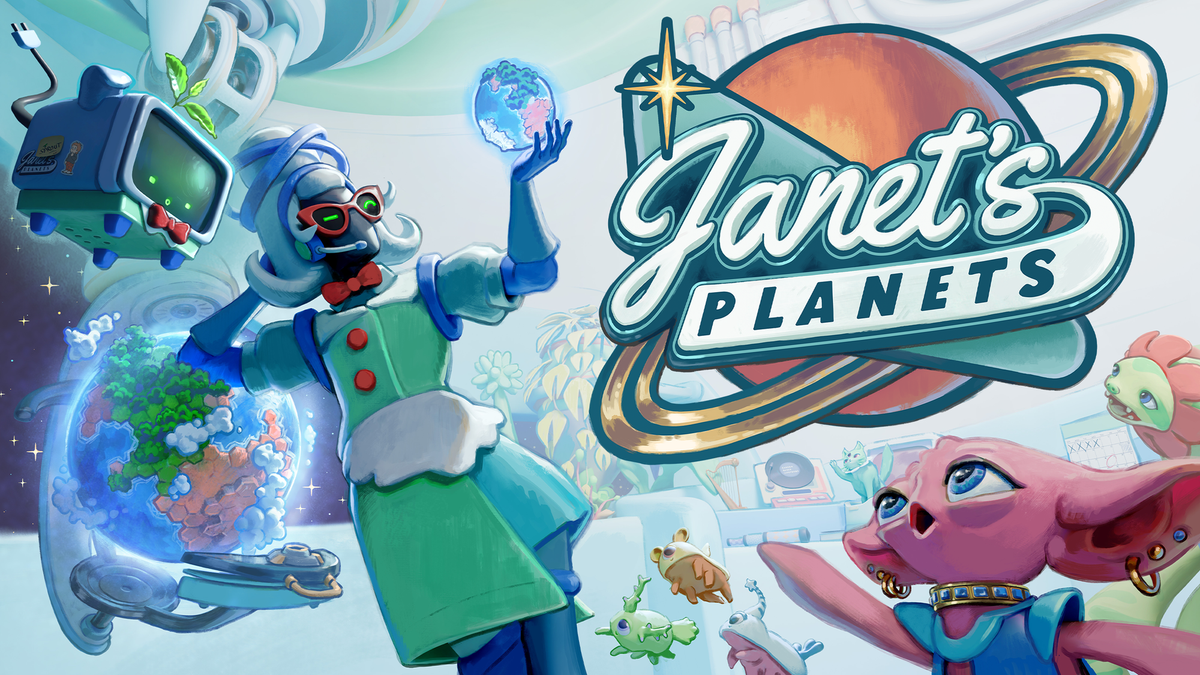
A narrative-driven, intergalactic terraforming adventure, Janet’s Planets promises to combine the studio’s signature tactile interactivity with a sprawling sci-fi odyssey. Designed specifically for the Meta Quest 3 and SteamVR, the title represents a bold step forward for a studio that has built its reputation on pushing the boundaries of what users can do and create within a three-dimensional space.
Main Facts: A New Frontier in VR Terraforming
Janet’s Planets is positioned as a "terraforming space adventure," a genre that has seen sporadic but successful entries in the VR space. However, Really Interactive aims to distinguish its title through a blend of narrative depth, complex ecological simulation, and a unique sense of scale.
Core Gameplay and Narrative
At its heart, Janet’s Planets casts the player in the role of a cosmic steward. The primary objective is to revitalize dying planets, transforming barren, hostile environments into lush, thriving ecosystems capable of supporting new life. This isn’t merely a mechanical exercise in resource management; the game features a central protagonist, Janet, and a charming sci-fi narrative that unfolds over an estimated six-hour playtime.
Players will encounter a variety of "strange aliens," each with distinct biological needs and cultural quirks. The gameplay loop involves learning the specific requirements of these species—ranging from atmospheric composition to temperature and flora—and tailoring entire worlds to ensure their survival.
Key Features and Technical Innovations
The announcement highlighted several standout features designed to leverage the immersive power of VR:
- "Sweetview" Technology: Perhaps the most technically intriguing feature is the "Sweetview" mechanic. This allows players to transition instantly from a "God-view" perspective—where they oversee the entire planet from orbit—to the planet’s surface. This seamless shift in scale is intended to provide a sense of presence and immediate feedback on the terraforming efforts.
- Sandbox Mode: For players who prefer unconstrained creativity over the structured narrative, a dedicated Sandbox mode allows for experimentation with the game’s planetary physics and biological systems.
- Daily Challenges and Global Leaderboards: To ensure longevity beyond the six-hour campaign, the game includes competitive elements where players can test their terraforming efficiency against a global community.
- Platform Availability: The game is confirmed for the Meta Quest 3, utilizing the headset’s improved processing power, as well as SteamVR for PC-tethered enthusiasts.
Chronology: The Evolution of Really Interactive
To understand the DNA of Janet’s Planets, one must look at the history of Really Interactive. The Stockholm studio has consistently prioritized "creative empowerment" in its design philosophy.
2019–2020: The Genesis with ‘Toran’
The studio first gained attention with Toran, a short but visually arresting sci-fi puzzle game. Though modest in scope, Toran established the studio’s aesthetic: clean, futuristic environments and a focus on tactile, physical puzzles. It served as a proof of concept for how players could interact with complex alien machinery in VR.
2022: The Success of ‘Virtuoso’
The studio’s breakout hit was Virtuoso, a musical sandbox that reimagined instrument creation for the spatial computing era. Virtuoso did away with traditional menus, instead giving players a suite of "Air-instruments" like the Empads and the Oorgan. It was praised for its accessibility and the way it turned the VR play space into a functional recording studio. The success of Virtuoso demonstrated that Really Interactive could handle complex, open-ended systems while keeping the user experience intuitive.
2024–2025: The Development of ‘Janet’s Planets’
Following the post-launch support for Virtuoso, the team shifted focus to a project that would combine the puzzle-solving roots of Toran with the creative freedom of Virtuoso. The "Creature Feature & Friends Showcase" served as the formal introduction of this synthesis. By moving into the "God-sim" and terraforming genre, the studio is applying its expertise in 3D interfaces to a larger, more structured narrative framework.
Supporting Data: The Rise of the VR "God Game"
The announcement of Janet’s Planets comes at a time when the "God Game" and "Cozy Sim" genres are seeing a resurgence in virtual reality. Market data suggests a growing appetite for non-violent, constructive experiences.
The Shift in VR Demographics
According to industry reports from 2023 and early 2024, the "creative and simulation" category in the Meta Quest Store has seen a 25% year-over-year increase in engagement. Titles like Deisim and Little Cities have proven that there is a dedicated audience for city-building and planetary management. Janet’s Planets enters this market with a significantly higher focus on narrative and character interaction than its predecessors.
Technical Specifications and Scale
The choice of the Meta Quest 3 as a lead platform is significant. With the Snapdragon XR2 Gen 2 chipset, the Quest 3 allows for more complex particle effects and larger draw distances—essential components for a game where the player watches a planet’s atmosphere change in real-time. The "six-hour playtime" for the campaign is also a strategic choice; it aligns with the "goldilocks zone" for VR narrative titles, providing enough depth for immersion without causing the "VR fatigue" often associated with 20+ hour marathons.
Official Responses: A Vision for Interactive Storytelling
While specific press junket interviews are still forthcoming following the showcase, Really Interactive has historically been vocal about its design ethos. In previous developer diaries, the team emphasized that "VR is at its best when it lets you touch things that don’t exist."
Regarding Janet’s Planets, the studio’s promotional materials emphasize the "charming" nature of the story. This suggests a tonal shift away from the "grim-dark" sci-fi common in gaming, opting instead for an optimistic, "Solar-punk" adjacent vibe. By focusing on making life rather than destroying it, Really Interactive is positioning the game as a wholesome yet intellectually stimulating experience.
The inclusion of SteamVR support has also been met with praise from the enthusiast community. As many developers shift exclusively to standalone mobile VR, Really Interactive’s commitment to the PCVR ecosystem suggests that Janet’s Planets will feature scalable graphics capable of pushing high-end hardware.
Implications: What This Means for the VR Industry
The announcement of Janet’s Planets carries several broader implications for the VR industry and the indie development scene.
1. The Maturity of the Quest 3 Ecosystem
By targeting the Quest 3, Really Interactive is signaling a move away from the "lowest common denominator" approach of designing for the aging Quest 2. This allows for more sophisticated physics simulations—crucial for a terraforming game where gas clouds, water levels, and vegetation growth must be modeled dynamically.
2. The "Virtuoso" Effect on Interaction Design
We can expect the interaction design in Janet’s Planets to be world-class. Because the developers spent years perfecting how hands interact with virtual objects in Virtuoso, the "Sweetview" and terraforming tools in Janet’s Planets are likely to feel more physical and responsive than standard "point-and-click" VR interfaces. This could set a new standard for how "God Games" are played in VR, moving away from laser-pointer menus toward direct, hand-tracked manipulation of the environment.
3. The Viability of Narrative Indie VR
The commitment to a six-hour, story-driven campaign is a gamble in an era where many indie VR titles lean on "infinite" roguelike loops to save on content costs. If Janet’s Planets succeeds, it will validate the market for mid-length, high-quality narrative experiences, encouraging other indie studios to invest in writers and world-builders rather than just mechanics.
4. Expanding the "Cozy VR" Subgenre
Janet’s Planets fits into the emerging "Cozy VR" trend—games that prioritize relaxation, creativity, and positive reinforcement. In a world of high-stress gaming, the appeal of spending an afternoon gently adjusting the humidity of a distant moon to help a friendly alien species thrive cannot be understated. This expands the VR demographic to include older players and those who are traditionally put off by the high-intensity nature of VR gaming.
Conclusion
Janet’s Planets represents a pivotal moment for Really Interactive. It is a project that seeks to bridge the gap between a creative tool and a narrative game. By leveraging the power of the Meta Quest 3 and the precision of SteamVR, the studio is inviting players to step out of their living rooms and into the role of a galactic gardener.
As the VR industry continues to seek its "killer apps," the success of titles like Janet’s Planets will be measured not just by sales, but by how well they utilize the unique properties of the medium. With its promise of seamless scale transitions, tactile terraforming, and a heartfelt story, Really Interactive’s latest venture is one of the most promising titles on the 2025-2026 VR horizon. For Janet and her planets, the future looks remarkably bright—and green.




Leave a Comment