
From Page to Play: "Marrying Mr. Darcy" Transforms Austen’s Classic into a Strategic Tabletop Romance
FOR IMMEDIATE RELEASE
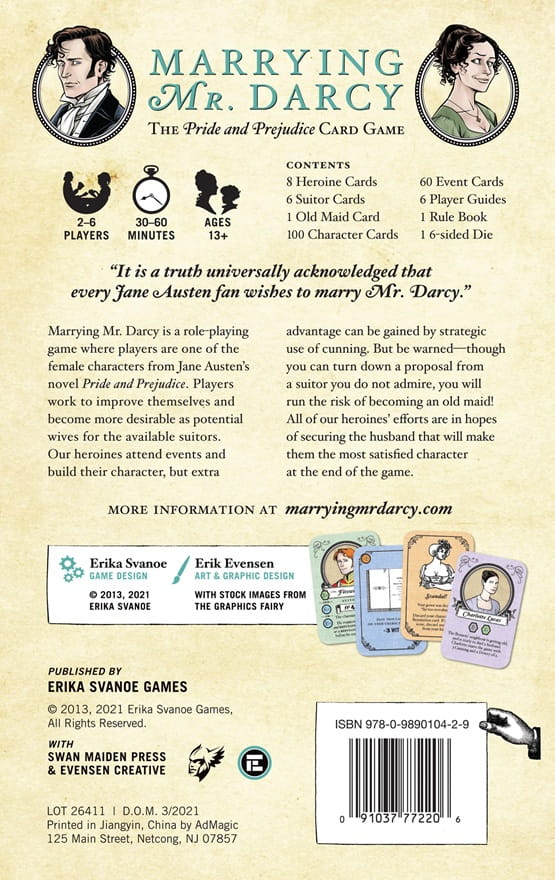
Lawrence, Kansas – [Insert Current Date] – Jane Austen’s seminal novel, Pride and Prejudice, has captivated readers for over two centuries with its sharp wit, intricate social commentary, and timeless romance. Now, its enduring appeal has been expertly translated from the literary page to the tabletop gaming sphere with Marrying Mr. Darcy, a strategic card game that challenges players to navigate the treacherous waters of Regency-era courtship. Designed by Erika Svanoe with art by Erik Evensen, and published independently by Erika Svanoe Games in 2013, this title offers a unique blend of historical immersion, strategic depth, and delightful humor, drawing both ardent Austen fans and casual gamers into its charming world.
The game, which recently garnered enthusiastic praise from local gaming circles, has proven to be an unexpected gem, offering a refreshing departure from more conventional board game themes. Its ability to condense the complex social dynamics and character development of Pride and Prejudice into an engaging, hour-long experience speaks volumes about its clever design and thematic resonance.
The Genesis of a Regency Romance on the Tabletop
The concept of Marrying Mr. Darcy sprung from a desire to bring the beloved world of Jane Austen into an interactive format. While numerous adaptations of Pride and Prejudice exist across film, television, and even modern literature, a dedicated board game that authentically captures the essence of its societal pressures and personal aspirations remained a relatively unexplored frontier. Erika Svanoe, a designer with a clear vision, recognized this gap and embarked on the ambitious task of distilling the novel’s core themes into a playable experience.
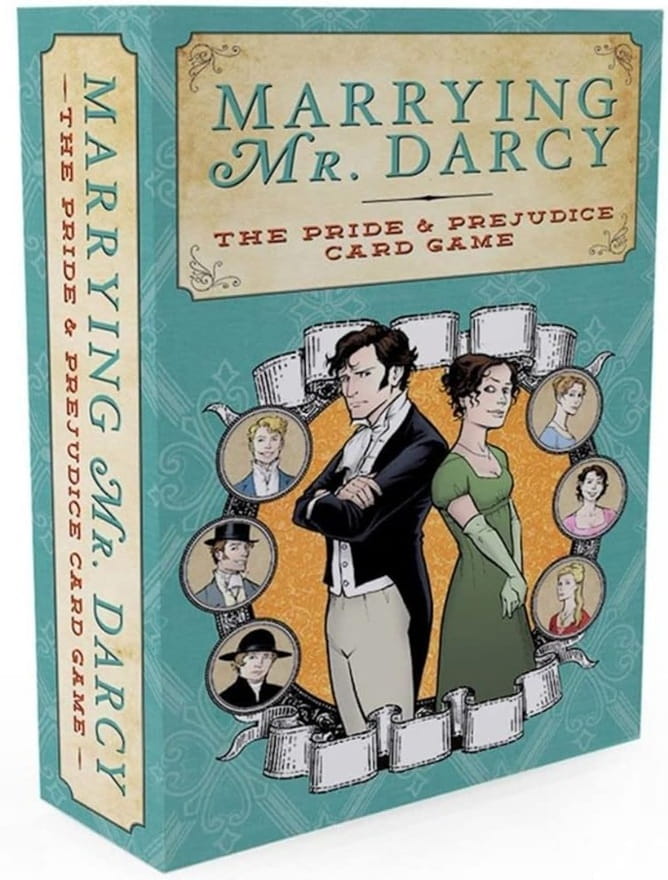
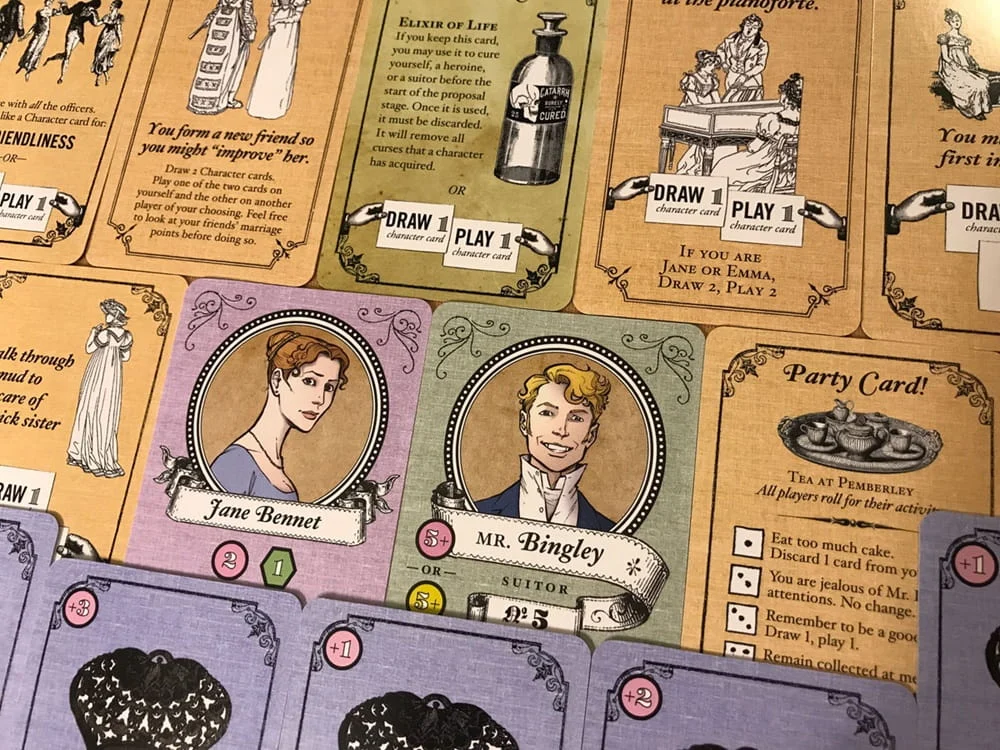
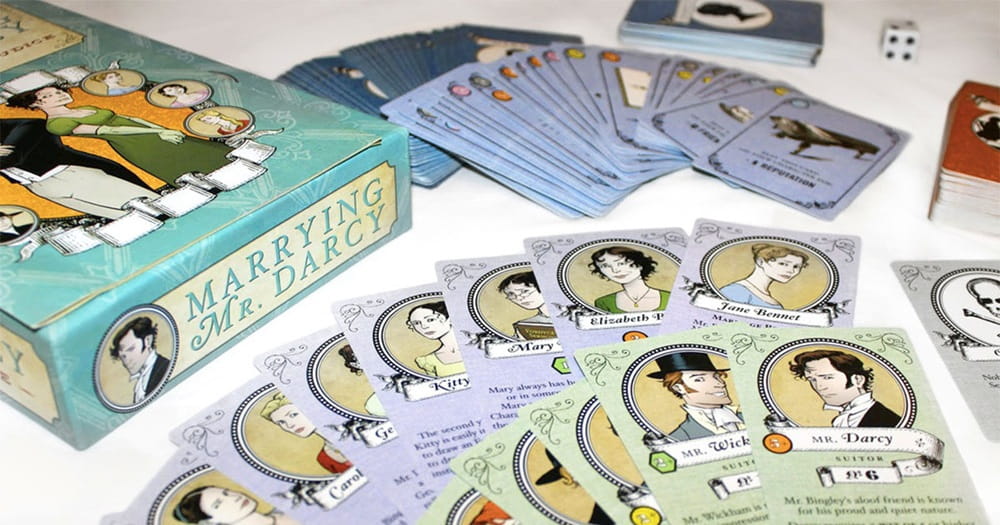
The year 2013 marked its initial release, a period when the board gaming industry was experiencing a significant renaissance, with a growing appetite for thematic diversity and innovative mechanics. While many games at the time focused on fantasy, science fiction, or Euro-style economic engines, Marrying Mr. Darcy carved out a distinctive niche by embracing a historical romance setting. Svanoe’s design philosophy appears to have centered on making the game accessible enough for those unfamiliar with complex rule sets, yet deep enough to satisfy seasoned players. The choice of Erik Evensen as the artist proved crucial in this endeavor, as his illustrations effectively evoke the aesthetic and atmosphere of the Regency period, immediately transporting players to the ballrooms and drawing-rooms of the early 19th century. The game’s vibrant visual identity, as seen in the character cards and event illustrations, enhances the immersive quality, making it appealing even before the first turn is taken.
The game’s premise—to secure the most advantageous marriage—is directly lifted from the novel’s central conflict, where marriage was often a matter of economic necessity and social standing rather than pure romantic love. By framing the gameplay around this societal imperative, Svanoe successfully grounds the experience in historical reality, providing both entertainment and a subtle educational component about the customs of the past.
Navigating the Nuances of Courtship: Gameplay Mechanics and Thematic Depth
Marrying Mr. Darcy accommodates up to six players, each embodying one of eight iconic young women from Pride and Prejudice. These include the indomitable Lizzie Bennet, her four sisters (Jane, Mary, Kitty, and Lydia), and three other significant figures from the novel’s social milieu. Each character begins with a unique set of initial personal traits and a crucial dowry, which, while not a "personal trait" in the game’s official lexicon, is undeniably a critical asset in the marriage market of the era. Critically, each young woman also has a set of base scores tied to potential suitors, indicating varying degrees of compatibility and desirability. For instance, Mr. Darcy, the titular hero, offers a significant point bonus, but his appeal is often highest for a character like Lizzie, reflecting the specific romantic arcs of the novel.
The game unfolds in two distinct phases: the Courtship Phase and the Proposal and Marriage Phase.
The Courtship Phase: Building One’s Persona
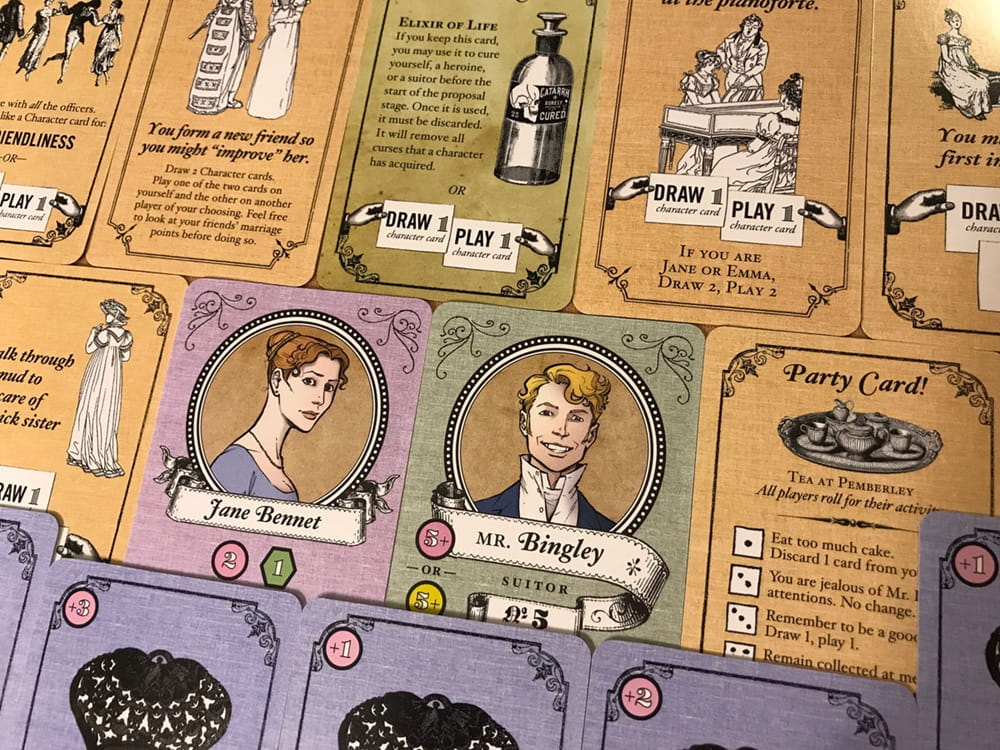
The Courtship Phase is a dynamic period where players draw and play Event Cards. These cards are ingenious thematic devices, representing the myriad social happenings and personal developments that would have shaped a young woman’s prospects in Regency society. From attending a grand ball or a quiet family dinner to enduring a public scandal or mastering a new accomplishment like playing the pianoforte, each event card offers opportunities or challenges. Many event cards grant players the ability to draw and/or play Character Cards, which are central to shaping a young woman’s profile.
There are five primary characteristics that players manage:
- Beauty: A universally valued trait, often crucial for attracting initial attention.
- Friendliness: Reflects social grace and amiability, important for forming connections.
- Reputation: A highly delicate and paramount trait in the 19th century, signifying moral standing and family honor. A tarnished reputation could irrevocably ruin a woman’s marriage prospects, a theme vividly explored in Pride and Prejudice with Lydia Bennet’s elopement.
- Wit: Intellectual sharpness and conversational prowess, particularly prized by discerning suitors like Mr. Darcy.
- Cunning: Unlike the other four, Cunning is played face-down, making it a hidden strategic asset. It allows players to subtly undermine their rivals by removing a face-up characteristic card from another young woman, directly impacting her appeal to specific suitors.
Players strategically accumulate these traits, knowing that different suitors have different preferences. For example, Mr. Collins, ever the pragmatist, might prioritize Beauty and an unblemished Reputation, while the intellectual Mr. Darcy seeks a woman of Wit and strong character. The interplay of these traits forces players to make nuanced decisions, balancing general appeal with specific targets.
Beyond personal characteristics, Dowry plays a vital, albeit often unspoken, role. Character cards can also enhance a player’s Dowry, reflecting inheritances, investments, or familial generosity. The game effectively highlights the historical reality that men often expected a young woman to bring a substantial dowry into a marriage, serving as a financial bedrock for the new household. This aspect, along with the emphasis on Reputation, offers a subtle educational insight into the economic and social underpinnings of marriage in the era, concepts that are often alien to contemporary players. The original reviewer noted that players unfamiliar with Austen or Georgette Heyer’s works might miss the gravity of these elements, underscoring the game’s authentic connection to its source material.
The Proposal and Marriage Phase: The Moment of Truth
Once the courtship period concludes, the game shifts to the high-stakes Proposal and Marriage Phase. This phase introduces an intriguing twist: turn order is determined by Cunning scores, with the most cunning young woman making her choices first. In the event of a tie, the higher Dowry acts as the tie-breaker, further emphasizing the subtle importance of these traits.
During their turn, players identify all suitors whose specific requirements (based on accumulated traits and dowry) they meet. Dice are then rolled for each eligible suitor to determine if they formally propose. This element of chance adds a layer of unpredictable drama, mirroring the capriciousness of real-life romantic endeavors. Players then face critical decisions: they can accept a proposal, removing that suitor from the pool available to others, or reject it, hoping for a more desirable match in subsequent turns or from other eligible suitors.
The consequences of these decisions are stark. A young woman who rejects all her suitors, or, worse, receives no proposals, is saddled with the "Old Maid" card. This outcome, a social catastrophe in Regency society, offers a poignant reflection of the limited options for unmarried women of the era. However, the game cleverly acknowledges player agency by suggesting that some might prefer the fate of an Old Maid to a truly undesirable marriage, adding a layer of ironic choice.
Scoring and Victory: The Best Match
The game culminates in the final scoring, where players tally their points. The final score is a composite of a character’s accumulated scores in Beauty, Friendliness, Reputation, and Wit, combined with the specific point value of her suitor for her. The highest score determines the winner, crowned as the most successfully married young woman. Intriguingly, ties are broken first by Dowry, and then by Cunning, ensuring that these seemingly secondary traits retain their strategic importance until the very end.
This scoring system ensures that success isn’t solely about marrying the highest-scoring suitor in a vacuum; it’s about making the best match for your specific character and her developed traits, echoing the personal journeys and compromises depicted in Austen’s novel. The swift gameplay, typically lasting an hour or less, ensures that each session feels like a fresh dramatic narrative, making it highly replayable and engaging.
Beyond the Ballroom: Critical Reception and Community Engagement
The reviewer’s enthusiastic endorsement — describing Marrying Mr. Darcy as "a lot of fun," an "entertaining game," and a "perfect palate cleanser" after more complex sessions — underscores its success as a lightweight yet deeply thematic experience. This positive reception is indicative of the game’s ability to resonate with players, blending historical accuracy with engaging mechanics.
One of the game’s strengths lies in its accessibility. While familiarity with Pride and Prejudice undoubtedly enhances the experience by allowing players to appreciate the numerous inside jokes and thematic nods, the game is perfectly playable for those with a general understanding of historical courtship customs. This broad appeal ensures that it isn’t solely confined to a niche audience of Austen scholars but can be enjoyed by anyone looking for a unique card game experience.
The artistry of Erik Evensen is frequently cited as a significant contributor to the game’s charm. The cards are not merely functional but are "attractively designed," effectively "suggesting that milieu" of Regency England. This attention to aesthetic detail is crucial for a game that relies heavily on thematic immersion.
The inclusion of an optional rule, where some women might be adopted and thus eligible to marry their "brothers," showcases the designer’s playful approach and willingness to inject humor and flexibility into the established narrative. It’s a nod to literary tropes (as noted with H.G. Wells’ Joan and Peter) and demonstrates a thoughtful engagement with the source material, even while playfully subverting it.
The Enduring Legacy of Literary Games and Austen’s Influence
Marrying Mr. Darcy stands as a testament to the enduring power of Jane Austen’s work and the innovative spirit of modern board game design. Its success has implications far beyond its immediate gameplay:
- Cultural Significance: The game reinforces Jane Austen’s continued relevance in contemporary culture. Her stories, themes, and characters continue to inspire new forms of media, proving their timelessness and adaptability. This game provides a fresh entry point for new audiences to engage with Pride and Prejudice in an active, rather than passive, way.
- Board Game Innovation: In an industry often dominated by fantasy, sci-fi, and abstract strategy, Marrying Mr. Darcy represents a vital expansion of thematic diversity. It demonstrates that literary adaptations, particularly those from genres outside the traditionally "geeky" realms, can be both commercially successful and critically acclaimed. This encourages other designers to explore a wider range of source materials.
- Educational Aspect: Through play, participants gain an intuitive understanding of the societal structures, economic realities, and moral codes that governed marriage in the Regency era. Concepts like dowry, reputation, and the limited agency of women become tangible gameplay elements, offering a unique form of historical education.
- Target Audience Expansion: The game’s blend of light strategy, charming theme, and familiar literary backdrop appeals to a broad demographic, including casual gamers, literary enthusiasts, and families. It bridges the gap between different communities, fostering shared enjoyment.
- Future of Literary Adaptations: Marrying Mr. Darcy sets a high bar for future literary board game adaptations. Its thoughtful integration of theme and mechanics provides a blueprint for how classic literature can be respectfully and entertainingly transformed into interactive experiences, proving that the magic of a good story can transcend its original medium.
In conclusion, Marrying Mr. Darcy is more than just a game; it is a meticulously crafted homage to one of English literature’s greatest works. It skillfully translates the complex social ballet of Pride and Prejudice into a delightful and strategic tabletop experience. Its quick play time, engaging mechanics, and charming aesthetic make it an ideal choice for a variety of gaming occasions, perfectly fulfilling its role as a "palate cleanser" or a main event for those seeking a unique blend of history, strategy, and romance. The enthusiastic anticipation for future plays is a clear indicator of its lasting appeal and its deserved place in the pantheon of successful literary adaptations.




Leave a Comment