
HBO’s "Lanterns" Unveils Ambitious Dual-Timeline Narrative, Navigating Gritty Realism with Cosmic Whimsy
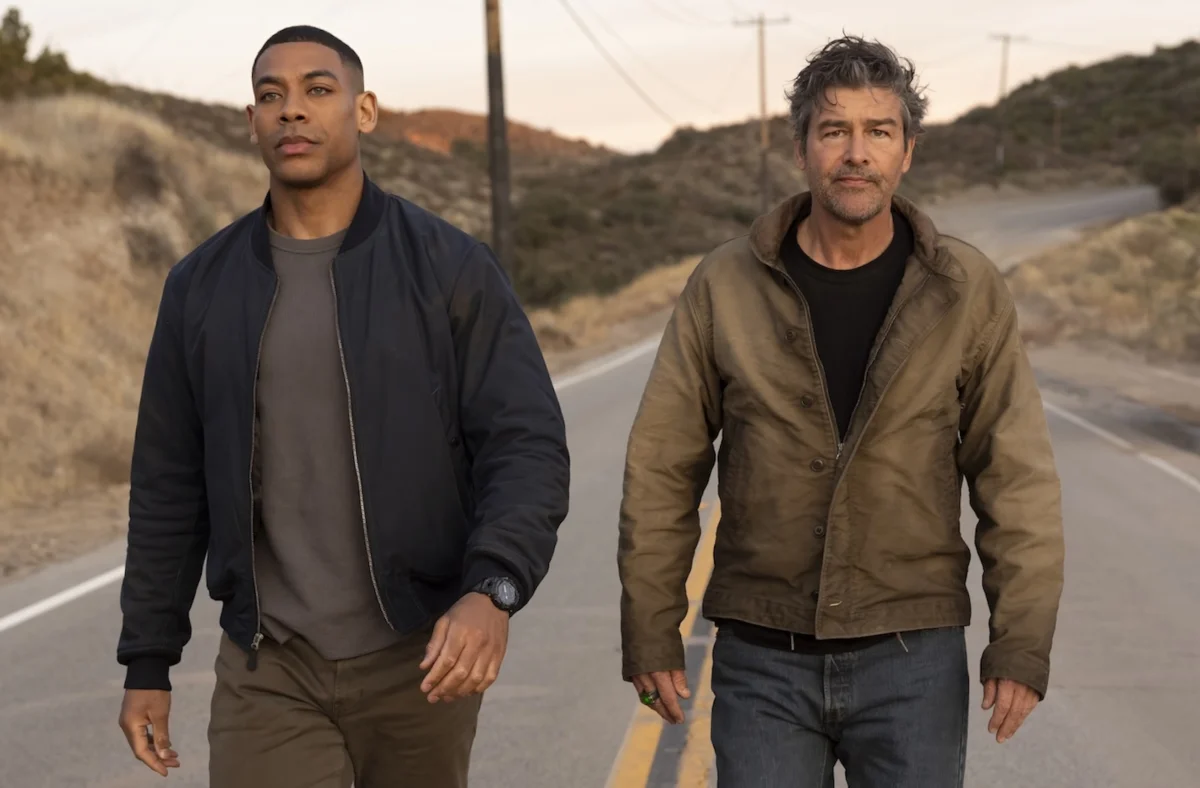
Los Angeles, CA – HBO’s highly anticipated Lanterns, the latest ambitious entry into James Gunn and Peter Safran’s revitalized DC Universe, is set to challenge conventional superhero storytelling with a complex dual-timeline narrative and a bold tonal tightrope walk. Premiering on August 16 on HBO and HBO Max, the series promises a "grounded" and "gritty" police procedural aesthetic, portraying its titular heroes as "cops who happen to have superpowers." However, this seemingly serious premise is juxtaposed with the confirmed casting of Nathan Fillion as the notoriously flamboyant and often comedic Guy Gardner, raising intriguing questions about how the show plans to reconcile these disparate elements.
New details emerging from an exclusive Entertainment Weekly piece featuring showrunner Chris Mundy have illuminated the series’ intricate structure, revealing a narrative spanning a decade and featuring a rich tapestry of established Green Lantern lore, mentorship dynamics, and a universe grappling with extraordinary threats.
Main Facts: A Glimpse into the Green Lanterns’ New Era
Lanterns is positioned as a foundational pillar within the new DC Universe, tasked with reintroducing the cosmic police force to a contemporary audience. The series aims to ground the fantastical elements of the Green Lantern Corps within a more relatable, Earth-bound context, initially presenting its protagonists as super-powered law enforcement officers.
Key Series Details:
- Lanterns
- Platform: HBO and HBO Max
- Premiere Date: August 16
- Showrunner: Chris Mundy
- Core Premise: A seemingly gritty, grounded police procedural within the DC Universe, featuring Green Lanterns.
- Central Mystery: The series begins in 2016 with an enigmatic shooting in Rushville, Nebraska, which seasoned Lantern Hal Jordan attributes to alien involvement, while a skeptical local sheriff remains unconvinced.
- Unique Narrative Structure: The story unfolds across two distinct timelines: 2016 and 2026, with a "second mystery" in the latter period.
- Key Cast & Characters:
- Hal Jordan (Kyle Chandler): A veteran Green Lantern, depicted as a reluctant mentor.
- John Stewart (Aaron Pierre): A new recruit, notably chosen by the Guardians of the Universe rather than a Green Lantern ring.
- Guy Gardner (Nathan Fillion): A Green Lantern known for his unconventional personality, slated to appear across multiple points in the series’ timelines.
- Local Sheriff (Kelly Macdonald): A grounded figure investigating the 2016 shooting.
The announcement of Nathan Fillion as Guy Gardner, made last year, immediately sparked discussions among fans. Fillion’s portrayal of Gardner in James Gunn’s upcoming Superman film (formerly Superman: Legacy) has already established the character’s signature irreverence, characterized by his distinctive bowl cut and boisterous demeanor. This persona stands in stark contrast to the initial "grounded" and "gritty" description of Lanterns, setting the stage for a fascinating narrative and tonal challenge that Mundy and his team appear eager to tackle.
Chronology: Weaving a Decade of Cosmic Policing
The most compelling revelation regarding Lanterns‘ narrative approach is its reliance on a dual-timeline structure, an ambitious choice that allows for exploration of character evolution, unfolding mysteries, and the broader impact of a burgeoning superhero universe.
The 2016 Baseline:
The series opens in 2016, immersing viewers in the aftermath of a violent shooting incident in the seemingly ordinary town of Rushville, Nebraska. This event serves as the catalyst for the initial mystery, drawing the attention of Hal Jordan, whose experience as a Green Lantern leads him to suspect extraterrestrial involvement. His claims, however, are met with skepticism from the local sheriff, played by Kelly Macdonald, establishing an immediate tension between the cosmic and the conventional. This grounded entry point is crucial for the "police procedural" aspect, allowing the audience to engage with familiar investigative tropes before delving deeper into the otherworldly. It’s within this timeline that we are introduced to John Stewart, a new recruit whose induction into the Green Lantern Corps deviates significantly from standard protocol.
The Intervening Decade and Superman:
Chris Mundy confirms that the events of James Gunn’s Superman film are situated chronologically between Lanterns‘ two primary timelines (2016 and 2026). This strategic placement solidifies Lanterns‘ role as an integral component of the interconnected DC Universe from its inception. The implication is that while Lanterns begins with a localized mystery, the larger cosmic and superheroic landscape is actively developing in the background. This period of ten years provides ample space for significant universe-altering events and character developments to occur, setting the stage for the mysteries of 2026.
The 2026 "Second Mystery":
A decade later, the narrative shifts to 2026, where a "second mystery" awaits. Mundy remains intentionally coy about the specifics of this future conflict, hinting at its complexity without revealing key plot points. The gap between 2016 and 2026, punctuated by the events of Superman, suggests a progression of threats and an evolution of the Green Lanterns’ understanding of their place in the universe. This dual-timeline approach allows the series to explore consequences and character arcs in a non-linear fashion, potentially offering glimpses of future stakes while simultaneously building the foundational story. Guy Gardner’s presence, appearing "a few different times" throughout the series, is likely key to bridging these timelines, perhaps serving as a consistent (or inconsistently consistent) presence across the decade.
Supporting Data: Deep Dive into Green Lantern Lore and DCU Context
The narrative choices and character interpretations in Lanterns draw heavily from decades of Green Lantern comic book lore while simultaneously aligning with the broader vision for the new DC Universe.
The Green Lantern Corps and the Guardians of the Universe:
At the heart of the Green Lantern mythos is the Green Lantern Corps, an interstellar police force powered by willpower, channeled through technologically advanced rings. These rings traditionally seek out sentient beings across the universe deemed capable of overcoming great fear. However, John Stewart’s origin in Lanterns deviates, as Mundy reveals he was "chosen not by the Green Lantern ring… but by the Guardians of the Universe, the founders of the Lantern Corps." The Guardians, ancient and immensely powerful beings from the planet Oa, are the architects of the Corps. Their direct intervention in selecting a Lantern, rather than allowing the ring’s autonomous choice, signals a potentially dire or unique situation. Mundy cryptically states, "They felt they had just cause," suggesting a specific, perhaps desperate, strategic reason for bypassing the usual protocol, hinting at the gravity of the threats the Corps faces.
Guy Gardner: The "Gritty" Anomaly:
Nathan Fillion’s casting as Guy Gardner is a deliberate challenge to the show’s initial "grounded" premise. In the comics, Guy Gardner is famously brash, arrogant, and often provides comic relief. His constructs are frequently outlandish, such as the "giant oven mitts" referenced, and his insistence on calling his teammates the "Justice Gang" underscores his irreverent nature. His signature bowl haircut is as much a part of his character as his fiery temper. This established persona is decidedly not gritty, and his presence across Lanterns‘ timelines suggests a conscious effort to inject a different flavor into the serious proceedings. The series will need to adeptly balance Guy’s inherent humor and audacity with the more dramatic tones established by Hal Jordan and John Stewart.
The Mentor-Mentee Dynamic: Hal Jordan and the Shadow of Sinestro:
The relationship between Hal Jordan and John Stewart forms a crucial thematic core, echoing classic mentor-mentee tropes but with a unique twist. Hal is portrayed as a "reluctant mentor" to John, indicating a character burdened by his own experiences and perhaps hesitant to guide another. This reluctance is deeply rooted in Hal’s past with his own mentor, Thaal Sinestro. Sinestro, once a revered Green Lantern, famously fell from grace, embracing the power of fear and establishing the Sinestro Corps. Mundy highlights this complex legacy: "We talked a lot about programming and parenting and training… What did Hal take away from Sinestro that was good or bad? It brings up a lot of interesting worries." This exploration of a corrupted mentorship adds significant depth, suggesting that Hal’s journey will not only be about training John but also about confronting the lingering influences of his own dark past. It raises questions about the nature of power, ideology, and the choices that define a hero.
The "Grounded" and "Gritty" Trope in Superhero Media:
The description of Lanterns as "grounded" and "gritty" taps into a pervasive trend in modern superhero adaptations, particularly those aimed at mature audiences. From Christopher Nolan’s The Dark Knight trilogy to shows like Daredevil and The Boys, this approach often seeks to inject realism and moral ambiguity into fantastical narratives. While popular, this trope has also faced criticism for its potential to strip away the inherent optimism and escapism often associated with superhero stories, leading to audience fatigue. Lanterns‘ challenge will be to find a fresh angle on this trope, especially with the inclusion of characters like Guy Gardner who inherently defy it. The dual timelines might allow for different levels of "grittiness" to be explored, with the 2016 period perhaps being more Earth-bound and raw, while 2026 could introduce more expansive, cosmic stakes.
Official Responses: Showrunner Insights and DCU Vision
Chris Mundy’s comments in Entertainment Weekly serve as the primary official response, providing crucial context for the series’ creative direction.
Chris Mundy’s Vision:
Mundy’s detailed explanations of the dual timelines confirm a sophisticated narrative structure, moving beyond a simple episodic format. His decision to keep the "second mystery" of 2026 under wraps generates anticipation, underscoring the show’s long-term storytelling ambitions. His acknowledgment of Guy Gardner’s multiple appearances across timelines highlights the character’s importance beyond mere cameo status, suggesting a more integrated role in the overarching plot.
The showrunner’s deep dive into the mentor theme reveals a commitment to character-driven storytelling. By linking Hal’s reluctance to his past with Sinestro, Mundy hints at a psychological complexity rarely afforded to traditional superhero narratives. This focus on "programming and parenting and training" elevates the series beyond simple action, positioning it as an exploration of legacy, influence, and the ethical dilemmas of power. The Guardians’ "just cause" for selecting John Stewart, while vague, sets up a compelling mystery regarding the dire circumstances that necessitate such an unusual choice.
James Gunn’s Broader DCU Strategy:
While not directly quoted in the article, James Gunn’s role as co-CEO of DC Studios is implicitly central to Lanterns‘ development. Gunn has consistently emphasized interconnectedness and character integrity as cornerstones of his DCU vision. The placement of Superman between Lanterns‘ timelines is a direct manifestation of this strategy, ensuring that the series contributes meaningfully to the larger narrative tapestry. Gunn’s previous statements about respecting source material while offering fresh interpretations likely guided the decision to include a comic-accurate yet tonally challenging Guy Gardner, demonstrating a willingness to embrace the full spectrum of DC’s rich character roster. Lanterns, therefore, is not just a standalone show but a vital thread in a meticulously planned cinematic and television universe.
Implications: Tonal Dexterity, Narrative Depth, and DCU Integration
The revelations about Lanterns‘ structure and character dynamics carry significant implications for the series, its place in the DCU, and audience expectations.
The Challenge of Tonal Balance:
The most immediate implication is the formidable task of balancing the "grounded" and "gritty" police procedural elements with Guy Gardner’s inherently comedic and over-the-top persona. This tonal dexterity will be critical for the show’s success. Will Guy’s humor serve as welcome levity, or will it undercut the serious stakes? The dual timelines might offer a solution, allowing different periods to lean into distinct tones, or perhaps Guy’s journey itself will involve a transformation or a deeper exploration of his character that grounds his antics. Successfully integrating these contrasting elements could set Lanterns apart from other superhero offerings.
Narrative Complexity and Long-Term Storytelling:
The dual-timeline structure promises a deeply complex narrative, encouraging active engagement from viewers as they piece together events across different periods. This approach allows for character arcs to unfold non-linearly, revealing motivations and consequences gradually. The "second mystery" in 2026, building upon the initial events of 2016 and the intervening Superman film, signals a commitment to long-form storytelling that prioritizes character evolution and an expanding universe. This could lead to a rich, unfolding saga rather than a series of disconnected adventures.
Profound Character Development:
The emphasis on mentorship and legacy, particularly Hal Jordan’s struggle with Sinestro’s influence, suggests a show deeply invested in the psychological journeys of its characters. Hal’s reluctant mentorship of John Stewart provides a compelling arc, forcing him to confront his own past while shaping the future of the Corps. John Stewart’s unique origin, chosen directly by the Guardians, immediately sets him apart, hinting at a destiny or a burden that is distinct from other Lanterns. Guy Gardner, appearing at various points, could offer a consistent (if chaotic) through-line, perhaps revealing different facets of his personality across the decade.
Integral DCU Integration:
Lanterns is clearly designed to be a cornerstone of the new DC Universe. Its premiere date, its placement relative to Superman, and the direct involvement of established Green Lantern lore all underscore its importance. The series will not only introduce audiences to the cosmic side of the DCU but also establish key relationships and narrative threads that will undoubtedly reverberate throughout other DCU projects. This interconnectedness is a defining feature of Gunn and Safran’s vision, and Lanterns appears to be a crucial early example of how this grand narrative will be constructed.
Redefining Audience Expectations for Green Lanterns:
For years, the Green Lantern property has struggled in live-action adaptations. Lanterns has the potential to redefine audience expectations by offering a fresh, sophisticated take on the Corps. By combining a grounded police procedural framework with ambitious cosmic lore, complex character dynamics, and a unique narrative structure, the series aims to deliver a compelling and mature superhero drama. The inclusion of Guy Gardner, in particular, signals a willingness to embrace the full, vibrant spectrum of the Green Lantern universe, promising a show that is both thoughtful and entertaining. The August 16 premiere will undoubtedly be a pivotal moment for the new DC Universe, showcasing its capacity for innovative storytelling and character depth.

Leave a Comment