
Headline: Judicial Rebukes and Corporate Reckonings: Inside the Legal Battle Between Krafton and the Founders of Unknown Worlds
March 18, 2026
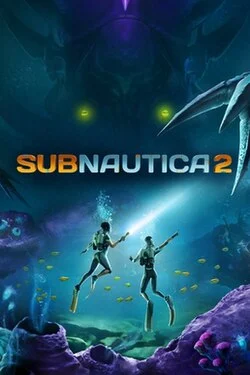
In what is rapidly becoming one of the most high-profile legal battles in the history of video game mergers and acquisitions, the Delaware Court of Chancery has issued a scathing preliminary ruling against the South Korean gaming giant Krafton. The litigation, initiated by the founders of Unknown Worlds Entertainment—the studio behind the critically acclaimed Subnautica series—alleges a calculated effort by Krafton to avoid a staggering $250 million earnout payment through the "bad faith" termination of the studio’s leadership.
The recent court victory for the founders marks the conclusion of the first phase of a multi-stage trial. The ruling has not only seen the reinstatement of ousted CEO Edward Gill but has also cast a harsh light on the internal maneuvers of Krafton, the multi-billion-dollar conglomerate best known for PUBG: Battlegrounds.
Main Facts: The $250 Million Disconnect
At the heart of the dispute is the 2021 acquisition of Unknown Worlds by Krafton. At the time, the deal was lauded as a strategic masterpiece. Krafton, seeking to diversify its portfolio beyond the battle royale genre, secured a premier developer known for innovative, atmospheric survival games. The deal structure included an upfront cash payment and a substantial "earnout" provision—a common mechanism in M&A where additional payments are made to the sellers if the acquired company hits specific financial or development milestones over a set period.
In this instance, the earnout was valued at approximately $250 million, tied largely to the development and projected success of Subnautica 2.
However, as the milestones for the earnout approached, the relationship between the parent company and the subsidiary founders soured. The founders alleged that Krafton began a campaign of "contractual sabotage," culminating in the summary dismissal of the studio’s leadership "for cause." By claiming the founders were fired for cause, Krafton sought to legally nullify their rights to the $250 million earnout, claiming they had breached their fiduciary duties and failed to meet performance standards.
The Delaware judge, however, found these claims to be largely unsubstantiated, describing the dismissals as a breach of the original acquisition agreement.
Chronology: From Acquisition to Litigation
To understand the gravity of the court’s ruling, one must trace the timeline of the deteriorating partnership:
- October 2021: Krafton officially acquires Unknown Worlds. The founders, including Edward Gill, agree to stay on to lead the studio through the development of Subnautica 2. The contract includes a performance-based earnout period.
- 2023–2024: Internal friction begins to mount. Reports suggest disagreements over the creative direction of Subnautica 2, specifically regarding Krafton’s desire to implement "Games as a Service" (GaaS) elements and aggressive monetization—features that the original Subnautica games famously avoided.
- Late 2025: As Subnautica 2 neared its Early Access launch window, Krafton abruptly terminated Edward Gill and several key founding members. The company cited "performance failures" and "insubordination" as the "cause" for termination.
- January 2026: The founders file suit in the Delaware Court of Chancery, alleging that the "for cause" termination was a sham designed solely to trigger a clause in the contract that would forfeit the $250 million earnout.
- March 17, 2026: The court releases its Phase 1 decision. The judge rules that Krafton’s actions were uncontractual and orders the immediate reinstatement of Edward Gill.
Supporting Data: The Mechanics of "Ouster"
The discovery documents made public during the trial provide a fascinating, if troubling, look at the mechanics of corporate acquisitions. According to the documents shared by industry veteran Rami Ismail and analyzed by legal experts, Krafton’s legal team had been exploring "exit strategies" for the founders as early as 18 months before the firing.
Key findings from the discovery phase include:
- Reinstatement of Authority: The judge didn’t just award damages; she took the "drastic" step of reinstating Edward Gill as CEO. This is a rare move in corporate law, indicating the court’s belief that Gill’s removal was a fundamental violation of the "status quo" required to fairly reach the earnout milestones.
- Earnout Extension: The court ruled that the timeline for the earnout must be extended by the exact duration of Gill’s "ouster." This ensures that Krafton cannot benefit from the delays caused by the leadership vacuum they created.
- Injunction Against Interference: Perhaps most significantly, the judge stated that "Krafton is enjoined from… impeding Gill’s authority over the early access launch of Subnautica 2." This effectively grants the studio founder a "shield" against his own parent company’s corporate interference during the most critical phase of the game’s lifecycle.
The financial data presented in court suggested that Subnautica 2 was tracking toward a highly successful launch. Internal Krafton projections—ironically used by the plaintiffs—showed that the game was almost certain to trigger the full $250 million payout if the founders remained in place.

Official Responses: A Study in Silence and Vindication
Following the ruling, the two parties have maintained starkly different public postures.
Krafton’s Response:
Krafton has remained largely tight-lipped, issuing a brief statement via their legal counsel: "While we respect the court’s preliminary findings regarding the employment status of certain individuals, we maintain that our actions were taken in the best interest of the project’s long-term health. We look forward to presenting further evidence in the second phase of litigation regarding the financial merits of the earnout claims."
Industry analysts interpret this as a retreat to a defensive "Phase 2" strategy, where Krafton will likely argue that even if the firings were procedurally incorrect, the $250 million in damages is an overestimation of what the founders would have actually earned.
The Founders’ Stance:
Edward Gill, via a statement from his representatives, expressed a sense of relief but remained focused on the work ahead. "This ruling is a victory for indie spirit within a corporate framework. Our goal has always been to deliver Subnautica 2 to our fans in a way that honors the franchise. We are eager to return to the studio and resume our work without the shadow of contractual bad faith hanging over the team."
Implications: A Warning Shot to the Industry
The implications of Gill v. Krafton extend far beyond the $250 million at stake. This case serves as a landmark precedent for the gaming industry’s M&A landscape, which has seen a frenzy of acquisitions over the last five years.
1. The "Earnout" Trap
Earnouts are often used to bridge the gap between what a buyer wants to pay and what a seller thinks their company is worth. However, this case highlights how they can create perverse incentives. If a buyer realizes a studio is too successful, they may be incentivized to disrupt operations to avoid a massive payout. This ruling suggests that courts are becoming increasingly savvy to these "financial engineering" tactics.
2. Creative Autonomy vs. Corporate Control
The injunction protecting Gill’s authority over the Early Access launch is a massive win for creative leads. It establishes that when a studio is bought for its specific creative culture, the parent company cannot unilaterally strip that culture away under the guise of "corporate restructuring" to save money.
3. Krafton’s Reputational Damage
Krafton has invested heavily in its image as a global powerhouse. However, being labeled by a court as having "broken a contract" to "weasel out" of payments (as described by Nicholas Lovell) is a significant blow. Future indie developers looking for an exit strategy may now view Krafton as a "predatory" buyer, potentially driving them into the arms of competitors like Sony, Tencent, or Microsoft.
4. The Future of Subnautica 2
While the legal victory is a win for the founders, the internal environment at Unknown Worlds is likely to be tense. Reinstating a CEO who just sued the owner of the company creates an unprecedented management dynamic. All eyes will be on the Early Access launch of Subnautica 2; its success is no longer just a matter of player satisfaction, but a central piece of evidence in a multi-million-dollar legal drama.
Looking Ahead: Phase 2
The battle is far from over. The second phase of the lawsuit will pivot from "wrongful termination" to "wrongful impairment." The court will determine if Krafton’s actions—beyond just the firing—actively damaged the studio’s ability to meet its financial goals. This could include things like withholding marketing budgets, forcing unwanted microtransactions, or redirecting staff to other Krafton projects.
If the founders prevail in Phase 2, Krafton could be on the hook for the full $250 million plus interest, legal fees, and potentially punitive damages. For now, the "Subnautica 2" team returns to their desks, but the waters of their corporate partnership remain deeper and more dangerous than any alien ocean they have ever designed.



Leave a Comment