
The Architect’s Archive: Raph Koster Curates Five Years of Game Design Wisdom
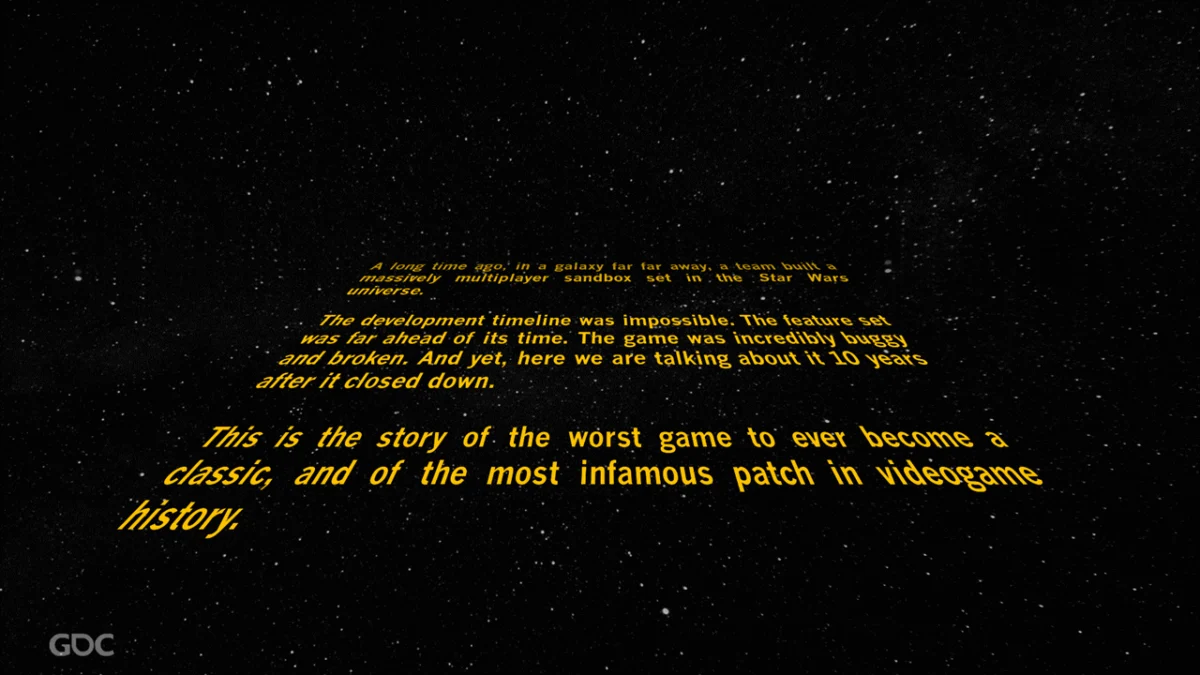
In the rapidly evolving landscape of digital entertainment, few voices carry as much weight as that of Raph Koster. A legendary figure in the realm of Massively Multiplayer Online (MMO) games, Koster—the lead designer of Ultima Online and the creative director of Star Wars Galaxies—has spent decades not just building worlds, but theorizing the very fabric of how they function. Recently, Koster signaled a significant milestone for his long-running digital repository, updating his "Recommended Posts" for the first time in over five years.
This curated update serves as more than just a list of blog links; it is a comprehensive map of the challenges and triumphs of the games industry between 2019 and 2024. Covering everything from the "Metaverse" craze to the nitty-gritty of game business models and the preservation of virtual history, Koster’s latest collection offers a masterclass for developers and a historical record for enthusiasts.
Main Facts: A Half-Decade of Design Evolution
Raph Koster’s personal website has long been a foundational resource for the game development community. His seminal book, A Theory of Fun for Game Design, is required reading in many university programs, and his blog serves as a real-time extension of those theories. The recent update marks a significant effort to organize the "best of" his output since his last major curation effort in 2018.
The update categorizes Koster’s work into several high-level domains:
- Game Design Overviews: High-level philosophical explorations of what makes games tick.
- Multiplayer Dynamics: Deep dives into the social engineering required for online worlds.
- The Business of Games: Realistic appraisals of how developers navigate the economic realities of the industry.
- Postmortems and History: A look back at the origins of the genre, including extensive new material on Ultima Online.
- The Metaverse Critique: A rigorous debunking of recent hype cycles through the lens of data science and historical precedent.
- Stars Reach and Playable Worlds: A "manifesto" for his current project, which aims to redefine the MMO genre for a new generation.
By organizing these thoughts, Koster provides a roadmap for navigating the "post-hype" era of game development, where the focus has shifted from speculative technology (like blockchain and the Metaverse) back to the core principles of simulation and player agency.
Chronology: From Legacy Worlds to "Stars Reach"
To understand the significance of this update, one must look at the timeline of Koster’s career over the last five years. In 2019, Koster founded Playable Worlds, a studio backed by significant venture capital, with the goal of creating a "living" world that utilizes modern cloud computing to achieve the depth of simulation he pioneered in the 1990s.
During this period, the gaming industry underwent several massive shifts. The COVID-19 pandemic saw a surge in player engagement, followed by a period of "Metaverse madness" driven by companies like Meta (formerly Facebook) and a flood of NFT-based gaming startups. Koster, having built virtual worlds long before the term "Metaverse" was a marketing buzzword, found himself in the unique position of being both an elder statesman and an active participant in the new frontier.
In 2018, just before this five-year gap began, Koster released his massive 700-page book, Postmortems, which collected his historical writings. The years following that release saw him refining his views on how data moves through virtual worlds, how player governance can prevent community collapse, and how the business models of the 2020s—specifically the "Games as a Service" (GaaS) model—interact with traditional design.
The 2024 update concludes this chapter of his career, transitioning from the theoretical and historical into the practical application of these ideas within his upcoming game, Stars Reach.
Supporting Data: The Pillars of Modern Virtual Worlds
Koster’s curated posts are grounded in technical and social data, rather than mere opinion. One of the most significant sections of his update deals with the "Metaverse" and the misconceptions surrounding it.
The Metaverse and Data Realities
During the height of the blockchain-gaming boom, Koster was one of the few voices pointing out the fundamental technical hurdles of decentralization. In his series on how Metaverses work from a "data point of view," he argued that the primary challenge of virtual worlds is not ownership (which blockchains address), but interoperability and state management.
Koster’s data-driven approach highlights that:
- Latency is the ultimate enemy: You cannot run a high-fidelity, real-time world on a decentralized ledger without breaking the laws of physics or compromising the "game" element.
- Governance is inevitable: Virtual worlds are societies, and societies require rules. Koster points to his work in the 1990s as evidence that without centralized or highly structured community governance, virtual spaces inevitably descend into toxicity or economic collapse.
The "Riffs" on Simulation
A large portion of the update, titled "Riffs by Raph," serves as a design document for Stars Reach. Here, Koster provides data-backed arguments for why the "Theme Park" MMO model (popularized by World of Warcraft) is reaching its limit. He advocates for a return to emergent gameplay, where the game world reacts to player actions in a systemic way. For example, if players over-harvest a forest in Stars Reach, the local ecosystem should realistically collapse, affecting everything from local temperature to the availability of rare resources.
Official Responses: Koster’s Philosophy on Industry "Madness"
The updated blog acts as a formal response to several industry trends. Koster is famously candid about the "Metaverse madness" that gripped Silicon Valley. He notes that many of the "innovations" touted by tech giants in the early 2020s were actually solved problems from the MUD (Multi-User Dungeon) era of the 1980s and 90s.
"Frankly, most people had no clue what the hell they were talking about," Koster writes in his update, referring to the recent Metaverse hype. He points out that he built his first Metaverse in the 1990s and another in the 2000s, suggesting that the industry often suffers from a lack of historical memory.
Regarding the business of games, Koster’s posts reflect a sober reality. He discusses how developers must navigate the "attention economy" and the rising costs of user acquisition. His commentary suggests that the current "enclosure" of gaming ecosystems (like those seen on mobile storefronts) is a threat to the creative experimentation that birthed the MMO genre in the first place.
Implications: The Future of the Living World
The release of this curated archive has profound implications for the future of the industry. As the "Metaverse" hype fades, the industry is looking for what comes next. Koster’s work suggests that the answer isn’t new hardware (like VR headsets) or new currencies (like crypto), but deeper simulation.
1. The Death of the "Static" World
Koster’s influence suggests a shift away from static, "scripted" content. If his theories hold, the next generation of successful online games will be those that empower players to change the environment permanently. This has massive implications for server technology and AI, requiring worlds that can "remember" every player action.
2. Historical Preservation as a Design Tool
By highlighting his work on emulators and Ultima Online postmortems, Koster emphasizes that the future of design is rooted in the past. As modern games become increasingly ephemeral due to server shutdowns and digital-only releases, Koster’s focus on emulation serves as a call to action for the industry to take its own history seriously.
3. The Democratization of World-Building
A recurring theme in the "Riffs" section is the idea of "Playable Worlds"—the notion that players should be more than just consumers; they should be architects. This implies a future where the line between "developer" and "player" continues to blur, requiring new legal and economic frameworks for user-generated content (UGC).
Conclusion
Raph Koster’s update to his recommended posts is more than a housekeeping task; it is a vital contribution to the "library of Alexandria" for game design. By synthesizing five years of rapid industry change into a coherent set of principles, Koster provides a steady hand for the next generation of developers.
As the industry moves away from the speculative bubbles of the early 2020s and returns to the hard work of building engaging, sustainable virtual societies, Koster’s archive will likely serve as the primary textbook. His message is clear: the most "fun" and "innovative" worlds are not built on hype, but on a deep understanding of human psychology, social dynamics, and the rigorous management of data. For those looking to build the future of the internet, the first step may well be reading through the five years of wisdom Koster has just laid out.


Leave a Comment