"Hemlock & Silver": T. Kingfisher’s Latest Masterpiece Reimagines "Snow White" with a Toxicological Twist
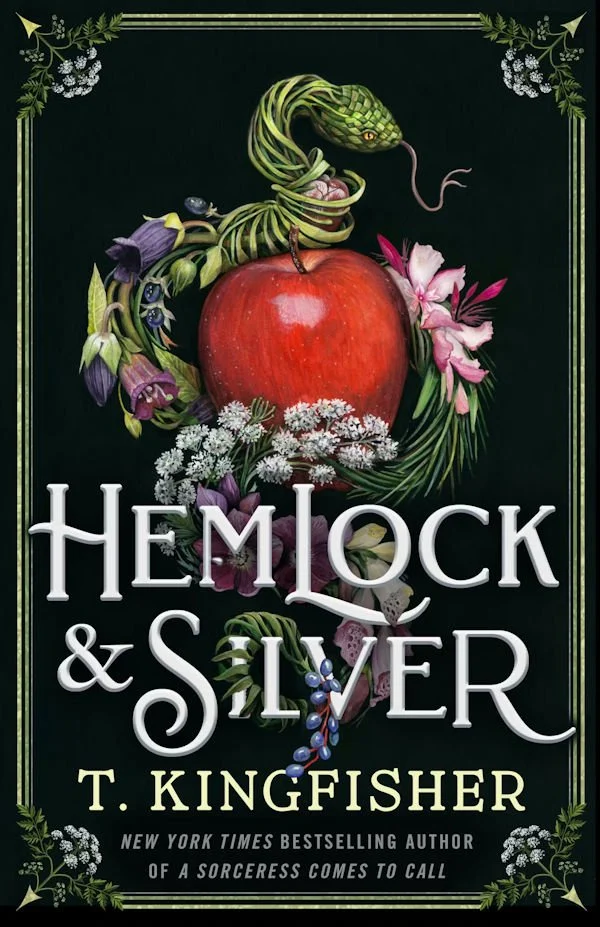
T. Kingfisher, the acclaimed pen name of Ursula Vernon, continues to captivate readers with her unique blend of fantasy and horror, delivering yet another standout novel in "Hemlock & Silver." Hailed as potentially her finest work to date, this dark retelling of "Snow White" deviates significantly from its source material, offering a sophisticated narrative centered on a pragmatic healer, a dying princess, and the unsettling secrets hidden within enchanted mirrors. The novel masterfully combines scientific inquiry with supernatural dread, appealing to both dedicated Kingfisher fans and newcomers seeking a fresh, intelligent take on classic fairy tales.
Main Facts
"Hemlock & Silver" introduces Healer Anja, a toxicologist by trade whose unorthodox methods involve self-experimentation with poisons to develop cures. Her life of dedicated research is abruptly interrupted when she is summoned to the royal court by a desperate King. His daughter, Princess Snow, is succumbing to a mysterious ailment that has baffled all conventional physicians, leading the King to place his last hope in Anja’s unique expertise. What begins as a medical mystery quickly spirals into a fantastical investigation, as Anja, aided by an enigmatic guard, a self-important feline, and her unwavering commitment to the scientific method, uncovers a hidden world concealed within the castle’s magic mirrors. This dark, reflective realm appears to be inextricably linked to Snow’s deteriorating health, presenting Anja with a challenge that transcends the boundaries of her scientific understanding. The novel explores themes of perception, reality, and the terrifying implications when logic clashes with the truly inexplicable, ultimately posing the question: can this secret world offer a cure, or does it harbor a danger that could consume them all?
The book, released to critical anticipation, has garnered praise for its distinctive narrative voice, intricate world-building, and its ability to weave genuinely unsettling horror elements into a traditional fairy tale fantasy framework. Reviewers, many of whom are long-time admirers of Kingfisher’s prolific output, have highlighted its exceptional character development, particularly that of its protagonist, Anja, whose sharp wit and grounded scientific perspective offer a refreshing counterpoint to the unfolding magic. Its innovative approach to the "Snow White" mythos, sidestepping direct plot points in favor of thematic and symbolic reinterpretations, marks it as a significant contribution to the evolving landscape of fairy tale retellings.
Chronology of Discovery and Plot Progression
The narrative of "Hemlock & Silver" unfolds with a meticulous pace, gradually peeling back layers of mystery and magic as Healer Anja delves deeper into Princess Snow’s perplexing condition.
Healer Anja’s Background and Unique Practice
The story firmly establishes Anja’s character from the outset, detailing her unconventional life dedicated to toxicology. A formative, albeit morbid, childhood encounter with wild hemlock sparked an enduring obsession with poisons, their effects, and, crucially, their antidotes. Anja’s practice is not merely academic; she routinely ingests controlled doses of various toxins, developing a profound understanding of their mechanisms and refining her curative remedies. This self-sacrificing dedication to her craft has earned her a reputation as both brilliant and eccentric, setting her apart from traditional healers and establishing her as the perfect protagonist to confront an ailment that defies conventional wisdom. Her background immediately grounds the fantastical elements in a pseudo-scientific reality, offering a logical lens through which to view the extraordinary.
The Royal Summons and Initial Investigations
Anja’s quiet, herb-focused life is shattered by the King’s urgent summons. Princess Snow, his only surviving child, is slowly wasting away, her condition worsening with each passing day despite the efforts of the kingdom’s most learned physicians. The King’s desperation is palpable, his appeal a last resort to a healer known for her "unorthodox methods." Upon her arrival at the sprawling, ancient castle, Anja immediately applies her methodical, scientific approach. She meticulously observes Snow, noting every symptom, every environmental factor, and every failed remedy. Her initial investigations are rooted in logical deduction, searching for a mundane poison or illness that might explain Snow’s decline. This period highlights Anja’s intellect and her unwavering commitment to empirical evidence, even as the lack of a clear, explainable cause begins to frustrate her scientific sensibilities. It is during this phase that she also begins to encounter the castle’s intriguing inhabitants, from the taciturn royal guard who becomes her reluctant companion to the enigmatic, narcissistic cat that seems to possess an unsettling awareness.
Unveiling the Mirror-Realm
As Anja’s traditional scientific methods yield no answers, the narrative takes a sharp turn into the supernatural. The key to Snow’s illness is not found in a forgotten herb or a hidden toxin, but in the pervasive, eerie presence of enchanted mirrors scattered throughout the castle. Initially dismissing them as mere decorative curiosities, Anja slowly begins to perceive unsettling anomalies—glimpses of another reality, reflections that don’t quite align, and a growing sense of disquiet emanating from their polished surfaces. The discovery of a secret world, a mirror-realm existing parallel to their own, marks the pivotal shift in the plot. This realm is portrayed with Kingfisher’s signature blend of wonder and dread; it is a place of warped reflections, stitched-together creatures, and a logic entirely alien to Anja’s scientific mind. The mechanics of how this realm interacts with the real world, particularly its connection to Snow’s declining health, are fascinatingly explored, forcing Anja to reconcile her empirical understanding with an undeniable magical reality. The creeping realization that these mirrors are not just passive objects but gateways to a dark, active force infuses the story with a chilling, nerve-wracking tension.
Escalation and Confrontation
With the existence of the mirror-realm established, the stakes escalate dramatically. Anja must not only understand this new reality but also identify who or what within it is targeting Princess Snow. The mystery deepens, moving beyond a simple diagnosis to uncovering the antagonist’s motives and methods. The narrative builds towards a confrontation, involving the exploration of the mirror-realm itself and direct interaction with its unsettling inhabitants. The reviewer notes that the sequence of events leading to the climax, particularly the various deceptions and character deaths, becomes "extremely convoluted and hard to follow." While this aspect presented a challenge for the reviewer to fully disentangle, it also serves to underscore the antagonist’s cunning and the chaotic nature of the magical conflict. The long and short of it, as the reviewer concludes, is that the antagonist leverages confusion and misdirection to achieve their goals, creating a climactic sequence that is both thrillingly complex and intentionally disorienting, culminating in a desperate bid to save Princess Snow and prevent the mirror-realm’s dark influence from spreading further.
Supporting Data & Thematic Depth
"Hemlock & Silver" is more than just a plot-driven fantasy; it’s a rich tapestry woven with Kingfisher’s distinctive authorial voice, intricate thematic layers, and a profound understanding of character.
Authorial Voice and Style
T. Kingfisher, or Ursula Vernon, has cultivated a formidable reputation as a prolific and versatile author, seamlessly traversing the landscapes of horror, fantasy, and even children’s literature. Her writing is characterized by a dry wit, a keen observational eye, and a remarkable ability to infuse even the darkest narratives with moments of unexpected humor and genuine warmth. "Hemlock & Silver" stands as a testament to this versatility, showcasing her talent for blending genres. The reviewer explicitly draws comparisons to Kingfisher’s other works, noting the horror elements reminiscent of "What Moves the Dead" and the fairy tale fantasy style akin to "Nettle & Bone." However, "Hemlock & Silver" distinguishes itself by addressing some of the common criticisms leveled against "Nettle & Bone," such as its perceived "low stakes" and a "simple and childish" main character. Anja, in contrast, is depicted as a believably mature, intelligent, and sharp-witted protagonist whose personality resonates strongly with Kingfisher’s own public persona, making her an exceptionally relatable and engaging lead. This evolution in character depth and narrative stakes underscores Kingfisher’s continuous growth as a storyteller.
Deconstructing the "Snow White" Retelling
One of the novel’s most remarkable achievements is its innovative approach to the "Snow White" mythos. The reviewer initially harbored skepticism, admitting a personal dislike for the original fairy tale and a weariness for conventional retellings. Yet, "Hemlock & Silver" completely subverts expectations. It is a "dark retelling" not by directly rehashing the plot points of the classic story, but by subtly recontextualizing its core symbols and themes. Elements like hemlock (poison), silver (mirrors, purity), and the concept of a "sleeping curse" are reimagined through a lens of toxicology and uncanny magic. Instead of focusing on a jealous stepmother and a poisoned apple, Kingfisher delves into the inherent creepiness of reflections and the psychological horror of a slow, inexplicable decline. The scientific method, championed by Anja, directly confronts the magical reality, creating a fascinating tension between logic and the fantastical. This nuanced approach allows the book to be deemed a "Snow White" retelling while forging an entirely unique and compelling narrative identity, proving that a retelling can be truly original without sacrificing its thematic roots.
Character Dynamics and Development
The characters populating "Hemlock & Silver" are universally praised for their believability and charm. Anja, as the central figure, undergoes significant development, evolving from a strictly empirical scientist who "does not believe in magic" to someone forced to confront and ultimately accept the existence of a profound magical reality. Her internal struggle and eventual adaptation make her journey compelling. The supporting cast is equally well-crafted. The castle staff, including the diligent Nurse, are portrayed with a grounded realism, avoiding the pitfall of making "commonfolk unusually well-learned for the setting." The taciturn guard provides a steady, practical presence, contrasting effectively with Anja’s more excitable intellect. Perhaps most captivating is the cat character, described as the "perfect combination of other-worldly changeling and gruff street cat," embodying Kingfisher’s talent for creating memorable, slightly eccentric animal companions. Even the King, despite his eventual disappearance from the narrative, serves a crucial initial role, his intelligence and paternal concern driving the early plot. While the reviewer notes the King’s unresolved arc as a minor flaw, his initial presence is vital in establishing the high stakes and Anja’s mission.
Genre Fusion: Horror and Fantasy
"Hemlock & Silver" brilliantly exemplifies Kingfisher’s mastery of genre fusion. While firmly rooted in fairy tale fantasy, it seamlessly integrates elements of horror that are as chilling and effective as those found in her dedicated horror novels. The mirror-realm, with its unsettling inhabitants and distorted realities, is a source of genuine dread and psychological unease, often described as "nightmare fuel." The very concept of reflections being gateways to a dark, hidden world taps into a primal fear of the uncanny. This horror is not gratuitous; it serves the plot, elevating the stakes and creating a pervasive sense of tension. Simultaneously, the novel embraces classic fantasy tropes: a royal court, a mysterious illness, an unlikely hero, and enchanted objects. The genius lies in how these elements are intertwined, with the magical aspects often possessing a dangerous, unpredictable edge. This genre blend ensures a dynamic reading experience, appealing to readers who appreciate the imaginative scope of fantasy but also crave the unsettling atmosphere and suspense inherent in horror. It’s a testament to Kingfisher’s skill that she can evoke both wonder and terror within the same narrative.
Critical Reception and Reader Experience
The journey of reading "Hemlock & Silver" is one marked by delightful surprises and a profound appreciation for its craft, particularly for those familiar with Kingfisher’s previous work.
Initial Expectations vs. Reality
The reviewer candidly admits to approaching "Hemlock & Silver" with a degree of skepticism. Having enjoyed "Nettle & Bone," another of Kingfisher’s fairy tale fantasies, she nevertheless found its stakes "terribly low" for her usual preferences. Coupled with a general aversion to the "Snow White" story, the initial description of "Hemlock & Silver" as a "dark retelling" did not immediately inspire confidence. The expectation was for a "similar outcome; endearing and cozy, with a very plain main character and a simple plot devoid of stress or mystery that would require me to think." This preconception, however, was spectacularly dismantled. The reviewer’s declaration that she was "so excited to be proven wrong in the best sense" speaks volumes about the novel’s ability to transcend expectations and deliver a narrative far more complex, engaging, and thrilling than anticipated. The experience was transformative, solidifying "Hemlock & Silver" as "the best one yet" in her growing collection of Kingfisher novels.
Strengths
The novel’s strengths are numerous and compelling. Foremost among them is the protagonist, Healer Anja, whose intelligent, well-studied, and sharply sarcastic personality makes her an incredibly engaging and believable character. Her grounded approach to a magical problem provides a unique narrative perspective. The imaginative world-building, particularly the intricate mechanics and unsettling nature of the mirror-realm, is another significant highlight, demonstrating Kingfisher’s boundless creativity. The seamless and effective genre-blending, marrying the whimsical elements of fairy tale fantasy with genuinely chilling horror, creates a distinctive atmosphere that sets the book apart. Furthermore, its subversive retelling of "Snow White" is a masterclass in reinterpretation, offering a fresh narrative that respects the original’s symbolic weight without replicating its plot. These elements combine to form a rich, immersive, and highly satisfying reading experience that leaves a lasting impression.
Areas for Improvement
While overwhelmingly positive, the review does pinpoint a couple of minor areas where the narrative could have been further refined. The most prominent is the unresolved fate and reaction of the King. After embarking on a journey midway through the book, he "never [appears] again," leaving a significant loose end. Given his portrayal as an "intelligent and probing" character deeply invested in his daughter’s welfare, his complete absence from the resolution feels like an oversight, diminishing the emotional impact of Snow’s potential recovery. The second point of critique concerns the ending’s "extremely convoluted and hard to follow" sequence of events, particularly regarding character deaths and deceptions. Despite multiple attempts to clarify the chronology, the reviewer struggled to fully grasp the precise order and motivations. While this might be attributed to the antagonist’s deliberate obfuscation within the narrative, it created a degree of reader confusion that slightly detracted from the otherwise clear storytelling. However, these are presented as minor quibbles that do not significantly diminish the overall excellence of the work.
Target Audience
Ultimately, "Hemlock & Silver" emerges as an ideal entry point for readers new to T. Kingfisher’s extensive bibliography. It encapsulates the very best of her dual strengths: the enchanting and often humorous fairy tale fantasy, reminiscent of "Nettle & Bone," combined with the unsettling, atmospheric horror found in works like "What Moves the Dead." Its accessibility for new readers stems from its compelling protagonist, original plot, and successful genre fusion. It particularly appeals to fans of dark fantasy, those who appreciate sophisticated fairy tale retellings that go beyond simple adaptations, and anyone who enjoys strong character voices, intricate world-building, and narratives that challenge the boundaries of their genre. The novel successfully blends intellectual curiosity with adventurous discovery, making it a broad-appeal title within its niche.
Implications and Author’s Legacy
"Hemlock & Silver" is not merely another book in T. Kingfisher’s expansive catalog; it represents a significant marker in her ongoing artistic evolution and solidifies her position as a singular voice in contemporary speculative fiction.
Impact on Kingfisher’s Oeuvre
This novel reinforces Kingfisher’s reputation as an exceptionally versatile and innovative author. Her ability to consistently release multiple high-quality titles per year, spanning both deeply unsettling horror and charming, yet poignant, fantasy, is remarkable. "Hemlock & Silver," by effectively merging the best elements of these two genres, showcases her complete command of her craft. It demonstrates her willingness to push boundaries within familiar frameworks, proving that she can deliver both the cozy, endearing qualities her fans adore and the spine-tingling dread that keeps them on edge. The book’s critical reception, particularly the sentiment that it might be her best work yet, suggests a continued upward trajectory in her already impressive career, cementing her legacy as an author who consistently defies categorization and delights readers with her unique storytelling.
Future of Fairy Tale Retellings
"Hemlock & Silver" makes a compelling case for the continued vitality and evolution of the fairy tale retelling genre. By deliberately sidestepping the direct plot points of "Snow White" and instead focusing on reinterpreting its symbols and underlying psychological anxieties, Kingfisher offers a blueprint for how to truly deconstruct and rebuild classic narratives. This approach moves beyond simple modernizations or darker adaptations, instead seeking to extract the essence of the tale and re-imagine it through an entirely new lens—in this case, toxicology and a deeply unsettling magical reality. The novel challenges authors to think more deeply about what constitutes a "retelling," suggesting that the most innovative versions are those that use the original as a springboard for entirely new thematic and narrative explorations, rather than as a rigid framework. Its success implies a growing reader appetite for such creative, less constrained interpretations.
Enduring Appeal
The lasting impression of "Hemlock & Silver" is multifaceted. Anja’s character, with her sharp wit, scientific rigor, and eventual acceptance of the magical unknown, is destined to resonate with readers long after the final page. The unsettling imagery of the mirror-realm and its stitched-together inhabitants will undoubtedly linger, a testament to Kingfisher’s prowess in crafting memorable, eerie atmospheres. Most importantly, the clever subversion of a universally recognized tale provides a profound sense of satisfaction, proving that even the most familiar stories can yield fresh insights and thrilling new adventures when approached with boundless imagination and a distinctive voice. "Hemlock & Silver" stands as a fantastic new installment in Kingfisher’s body of work, a testament to her unique vision, and a delightful, albeit unnerving, journey that will undoubtedly leave an indelible mark on its readers.