Hollywood’s Phoenix Cycle: How the "YouTube Horror" Wave Echoes a Decade-Old Warning in Lights Out
The world, it seems, is ablaze. From literal forest fires consuming vast landscapes to the metaphorical conflagrations sweeping through industries, a pervasive sense of urgency and upheaval dominates the global narrative. In the face of such widespread infernos, the ancient wisdom that nature requires periodic cleansing to thrive feels distant, almost irrelevant. All one can do amidst the heat and choking smoke is survive, waiting for the blaze to subside and for new growth to emerge from the ashes.
Hollywood, in its creative cycles, often mirrors this destructive yet regenerative pattern. Historically risk-averse, major studios cling desperately to successful formulas, relentlessly milking the cultural zeitgeist until it’s barren. Audiences, starved for originality, eventually drift away, leaving behind a scorched landscape where once vibrant franchises resided. The transition to the "next big thing" is fraught with peril, a terrifying leap into the unknown where the winds of change can sweep away fortunes and careers.
This cycle is vividly playing out in the entertainment industry today. The pervasive nostalgia boom that defined the turn of the century – characterized by an endless stream of comic book superhero adaptations and reboots of Saturday morning cartoons – has finally reached its nadir. The era of guaranteed blockbusters, even for a titan like Marvel, is over. Each new superhero film must now actively earn its audience’s interest, shedding the comfortable cloak of pre-existing goodwill. Some succeed, many falter. Hollywood, ever the gambler, is no longer willing to bet on increasingly uncertain returns from a dwindling well of familiar IPs. It is desperately searching for a new, surefire formula, ready to exploit it until it, too, runs dry and the cycle of creative destruction begins anew.
The Spark of a New Era: YouTube’s Independent Ascent
Main Facts

A compelling new trend is, however, driving audiences back to theaters in significant numbers: low-budget films adapted from the viral creations of acclaimed YouTube artists. This phenomenon represents a genuine artistic movement, a groundswell of grassroots creativity proving that fresh narratives and unique voices can captivate a mass audience, even without the gargantuan budgets and established marketing machinery of traditional studios. Hollywood, ever vigilant for the next cash cow, has taken notice and is rapidly attempting to reduce this organic success into a replicable checklist, particularly within the horror genre. The industry is aggressively scouting the internet, eager to claim ownership of these burgeoning flames of innovation.
Chronology
The shift away from the IP-driven blockbuster era began subtly, marked by increasing audience fatigue and critical apathy. While Marvel once commanded unquestioning loyalty, recent releases have seen diminishing box office returns and a more discerning audience. This decline coincided with the slow, but steady, rise of independent creators on platforms like YouTube, who, unburdened by corporate oversight, were free to experiment and cultivate direct connections with their audiences.
The undeniable breakthrough moments for this new wave have been recent and impactful:

- Kane Parsons’ Backrooms: Parsons transformed his chilling creepypasta YouTube videos, known for their uncanny liminal spaces and existential dread, into a horror blockbuster that resonated deeply with a generation familiar with internet folklore.
- Curry Barker’s Obsession: Barker leveraged his popular YouTube shorts, which often explored unsettling supernatural phenomena, into an improbably successful supernatural freakout that drew substantial crowds.
- Markiplier’s Iron Lung: The celebrated YouTuber, known for his horror video game commentaries, took a monumental leap by writing, directing, self-releasing, and starring in his own hit video game horror movie, demonstrating the power of creator-driven projects.
- Gooseworx’s The Amazing Digital Circus: This existentially terrifying yet ironically charming animated series concluded its run on the big screen, attracting massive audiences and cementing its cultural significance beyond the digital realm.
These successes aren’t isolated incidents; they signify a powerful paradigm shift, showcasing the immense potential of content born outside the traditional studio system. Hollywood, in its characteristic fashion, is now attempting to "call dibs" on these flames, scouring the digital landscape for the next viral sensation to adapt.
The Unheeded Oracle: Lights Out and the Missed Decade
Supporting Data
What many in Hollywood fail to realize, or perhaps choose to ignore, is that this "new" phenomenon is anything but. The entertainment industry had a clear blueprint for this success nearly a decade ago, one that went largely unheeded: David F. Sandberg’s Lights Out.
In 2013, Sandberg, then an unknown Swedish filmmaker, uploaded a three-minute horror short to YouTube. The premise was elegantly terrifying: a woman (played by Lotta Losten) sees a shadowy figure whenever the lights are off, and it disappears when they’re on. The horror escalates as the figure draws closer with each flick of the switch. This simple yet brilliantly executed concept tapped into a primal human fear – the inherent dread of the unknown in darkness, and the terrifying realization that what you fear might not vanish with the light, but merely move. It stripped away the comfort of childhood imaginings, asserting that some fears are, chillingly, real.

The short film quickly went viral, attracting millions of views and, crucially, the attention of Hollywood producers Lawrence Grey and James Wan. This led to a feature-length adaptation, released in 2016, directed by Sandberg himself and written by Eric Heisserer. Heisserer, notably, also penned the critically acclaimed, Academy Award-nominated screenplay for Arrival in the same year, a testament to his versatile talent despite earlier missteps like A Nightmare on Elm Street remake and The Thing prequel.
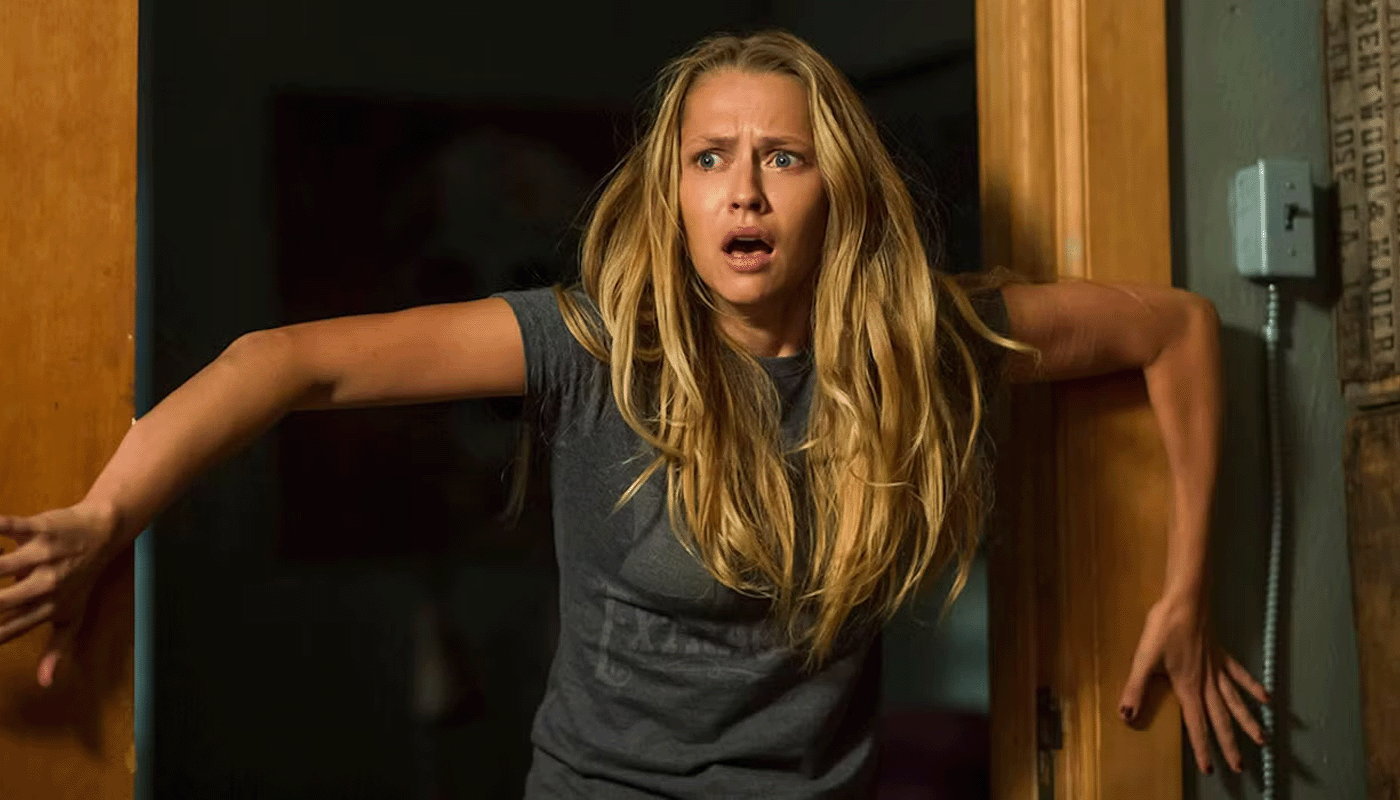
The feature film Lights Out, despite its lean 81-minute runtime, successfully expanded the short’s chilling premise. It stars Teresa Palmer as Rebecca, a young woman estranged from her bipolar mother, Sophie (Maria Bello). Rebecca’s younger brother, Martin (Gabriel Bateman), begins experiencing the same terrifying encounters with a shadowy entity named Diana, who only appears in the dark and seems intrinsically linked to Sophie’s mental state. Rebecca soon realizes that Diana is not just a nightmare but a supernatural specter, a malevolent manifestation of Sophie’s unresolved psychological torment and a childhood friend who died tragically in a mental institution. Diana lashes out at anyone who tries to intervene in Sophie’s life or attempts to get her psychiatric help.
An intriguing visual detail connects Lights Out to the current YouTube horror wave: Diana’s silhouette features distinct pinhole eye lights, a characteristic shared by the demonically-possessed Nikki (Inde Navarette) in Curry Barker’s recent hit, Obsession. This could be a conscious homage, a subconscious influence, or a remarkable coincidence, but it underscores the aesthetic threads that link these independent horror visions.
Lights Out emerged during a particular boom in allegorical horror, often dubbed the "trauma monster" subgenre. Films like Jennifer Kent’s The Babadook (2014), Ari Aster’s Hereditary (2018), Remi Weekes’s His House (2020), and Parker Finn’s Smile (2022) solidified this format. These films externalize deeply personal psychological suffering – be it grief, generational trauma, or mental illness – into tangible, supernatural threats. The monster becomes a literal manifestation of unresolved torment, often reflecting the inescapable nature of conditions that "run in the family."

Sandberg, in the feature, cleverly invents numerous light-based gags to explore Diana’s unique vulnerability, though not all of them logically cohere. The core challenge for Heisserer and Sandberg was how to defeat an entity that is essentially a projection of the human subconscious. This is the central dilemma of all trauma monster movies: how do you offer a satisfying resolution without minimizing the real-world complexity of mental health struggles?
Films like It Follows and Smile often conclude with their heroes failing to conquer their psychological demons through clever tricks or force. The monster often wins, painting a bleak, almost defeatist picture. However, this apparent pessimism serves a crucial purpose: it dramatizes the terrifying reality that mental health issues are complex, insidious, and rarely yield to quick fixes. They represent our deepest fears about inescapable suffering, cautioning against simplistic solutions like "sucking it up" or "acting like a man." These demons, these manifestations of inner turmoil, will always lurk, waiting for a moment of weakness.
The Flawed Resolution: A Betrayal and its Industry Echoes
Official Responses
This understanding of the trauma monster subgenre makes the theatrical ending of Lights Out particularly troubling. In the film’s climax, Diana threatens Sophie’s family. Sophie, after years of psychological abuse by her imaginary friend, makes a horrifying decision: she sacrifices herself, believing that by ending her own life, she will permanently defeat Diana, who is tethered to her mind. And in the theatrical cut, this works. Diana is indeed vanquished.

The implications of this ending are profoundly disturbing. It can be interpreted as suggesting that if one’s mental illness poses a serious threat to their loved ones, self-sacrifice is a viable, even effective, solution. This deeply irresponsible message stands in stark contrast to the nuanced explorations of mental health in other trauma monster films, and indeed, to real-world mental health advocacy.
It is crucial to note, in the filmmakers’ defense, that this was not Sandberg’s original vision. The initial cut of Lights Out featured a far superior ending. In this version, Sophie’s death solves nothing. Diana reappears, symbolizing the enduring and cyclical nature of mental illness. Rebecca and Martin, though terrified, choose to confront Diana together, armed with light. They understand that the battle will be continuous, but they resolve to fight it every time, growing stronger with each stand. This original ending perfectly engaged with the film’s metaphor, offering a constructive message about collective resilience and the ongoing struggle against mental health challenges.
However, as Sandberg revealed to The AV Club, test audiences disliked this ending. They reportedly felt that Diana’s return rendered Sophie’s sacrifice "in vain." This feedback, alarmingly misconstrued, led to the adoption of the current, problematic ending. The audience’s desire for a definitive "win" for the heroes overrode the film’s deeper metaphorical truth, demonstrating a profound disconnect between artistic intent and commercial pressure.
Despite its ethical misstep, Lights Out was a phenomenal financial success, costing a mere $4.9 million and grossing a staggering $148.9 million worldwide. A sequel was even officially announced shortly after its release. Yet, Lights Out 2 never materialized. Instead of nurturing Sandberg’s original voice or allowing him to explore a sequel that could have rectified the original’s problematic conclusion, Hollywood promptly funneled him into established intellectual properties. He directed Annabelle: Creation, a spin-off of The Conjuring universe, before spending half a decade churning out DC superhero films like Shazam! and Shazam! Fury of the Gods. This decision to prioritize existing franchises over original, proven talent perfectly encapsulates Hollywood’s risk-averse, formula-driven modus operandi. The opportunity to launch a "YouTube horror wave" a decade early was squandered, and the troubling message of Lights Out‘s ending was left to stand unchallenged.

The Irony of Revival: Implications for the Future of Horror
Implications
The failure to produce Lights Out 2 allowed the first film’s ethically fraught ending to persist as the official narrative. A sequel, by its very existence, would have inherently corrected this, revealing that Diana was not truly defeated and that Sophie’s tragic decision was, in fact, unnecessary and a cautionary tale about succumbing to the overwhelming despair of mental illness. It would have transformed the ending from a problematic resolution into a powerful, tragic inflection point, emphasizing the ongoing fight for mental well-being.
The long-awaited redemption for Lights Out may finally be at hand. In a remarkable twist of irony, Lights Out 2 was officially announced again in March 2026, just months before the current YouTube horror wave began making significant headlines. David F. Sandberg and Eric Heisserer are set to produce, alongside Lawrence Grey, who was involved in the original. While the path through development hell is always uncertain, the timing is undeniably fitting. The film that could have launched this movement a decade ago is finally back on track, propelled by the very trend it once presaged.
This resurgence of interest in Lights Out underscores a critical lesson for Hollywood: genuine innovation and audience connection often originate outside the established pipelines. The studios, now reluctantly, are being dragged into the shadows cast by a new generation of horror luminaries who honed their craft on YouTube. It’s a poetic justice that Diana, the entity born of darkness, might finally see her movie’s name truly "in lights," not just as a financial success, but as a culturally significant touchstone and a belated vindication of its original, more profound message. This time, perhaps, Hollywood will learn to nurture the flames of creativity, rather than simply attempting to brand and extinguish them.