Humanity’s Last Stand: A Lone Earthling’s Struggle on Mars
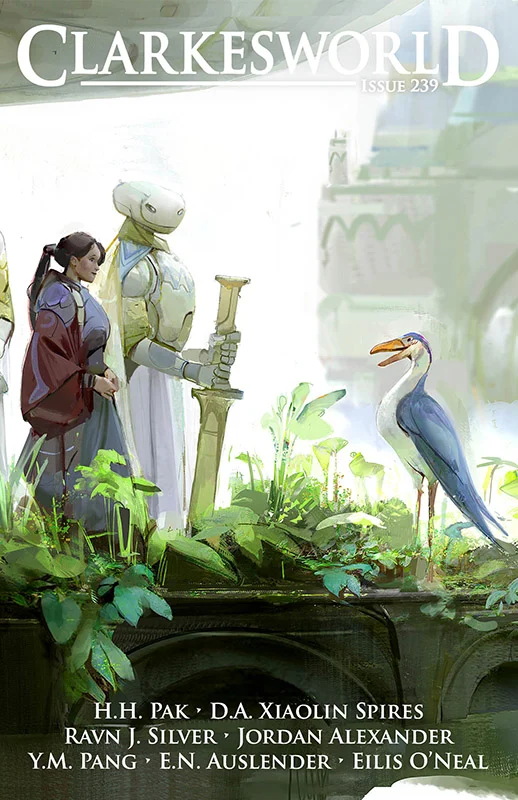
MARS, Landfall Colony – Five centuries after the "Exodus" saw a privileged few flee a dying Earth for the nascent Martian colonies, humanity finds itself on the precipice of extinction, clinging to hope through the "Endangered Species Initiative" (ESI). This ambitious program aims to secure a future for humankind on the Red Planet, but its success hinges on the cultural assimilation of its representatives. The latest human envoy, a robotics engineer named Teri, is discovering firsthand the profound challenges of navigating an alien society that views her as both a scientific curiosity and a living relic. Recent events, including a physical altercation with a Martian colleague, highlight the immense psychological and cultural pressures weighing on Earth’s last ambassadors.
The Precarious State of Humanity and the ESI Mission
Earth’s population, once billions strong, has dwindled to a mere eleven thousand, a catastrophic decline attributed to centuries of environmental degradation and resource depletion—a period humans refer to as the "Collapse." In a desperate bid for survival, the ESI was established, securing a fragile alliance with the advanced Martian civilization. The Martians, genetically engineered descendants of the original colonists, possess superior technology and a robust society, offering a potential haven. However, their assistance is conditional, contingent upon proof that humanity is "worthy of being saved." This places an immense, almost unbearable, burden on ESI representatives like Teri.
Teri, hailed as Earth’s premier robotics engineer, arrived on Mars a month ago, her journey funded by the ESI. Her initial assignment, however, was a profound demotion: "Laboratory Mechanics Specialist," essentially a repair technician at Eberswalde University. This stark contrast to her Earth-side expertise underscores the Martians’ perception of human capabilities and their subtly condescending approach to Earth technology, often viewed as "quaint" or "ancient."
Financial constraints further compound Teri’s struggle. The ESI stipend, though generous by Earth standards, is largely sent back home to support her mother, a zoologist grappling with the ongoing ecological crisis. On Mars, Teri initially relied on the charity of her Martian neighbors, who, with a mix of curiosity and pity, left sustenance like "potato and protein paste stew," "tofu tacos made with cricket flour tortillas," and "candied grasshoppers" outside her Biodome airlock. This generosity, however, proved unsustainable, forcing Teri to accept the undervalued position.
A Chronology of Cultural Clash and Personal Strain
Teri’s acclimation period has been marked by a pervasive sense of alienation. Her living quarters, a cramped studio apartment within the "Biodome"—an ancient terrarium providing Earth-like conditions—feels less like a home and more like a museum exhibit. Martian architecture, predominantly constructed from "mycelium brick," makes her feel "like the walls were breathing," a far cry from the concrete and steel of Earth. Her height, an anomaly on Mars, results in frequent bumps against low doorways, a constant physical reminder of her foreignness.
Communication with Earth remains a challenge. Holo-calls to her mother, Mama, are plagued by flickering signals and crackling audio, a stark contrast to the Martians’ ubiquitous neural implants. This technological disparity reinforces Teri’s feeling of being a "dinosaur" in this advanced society.
The psychological toll is evident in her conversations with Mama. "I feel like a Neanderthal," Teri confessed, rubbing a bruised forehead. Mama, pragmatic and stern, offered little sympathy, reminding Teri of humanity’s desperate situation: "You may have been the best here, but you’re one in three billion there. Thank the Ancients they gave you anything." Mama’s role on Earth, painstakingly cataloging and attempting to preserve endangered species, serves as a constant, implicit warning to Teri: "failure kills." Her cryptic messages, images of extinct animals like the mountain gorilla, hawksbill turtle, sea cows, and Tasmanian tiger, act as a "memento mori," emphasizing the high stakes of Teri’s mission.
The Shadow of the Predecessor: A significant source of pressure for Teri is the unspoken legacy of Dunia Amal, the first human ESI representative. Dunia "failed the initiative after three months," an act that, in the eyes of Earth, condemned her and the entire human race. Earth’s policy is to "pretend she doesn’t exist," her name a taboo. Teri, however, encounters Dunia as a cruiser pilot, a poignant symbol of her predecessor’s diminished status and isolation. This encounter reveals Dunia’s own bitter resignation to her fate, stating, "There are worse things than extinction, Teri."
A Martian Connection: A brief period of solace arrived in the form of Nile, a Martian PhD candidate studying human society and culture. Nile, a slender woman with "sunset" skin and "emerald eyes," offered Teri a rare moment of genuine connection, a handshake, and a willingness to understand Earth’s past. Their relationship blossomed, with Nile expressing a deep fascination for human history and a desire to bridge the cultural gap. She championed Teri, correcting xenophobic remarks from colleagues and attempting to learn Earth customs, even if sometimes misguided.
However, even Nile, with her academic curiosity and seemingly genuine affection, inadvertently reinforced Teri’s status as a subject of study. Her "academic discussion" with Thames about Earth’s coping mechanisms for extinction, using Mama’s messages as an example, revealed a subtle objectification.
The Breaking Point: The simmering frustrations culminated in a public incident during a tour of the Schiaparelli Crater. Thames, Teri’s condescending manager, cornered her, launching into a series of demeaning remarks about humanity’s past failures and their "reproduction plans." His suggestion of "guided human reproduction" and the prospect of "half-breed offspring" being "sterile," combined with his casual mention of "Denisovans"—an extinct archaic human subspecies Mama had recently warned Teri about—triggered Teri’s suppressed rage. She punched Thames, resulting in a bloodied nose and a literal "clash of cultures."
Supporting Data: Martian Society and the Human Experience
Martian society, shaped by centuries of genetic engineering and isolation, presents a stark contrast to Earth.
- Architecture: Cities are built into craters, with Landfall nestled in Schiaparelli. Buildings are primarily "mycelium towers," giving the city a "warm, beige hue," reminiscent of "spongy, mushroom-brick sandcastles." This organic, non-Euclidean design is often prioritized over practicality, leading to "engineering nightmares."
- Technology: Martians boast advanced neural implants for communication and data access, anti-motion sickness implants, and superior cruisers. Earth’s "quaint technology," like Teri’s soldering gun, is viewed with a mixture of amusement and anthropological interest.
- Cultural Practices: Martians show "unquestioning love for their ancestors," a stark contrast to Earth’s reverence for "the Ancients," whom they remember only "to avoid their mistakes." EV suits, though no longer biologically necessary for Martians, are worn as a "cultural" honor to their ancestors. Physical touch is uncommon.
- Perception of Humans: Martians often regard humans as "living relics," "artifacts," or "projects." Their curiosity, while sometimes well-intentioned, frequently manifests as intrusive questioning about human biology, culture, and even reproductive plans, often laced with xenophobic undertones. They use terms like "Exodus" for Earth’s decline, reflecting their ancestor’s narrative of escape, rather than the human term "Collapse," which implies cataclysm.
Official Responses and Institutional Dynamics
The ESI and Martian authorities maintain a careful balance, seemingly prioritizing the stability of their arrangement over the well-being of their human representative.
- Loch, the ESI Case Manager: Represents the bureaucratic face of the ESI. Her office, larger than Teri’s apartment, is decorated with "inaccurate illustrations of oceans and rivers," highlighting a superficial understanding of Earth. She consistently pressures Teri to assimilate, recording "obstinance" when Teri expresses discontent. Her advice to "mind the sinkholes" and "let sleeping dogs lie" regarding Dunia Amal underscores the ESI’s desire to control narratives and suppress dissent.
- Thames, the University Manager: Embodies the casual xenophobia prevalent in some Martian circles. His "vast knowledge" of human history is often fabricated or misinterpreted, used to "intimidate" and remind Teri of humanity’s precarious position. His probing questions about Teri’s "reproduction plans" and "half-breed offspring" demonstrate a disturbing objectification of her as a biological specimen.
- Nile’s Advocacy: After the incident with Thames, Nile actively intervened, convincing the ESI that Teri’s actions were a "clash of cultures" rather than a dangerous outburst. This resulted in a modified "rehabilitation" assignment at Landfall Memorial Hospital, repairing radiosurgery machines, a task Teri found ironically fitting given Dunia’s past. Nile’s efforts, while helpful, also highlight the Martian system’s preference for containment and "adjustment" over genuine understanding or systemic change.
Mama, from Earth, represents the official, if distant, response of humanity. Her calls, while personally supportive, also carry the weight of Earth’s expectations. Her stern reminders of "failure kills" and "no one is above extinction" reinforce the immense pressure on Teri to succeed at all costs, even if it means sacrificing her own dignity or identity.
Implications for Human-Martian Relations and Teri’s Future
The events surrounding Teri’s tenure on Mars expose the deep-seated tensions and power imbalances inherent in the ESI.
- The Burden of Representation: Teri’s experience illustrates the crushing weight placed on individual representatives of a species facing extinction. Every action, every perceived "failure," carries the potential to jeopardize the survival of all humanity. This forces a constant suppression of personal emotions and a performance of "happy-go-lucky" assimilation.
- Cultural Imperialism vs. Adaptation: The Martians, despite their advanced state, struggle with genuine empathy and understanding, often imposing their cultural norms and interpretations on humans. The expectation for Teri to "adjust her personality" and "meet them where they are" highlights a one-sided demand for assimilation, rather than a mutual cultural exchange.
- The Dehumanization of the "Other": Teri’s realization that she is viewed as an "artifact" and her life a "dig site" is a profound and painful insight. This objectification, even when cloaked in academic curiosity or well-meaning intervention, strips her of agency and identity, reducing her to a specimen for study.
- The Dilemma of Survival: Dunia Amal’s cynical perspective—"There are worse things than extinction"—presents a challenging philosophical question. Is survival at any cost, under conditions of constant dehumanization and subjugation, truly a victory? Teri’s breakdown and her growing understanding of Dunia’s apathy suggest that for some, the psychological cost of such survival might be too high.
- Uncertain Future: Teri’s future remains uncertain. While Nile’s intervention has softened her immediate punishment, the fundamental issues of disrespect, misunderstanding, and the immense pressure to conform persist. The question of whether humanity can truly find a haven on Mars, or merely a prolonged, dignified extinction, hangs heavy over Teri’s journey.
As the Martian sun dips, casting an indigo glow over the crater, Teri sits in the dust with Dunia, sharing her story, her tears a stark contrast to Dunia’s resigned apathy. The message from Mama—"Passenger pigeons," accompanied by images of stuffed, lifeless birds—serves as a poignant reminder of what has been lost, and what could still be lost, not just biologically, but in the spirit of humanity itself. The journey to a new home on Mars is proving to be less about technological marvels and more about the enduring, painful struggle for dignity and identity in the face of existential threat.