
Illuminating the Pillars of Thought: A Deep Dive into Philosophy’s Most Influential Minds
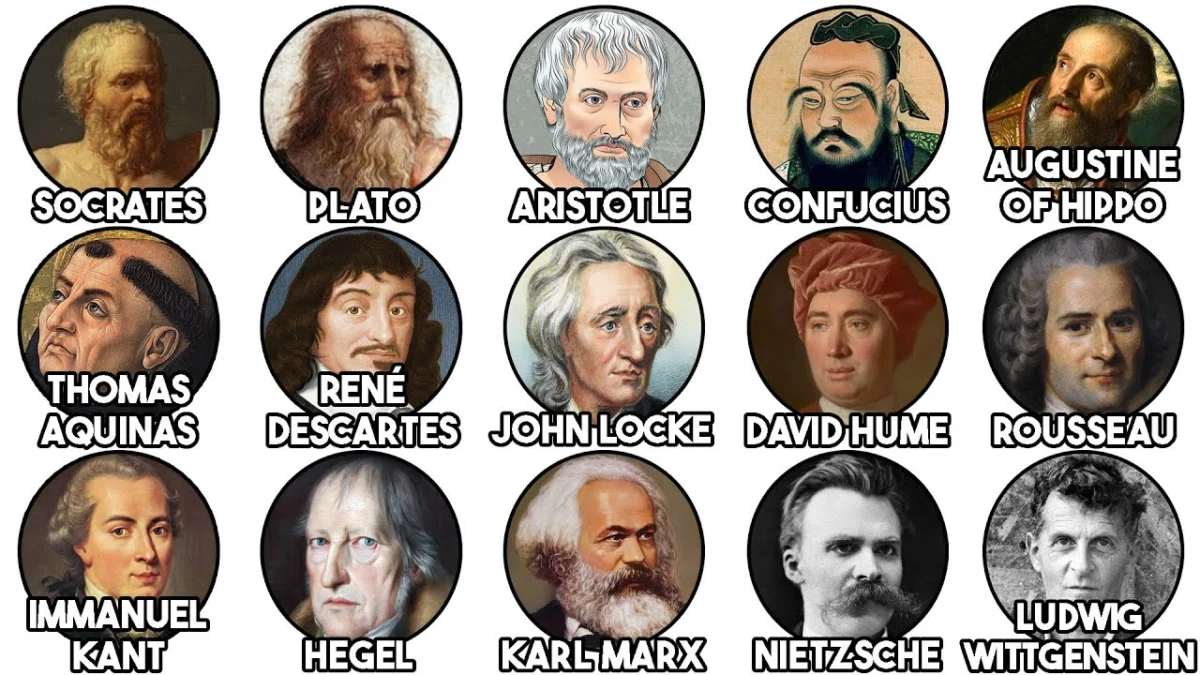
The enduring quest for understanding human existence, knowledge, and values has been shaped by a pantheon of thinkers whose ideas continue to resonate through the ages. From the dialogues of ancient Greece to the complex theories of the modern era, a select group of philosophers has profoundly influenced the trajectory of human thought and society. This exploration delves into the contributions of fifteen such luminaries, as presented in a captivating video by "Jadone History," offering a concise yet insightful overview of their lasting impact.
The Pantheon of Philosophical Giants: An Overview
The question of identifying the "fifteen most influential philosophers of all time" is a compelling one, even for those outside the academic sphere. While the precise ranking might spark lively debate, the impact of certain thinkers is undeniable, their names recognized even by those who haven’t delved into their seminal texts. This article, drawing inspiration from a widely viewed YouTube video by "Jadone History," aims to shed light on these intellectual titans, providing a brief biographical sketch and encapsulating their core ideas. The video, a 26-minute journey through philosophical history, offers a valuable entry point into the minds that have shaped our world, despite occasional pronunciation quirks and a narrative that, while informative, is not without its idiosyncrasies.
The chosen philosophers represent a broad spectrum of thought, spanning millennia and continents. They grapple with fundamental questions about reality, ethics, politics, and the very nature of human consciousness. Their ideas, often born from rigorous inquiry and profound contemplation, have not only informed academic discourse but have also seeped into the fabric of our societies, influencing laws, ethical frameworks, and our collective understanding of what it means to be human.
A Chronological Journey Through Philosophical Innovation
The video, and this expanded analysis, presents a chronological progression of philosophical thought, highlighting the evolution of ideas and the intellectual lineage that connects these thinkers.
Ancient Foundations: Socrates, Plato, and Aristotle
Our journey begins in ancient Greece, with the foundational figures of Western philosophy.
-
Socrates (c. 470–399 BCE): The father of Western philosophy, Socrates famously employed the Socratic method, a form of cooperative argumentative dialogue between individuals, based on asking and answering questions to stimulate critical thinking and to draw out ideas and underlying presuppositions. His relentless pursuit of truth and his emphasis on self-examination laid the groundwork for much of subsequent philosophical inquiry. He believed that virtue is knowledge and that no one does wrong willingly, but rather out of ignorance.
-
Plato (c. 428/427 or 424/423 – 348/347 BCE): A student of Socrates, Plato’s contributions are vast and multifaceted. He proposed the theory of Forms, suggesting that the physical world we perceive is merely a shadow of a higher, eternal realm of perfect, unchanging Forms. Plato advocated for a society governed by philosopher-kings, individuals possessing wisdom and virtue, who would rule based on their understanding of these Forms. His dialogues, such as The Republic and The Symposium, continue to be cornerstones of philosophical study.
-
Aristotle (384–322 BCE): A student of Plato, Aristotle diverged from his teacher in significant ways. While acknowledging the importance of abstract reasoning, he placed a greater emphasis on empirical observation and the systematic study of the natural world. Aristotle’s contributions spanned logic, metaphysics, ethics, politics, biology, and physics. He developed the concept of causality, distinguishing between material, formal, efficient, and final causes. His ethical framework, centered on the pursuit of eudaimonia (flourishing or living well) through the cultivation of virtues, remains highly influential.
Eastern Wisdom: Confucius
While the video primarily focuses on Western philosophers, it rightly includes a pivotal figure from Eastern thought.
- Confucius (551–479 BCE): In China, Confucius championed a philosophy centered on ethics, morality, and social harmony. He emphasized the cultivation of personal virtue, filial piety, and the importance of ritual and proper conduct in maintaining social order. His teachings, collected in the Analects, became the bedrock of Chinese social and political thought for centuries, shaping societal norms and governance. His focus on benevolent leadership and the importance of education for moral development continues to hold relevance.
Medieval Syntheses: Augustine and Aquinas
The medieval period saw philosophy deeply intertwined with theology, with thinkers seeking to reconcile faith and reason.
-
Augustine of Hippo (354–430 CE): A towering figure in early Christian thought, Augustine synthesized Neoplatonic philosophy with Christian doctrine. His Confessions offers a profound exploration of faith, sin, and divine grace, while City of God provides a theological framework for understanding history and the relationship between earthly and divine kingdoms. Augustine’s ideas on free will, original sin, and the nature of time have had a lasting impact on Western theology and philosophy.
-
Thomas Aquinas (1225–1274): The preeminent theologian and philosopher of the Scholastic period, Aquinas sought to integrate Aristotelian philosophy with Christian teachings. His Summa Theologica is a monumental work that systematically addresses theological and philosophical questions. Aquinas famously presented five arguments for the existence of God, which remain subjects of philosophical discussion. His emphasis on the harmony between faith and reason profoundly influenced Catholic thought and Western philosophy.
The Dawn of Modernity: Descartes, Locke, Hume, Rousseau, and Kant
The Renaissance and the Enlightenment witnessed a dramatic shift in philosophical inquiry, with a renewed focus on human reason and individual experience.
-
René Descartes (1596–1650): Often called the "father of modern philosophy," Descartes embarked on a quest for absolute certainty in knowledge. Through methodical doubt, he arrived at his famous declaration, "Cogito, ergo sum" ("I think, therefore I am"), establishing self-awareness as the foundation of knowledge. His dualistic worldview, separating mind and body, profoundly influenced subsequent thought, though it also generated significant philosophical challenges.
-
John Locke (1632–1704): A leading figure of empiricism, Locke argued that the mind is a tabula rasa (blank slate) at birth, and all knowledge is derived from sensory experience. His Two Treatises of Government laid out foundational principles of liberalism, including the concepts of natural rights (life, liberty, and property) and the idea that legitimate government derives from the consent of the governed. His ideas significantly influenced the American and French Revolutions.
-
David Hume (1711–1776): A radical empiricist, Hume pushed the boundaries of skepticism, questioning fundamental assumptions about causality, induction, and the self. He argued that our belief in cause and effect stems from habit and custom, rather than any rational necessity. Hume’s critique of traditional metaphysics and his emphasis on the limits of human knowledge challenged prevailing philosophical paradigms.
-
Jean-Jacques Rousseau (1712–1778): Rousseau’s political philosophy, particularly his concept of the "general will," profoundly influenced the French Revolution. He argued that legitimate political authority arises from a social contract, an agreement among free and equal individuals to form a society governed by their collective will. His ideas on the corrupting influence of society and the innate goodness of humanity, as expressed in Emile, or On Education and The Social Contract, continue to be debated.
-
Immanuel Kant (1724–1804): A central figure of the Enlightenment, Kant attempted to synthesize rationalism and empiricism. He argued that while knowledge begins with experience, it is also shaped by the innate structures of the mind. Kant’s transcendental idealism posits that we can only know phenomena (things as they appear to us) and not noumena (things as they are in themselves). His ethical system, based on the categorical imperative, emphasizes duty and universalizability, profoundly influencing moral philosophy.
The 19th Century and Beyond: Hegel, Marx, Nietzsche, and Wittgenstein
The 19th and 20th centuries saw the development of complex philosophical systems and critiques of existing societal structures.
-
Georg Wilhelm Friedrich Hegel (1770–1831): Hegel developed a comprehensive philosophical system based on the concept of the dialectic – a process of thesis, antithesis, and synthesis that drives historical and intellectual progress. His idea of Dasein (being-there) explored the human mode of existence, a concept that would be further developed by later existentialist thinkers. Understanding Hegel’s intricate writings often requires dedicated study.
-
Karl Marx (1818–1883): A revolutionary thinker, Marx analyzed history through the lens of economic structures and class struggle. He posited that capitalism inherently creates exploitation and alienation, and envisioned a future communist society characterized by equality and the abolition of private property. His ideas have had a profound and lasting impact on political movements and social theory worldwide.
-
Friedrich Nietzsche (1844–1900): Nietzsche famously declared "God is dead," asserting that traditional moral and religious foundations had lost their authority in the modern world. He placed the burden of creating meaning and values on humanity, particularly through the concept of the Übermensch (overman), an individual who transcends conventional morality and creates their own values. His critiques of morality, religion, and nihilism remain highly provocative.
-
Ludwig Wittgenstein (1889–1951): A towering figure in 20th-century philosophy, Wittgenstein dedicated himself to clarifying the relationship between language and reality. His early work, Tractatus Logico-Philosophicus, proposed a picture theory of meaning, while his later philosophy, articulated in Philosophical Investigations, shifted to a focus on language games and the social context of meaning. His rigorous approach to language has had a transformative impact on analytic philosophy.
Supporting Data and Enduring Relevance
The influence of these philosophers is not merely theoretical; it is deeply embedded in the structures and discourse of our societies.
-
Political Systems: Concepts like democracy, natural rights, and the social contract, championed by Locke and Rousseau, are the bedrock of many modern governments. Marxist critiques of economic inequality continue to fuel debates about social justice and economic policy.
-
Ethical Frameworks: Kant’s emphasis on duty and universal moral laws, along with Aristotle’s virtue ethics, continue to inform discussions about right and wrong, justice, and the good life.
-
Scientific Inquiry: Aristotle’s commitment to empirical observation and logical reasoning laid the groundwork for the scientific method. Descartes’ emphasis on rational deduction and systematic doubt also contributed to the development of scientific inquiry.
-
Language and Meaning: Wittgenstein’s profound insights into the nature of language have reshaped how we understand communication, meaning, and the limits of thought.
-
Existential Concerns: Nietzsche’s exploration of meaning in a godless world and the concept of self-creation resonate with contemporary anxieties about purpose and individual freedom.
Official Responses and Scholarly Engagement
While there are no "official responses" in the traditional sense for philosophical ideas, the academic world consistently engages with and reinterprets the works of these influential thinkers. Universities worldwide offer courses dedicated to their philosophies, and scholarly journals publish ongoing research and debate surrounding their ideas. The very existence of resources like "Jadone History’s" video, and this expanded analysis, demonstrates the sustained public and academic interest in understanding their contributions. The continuous re-examination of these philosophers’ works ensures their ideas remain relevant and adaptable to new contexts and challenges.
Implications for the Future
The enduring legacy of these philosophers lies in their ability to provoke critical thinking and to offer frameworks for understanding the human condition. As societies grapple with new technological advancements, complex social issues, and evolving ethical dilemmas, the insights of these thinkers provide invaluable tools for navigation.
-
Ethical AI and Technology: Kant’s categorical imperative and Aristotle’s virtue ethics offer potential guides for developing ethical principles for artificial intelligence and other transformative technologies.
-
Global Justice and Inequality: The critiques of Marx and the ideas of thinkers like Rousseau on social contracts remain vital for addressing persistent global inequalities and advocating for more just societies.
-
The Nature of Truth in the Digital Age: The challenges posed by Hume to our understanding of knowledge and the nature of belief are perhaps more relevant than ever in an era of misinformation and the proliferation of subjective "truths."
-
Individual Meaning and Purpose: Nietzsche’s call for self-creation and the ongoing philosophical discussions about existentialism continue to guide individuals in their search for meaning and purpose in an increasingly complex world.
The video’s creator hints at a potential Part Two, leaving the audience to ponder other influential figures like Spinoza, Heidegger, or Sartre. This anticipation underscores the vastness of philosophical inquiry and the continuous evolution of thought. The journey through the ideas of these fifteen philosophers is not an endpoint, but rather an invitation to further exploration, encouraging us to engage with their profound questions and to apply their wisdom to the challenges and opportunities of our own time. Their voices, though often separated by centuries, continue to echo, guiding us in our own quest for understanding and a more meaningful existence.




Leave a Comment