
Infernal Masterpiece Revisited: Green Ronin’s Legions of Hell – A Standard-Setting Bestiary for the D20 Era and Beyond
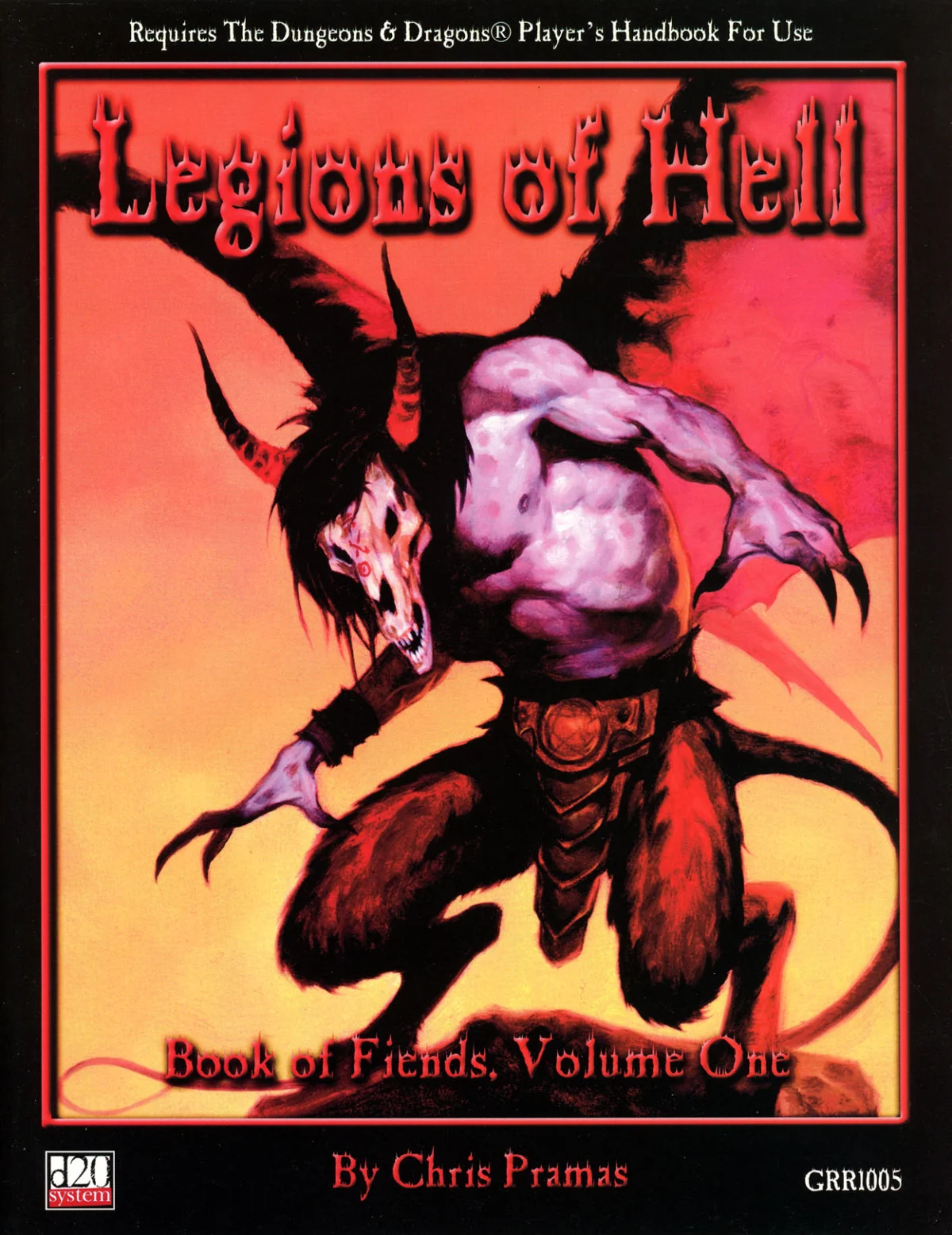
Originally heralded as one of the definitive D20 supplements, Green Ronin Publishing’s Legions of Hell emerged in 2001 as a beacon of quality in a saturated market. Praised unequivocally by critics, including an early review that deemed it "Excellent" and "Easily one of the Top 10 D20 supplements released to date," this groundbreaking bestiary delved deep into the infernal realms, offering game masters an unprecedented array of fiendish adversaries and a richly detailed cosmology of damnation. Decades later, its influence endures, having evolved into The Book of Fiends series, adapted for subsequent editions of Dungeons & Dragons, and inspiring countless campaigns with its meticulously crafted denizens of the Pit.
Main Facts: A Fiendish Phenomenon Takes Hold
In an era when the tabletop role-playing game (TTRPG) market, particularly the D20 system, was awash with countless creature compendiums, Legions of Hell from Green Ronin Publishing managed to cut through the noise with remarkable force. Released on October 13th, 2001, and priced at an accessible $14.95 for its 64 pages, this supplement immediately distinguished itself. Authored primarily by Chris Pramas, a name already synonymous with detailed world-building and impactful lore, alongside contributions from Jim Bishop, Brian Kirby, and Erik Mona, the book offered far more than just stat blocks for generic monsters.
Legions of Hell provided an immersive exploration of the Nine Circles of the Pit, focusing on the intricate hierarchy and diverse inhabitants serving Asmodeus, the enigmatic King of Hell. The core of the book presented approximately forty-five unique monster entries, carefully designed to offer both tactical challenges and deep narrative hooks. These ranged from the terrifying "foot soldiers" of hell to formidable Princes and Dukes, each imbued with distinct characteristics, motivations, and lore. Beyond the creatures themselves, the supplement enriched campaigns with prestige classes tailored for infernal servants, templates for Fallen Celestials, detailed information on the Angelic Choirs, and a comprehensive overview of Hell itself.
Its critical reception was nothing short of glowing, with reviewers struggling to identify any genuine weaknesses. The consensus was clear: Legions of Hell was not merely another monster manual but a masterclass in world-building, monster design, and artistic presentation, setting a new benchmark for supplemental material in the D20 system. Its legacy is further cemented by its subsequent evolution into The Book of Fiends series, which saw revisions for D&D 3.5 and 5th Edition, confirming its enduring relevance and adaptability across different game iterations. This initial offering from Green Ronin not only captivated the D20 community but also laid the groundwork for a long-standing contribution to infernal lore in TTRPGs.
Chronology: From D20 Saturation to Enduring Legacy
The journey of Legions of Hell from a standalone D20 supplement to a foundational text for infernal campaigns spans decades, reflecting its intrinsic quality and adaptability.
The D20 Landscape of 2001: A Market Ripe for Innovation
The turn of the millennium marked a pivotal period for tabletop role-playing games, particularly with the widespread adoption of the D20 System License by Wizards of the Coast. This open-gaming license, designed to foster third-party content creation for Dungeons & Dragons 3rd Edition, led to an explosion of supplements. While this democratized game design and offered unprecedented choice, it also resulted in market saturation. Game shop shelves groaned under the weight of countless monster manuals, adventure modules, and setting books, many of which offered only incremental variations on established tropes. As the original review succinctly put it, the common player sentiment was "How many cheesy fantasy monsters can these people crank out?" It was a landscape where true innovation and quality risked being drowned out by sheer volume. In this environment, a product had to be truly exceptional to capture attention and earn lasting praise.
The Genesis of Legions of Hell
It was into this crowded arena that Green Ronin Publishing released Legions of Hell on October 13th, 2001. The publisher, already gaining recognition for quality products like their Freeport modules (including the Origins Award-winning Death in Freeport), sought to create something distinct. The choice to focus exclusively on the denizens of Hell was a deliberate one, promising a thematic depth often lacking in more general monster compilations. The creative vision was spearheaded by Chris Pramas, whose prior work, most notably the AD&D 2nd Edition Guide to Hell, had already established him as an authority on infernal cosmology. This pedigree immediately lent credibility to the project, signaling to discerning players that Legions of Hell was more than just another collection of monsters; it was an authoritative treatise on the infernal. The book’s 64 pages, a concise yet packed format, were designed to be a potent injection of dark fantasy into any D20 campaign.
Evolution into The Book of Fiends Series
The overwhelming success and critical acclaim of Legions of Hell spurred Green Ronin to expand its vision. What began as a singular dive into the infernal soon grew into a comprehensive series. Legions of Hell became the first installment of what would eventually be known as The Book of Fiends. Subsequent volumes (though not explicitly named in the provided text, the series expanded to cover other major fiend types like demons and devils comprehensively) continued this tradition of deep lore, innovative design, and stunning artwork. This phased release allowed for an even more meticulous exploration of fiendish realms, ensuring that each creature and concept received the attention it deserved.
The series then underwent significant revisions and consolidations. Initially designed for D&D 3rd Edition, the material was later updated and compiled into single hardback collections for D&D 3.5 and, significantly, for D&D 5th Edition. This continuous adaptation across game editions is a testament to the timeless appeal of its content. It allowed the meticulously crafted lore and unique monsters to remain accessible and playable for new generations of TTRPG enthusiasts, ensuring that the legacy of Legions of Hell transcended the specific ruleset it was originally designed for. This ongoing relevance underscores the foundational quality of the original work and its authors’ foresight.
Supporting Data: Unearthing the Depths of Damnation
The enduring praise for Legions of Hell is firmly rooted in the quality and depth of its content, presenting a compelling case for its status as a landmark publication.
A Pantheon of Perdition: Unveiling the Fiends
The core strength of Legions of Hell lies in its meticulously designed monster entries. Far from generic fodder, each of the approximately forty-five creatures detailed within the book is a narrative waiting to unfold. The authors eschewed cliché, opting instead for imaginative and often unsettling new interpretations of infernal beings.
-
The Foot Soldiers of Hell: The book introduced a diverse array of lower-tier fiends, each with a distinct role and backstory that enriched the infernal hierarchy.
- Akop: Not merely shadowy figures, but an entire race tragically tricked into eternal servitude, transformed into spectral shadows – a poignant example of infernal manipulation. Their presence hints at deeper conspiracies and the corruption of innocence.
- Bonedreg: These horrific constructs, born from the indigestible remains of victims of the Leviathan, serve as grim reminders of the ultimate fate awaiting those who cross infernal masters. Their grotesque nature adds a visceral layer of horror.
- Chamagon: Gaunt, swift, and magically adept, the Chamagon are infiltrators and saboteurs, perfect for subtle infernal schemes that require espionage and disruption rather than brute force. They represent the insidious reach of Hell.
- Darksphinx: A sinister corruption of the iconic gynosphinx, these creatures embody the twisting of wisdom and prophecy into instruments of malevolence, challenging heroes not just physically but intellectually.
- Distender: Revolting devils resembling bloated stomachs, capable of attacking through the classic humors, the Distender presents a unique and repulsive combat encounter, pushing the boundaries of traditional fiend design.
- Faceless: These chilling assassins signal their success by adopting the faces of their victims, a macabre trophy that instills dread and anonymity. They are a potent tool for GMs seeking to sow paranoia and fear.
- Hellwardens: Living scarecrows, they serve as silent, watchful guardians, embodying the oppressive surveillance and absolute control within Hell’s domains.
- Spinders: Monstrous-sized, swarm-traveling creatures, the Spinders are a bane even to the devils themselves, showcasing that Hell has its own untamed horrors. They offer a unique challenge that disrupts the infernal order.
- Soulsniffer: These creatures possess the terrifying ability to track escaped souls across the planes, highlighting Hell’s relentless pursuit of its due and providing a powerful narrative engine for rescue or escape scenarios.
- And many others, each contributing to a rich tapestry of infernal ecology.
-
Princes and Dukes of Hell: At the upper echelons, the book introduced unique, named entities, each a powerful figure with their own dominion, personality, and agenda.
- Balan, Master of the Infernal Hunt: A formidable adversary who could lead epic chases across the planes.
- Furcas, Duke of Rhetoric: A master manipulator, offering challenges that go beyond combat, requiring negotiation, wit, and moral fortitude.
- Hadriel, Duchess of Domination: A powerful entity representing the absolute control and subjugation inherent in Hell’s hierarchy.
- Iblis, Duke of Pride (a Fallen Solar): A tragic figure whose fall from grace provides a deep wellspring for lore and moral dilemmas.
- The Lich Fiend: A fusion of two terrifying archetypes, presenting a unique form of undead infernal power.
- Krotep, Pharaoh of Axor, and Nekhet, Prophet of Set: These figures introduce an intriguing blend of infernal and ancient Egyptian mythos, adding a layer of cultural richness and unexpected connections to the Nine Hells.
Beyond the Bestiary: Campaign Integration and Lore
Legions of Hell transcended the simple role of a monster manual by providing extensive supplementary material designed to integrate these fiends into full-fledged campaigns. The inclusion of prestige classes specifically for servants of Hell allowed player characters to explore paths of damnation, offering dark alternatives and tempting power. Templates for Fallen Celestials provided GMs with tools to create powerful, tragic antagonists or even complex player choices. Information regarding the Angelic Choirs detailed the forces of good that might oppose Hell, creating a cosmic balance and context. Finally, a comprehensive overview of Hell itself—its geography, politics, and inherent dangers—transformed the setting from a mere backdrop into a living, breathing, terrifying realm ripe for adventure. This holistic approach ensured that every page offered "some new idea or adventure seed waiting for exploration."
Artistic Excellence: Visualizing Damnation
A crucial element in the book’s success was its stunning visual presentation. Legions of Hell boasted artwork by some of the industry’s most renowned talents, including Brom, Sam Wood, Raven Mimura, and Toren Atkinson. These artists, celebrated for their ability to evoke dark fantasy, horror, and intricate detail, contributed pieces that were not merely illustrations but integral components of the book’s immersive quality. The consistently high quality meant that "there is, literally, not a single weak piece of art in the entire book." This visual mastery played a significant role in establishing the grim, majestic, and terrifying aesthetic of the Nine Hells, allowing the monsters to leap off the page and into the imaginations of players and GMs. The art elevated the entire product, making it a collectible in its own right and enhancing the sense of dread and awe the subject matter demanded.
Design Philosophy and Innovation
Chris Pramas’s deep understanding of infernal lore, honed through his work on AD&D’s Guide to Hell, was evident throughout Legions of Hell. The book’s design philosophy was one of thoughtful originality, moving beyond the "same old stuff" that plagued many D20 supplements. Pramas and his team conducted extensive "creativity and research," drawing upon diverse mythologies and literary traditions to craft fiends that felt fresh, distinct, and deeply rooted in a consistent infernal cosmology. This commitment to unique design, coupled with a practical approach to game utility, is what ultimately allowed Legions of Hell to stand out and earn its reputation as an essential resource.
Official Responses: Unanimous Acclaim and Enduring Relevance
The critical reception of Legions of Hell was overwhelmingly positive, solidifying its place as a cornerstone D20 product and a benchmark for quality in TTRPG supplements.
Initial Critical Acclaim
Upon its release in 2001, Legions of Hell was met with an almost unprecedented level of enthusiasm. The initial review captured the widespread sentiment, declaring it "Excellent" and placing it "Easily one of the Top 10 D20 supplements released to date." Such high praise, particularly in a crowded market, was a powerful endorsement. Reviewers consistently highlighted the book’s originality, the depth of its lore, the sheer volume of usable material, and its exceptional production values. The reviewer’s candid admission of struggling to find "any weaknesses" speaks volumes about the perceived perfection of the product at the time. This collective critical acclaim positioned Legions of Hell not merely as a good product, but as an essential one for any D20 Dungeon Master seeking to incorporate infernal themes.
Long-Term Impact and Author’s Perspective
The true measure of a product’s success often lies in its enduring utility, and Legions of Hell (and its subsequent Book of Fiends iterations) has passed this test with flying colors. The author of the original review, reflecting on the product years later, confirmed that he had "never stopped singing its praises." This long-term endorsement from someone deeply entrenched in the TTRPG community underscores the product’s lasting value.
The practical application of The Book of Fiends in significant campaigns further illustrates its impact. It "greatly enhanced the Avernus Remix," a popular fan-created modification for a major D&D adventure, showcasing its ability to deepen and enrich established settings. Its influence was "extensively" felt in the reviewer’s own In the Shadow of the Spire campaign, with specific elements visible in the Chaos Lorebooks series, demonstrating its direct inspiration on creative works. Moreover, its adaptability is highlighted by its successful integration into diverse game systems like Mothership and Numenera, proving that the core concepts and creature designs transcend specific rulesets.
Comparison to Industry Titans
Perhaps the most significant testament to Legions of Hell‘s quality is its comparison to one of the most revered bestiaries in TTRPG history: the AD&D 2nd Edition Monstrous Manual. For the reviewer to place The Book of Fiends in a "toss-up" with such an iconic and beloved product speaks volumes about its perceived excellence and influence. The Monstrous Manual is a benchmark against which many subsequent creature compilations are measured, and for Legions of Hell to be considered its peer elevates it to an elite status within the genre. This comparison is a powerful statement of its foundational importance to the landscape of monster design in role-playing games.
Implications: A Legacy Forged in Fire and Innovation
The release and subsequent evolution of Legions of Hell (and The Book of Fiends series) carry significant implications for the TTRPG industry, influencing design philosophy, content standards, and the enduring appeal of infernal lore.
Setting a New Standard for Bestiaries
Legions of Hell arrived at a critical juncture, demonstrating that even in a crowded market segment like monster manuals, innovation and depth could still command attention. It proved that players yearned for more than just new stat blocks; they desired rich lore, compelling backstories, and creatures that felt integral to a larger, coherent world. By delivering a product that was "not the same old stuff," Green Ronin, led by Chris Pramas, effectively raised the bar for what a creature supplement could and should be. It underscored the importance of thematic focus, extensive research, and a commitment to original design over simple variations.
Deepening Infernal Lore in TTRPGs
The book’s dedicated focus on the Nine Hells provided a comprehensive and nuanced portrayal of infernal cosmology rarely seen before. It moved beyond simplistic good-vs-evil dichotomies to present a complex hierarchy, intricate politics, and diverse denizens with their own twisted motivations. This depth significantly contributed to the broader understanding and portrayal of Hell and its inhabitants in D&D and other RPGs. It provided GMs with a sophisticated framework for weaving intricate tales of damnation, corruption, and cosmic conflict, influencing how subsequent designers and GMs approached the depiction of ultimate evil. The detailed descriptions of infernal regions and the internal workings of Hell offered a template for crafting immersive, high-stakes campaigns centered around these powerful entities.
Green Ronin’s Reputation and Influence
The critical and commercial success of Legions of Hell played a crucial role in cementing Green Ronin Publishing’s reputation as a purveyor of high-quality, innovative TTRPG content. Alongside their acclaimed Freeport series, Legions of Hell showcased the publisher’s commitment to excellence in writing, art, and production. This reputation helped Green Ronin establish itself as a prominent and trusted voice in the competitive D20 market, allowing them to continue producing influential products for years to come.
Enduring Relevance in Modern Gaming
The continuous adaptation of The Book of Fiends series for D&D 3.5 and, crucially, for D&D 5th Edition, speaks volumes about its timeless appeal and utility. In an industry where editions come and go, the core concepts and creatures from Legions of Hell have proven remarkably resilient. Its ability to be "remixed" for major adventures like Avernus and adapted to wildly different game systems like Mothership and Numenera demonstrates that its fundamental design principles are robust and universally applicable. This enduring relevance means that new generations of GMs and players can still benefit from its rich content, ensuring that the legacy of Legions of Hell continues to inspire compelling, infernal adventures in the contemporary TTRPG landscape.
In conclusion, Legions of Hell was more than just a creature compendium; it was a testament to the power of focused design, deep lore, and artistic vision. It set a standard for quality that few have matched, proving that even the darkest corners of a fantasy world could yield products of unparalleled brilliance. For any game master seeking to inject a truly malevolent and sophisticated demonic presence into their campaigns, the foundational work begun with Legions of Hell remains, to this day, an absolutely essential resource.



Leave a Comment