The Shortened Reach: Examining the Erosion of American Asylum and Civil Rights in the 21st Century
Main Facts: A Shift in the American Identity
In the summer of 2026, the United States finds itself at a critical crossroads regarding its identity as a "nation of immigrants." For over a century, the Statue of Liberty and Emma Lazarus’s iconic sonnet, "The New Colossus," have served as the definitive symbols of American welcome. However, recent judicial rulings and federal policy shifts suggest a significant retreat from these foundational ideals.
The central tension lies between the historic "Mother of Exiles" persona and a modern, exclusionary legal framework. This shift is most notably embodied in the Supreme Court’s decision in Mullin v. Al Otro Lado, which grants the executive branch the authority to turn back refugees at the border without an asylum hearing. This ruling, alongside others that permit racial profiling by Immigration and Customs Enforcement (ICE) agents, marks a departure from the "better angels of our nature" that Abraham Lincoln once invoked.
Critics argue that these developments represent a "shortening of the American arm," where the country’s reach for its highest ideals no longer exceeds its grasp, but rather contracts toward a more insular and homogenous vision of society.
Chronology: From the "Golden Door" to the "Papers Please" Era
1882–1886: The Paradox of Liberty
The American struggle with immigration is not a new phenomenon. In 1882, the United States passed the Chinese Exclusion Act, the first significant law restricting immigration into the U.S. based on a specific ethnic group. Only four years later, in 1886, "Liberty Enlightening the World" was dedicated in New York Harbor. While the statue featured broken chains at its feet—celebrating the abolition of slavery—the nation remained deeply divided, continuing to break treaties with indigenous peoples and enforcing Jim Crow laws.
1961: An Awakening of Perspective
The publication of John Howard Griffin’s Black Like Me in 1961 served as a pivotal moment in American sociology. Griffin, a white journalist, darkened his skin to travel through the Deep South, documenting the systemic hostility faced by Black Americans. The book challenged the "default" white perspective, forcing a segment of the population to recognize that the American experience was not uniform and that justice often depended on the color of one’s skin.
2025–2026: The New Judicial Reality
The mid-2020s have seen a rapid acceleration of exclusionary legal precedents:
- September 2025: A Supreme Court decision clears the way for ICE agents to use race as a legitimate ground for immigration stops, effectively codifying racial profiling.
- Early 2026: Reports emerge of a workplace raid in Scottsdale, Arizona, where ICE detained members of the Navajo Nation, prompting tribal leaders to advise members to carry "Certificate of Indian Blood" papers at all times.
- June 2026: The Mullin v. Al Otro Lado decision is handed down, severely limiting the right to seek asylum. Simultaneously, ICE updates its policy on reporting detainee deaths, a move critics claim is designed to shield the agency from public accountability regarding the treatment of those in its custody.
Supporting Data: The Statistics of Exclusion and its Consequences
The impact of these policies is measurable across several sectors of American life, from civil liberties to national security.
Judicial Precedent and Racial Profiling
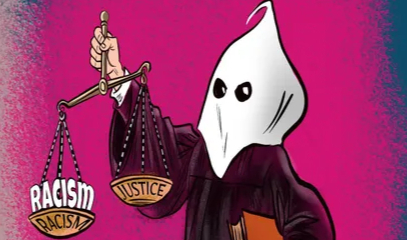
The link between historic and modern rulings is found in the logic of dehumanization. In the 1857 Dred Scott v. Sandford decision, Chief Justice Roger Taney famously wrote that Black people "had no rights which the white man was bound to respect." Modern critics, including legal scholars analyzing the Mullin decision, argue that the current Court’s disregard for the "shithole countries" rhetoric—and its impact on policy—echoes Taney’s dismissal of personhood.
The Navajo Nation Incident
The consequences of allowing race-based stops were felt acutely by the Navajo Nation. Following a series of raids, Arizona State Senator Theresa Hatathlie recommended that tribal members maintain digital and physical copies of their Certificate of Indian Blood. This "papers please" environment has created a climate of fear even among those with ancestral ties to the land that predate the United States itself.
National Security and Public Health
The trend toward isolationism and the rejection of scientific mandates has also impacted the U.S. military. In June 2026, reports indicated that nearly 300 service members fell ill in a viral outbreak following the reinstatement of vaccine mandate challenges. This data suggests that the same "anti-woke" rhetoric driving immigration policy is also undermining the readiness of the nation’s armed forces.
Official Responses: A Divided Government
The Judicial Majority
Justice Samuel Alito and the conservative majority of the Supreme Court have maintained that their rulings are grounded in a strict interpretation of executive power and border security. In Mullin v. Al Otro Lado, the majority argued that the administration must have the flexibility to manage border flows without the administrative burden of universal asylum hearings, especially during perceived national emergencies.
Legislative and Tribal Dissent
In contrast, advocates for civil rights and tribal sovereignty have reacted with alarm. Senator Theresa Hatathlie’s advice for indigenous people to carry "papers" was not just a practical recommendation but a stinging indictment of the current legal climate. "When the original inhabitants of this land are required to prove their right to exist in public spaces, the system is fundamentally broken," Hatathlie stated in a legislative session.
Advocacy Groups and the "Just Us" Pun
Human rights organizations have revived a pun famously coined by comedian Richard Pryor regarding the justice system: "You go down there looking for justice, that’s what you find: Just us." This sentiment reflects a growing belief that the legal system is increasingly designed to serve a "default" demographic—middle-class, white, and well-educated—while excluding those who fall outside those parameters.
Implications: The Economic and Moral Future of the Nation
The shift toward a more restrictive and racially conscious society carries profound implications for the future of the United States.

The Economic Labor Gap
One of the most immediate concerns is the potential collapse of the American workforce. Immigrants, including those from the "shithole countries" disparaged in political rhetoric, form the backbone of several essential industries.
- Agriculture and Food Processing: A significant portion of the workforce in produce picking and meatpacking is foreign-born.
- Service and Hospitality: Hotels and maintenance services rely heavily on immigrant labor.
- Healthcare: Nursing and elder care are currently facing critical staffing shortages that are exacerbated by restrictive immigration policies.
If the "America First" movement successfully removes or deters this workforce, the nation faces a looming crisis in its supply chain and basic services. The irony, as noted by some commentators, is that the very people cheering for these exclusions may soon find themselves unable to find affordable groceries or healthcare.
The Death of Empathy and Diversity
The rejection of "woke" culture and "diversity" initiatives signals a broader retreat from empathy. The author Mike Peterson notes that prejudice is often not "intentional and hostile" but rather a "judgment in advance, without evidence." When the nation’s decision-makers share a limited, similar social experience, they become blind to the realities of those living outside the "white default."
The move to stop reporting ICE deaths until after a detainee is released is a hallmark of this lack of curiosity. By sanitizing the data, the system allows the public to remain comfortable in their ignorance of the human cost of border enforcement.
Conclusion: The Lamp Beside the Golden Door
As of late June 2026, the "mighty woman with a torch" still stands in New York Harbor, but her message is increasingly at odds with the laws of the land she represents. The "air-bridged harbor" that once welcomed the "homeless, tempest-tost" is now guarded by a legal framework that prioritizes exclusion over asylum.
The American experiment has always been a balance between its high-minded ideals and its darker impulses. However, the current trajectory suggests that the "reach" of the American spirit is no longer exceeding its grasp. Instead, the nation is settling for a smaller, more fearful version of itself—one where justice is reserved for "just us," and the golden door is increasingly bolted from the inside. The question remains whether the economic and moral fallout of this shift will eventually force a return to the "better angels" that Emma Lazarus so famously celebrated.