The Resilience of the Frontier: Taylor Sheridan’s Case for the Eternal Western
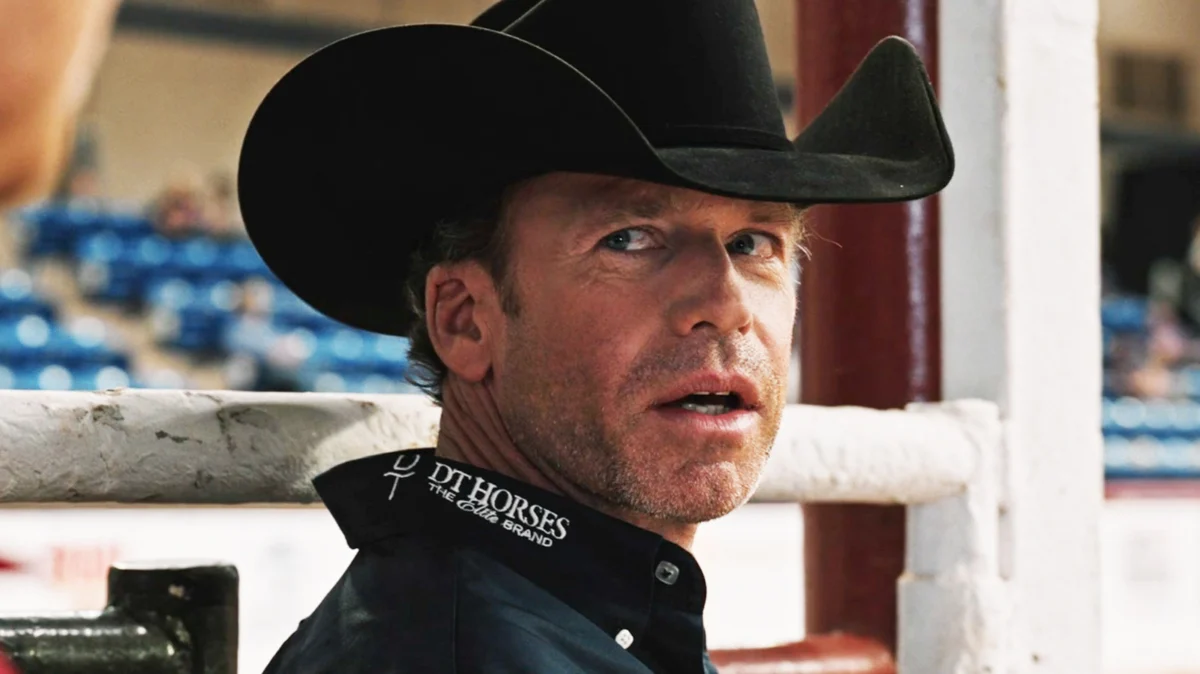
For decades, film historians and industry pundits have been obsessed with a singular autopsy: who or what killed the Western? Some point to the 1980 financial catastrophe of Michael Cimino’s Heaven’s Gate, a film so bloated it famously toppled United Artists. Others look to the 1970s, when the rise of science fiction—led by Star Wars—offered a new kind of "final frontier" that made the dusty plains of the 19th century seem archaic. Even the legendary critic Roger Ebert once suggested that the 2001 Ali Larter vehicle American Outlaws served as the genre’s final death certificate.
However, Taylor Sheridan, the architect behind the Yellowstone universe and arguably the most influential voice in modern television, rejects the premise entirely. To Sheridan, the Western never died, it was simply misunderstood by those tasked with making it. In his view, the genre isn’t just a collection of tropes—it is the foundational mythology of the United States, representing a period he describes as the "American Middle Ages."
Main Facts: The Sheridan Thesis
Taylor Sheridan’s perspective on the Western genre is rooted in a rejection of industry "common sense." During an extensive interview on the Bill Simmons Podcast, Sheridan dismantled the notion that audiences had grown tired of cowboys and outlaws. Instead, he argued that the industry had grown tired of quality storytelling, often masking poor narratives with genre gimmicks.
The core of Sheridan’s argument rests on three main pillars:
- Quality Over Genre: A genre does not die; only poor executions of it do.
- Cultural Mirroring: The Western serves as the American equivalent of medieval folklore, providing a necessary space to explore the country’s origins and moral complexities.
- The Neo-Western Evolution: The genre’s survival depends on its ability to adapt to modern settings while maintaining the archetypal themes of land, legacy, and lawlessness.
Sheridan’s success with Yellowstone, 1883, and 1923—as well as his film scripts for Sicario and Hell or High Water—serves as empirical evidence for his claims. While Hollywood executives spent the early 2010s avoiding the frontier, Sheridan was proving that the "flyover states" and global audiences alike were hungry for the rugged individualism and moral ambiguity that only a Western can provide.
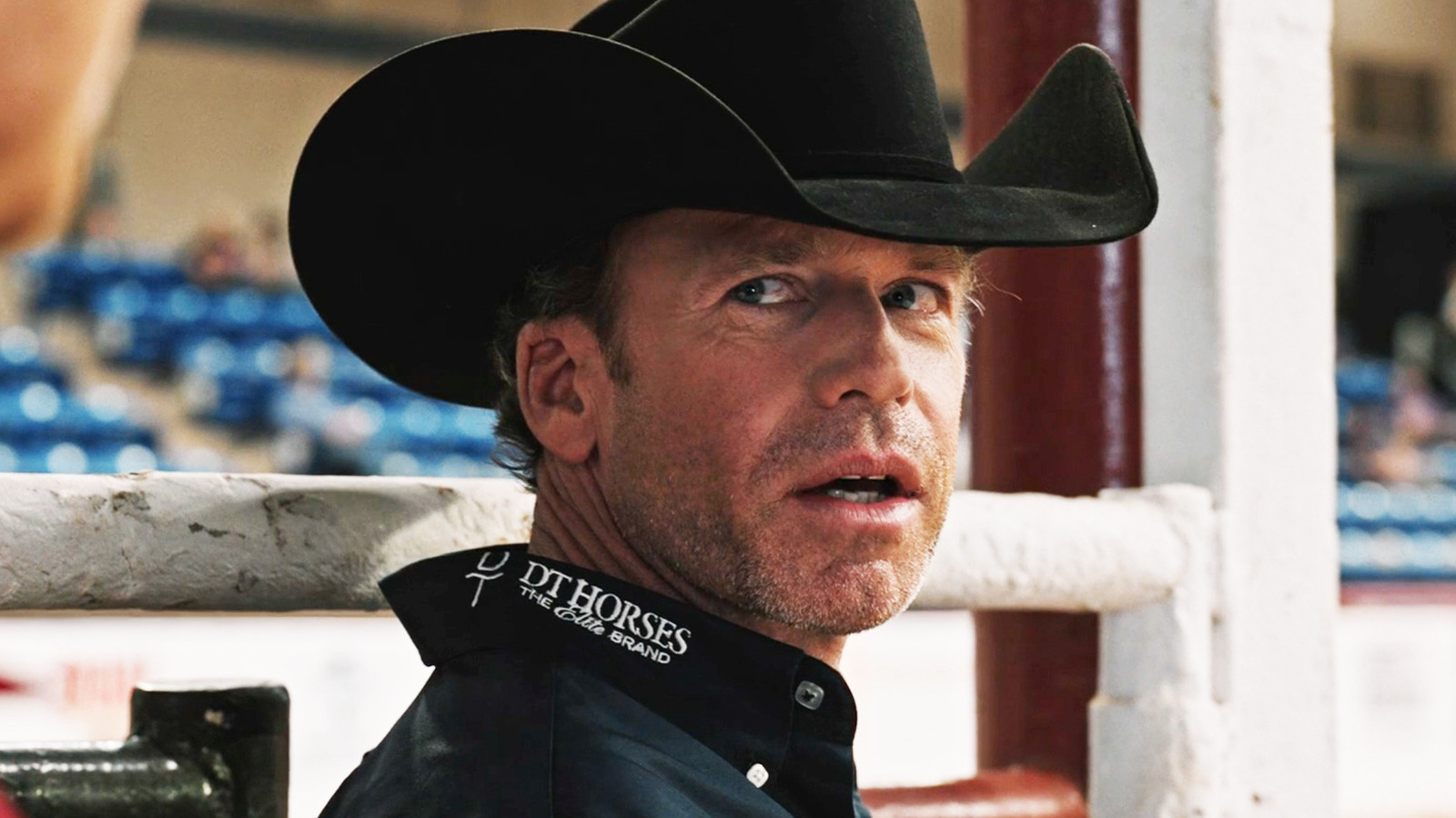
Chronology: The Alleged Death and Rebirth of the Oater
To understand Sheridan’s defiance, one must look at the timeline of the Western’s supposed decline.
The Golden Age and the Revisionist Pivot (1930s–1960s)
From the 1930s through the 1950s, the Western was the dominant form of American entertainment. Directors like John Ford and stars like John Wayne created a mythic version of the West that was largely heroic and binary. However, by the late 1960s, the "Revisionist Western" emerged. Films like The Wild Bunch (1969) and Butch Cassidy and the Sundance Kid (1969) began to deconstruct the myth, introducing bloodier violence and anti-heroes.
The "Death" of the Genre (1980–2011)
The 1980 release of Heaven’s Gate is often cited as the genre’s tombstone. The film’s failure led studios to believe that the Western was too expensive and too niche for a blockbuster-oriented era. Throughout the 90s and 2000s, the genre only appeared in "prestige" bursts, such as Clint Eastwood’s Unforgiven (1992) or Kevin Costner’s Dances with Wolves (1990). By the time the 21st century arrived, the Western was seen as a "cursed" genre. This sentiment peaked in 2011 with the release of Cowboys & Aliens, a high-concept mashup that Sheridan cites as a primary example of why executives lost faith.
The Sheridan Renaissance (2015–Present)
Sheridan began his "Modern Frontier" trilogy with the screenplay for Sicario (2015), followed by Hell or High Water (2016) and Wind River (2017). These films applied Western archetypes to modern-day drug wars and poverty-stricken rural landscapes. In 2018, Yellowstone debuted on the Paramount Network. Despite lukewarm initial critical reception, it became a ratings juggernaut, eventually leading to a multi-billion dollar franchise that proved the Western was not only alive but more profitable than ever.
Supporting Data: The Cost of Gimmicks vs. The Reward of Tradition
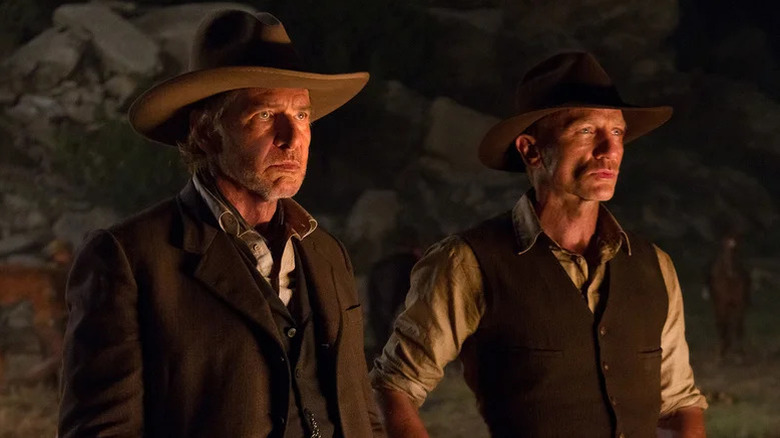
Sheridan’s critique of the 2011 film Cowboys & Aliens provides a stark look at how the industry misinterprets genre failure. Directed by Jon Favreau and starring Harrison Ford and Daniel Craig, the film was an attempt to revitalize the Western by injecting it with sci-fi elements.
- Financial Failure: Cowboys & Aliens grossed approximately $174.8 million worldwide against a production budget of $163 million. When marketing costs are factored in, the film was a significant loss for Universal Pictures.
- The Executive Takeaway: Studio heads viewed this as proof that "the cowboy genre is dead."
- The Sheridan Rebuttal: Sheridan argues that the film failed because it was a "bad genre" mashup. "The cowboy genre’s not dead," he told Bill Simmons. "What’s dead is dumb movies about cowboys and aliens."
In contrast, look at the "traditional" Westerns Sheridan points to as evidence of the genre’s health:
- Unforgiven (1992): Budget: $14M | Box Office: $159M | 4 Academy Awards.
- 3:10 to Yuma (2007): A critical and commercial success that proved the demand for "pure" Westerns remained.
- Yellowstone (2018-present): The Season 5 premiere drew 12.1 million viewers, a number nearly unheard of in the fragmented era of streaming and cable.
These figures suggest that when the Western stays true to its roots—focusing on character, land, and conflict rather than gimmicks—it consistently finds an audience.
Official Responses and Industry Skepticism
The road to Yellowstone’s success was paved with rejection. Sheridan has been vocal about the resistance he faced from "prestige" networks. He famously pitched Yellowstone to HBO, only to be met with skepticism. According to Sheridan, an HBO executive told him the show felt "too much like a soap opera" and expressed doubt that an audience existed for a story about a ranching family in Montana.
The industry’s reluctance was fueled by a demographic bias. For years, Hollywood focused on the "coastal elite" demographics, assuming that rural settings and traditional American themes were "uncool" or outdated. Paramount’s decision to pick up the series was a gamble that paid off, effectively shifting the gravity of the television landscape toward the "Heartland."
Furthermore, Sheridan’s insistence on high production values—shooting on location in Montana and Utah and using real horses and ranching techniques—initially terrified studio accountants. His "original pitch for Yellowstone sounded like a studio’s worst nightmare" because of the sheer cost of authenticity. However, Sheridan argued that the Western requires scale to work; if the landscape doesn’t feel like a character, the story fails.
Implications: The Western as the "American Middle Ages"
The most profound element of Sheridan’s philosophy is his classification of the Western as the "American Middle Ages." This perspective has significant implications for how we view American culture and storytelling.
A Foundational Myth
Most nations have centuries or millennia of history to draw upon for their folklore. European cultures have tales of knights and feudal lords; Japan has the era of the Samurai. The United States, being a relatively young nation, has the post-Civil War 1800s. Sheridan posits that this era serves as our "Dark Ages"—a period of lawlessness where the foundations of modern society were forged in blood and grit.
The Enduring Archetype
By framing the Western as a medieval epic, Sheridan explains why the themes never go out of style. The "Cowboy" is the American Knight-Errant. The "Ranch" is the feudal kingdom. The "Outlaw" is the rogue. These are universal human archetypes that resonate across cultures and generations. As long as humans are interested in themes of justice, survival, and the struggle against nature, the Western will remain relevant.
The Future of the Genre
Sheridan’s success has opened the floodgates for a new era of Western storytelling. We are seeing a surge in "Neo-Westerns" and "Period Westerns" across all platforms, from Kevin Costner’s ambitious Horizon saga to Netflix’s Godless.
The implication for the film and TV industry is clear: the Western is not a relic of the past to be "fixed" with aliens or modern gimmicks. It is a robust, flexible framework capable of exploring the deepest anxieties of the modern world. Taylor Sheridan didn’t "save" the Western; he simply reminded the world that it was never actually gone. He looked at the vast, empty space that Hollywood had ignored for decades and saw not a graveyard, but a frontier waiting to be reclaimed.