
King Edmund I: The Unsung Architect of a Unified England
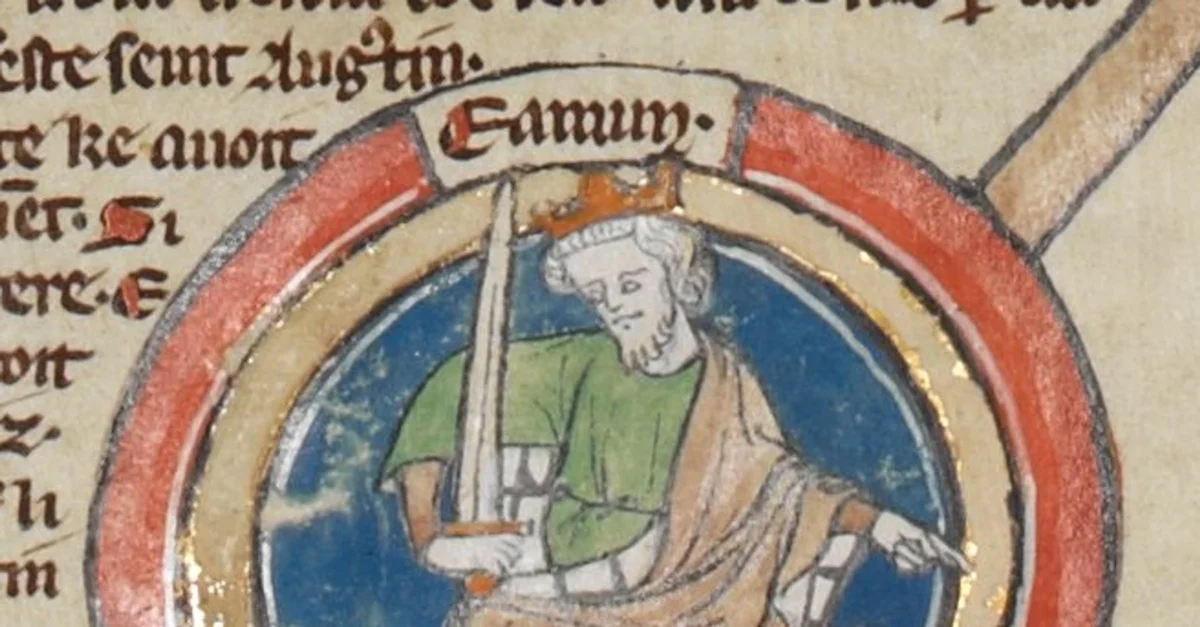
A pivotal figure often overshadowed by his illustrious grandfather, Alfred the Great, and his elder brother, Aethelstan, King Edmund I (reigned 939-946) nevertheless carved out a significant legacy in the tumultuous landscape of 10th-century Britain. His brief but impactful reign saw the young monarch not only defend and reconsolidate the nascent Kingdom of England against resurgent Viking threats but also forge innovative diplomatic strategies that redefined relations with his Celtic neighbours. From the brutal fields of Brunanburh to the intricate negotiations for northern supremacy, Edmund proved himself a capable warrior-king and a shrewd statesman, earning the praise of both medieval chroniclers and modern historians alike.
Main Facts: A Reign Forged in Conflict and Vision
Edmund I ascended the throne of England in 939, inheriting a kingdom precariously balanced between consolidation and renewed fragmentation. Born in 921, the fourth son of Edward the Elder, Edmund’s path to kingship was unexpected. Yet, he had already proven his mettle at the age of 16, fighting alongside his brother, King Aethelstan, at the epoch-making Battle of Brunanburh in 937. This decisive victory over a formidable Celtic-Viking alliance cemented English supremacy for a time and provided Edmund with invaluable military and strategic experience.
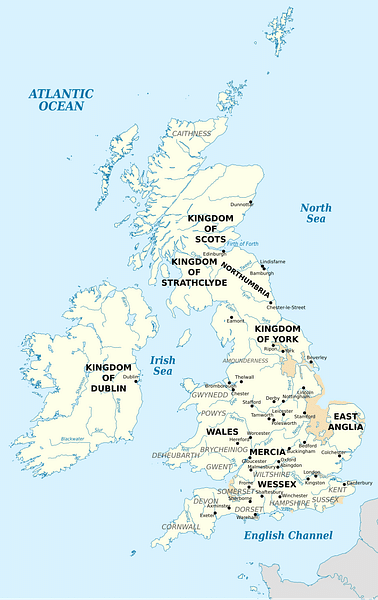
Upon Aethelstan’s death, Edmund immediately faced a severe challenge: the Vikings, seizing the opportunity, re-established their rule in York and parts of the Danish East Midlands. Edmund’s reign became a relentless campaign to reclaim these territories. Through a combination of military pressure, astute exploitation of internal Viking divisions, and strategic alliances, he successfully recovered the ‘Five Boroughs’ (Derby, Leicester, Lincoln, Nottingham, and Stamford) by 942 and definitively re-established the House of Wessex’s control over York by 944.
Beyond England’s borders, Edmund pursued a more nuanced foreign policy than his predecessor. While Aethelstan often demanded overt submission from neighbouring Celtic rulers, Edmund cultivated a network of "friendly client kings." He decisively intervened in Wales, establishing Hywel Dda as a loyal ally across most of the country, and famously granted the Kingdom of Strathclyde to Malcolm I of Scotland, securing military support rather than mere tribute. Domestically, Edmund was remembered as a lawgiver, implementing significant reforms influenced by Archbishop Oda of Canterbury, focusing on issues of law and order, and fostering the rebuilding of the Church. His reign, though cut short by an untimely death in 946, solidified the foundations of the unified English kingdom, passing on a stronger, more stable realm to his successors.
Chronology: From Princely Youth to Kingly Challenge
Early Life and Royal Lineage (921-924)
Edmund was born in 921, a period of profound transformation for England. The old Anglo-Saxon kingdoms of East Anglia, Mercia, and Northumbria had largely succumbed to the Viking invasions of the late 9th century, leaving the Kingdom of Wessex as the last bastion of English resistance. Under the visionary leadership of Alfred the Great, and subsequently his son, Edward the Elder, Wessex had embarked on a vigorous reconquest. By the 910s, Edward had successfully expanded his authority into Viking-held territories in the East Midlands and East Anglia, laying the groundwork for a unified English state.
Edmund was the son of Edward the Elder and his third wife, Eadgifu of Kent. His naming held symbolic weight; by calling him Edmund, the king drew a direct link to Saint Edmund the Martyr, the last English ruler of East Anglia, who had been killed by Vikings in 869. This connection underscored the ongoing struggle against Norse power and perhaps hinted at a destiny of resistance and recovery. Growing up in Wessex under his mother’s care, Edmund received a comprehensive education. The 12th-century historian William of Malmesbury noted that Edward’s sons were educated "like philosophers" and immersed in "book-learning" (201). Crucially, as a royal prince of the House of Wessex, Edmund would also have undergone rigorous training in martial arts, mastering the sword, spear, horsemanship, and the intricacies of military strategy – skills that would soon prove indispensable.
Initially, Edmund, as the fourth son, held little expectation of inheriting the throne. His eldest half-brother, Aethelstan, a seasoned warrior from Edward’s first marriage, was already a prominent figure. From Edward’s second marriage came Aelfweard and Edwin, the second and third sons. The union with Eadgifu also produced a fifth son, Eadred. This lineage meant Edmund’s path to kingship was far from assured.
A Royal Apprenticeship under Aethelstan (924-939)
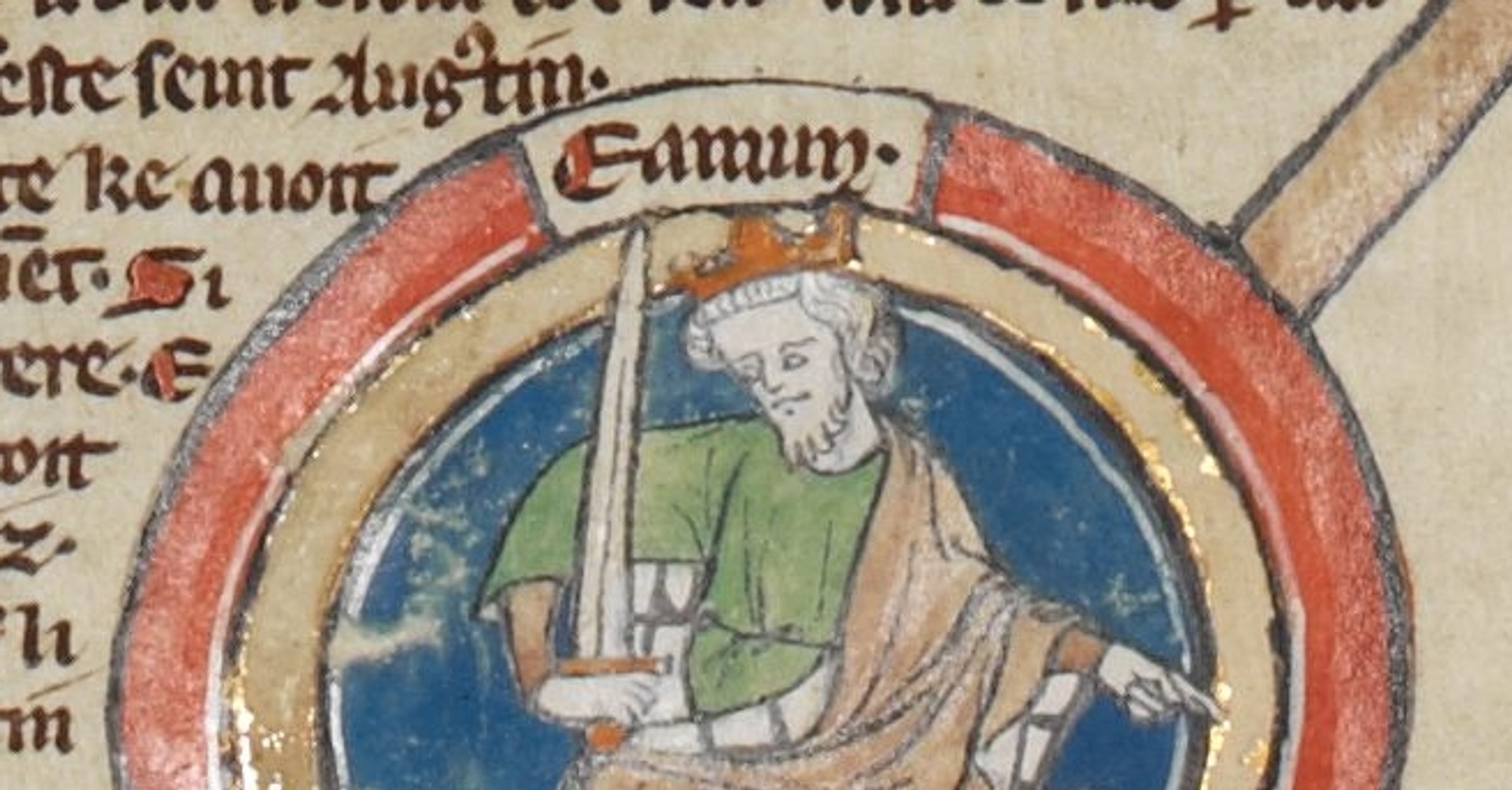
Edmund’s status within the royal family dramatically shifted following his father Edward’s death in 924. A brief but intense succession contest ensued between Aethelstan and Aelfweard, with Aethelstan emerging victorious and Aelfweard dying shortly after. With Aethelstan nearly three decades his senior, Edmund and his younger brother Eadred found a paternal figure in the new king. William of Malmesbury recounts Aethelstan’s "remarkable affection towards his other brothers [Edmund and Eadred] mere infants at his father’s death, he brought them up lovingly in childhood" (229).
Aethelstan’s reign began auspiciously. In 927, he capitalized on the death of Viking ruler King Sihtric of York, marching north to seize the city and declare himself ruler of all England. His ambitions extended further, aiming to be the overlord of all Britain. Neighbouring rulers from Wales, Strathclyde, Scotland, and Bamburgh were compelled to submit, publicly humbling themselves before their new English suzerain.
Edmund’s destiny took a significant turn in 933 when his elder brother Edwin died at sea. Aged just 12, Edmund became the new heir to Aethelstan’s burgeoning empire. His royal apprenticeship commenced in earnest with a chaotic episode in 934 when the Scots reneged on their fealty. Aethelstan responded with a massive invasion, assembling English lords, Danish earls, a large fleet, and Welsh princes, leading them through Nottingham and Durham into Scottish lands. Edmund, though too young to fight, accompanied the expedition, observing his brother’s leadership and the mechanics of dominating neighbours. Scotland was extensively raided and plundered, forcing King Constantine II to surrender once more, compelled to attend the English king’s council as a public display of supplication.
The Crucible of Brunanburh (937)
Despite Aethelstan’s overwhelming display of force, the Scots proved unreliable. In 937, they formed a formidable alliance with Strathclyde and Olaf Guthrithson of Dublin, culminating in a major invasion of England. In early winter, a huge army landed on the Wirral, on England’s west coast. Aethelstan, raising forces from Mercia and Wessex, marched north to confront them. Edmund, now 16, fought alongside his brother, demonstrating his growing maturity and military capability.
The ensuing Battle of Brunanburh was arguably the greatest clash of 10th-century Britain, a titanic struggle that shaped the future of England. A contemporary poem celebrating the victory immortalized the brothers’ heroism:
King Aethelstan, the lord of warriors,
Patron of heroes, and his brother too,
Prince Edmund, won themselves eternal glory
In battle with the edges of their swords
Round Brunanburh; they broke the wall of shields,
The sons of Edward with their well-forged swords
Slashed at the linden-shields; such was their nature
From boyhood that in battle they had often
Fought for their land, its treasures and its homes,
Against all enemies. Their foes fell dead,
The Scottish soldiers and their pirate host,
Were doomed to perish. (Campbell)
This resounding victory temporarily secured northern England. However, the Scots, though beaten, remained beyond direct English overlordship. The experience at Brunanburh undoubtedly impressed upon the young Edmund the enduring challenges of maintaining English authority over its northern neighbours and defending against persistent Viking incursions. These unresolved questions – concerning Scottish relations, Viking threats, and the complexities of royal succession – would soon become his direct responsibility. Aethelstan died in 939 at 45, thrusting the 18-year-old Edmund onto the throne, tasked with proving himself a worthy successor.
Ascending the Throne: Immediate Crisis (939-941)
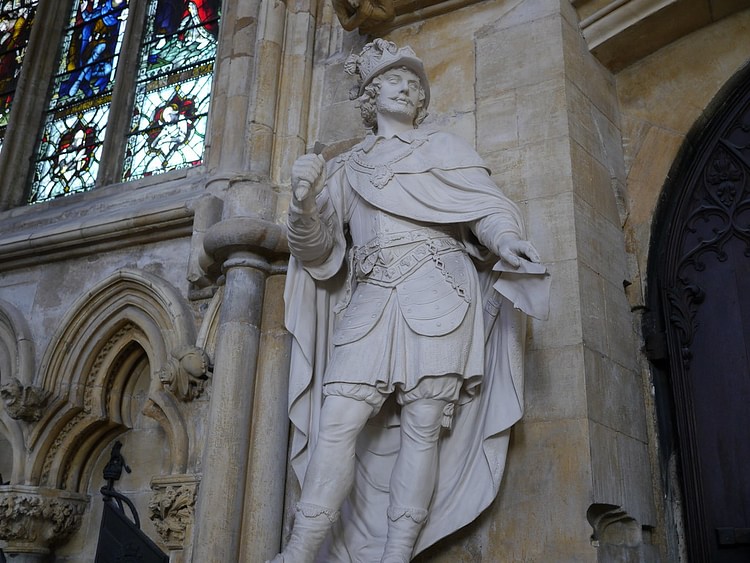
Edmund’s coronation took place late in 939 at Kingston-upon-Thames. As he knelt before Archbishop Wulfhelm of Canterbury, he must have reflected on the immense challenges and opportunities of his inheritance. Any hopes for a long, peaceful reign were immediately dashed. No sooner had Aethelstan died than England was plunged into crisis. The leading men of York, ever opportunistic, summoned Olaf Guthrithson of Dublin to rule over them. Large swathes of the Danish East Midlands also defected, rapidly enlarging Olaf’s new kingdom and threatening to unravel Aethelstan’s achievements.
In 940, Olaf advanced south, while Edmund marched north, their forces meeting at Leicester. A full-scale battle was narrowly averted thanks to the intervention of the Church. Archbishop Wulfstan of York, a key English defector who had become Olaf’s right-hand man, negotiated a peace with Bishop Oda of Ramsbury, Edmund’s chief advisor. This fragile peace, however, was short-lived. Olaf, a restless and ambitious ruler, soon turned his attention north, attacking the English earldom of Bamburgh. During this campaign, he died, possibly in battle, opening a new window of opportunity for Edmund.
Reclaiming the North: The Fight for York (942-944)
At York, Olaf Guthrithson was succeeded by his cousin, Olaf Cuaran. Edmund, seizing the moment of transition and potential instability in the Viking leadership, advanced north in 942. He swiftly reconquered several key towns in the northeast Midlands, collectively known as the ‘Five Boroughs’ (Derby, Leicester, Lincoln, Nottingham, and Stamford). Contemporary poets celebrated these martial exploits, hailing him as "the brave Edmund" and the "doer of necessary deeds" (McLoughlin).
Despite these successes, York itself remained outside English control. However, the new Olaf proved less aggressive than his predecessor and sought peace with Edmund to avoid further losses. In a significant diplomatic move, Olaf even accepted baptism, signaling a desire for better relations with the English crown. Yet, this appeasement alienated his supporters in York, who were already displeased by the loss of the Five Boroughs. Soon, Olaf Cuaran’s cousin, Ragnall, was elevated to the throne, leading to a temporary split in the Viking kingdom’s leadership.
Ragnall, too, initially followed his cousin’s lead, accepting both baptism and a nominal friendship with Edmund, perhaps hoping for English assistance against Olaf Cuaran. However, he misjudged the astute young English king. Edmund was content to let the internal divisions weaken York. In 944, with the backing of Archbishop Wulfstan, Edmund launched a decisive strike, crossing his northern border and seizing York. Ragnall was executed, and Olaf fled into exile. After five years of intense conflict and strategic manoeuvring, York was finally back in West Saxon hands, allowing Edmund to legitimately claim rule over all English territories, echoing Aethelstan’s earlier assertion of authority. This period of conflict, notably devoid of large-scale pitched battles, demonstrated Edmund’s skill in what was essentially a war of political influence, leveraging significant force, exploiting power transitions, and dividing rival factions – crucial skills for any warrior-king of his era.
Supporting Data: Statecraft and Strategic Vision
Diplomatic Ingenuity: Redefining Relations with Neighbours
Edmund’s ambitions, much like Aethelstan’s, extended beyond the traditional boundaries of England. He styled himself "King of the English and of the surrounding peoples" (Trousdale, 289), aiming for influence across the entire island of Britain. However, his approach to achieving this influence marked a distinct shift from his brother’s more demanding policies.
Welsh Affairs: The Case of Gwynedd
Wales during this period remained a complex "patchwork of kingdoms." The north was dominated by Idwal the Bald of Gwynedd, while the south was largely under the sway of Hywel the Good of Deheubarth. Edmund’s interactions with these Welsh rulers, though sparsely recorded, indicate a lighter hand than Aethelstan’s. The Welsh were primarily required to pay tribute and, crucially, to abstain from allying with the Vikings.

This relatively stable arrangement was disrupted in 942 when Idwal of Gwynedd appears to have rebelled against English overlordship or entered into an alliance with the Vikings. Edmund’s response was swift and decisive. He invaded Gwynedd, defeated Idwal’s forces, and the Welsh king was killed. Rather than annexing the territory, Edmund strategically granted control of Gwynedd to Hywel the Good, who now effectively ruled almost all of Wales. Hywel proved to be a steadfast ally to the English, deemed by Edmund to be a reliable and trustworthy neighbour. This move consolidated Welsh power under a friendly client king, simplifying English oversight and reducing the potential for further rebellion.
Scottish and Strathclyde Policy: A New Partnership
In the far north, Viking York had long served as a buffer, limiting English influence over the kingdoms of Scotland and Strathclyde. With the fall of York to Edmund in 944, this barrier was removed, allowing him to directly intervene in northern affairs.
Strathclyde, in particular, attracted Edmund’s attention, not only for its past alliance with the Vikings but also for harbouring Norse raiders, possibly including the deposed Olaf Cuaran. Harbouring England’s enemies was deemed intolerable. In 945, Edmund launched an invasion, driving out both the Norse and the Strathclydian ruler. Crucially, he did not retain the territory for himself. Instead, he granted it to King Malcolm I of Scotland, who had recently succeeded his cousin, Constantine II.
This "gift" of Strathclyde heralded a new relationship between England and Scotland. Unlike Constantine, Malcolm was not required to pay tribute or attend the royal court of Wessex as a supplicant. His primary obligation was to provide military support should northern England face further Viking attacks. This innovative approach, as Alaric A. Trousdale explains, represented "the reinforcement of the power of friendly client kings in the lands bordering his own, as opposed to King Athelstan’s policies of enforcing the submission of client kings" (126). Edmund, a veteran of Brunanburh, understood the perils of a unified Celtic-Viking threat. He had observed how Aethelstan’s heavy-handedness could push Celtic rulers into the arms of the Vikings. His "lighter approach" positioned England as a "first among equals," with Wales and Scotland as junior partners, benefiting from English friendship and even facilitated expansion into Gwynedd and Strathclyde respectively. While this strategy might not have exalted the West Saxon monarchy to the same imperial heights as Aethelstan’s, it proved a more sustainable and pragmatic way to maintain English power and contain the Viking threat in the long run.
Governing the Realm: Court, Counsel, and Legislation
Royal Advisors and Provincial Governance
On the domestic front, the young King Edmund relied heavily on a circle of experienced advisors. These included his influential mother, Eadgifu, his powerful cousin, Ealdorman Aethelstan, and Archbishop Oda of Canterbury. Ealdorman Aethelstan, often referred to by later generations as the ‘Half-King,’ wielded immense power. As Ealdorman of East Anglia, a vast province encompassing significant portions of the East Midlands, he was at the forefront of the wars against York and a vital source of military strength for Edmund. His influence is further evident in the rise of his wider family, with his brothers, Aethelwold and Eadric, being appointed as ealdormen in Kent and Wessex during Edmund’s reign. Edmund also elevated another royal cousin, Ealhhelm, as an ealdorman in Mercia. This strategy reveals Edmund’s approach to provincial governance: entrusting power to loyal kinsmen rather than relying solely on local elites, thereby reinforcing central royal authority across Mercia, East Anglia, and Kent.
Legal and Ecclesiastical Reforms
A key exception to this familial appointment strategy lay within the Church. Archbishop Oda of Canterbury, the bishop who had negotiated peace with York in 940 and was appointed Archbishop the following year, was of Viking heritage but a devout Christian. He became a central figure in formulating the king’s legislation, and his influence was undoubtedly positive. Edmund was remembered as a wise lawgiver, who "wisely decreed" and "honoured God and kept his laws" (Robertson, 129).
Like his predecessors, Edmund was deeply concerned with maintaining law and order, particularly in curbing blood feuds and theft. However, his laws also contained elements of innovation, likely thanks to Oda’s influence. Oda, through his extensive diplomatic trips, had been exposed to reforming ideas from the Kingdom of Francia. Consequently, Edmund’s laws promoted higher standards for monks and enforced celibacy through strict punishments. The role of bishops was significantly enhanced, encouraging them to tour their dioceses and preside over judgments at local assemblies. Bishops were also mandated to undertake the rebuilding of churches that had fallen into disuse, especially in areas of former Viking settlement, with the king’s explicit support for this vital project of spiritual and physical reconstruction.
Official Responses: Contemporary and Historical Appraisals
Edmund I, though often overshadowed by the monumental figures of Alfred the Great and Aethelstan, was nonetheless remembered sympathetically and with considerable respect by both medieval and modern scholars. His reign, though short, was widely seen as effective and crucial for the nascent English kingdom.
The 12th-century chronicler John of Worcester, reflecting on Edmund’s achievements, considered him a "great king." This assessment speaks to a perception of a monarch who not only weathered immediate crises but also demonstrated strong leadership and strategic foresight. Similarly, the eminent historian Sir Frank Stenton lauded Edmund as "both warlike and politically effective" (98 & 357). This modern appraisal perfectly encapsulates the dual nature of Edmund’s kingship: his prowess on the battlefield and his sagacity in governance and diplomacy.
Contemporary poets, as seen in the praise for his role at Brunanburh and his reconquest of the Five Boroughs, hailed him as "the brave Edmund" and the "doer of necessary deeds." These accolades were not merely poetic embellishment but reflected a genuine appreciation for a king who decisively acted to secure his realm. His successful reclamation of York, after Aethelstan’s death had seen it slip away, was a testament to his ability to consolidate his brother’s legacy while adapting to new challenges.
His unique approach to foreign policy, shifting from Aethelstan’s overt submission to a system of "friendly client kings," was a subtle but profound "official response" to the geopolitical realities of his time. It demonstrated a pragmatic understanding that long-term stability might be better achieved through partnership and strategic concessions rather than constant assertions of imperial overlordship. Thus, while not always placed in the pantheon of England’s most famous kings, Edmund I’s reign was consistently viewed as a period of vital consolidation and strategic innovation, earning him a respected place in Anglo-Saxon history.
Implications: Legacy and Successional Challenges
A Legacy of Consolidation and Innovation
King Edmund I’s reign, though tragically brief, left an indelible mark on the development of the English kingdom. He inherited a realm facing immediate existential threats from resurgent Viking powers and demonstrated exceptional leadership in not only repelling these incursions but decisively reclaiming lost territories. His reconquest of York and the Five Boroughs solidified the House of Wessex’s control over a truly unified England, proving that Aethelstan’s achievements were not merely transient but could be defended and maintained.
Beyond military success, Edmund’s strategic foresight in foreign policy was particularly impactful. His shift towards cultivating "friendly client kings" in Wales and Scotland created a more sustainable framework for managing relations with England’s neighbours. By offering patronage and strategic alliances rather than demanding outright submission, he mitigated the risk of a combined Celtic-Viking front, ensuring a degree of stability on England’s borders that would prove invaluable in the years to come. Domestically, his legislative and ecclesiastical reforms, influenced by Archbishop Oda, laid crucial groundwork for legal and religious development, promoting higher standards for the clergy and enhancing the Church’s role in local governance and social order. He successfully cemented the authority of the House of Wessex and ensured the continuity of its power, proving himself a worthy successor who not only preserved but enhanced his inheritance.
The Sudden End and Lingering Instability
Edmund’s promising reign, however, was cut short in a bizarre and tragic incident. By 946, the 25-year-old king could look back on a successful tenure marked by military triumphs, harmonious relations with his magnates, and effective alliances. On May 26, 946, he retreated to Pucklechurch, Gloucestershire, to celebrate the festival of Saint Augustine. This rare moment of respite for the king, intended for relaxation with family and companions, turned fatal. A notorious thief named Leofa intruded into the royal hall. His exact intentions remain unclear, but when identified and ordered to leave by the king’s steward, he refused, precipitating a brawl. King Edmund, renowned for his personal bravery, intervened directly in the chaos. In the ensuing struggle, Leofa fatally stabbed him.
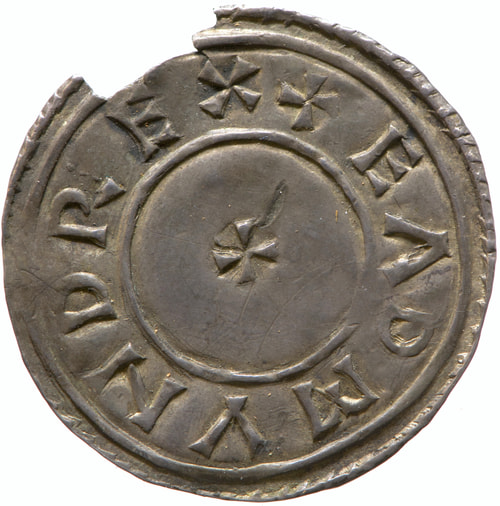
Edmund was buried at Glastonbury Abbey, a prestigious church in Wessex that he had favoured and patronized throughout his life. His sudden death had immediate and significant implications for the English kingdom. With his two sons, Eadwig and Eadgar, too young to rule, the throne passed to his younger brother, Eadred.
Edmund’s death, though he had brought stability, underscored the fragility of the nascent English state and the persistent nature of the Viking threat. No sooner had Eadred ascended than York once again rebelled under Viking leadership. Eadred would spend the remainder of his reign locked in a bitter struggle for control of the north, fighting to secure what Edmund had briefly achieved. It would take another decade of conflict before York finally fell to the House of Wessex for the last time, cementing the unified English kingdom that Edmund had so diligently worked to preserve and strengthen. His untimely demise highlighted the personal risk inherent in medieval kingship and the enduring challenge of maintaining a unified realm in an era of constant external and internal pressures.



Leave a Comment