
The Stone Tablet of Justice: Unearthing the Enduring Legacy of Hammurabi’s Code

Paris, France – In the heart of the Louvre Museum, a towering black diorite stele stands as a silent testament to one of humanity’s earliest and most influential legal systems. This isn’t just a relic; it’s the Code of Hammurabi, a compendium of 282 laws inscribed in stone by the Babylonian king Hammurabi (reigned 1792-1750 BCE). Though not the first attempt to codify justice, its unparalleled clarity, comprehensive scope, and enduring influence on subsequent legal traditions solidify its place as a cornerstone of ancient Mesopotamian civilization and a pivotal document in the history of law.
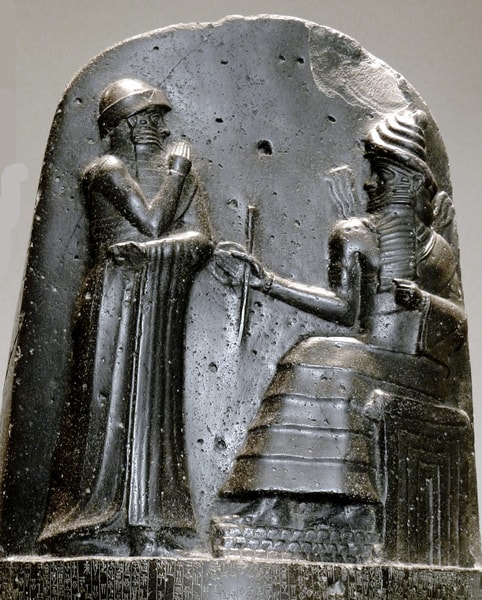
Unearthed in 1901 from the ruins of the Elamite city of Susa, this seven-foot-tall monument offers a profound glimpse into the social, economic, and judicial fabric of a vast empire. Its public display ensured that no citizen could claim ignorance of the law, a foundational principle for any effective legal system. At its apex, a carved image depicts Shamash, the revered god of justice, bestowing the laws upon Hammurabi, unequivocally asserting their divine origin and legitimacy, far beyond the arbitrary decrees of a mortal ruler.
A Chronology of Mesopotamian Justice: Precursors to the Great Code
The Code of Hammurabi did not emerge from a vacuum. It was the culmination of centuries of legal development in Mesopotamia, a region often hailed as the "cradle of civilization." The need for codified laws arose with the advent of complex urban societies, requiring clear guidelines to manage disputes, regulate commerce, and maintain social order.
The Early Attempts: Urukagina and Ur-Nammu
The earliest known fragments of a law code hail from the Sumerian city-state of Lagash, attributed to King Urukagina around the 24th century BCE. While largely lost to time, these fragments suggest early efforts at social reform and the protection of the vulnerable.
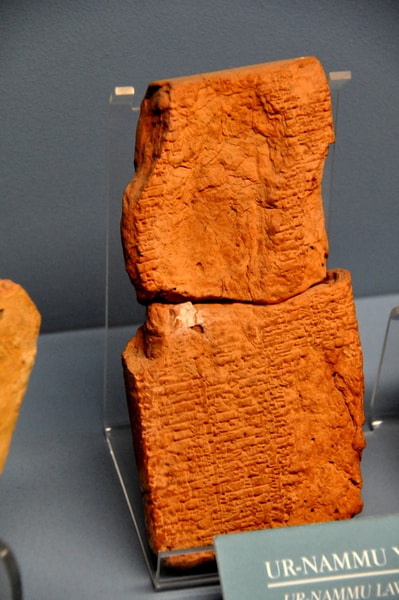
A more substantial predecessor, the Code of Ur-Nammu, dates from circa 2100-2050 BCE. Inscribed on clay tablets in cuneiform, this code was established in the city of Ur either by King Ur-Nammu (reigned circa 2112-2094 BCE) or his son Shulgi of Ur (reigned 2094 to circa 2046 BCE). Its genesis lay in a period of restoration following the collapse of the Akkadian Empire and the chaotic rule of the Gutians. Ur-Nammu, keen to legitimize his reign and foster a stable, unified society, presented himself as a benevolent "father figure" to his subjects. He understood that a patrimonial state, where subjects felt like members of a large family, thrived on consent rather than coercion.
Crucially, Ur-Nammu, like Hammurabi after him, claimed divine sanction for his laws, asserting he was merely the administrator of the gods’ will. This divine mandate was critical for securing the "consent of the governed," ensuring instinctive obedience and allowing the regime to pursue broader aims without excessive effort suppressing disaffection. His laws predominantly featured conditional sentences – "if a man… then he must…" – and prescribed monetary fines for infractions. For example:
- "If a man proceeded by force and deflowered the virgin slave-woman of another man, that man must pay five shekels of silver."
- "If a man knocked out the eye of another man, he shall weigh out half a mina of silver."
These fines served as deterrents in a relatively homogeneous society where a shared understanding of acceptable behavior could be presumed. This model of justice contributed to the cultural flourishing known as the Sumerian Renaissance under Ur-Nammu and Shulgi.

The Evolving Landscape: Laws of Eshnunna and Lipit-Ishtar
Following the Third Dynasty of Ur’s decline, Mesopotamia entered a period of fragmentation. The Laws of Eshnunna (circa 1930 BCE) emerged, primarily serving the city-state of Eshnunna. While building on Ur-Nammu’s model, their influence remained regional.
The Code of Lipit-Ishtar (died circa 1924 BCE), the fifth king of the Isin dynasty, marked another significant step. By this era, Mesopotamian society had grown more complex and diverse due to successive migrations and conquests. The relative homogeneity of Ur-Nammu’s time was gone, making a shared, implicit understanding of proper behavior less reliable. Lipit-Ishtar’s code, though also fragmentary, reflects this increased societal complexity with more detailed provisions, particularly concerning family law and commercial contracts. Monetary fines remained a primary form of punishment, but the precision of the laws indicates a growing need to explicitly define expectations for a varied populace. Examples include:
- "If a man’s wife has not borne him children, but a harlot from the public square has borne him children, he shall provide grain, oil, and clothing for the harlot. The children which the harlot has borne him shall be his heirs and as long as his wife lives the harlot shall not live with the wife."
This evolving legal landscape paved the way for Hammurabi, whose ambition and foresight would consolidate these precedents into a legal masterpiece.
The Zenith of Babylonian Law: Hammurabi’s Monumental Code
Hammurabi ascended to the throne of Babylon in 1792 BCE, inheriting a kingdom in a precarious position. His father, Sin-Muballit, had been forced to abdicate after a defeat by the powerful city-state of Larsa. Hammurabi initially pursued cautious domestic policies, focusing on infrastructure projects like temples and canals, giving no indication of the military genius that would soon transform Babylon into the dominant power of Mesopotamia. It is believed that he instituted his law code around 1722 BCE, a strategic move to ensure domestic stability before embarking on his ambitious military campaigns.
The Stele: A Public Proclamation of Divine Justice
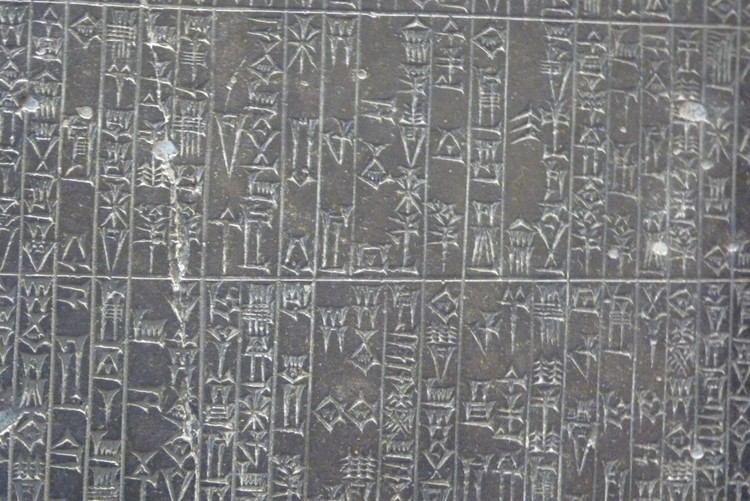
The physical manifestation of Hammurabi’s Code is itself a powerful statement. The grand stele, publicly erected, served as a highly visible and accessible declaration of law. Its imposing height ensured it could be seen, and its clear cuneiform script, though requiring literacy, underscored the principle that justice was open and available to all, removing any pretext of ignorance.
The iconic relief at the top of the stele, depicting Shamash handing the laws to Hammurabi, was not merely decorative. It was a potent piece of political and religious propaganda. By portraying this divine conferral, Hammurabi cemented the legitimacy of his rule and his laws, presenting himself as the divinely appointed agent of justice. This "official response" to the challenges of governance – attributing his authority directly to the gods – was a common and effective strategy for ancient rulers seeking to unite diverse populations under a single authority. The prologue of the Code itself reinforces this:
"When the lofty Anu, King of the Annunaki and Bel, Lord of Heaven and Earth… committed the rule of all mankind to Marduk… at that time Anu and Bel called me, Hammurabi, the exalted prince, the worshipper of the gods, to cause justice to prevail in the land, to destroy the wicked and the evil, to prevent the strong from oppressing the weak, to enlighten the land and to further the welfare of the people."
This powerful declaration established Hammurabi as bani matim ("builder of the land") and a divinely chosen protector, aiming to foster widespread acceptance and adherence to his laws.
Lex Talionis: Justice for a Diverse Empire
A defining characteristic of Hammurabi’s Code is its embrace of Lex Talionis – the law of retributive justice, famously encapsulated by the phrase "an eye for an eye, a tooth for a tooth." This marked a significant departure from the earlier Mesopotamian codes, which largely favored monetary compensation. The severity of the punishments was directly proportional to the crime and, importantly, often to the social status of the perpetrator and victim. For instance:
- "If a man put out the eye of another man, his eye shall be put out."
- "If he break another man’s bone, his bone shall be broken."
- "If a builder build a house for someone, and does not construct it properly, and the house which he built fall in and kill its owner, then that builder shall be put to death."
- "If it kill the son of the owner of the house, the son of that builder shall be put to death."
This harsh, yet meticulously detailed, system was a pragmatic response to the "unprecedented social environment" of Hammurabi’s burgeoning empire. As scholar Paul Kriwaczek notes, earlier Sumerian-Akkadian communities, feeling themselves to be members of a shared family, could often settle disputes through restitution. However, the multi-ethnic, multi-tribal Babylonian world, with its mix of urban dwellers, nomads, and speakers of various languages, presented a volatile mix. Confrontations could easily escalate into vendettas and blood feuds, threatening the very cohesion of the empire. Lex Talionis, with its absolute and publicly understood penalties, was designed to deter such conflicts and enforce a uniform standard of justice across a diverse populace, preventing societal instability.
The Code covered a vast array of legal areas, including:
- Property Law: Regulating ownership, inheritance, and land disputes.
- Commercial Law: Establishing proper prices, business contracts, and regulations for merchants and traders.
- Family Law: Addressing marriage, divorce, adultery, and the rights of women and children.
- Criminal Law: Outlining penalties for theft, assault, and other offenses.
- Labor Law: Defining responsibilities and compensation for various professions, including builders, doctors, and farmers.
Each crime was meticulously followed by its prescribed punishment, leaving little room for ambiguity and reinforcing the strict, uniform application of the law.
Conquest and Consolidation: Unifying an Empire Through Law
Hammurabi’s reign was a masterclass in strategic expansion and consolidation. Having secured domestic stability through his laws and policies, he was ready to extend his reach. He skillfully employed shifting alliances, first allying with Larsa to defeat the Elamites, then swiftly turning on Larsa to seize its key cities of Uruk and Isin. His military tactics were innovative and often ruthless, utilizing river damming to either starve out or flood enemy cities.
Perhaps the most striking example of his strategic cunning was his attack on Mari, a former ally whose king, Zimri-Lim, had supported Hammurabi’s earlier expansions. After conquering Mari, Hammurabi razed the city, leaving it in ruins – a stark warning to any who might defy him. By 1755 BCE, Hammurabi had consolidated control over the entirety of Mesopotamia, forging a vast empire under Babylonian hegemony.
Crucially, unlike earlier empires like the Akkadian, which relied on appointing handpicked officials to administer conquered territories, Hammurabi governed his expansive realm primarily through his unified legal code. This approach fostered a sense of shared identity and justice among diverse populations. The widespread acceptance of these divinely sanctioned laws, perceived as protecting the weak from the strong and promoting general welfare, contributed significantly to the absence of widespread revolt during the last five years of Hammurabi’s reign. The people, it seems, recognized the laws as serving their collective interest, fostering stability that allowed for further cultural and economic advancements.
The Unraveling and Rediscovery: A Journey Through Millennia
Despite Hammurabi’s achievements, his "empire of laws" proved fragile after his death. His son and successor, Samsu-Iluna, struggled to maintain control. City-states that had remained compliant under the formidable Hammurabi soon revolted, leading to the gradual fragmentation of the empire. This disunity made the region vulnerable to external threats.
Mesopotamia was subsequently invaded by the Hittites in 1595 BCE, followed by the Kassites, and then the Elamites around 1150 BCE. It was during this Elamite conquest, under King Shutruk Nakhunte, that the stele of Hammurabi’s Code was taken as spoils of war. Shutruk Nakhunte sacked the city of Sippar, near Babylon, and transported the monumental stele, along with other treasures like the statue of the god Marduk, to his capital city of Susa, in what is modern-day Iran.
There it lay, broken in pieces, for nearly three millennia, until its dramatic rediscovery in 1901 by a French archaeological expedition led by Jacques de Morgan. The painstaking reassembly of the fragments brought this ancient legal marvel back into the light, allowing scholars and the public alike to marvel at its sophistication and historical depth. Today, it stands proudly in the Louvre Museum, a testament to ancient human ingenuity and the enduring quest for justice.
Enduring Echoes: The Implications of Hammurabi’s Code
The Code of Hammurabi’s influence reverberated far beyond the borders of ancient Babylon, leaving an indelible mark on the development of legal thought and practice.
Influence on Subsequent Legal Systems:
Its impact is clearly discernible in later legal codes from the ancient Near East, including the Middle Assyrian Laws and the Neo-Babylonian Laws, which adopted its structured format and, in many cases, its legal principles. Perhaps its most significant, albeit debated, influence lies in its parallels with the Mosaic Law of the Bible. While there are distinct differences (e.g., Hammurabi’s stratified justice versus the theoretical equality before God in Mosaic Law), the shared concept of Lex Talionis and the categorical, divinely sanctioned nature of the laws suggest a common legal tradition or mutual influence. Both sought to provide a universal directive on how individuals should treat each other within a civilized society, establishing clear boundaries and consequences.
Contribution to Jurisprudence:
Hammurabi’s Code represents a pivotal moment in the history of jurisprudence. It solidified the concept of a written, publicly displayed law, making justice transparent and accessible (at least conceptually). It established the principle of objective justice, where predefined rules, rather than arbitrary whims, dictated outcomes. Furthermore, it offered an early, albeit harsh, articulation of proportionality in punishment, a concept that remains central to modern legal systems, even if its application in Lex Talionis is no longer accepted.
Beyond its legal aspects, the Code serves as an invaluable historical document, providing unparalleled insights into the social hierarchy, economic practices, family structures, and moral values of Old Babylonian society. Scholars can deduce the daily lives of its citizens, from the roles of women and slaves to the nuances of property ownership and commercial transactions.
Modern Relevance:
In the modern world, the Code of Hammurabi remains a foundational text for understanding the evolution of legal thought, the role of law in state-building, and the complexities of governing diverse populations. It stands as a powerful reminder of humanity’s ancient and continuous quest to establish order, resolve conflict, and define justice within society.
In conclusion, the Code of Hammurabi is far more than an ancient artifact; it is a monumental achievement that profoundly shaped the legal landscape of the ancient world. Its clarity, comprehensiveness, and enduring influence underscore its monumental status as a cornerstone of human civilization, a testament to the timeless human endeavor to codify justice and establish order in a complex world. Its legacy continues to echo through the corridors of law, a powerful reminder of the deep roots of our modern legal systems.




Leave a Comment