Leap of Faith: Analyzing the Chaotic Physics and Cooperative Depth of ‘Frog Sqwad’
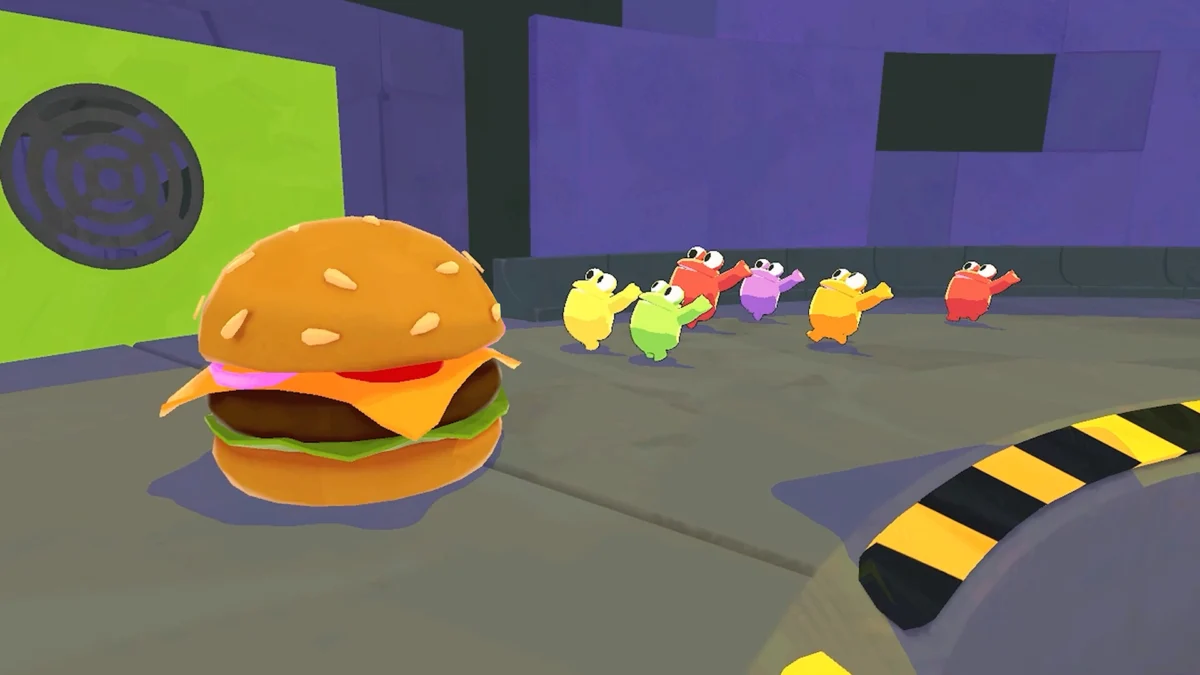
The indie gaming landscape has recently seen a significant shift toward physics-based cooperative experiences that prioritize emergent "controlled chaos" over rigid mechanical perfection. In this evolving market, titles like Gang Beasts, Human Fall Flat, and Overcooked have paved the way for a sub-genre often referred to as "fumble-core." The latest contender to enter this arena is Frog Sqwad, a high-energy, tongue-swinging party game that challenges players to navigate treacherous environments to satisfy the insatiable hunger of a monarch known as the Swamp King.
Released on Steam, Frog Sqwad represents a fusion of traditional platforming and physics-driven environmental interaction. While it offers a solo experience, the game is fundamentally designed around an expansive eight-player cooperative mode, pushing the boundaries of traditional four-player local and online limits. This report explores the core mechanics, development trajectory, and broader industry implications of Frog Sqwad.
Main Facts: The Anatomy of an Amphibian Heist
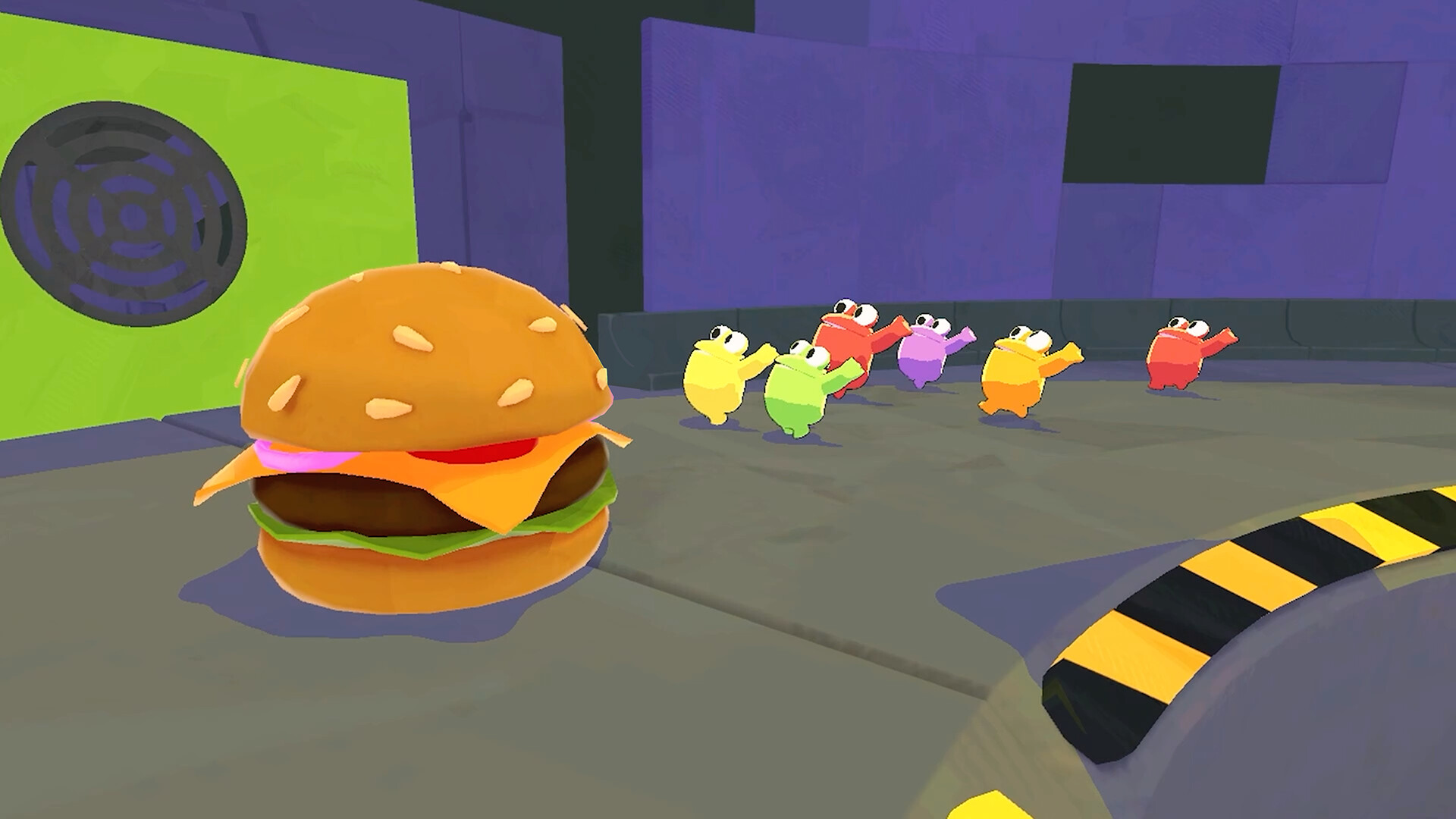
At its core, Frog Sqwad is a mission-based cooperative game where players take control of colorful frogs tasked with a singular objective: gathering food. However, this is not a simple collection task. The food—ranging from oversized hamburgers and fries to fragile giant eggs—is scattered across procedurally generated maps filled with hazards.
The primary mechanical hook is the "Sticky Tongue." Unlike traditional platformers where movement is dictated by a jump button and directional input, Frog Sqwad utilizes the tongue as a multi-tool for grappling, swinging, and hauling objects. This creates a high skill ceiling despite the game’s whimsical appearance. Players must meet a daily "quota" of food delivered to a central bowl, a mechanic that introduces a time-management element reminiscent of titles like Lethal Company.
Key features of the title include:
- Player Capacity: Support for up to eight players simultaneously, facilitating massive cooperative efforts or, more often, massive logistical failures.
- Dynamic Scaling: A unique "growth" mechanic where consuming smaller food items increases the player’s physical size and weight.
- Environmental Variability: Procedurally generated levels ensure that no two "feeding runs" are identical, forcing players to adapt to new layouts and hazard placements.
- Physics-Driven Interaction: Every object in the game, from the players themselves to the "human food" they scavenge, is subject to a physics engine that emphasizes momentum and weight.
Chronology: From Concept to the London Showcase
The journey of Frog Sqwad from a conceptual prototype to a full Steam release follows the classic trajectory of a modern indie success story, punctuated by public hands-on demonstrations that helped shape its final form.
The Announcement and Early Buzz
The game first garnered attention through its official announcement trailer, which highlighted the vibrant, neon-soaked aesthetic of its swamp environments and the slapstick nature of its eight-player gameplay. Early marketing emphasized the "Sqwad" aspect, positioning the game as a social experience rather than a solitary challenge.
The New Game Plus London Demonstration
A pivotal moment in the game’s development cycle was its appearance at the "New Game Plus" event in London. This showcase allowed critics and players to experience the game’s unique physics firsthand. It was during this event that the specific "feel" of the game became a topic of discussion among the gaming press.
Initial feedback highlighted the "floaty" nature of the controls—a common characteristic in physics-based games that can be polarizing. While some players found the lack of precision frustrating, others noted that the unpredictability added to the comedic value of the multiplayer experience. This feedback loop between developers and the community during the demo phase was instrumental in fine-tuning the procedural generation algorithms to ensure levels remained navigable despite the loose movement mechanics.
Full Release on Steam
Following the refinement period post-London, Frog Sqwad launched on Steam, targeting the growing audience of "Discord-centric" gamers who look for titles that can accommodate large groups of friends in a single session.
Supporting Data: Mechanics, Hazards, and the "Gorge" System
To understand why Frog Sqwad stands out in a crowded market, one must look at the data-driven design of its gameplay systems. The game operates on a risk-reward loop that is divided into three primary categories: Nutritional Scaling, Environmental Hazards, and Cooperative Synergy.
Nutritional Scaling and the "Giant Ball" Mechanic
One of the most innovative aspects of Frog Sqwad is how it handles player progression within a single level. Small food items—apples, fries, and berries—can be eaten by the frogs. This provides two benefits:
- Health Regeneration: Essential for surviving spikes and slime monsters.
- Physical Transformation: As a frog eats, its character model scales upward.
Upon reaching a certain threshold, the frog loses its ability to perform precise jumps and instead becomes a "giant ball." In this state, the player becomes a wrecking ball capable of smashing through environmental barriers and walls that are otherwise impassable. This creates a strategic layer where the team must decide which players will remain small and agile to fetch items, and which will "bulk up" to act as the team’s heavy machinery.
Environmental Hazards and Procedural Logic
The procedural generation in Frog Sqwad is not merely about layout; it is about the distribution of "death traps." The game features:
- Slime Monsters: Mobile AI threats that can consume players, removing them from the round until they respawn or are rescued.
- Toxic Ooze: Static hazards that require precise "tongue-swinging" to bypass.
- Fragility Physics: Larger items, like the giant eggs, have "health" bars. If a player is too reckless while dragging an egg through a spiked corridor, the item will break, resulting in zero progress toward the Swamp King’s quota.
The Eight-Player Synchronicity
Data from multiplayer testing suggests that the game’s difficulty scales non-linearly. While a single player might find the "floaty" controls a hindrance, a group of eight can effectively "brute force" physics puzzles. For example, multiple frogs can attach their tongues to a single heavy object, creating a tug-of-war dynamic that allows for the movement of massive items that a solo player could never budge.
Official Responses and Critical Reception
The developer’s philosophy regarding Frog Sqwad centers on the idea of "joyful frustration." In response to critiques regarding the "floaty" movement, the design team has maintained that the lack of pinpoint precision is a deliberate choice intended to foster communication and laughter.
Critical Analysis of Movement
Reviewers who played the demo at the New Game Plus event noted that the movement felt "ridiculously floaty for a game requiring specific jumping." In professional game design, this is often a contentious point. If a game requires precision (platforming) but provides imprecise tools (floaty physics), it risks alienating "hardcore" players.
However, the consensus among party-game enthusiasts is that this friction is where the "magic" happens. Much like the intentional clunkiness of Octodad: Dadliest Catch, the struggle to move effectively is the primary source of entertainment. The developers have responded to this by ensuring that while individual movement is loose, the environmental puzzles are forgiving enough to allow for multiple solutions.
The "Sqwad" Strength
Official statements from the development team emphasize that the game is "best served with friends." They have designed the "precise rooms" of the game to be solvable by players who master the tongue mechanics, while less experienced players can contribute by gathering smaller food items or acting as the "wrecking ball" to clear paths. This "play to your strengths" approach has been praised for its inclusivity in a genre that can sometimes be punishingly difficult.
Implications: The Future of Physics-Based Social Gaming
The release of Frog Sqwad carries several implications for the broader gaming industry, particularly in the indie sector.
1. The Expansion of the "Party" Limit
For decades, the "four-player local co-op" was the industry standard, dictated largely by the hardware limitations of early consoles (like the N64 or GameCube). Frog Sqwad joins a new wave of titles that treat eight players as the new baseline. This shift reflects the rise of high-speed internet and the prevalence of PC gaming, where hardware constraints are less of a bottleneck. As more games adopt this higher player count, we may see a shift in how "social" games are marketed.
2. The Persistence of "Fumble-Core"
Frog Sqwad proves that there is still a massive appetite for physics-based comedy. In an era where AAA titles strive for hyper-realistic animations and "weighty" movement, indie games are finding success by doing the opposite—embracing the absurdity of ragdoll physics and floaty controls. This suggests that "fun" is increasingly being defined by the unpredictability of the game engine rather than the narrative or graphical fidelity.
3. Procedural Generation as a Tool for Longevity
By utilizing procedurally generated maps, Frog Sqwad addresses the primary weakness of the party game genre: repetitiveness. Most party games suffer once players memorize the optimal routes through a level. By ensuring that the "Swamp King’s" domain is ever-changing, the developers have created a framework for long-term replayability that could see the game maintained through seasonal updates and new "food" types.
Conclusion
Frog Sqwad is more than a simple game about frogs eating hamburgers; it is a testament to the enduring appeal of cooperative chaos. By blending the frantic energy of an eight-player lobby with the strategic depth of a physics-based puzzler, it carves out a unique niche on the Steam storefront. While its "floaty" controls may present a barrier to entry for those seeking a traditional platforming experience, those who embrace the "sqwad" mentality will find a delightful, challenging, and ultimately hilarious experience. As the Swamp King awaits his next meal, players are left to wonder: in the world of Frog Sqwad, is the greatest challenge the slime monsters, or the teammates swinging wildly on the other end of the tongue?