Life Imitating Art: Scarlett Bermingham and Andrew Rhymer on Redefining the Modern Rom-Com
The bustling lobby of a high-end Toronto hotel in early September is rarely a place of quiet reflection. Between the clinking of cocktail glasses and the hurried whispers of publicists, the air is thick with the nervous energy of the Toronto International Film Festival (TIFF). Yet, for filmmakers Scarlett Bermingham and Andrew Rhymer, the chaos feels strangely domestic. Upstairs, a sitter watches their two children; downstairs, the husband-and-wife duo prepares to debut their first co-directed feature, All That She Wants.
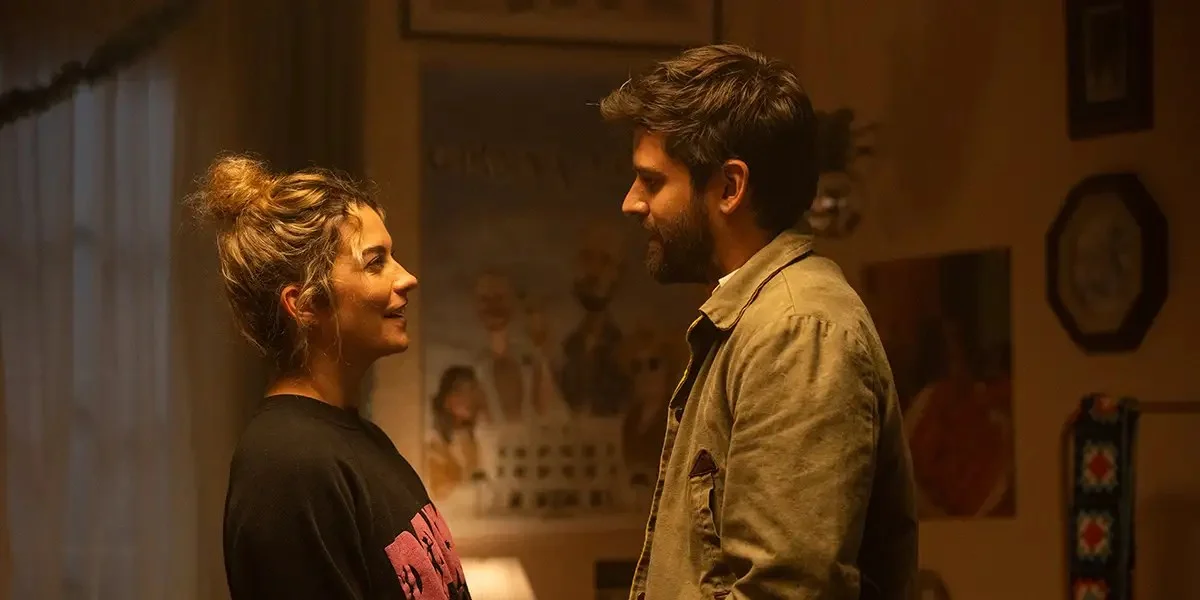
The film, a poignant yet comedic exploration of modern womanhood and the biological clock, stars Annie Murphy (Schitt’s Creek) and Cooper Raiff (Cha Cha Real Smooth). While the project arrives as a polished entry into the independent film circuit, its journey to the screen was a four-year marathon that saw the directors’ personal lives converge almost eerily with the script’s central themes.
Main Facts: A New Vision for the Romantic Comedy
All That She Wants, written by David West Read (the Emmy-winning writer of Schitt’s Creek), centers on Emma (Murphy), a professional dancer in her 30s navigating a precipice. Tired of the grind of demeaning gigs and the hollow cycle of modern dating, Emma decides she wants a child—but she isn’t sure she wants the traditional relationship that usually precedes it. Her plans are complicated when she meets Luke (Raiff), a sweet-natured graduate student whose youth belies a surprising maturity.
The film distinguishes itself from contemporary "indie" romantic comedies by tackling the desire for motherhood not as a "biological trap" or a sign of "settling," but as a legitimate and empowering pursuit of self-actualization. Bermingham and Rhymer’s direction seeks to move past the binary tropes of the "hot mess" or the "alpha careerist," offering instead a nuanced look at a woman who is both capable and vulnerable.
Chronology: Four Years of Development and Two Pregnancies
The genesis of the film began at 30,000 feet. Bermingham recalls being on a plane when Rhymer handed her Read’s script. The reaction was instantaneous and visceral. "God, damn it," Bermingham remembered thinking. "I wish I had written this. It seemed to speak to everything I was going through."
What followed was a grueling four-year process of securing financing, a task that has become increasingly difficult for mid-budget, character-driven independent films. However, as the production stalled and started, Bermingham and Rhymer’s personal lives began to mirror the script’s preoccupation with family and timing.
- Year One: The couple boards the project. Shortly after, Bermingham discovers she is pregnant with their first child.
- Years Two and Three: The financing struggle continues. The script undergoes refinements while the couple navigates the early stages of parenthood.
- Year Four: The film finally receives the green light. In a stroke of cosmic irony, the news arrived almost simultaneously with the discovery that Bermingham was pregnant with their second child.
- Production and Post-Production: The film was shot in Toronto, with the directors managing a set while Bermingham was in her second and third trimesters.
- The Final Cut: The directors turned in the final director’s cut of the film just one week before their son was born.
"We were living the movie while we were making it," Rhymer says. "The stakes of wanting to build something—both a career and a family—were never theoretical for us."
Supporting Data: The "Overcorrection" of the Female Protagonist
In recent years, the romantic comedy genre has undergone a significant transformation. Following the "Apatow era" of the 2000s, which often sidelined female characters, there was a concerted effort to center women’s stories. However, Bermingham argues that this shift resulted in a new set of limiting archetypes.
"There’s been a bit of an overcorrection in rom-coms to make the female protagonist either a total mess or a super type-A careerist who has it all together," Bermingham explains. According to industry analysis of the last decade of romantic comedies, characters in their 30s are often portrayed as "failing" if they haven’t achieved a specific milestone, or "rebellious" if they reject them entirely.

All That She Wants seeks to inhabit the middle ground. Data from recent audience sentiment surveys suggests a growing fatigue with the "relatable mess" trope, with viewers gravitating toward characters who possess agency but face realistic life-stage dilemmas. By embedding the desire for motherhood into the rom-com tradition, the film validates an experience that Hollywood often deems "unsexy" or too domestic for the genre’s sparkling aesthetics.
Official Responses: Casting Against Type
The success of the film hinges on the chemistry between Murphy and Raiff, both of whom used the project to expand their professional ranges.
Annie Murphy’s Emotional Metamorphosis
Annie Murphy, beloved for her iconic portrayal of Alexis Rose in Schitt’s Creek, was the first choice for Emma. While her comedic timing is world-class, Bermingham was more interested in her capacity for pathos.
"There are these moments on set when I was just watching her, and I’m just so blown away," Bermingham says. "Everyone knows how funny she is and how good she is at physical comedy, but this movie shows that she can go there emotionally, too. She’s so accessible and relatable."
Cooper Raiff’s Mature Pivot
Cooper Raiff has built a reputation as the king of the "neurotic Gen Z" protagonist. However, in playing Luke, Raiff had to shed the uncertainty that defined his earlier roles. Rhymer notes that this role represents a "maturation" for the actor.
"Those early roles are kind of versions of himself… he was really playing into the uncertainty he was feeling," Rhymer explains. "In this movie, he has a maturity that he hasn’t had before because he really is an old soul."
The "Family Business" of Directing
Co-directing is a notoriously difficult feat, often leading to creative friction. When the directors are also married, the risks are magnified. However, Bermingham and Rhymer insist that their partnership is their greatest asset.
Rhymer describes their process as a search for "Option C." If they disagree on a creative choice, they don’t compromise; they iterate until they find a third solution that satisfies both. "Any friction or tension we experience only sharpens things," Rhymer says. He likens their collaboration to a "family business," noting that for much of human history, working alongside one’s spouse was the norm rather than the exception.
The logistical challenges of directing with a newborn and a toddler were handled with a "no-fat" communication style. "There’s definitely times when it’s four in the morning and one of us is up with the baby and they turn to the other and say, ‘There’s this line in Act Two that isn’t working. Are you awake enough to talk about that?’" Rhymer admits.

Implications: A Bright Future and the "LuckyChap" Factor
The successful premiere of All That She Wants at TIFF marks a significant milestone for Bermingham and Rhymer, positioning them as a formidable new voice in the industry. Their ability to balance commercial appeal with emotional depth has already caught the attention of major studios and production houses.
Their upcoming slate suggests they are moving into the "prestige-commercial" space:
- The Paper Bag Princess: An adaptation of the classic children’s book for Universal and LuckyChap (Margot Robbie’s production company). This project signals their entry into high-profile IP.
- Big Time Abroad: Picked up by New Line, this film is described as a cross between Booksmart and Indiana Jones, suggesting a move into larger-scale action-comedy.
The industry implication is clear: there is a high demand for filmmakers who can bridge the gap between "indie" sensibilities and "studio" execution. By focusing on grounded, character-driven narratives that don’t shy away from complex life stages, Bermingham and Rhymer are filling a void in the current cinematic landscape.
Conclusion: From NYU to the Global Stage
As the interview in the Toronto hotel draws to a close, the directors reflect on their "meet-cute"—a story that sounds like a scene from one of their own movies. Having met as freshmen at New York University, they entered each other’s orbits when Rhymer, a film major, volunteered to work on a student film just to be near Bermingham, an acting student.
"I had such a crush on Scarlett," Rhymer recalls. "I was probably holding a bounce card the whole time, but it was just a great way to hang out for the entire afternoon."
In a moment of classic romantic comedy tension, Rhymer once thought he had accidentally broadcast his feelings for Bermingham over the studio intercom while she was in the sound booth. Fortunately for him, the button wasn’t pressed. "I didn’t hear a thing," Bermingham laughs. "It took more time for us to become friends and get together, and then, the rest is history."
With All That She Wants, that history has culminated in a film that is as much a reflection of their partnership as it is a gift to an audience looking for more than just a simple "happily ever after." In the world of Bermingham and Rhymer, the real romance is in the work, the family, and the messy, beautiful reality of growing up together.