"Merchant Magician" Conjures a Unique Blend of Urban Fantasy and Cozy Charm, But Faces Critical Questions on Scope
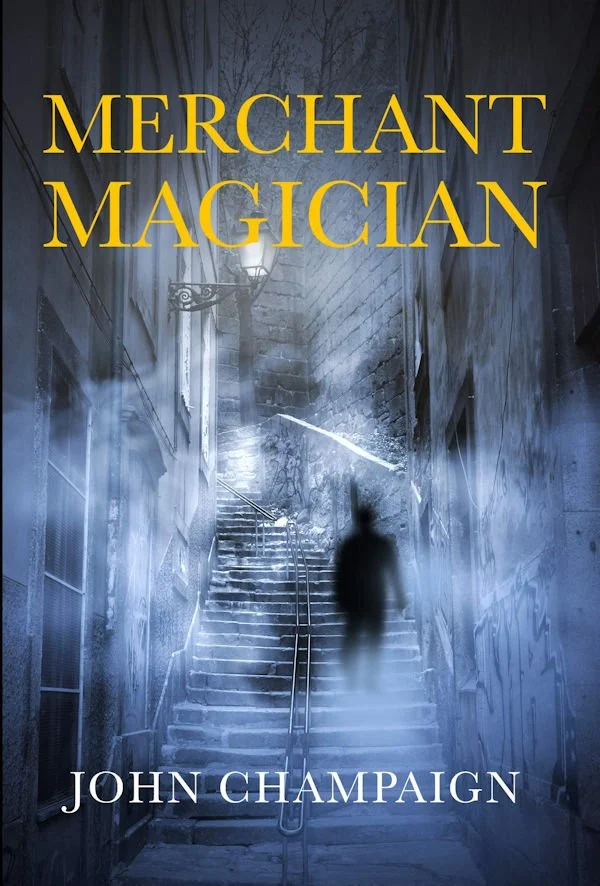
A noteworthy new entry into the urban fantasy landscape, "Merchant Magician" has captured early attention for its inventive premise and refreshingly pragmatic protagonist. The novel, which follows an exiled mystical trader navigating a world populated by familiar mythological figures, has been lauded for its charming tone and creative world-building. However, critical reception also points to significant challenges in narrative depth and tonal consistency, particularly concerning its ambitious conclusion.
Published amidst a thriving market for speculative fiction, "Merchant Magician" positions itself as a distinctive blend of urban fantasy, classic mythology, and the increasingly popular "slice-of-life" genre. Early assessments suggest a compelling reading experience for those seeking a lighter, character-driven narrative, yet raise pertinent questions about the execution of its grander ambitions.
Main Facts: An Overview of "Merchant Magician"
"Merchant Magician" introduces readers to a world where ancient myths seamlessly intersect with modern reality, overseen by a clandestine network of mystical merchants. The central figure of this narrative is a young man, exiled on his 23rd birthday from his family of esteemed traders in arcane goods and services. This expulsion, a traditional rite of passage, compels him to forge his own path and prove his worth in the wider world.
His journey is far from ordinary, leading him to a diverse array of supernatural encounters across continents. From engaging in mystical commerce with mermaids beneath the bustling surface of San Francisco to bartering with elusive leprechauns in the American Midwest, and even negotiating with stoic dwarves in the stark landscapes of Iceland, the protagonist’s quest for independence is a global odyssey. These encounters are not merely episodic adventures but form the bedrock of his new existence, as he establishes himself as an independent purveyor of magical solutions and curiosities.
The narrative takes a sharp turn with the introduction of a romantic interest – "the girl of his dreams." This seemingly idyllic development, however, quickly unravels to reveal a profound and potentially world-altering conflict. The object of his affection is unveiled as a devoted cultist, committed to facilitating the awakening of "great old ones" – cosmic entities prophesied to consume the world in a cataclysm of ash and fire. This revelation transforms a charming tale of self-discovery and entrepreneurial spirit into a high-stakes confrontation with apocalyptic forces, a tonal shift that has become a central point of discussion among early readers and critics.
The Protagonist’s Journey: A Chronological Overview
The narrative of "Merchant Magician" unfolds as a sequence of interconnected experiences that shape the protagonist’s identity and solidify his place within the mystical mercantile world.
Exile and Early Ventures
The story commences with the poignant, yet culturally significant, exile of the protagonist on his 23rd birthday. This event is not a punishment but a traditional decree from his powerful family, forcing him to leave the familiar comforts and established networks of his upbringing. His task is clear: to make his fortune and demonstrate his individual capability before he can be considered worthy of reintegration. This initial phase sets a remarkably grounded tone, as the young magician, despite his extraordinary lineage, approaches his new reality with refreshing humility. He is depicted as "refreshingly unsnobby," willing to undertake menial tasks such as washing dishes or pulling espresso shots – a stark contrast to many fantasy protagonists who often possess an inherent disdain for mundane labor. This pragmatic approach underscores his determination and adaptability, showcasing a character who values hard work and resourcefulness above entitlement. His initial ventures are focused on establishing a foothold, demonstrating his inherent skills in magical trade and negotiation while proving his resilience in the face of adversity.
Global Encounters and Mystical Commerce
As the protagonist embarks on his journey, the world of "Merchant Magician" opens up, revealing a rich tapestry of interwoven mythologies. His travels take him to iconic locations, each serving as a stage for his burgeoning career as an independent merchant magician. In the vibrant urban sprawl of San Francisco, he encounters enigmatic mermaids, engaging in delicate negotiations for their unique mystical services or goods. His travels then lead him to the heartland of America, where he navigates the whimsical yet shrewd world of Midwestern leprechauns, often involving intricate bargains and clever exchanges. Further afield, he ventures to the desolate and ancient landscapes of Iceland, where he interacts with formidable dwarves, whose craftsmanship and knowledge of ancient magic are highly sought after.
These encounters are more than just geographical markers; they are fundamental to illustrating the protagonist’s unique approach to business. He operates under a philosophy that prioritizes mutual satisfaction, striving for agreements that leave all parties content and eager for future collaboration, rather than feeling outmanoeuvred. This ethical and amiable bargaining style is presented as one of the book’s "quiet pleasures," distinguishing him from more cutthroat figures often found in such narratives. His success is built on trust and fair dealing, allowing him to weave a network of diverse mystical clients and suppliers.
The Romantic Entanglement and Looming Catastrophe
Amidst his burgeoning career and global travels, the protagonist experiences a profound personal connection, meeting "the girl of his dreams." This romantic subplot initially promises to add a layer of warmth and personal fulfillment to his arduous journey. However, this promising development swiftly takes a dark and unexpected turn. The girl, far from being a simple love interest, is revealed to be a dedicated cultist. Her devotion is not to a benign deity but to the terrifying prospect of "great old ones" – ancient, cosmic entities whose awakening is prophesied to bring about the complete annihilation of the world.
This revelation catapults the narrative into an entirely new dimension of conflict, dramatically raising the stakes from personal success to global survival. The juxtaposition of the protagonist’s "cozy slice-of-life" aspirations with his love interest’s apocalyptic devotion creates a central tension that defines the latter half of the story. While this twist introduces a compelling moral dilemma and a significant external threat, early critical responses suggest that the romantic subplot itself struggles with development, often circling "the same moment repeatedly without developing," thereby consuming valuable narrative space that could have been dedicated to further world-building or character progression. This pivotal entanglement ultimately drives the story towards its controversial and abrupt conclusion.
Analyzing the Narrative Landscape: Supporting Data and Genre Context
"Merchant Magician" stands as a testament to the ongoing evolution of the urban fantasy genre, attempting to carve a unique niche by blending established tropes with fresh narrative approaches.
A Fresh Take on Urban Fantasy
The urban fantasy genre has, in recent decades, become a cornerstone of speculative fiction, characterized by its integration of magical elements into contemporary, often metropolitan, settings. From the vampire-laden streets of major cities to hidden magical enclaves beneath everyday life, the genre frequently explores themes of secret societies, hidden powers, and the struggle between the mundane and the supernatural. "Merchant Magician" enters this crowded field with a distinct proposition. While many urban fantasy narratives lean towards grittier, darker tones, featuring reluctant heroes burdened by power or investigators delving into occult crimes, "Merchant Magician" opts for a more optimistic and approachable protagonist. The reviewer highlights this distinction, noting that the book offers "something genuinely unlike most things out there." This divergence is significant, suggesting a conscious effort to move away from the often-brooding atmosphere prevalent in much of the genre, instead favoring a narrative driven by charming interactions and entrepreneurial spirit.
Blending Mythology and Mundanity
One of the book’s most celebrated aspects is its "genuinely creative" integration of diverse mythologies into a contemporary setting. The seamless co-existence of mermaids in San Francisco, leprechauns in the American Midwest, and Icelandic dwarves speaks to a rich, imaginative world-building effort. This blending of ancient folklore with modern locales offers a fresh perspective on how mythological beings might adapt and thrive in the 21st century. Furthermore, the incorporation of "cozy slice-of-life" elements – the protagonist’s willingness to wash dishes, his ethical approach to business, and the general easygoing tone – grounds these fantastical elements in relatable human experiences. The rising popularity of "cozy fantasy," a subgenre emphasizing comfort, community, and lower stakes, finds a compelling intersection here. This blend offers readers the escapism of fantasy without the often-heavy emotional toll of high-stakes epics, creating a narrative that is both enchanting and accessible.
The Unsnobby Hero: A Character Study
The protagonist of "Merchant Magician" is arguably its most compelling asset. Described as "refreshingly unsnobby," he represents a departure from many fantasy archetypes. Unlike the chosen one burdened by destiny or the powerful wizard aloof from common concerns, this character embraces the necessity of mundane work and honest toil. His willingness to "wash dishes or pull espresso shots" alongside his mystical endeavors paints a picture of a grounded, resilient individual. His approach to business – bargaining effectively yet ethically, ensuring all parties are "happy to work with you again rather than feeling outmanoeuvred" – speaks to a strong moral compass and a sophisticated understanding of long-term relationships. In a genre often populated by anti-heroes or those struggling with the weight of their powers, this unsnobby, ethical merchant offers a relatable and aspirational figure. His character provides a core of stability and charm that anchors the more fantastical elements, making him an easy companion for the reader through his varied adventures. This characterization taps into a desire for heroes who embody humility and integrity, qualities that resonate strongly with contemporary audiences.
Critical Observations on Depth and Pacing
Despite its strengths, "Merchant Magician" faces significant critical observations regarding its narrative depth and pacing. The review notes that the book’s "main limitation is that it’s doing a lot in a short space, and the world never quite gets the depth it deserves." This critique highlights a common challenge in standalone novels or the inaugural volumes of a series: balancing extensive world-building with plot progression within a limited page count. The ambitious scope, encompassing multiple mythologies and global travel, demands a level of detail that the narrative, by its very nature, struggles to provide. Consequently, elements that could have been richly explored – the specific mechanics of mystical trade, the societal structures of mermaids or dwarves, or the deeper lore of the "great old ones" – remain somewhat underdeveloped.
Furthermore, the romantic subplot, while crucial to the overarching conflict, is cited as a repetitive element that "circles the same moment repeatedly without developing." This stagnation not only frustrates reader investment in the relationship but also consumes valuable narrative real estate that could have been better utilized to expand on the creative world or deepen the character arcs. Such pacing issues can disrupt the flow of the story, creating a sense of inertia even as the plot theoretically advances. These observations underscore the delicate balance required when weaving multiple genre threads and character arcs within a single volume.
Navigating the Narrative Climax: Critical Responses and Authorial Intent
The climax of "Merchant Magician" has emerged as a particularly contentious point among early critical assessments, leading to discussions about authorial intent and narrative consistency.
The Confounding Conclusion
The review explicitly states that "the ending overshoots what the book has built." This criticism points to a significant tonal and thematic mismatch between the narrative’s established character and its ultimate resolution. For much of its length, "Merchant Magician" is presented as a "quiet, cosy story at heart," focusing on character development, ethical commerce, and charming, low-stakes encounters with mythological beings. The sudden escalation to "universe-ending territory" with the awakening of the great old ones, followed by an equally rapid and seemingly facile collapse of these stakes, creates a sense of "whiplash." This abrupt shift undermines the meticulously built foundation of the preceding chapters, leaving readers potentially disoriented and unsatisfied. The grandiosity of the threat feels unearned within the established narrative framework, and its swift resolution feels equally unconvincing, diminishing the impact of what came before.
Balancing Tone and Stakes
This critical observation highlights a fundamental challenge in storytelling: maintaining a consistent tone while escalating narrative stakes. For a book that thrives on its "easygoing and breezy" atmosphere and its protagonist’s grounded pragmatism, a cosmic-level threat demands a significant shift in focus and gravitas that the narrative reportedly struggles to accommodate. Authors often grapple with how to introduce high-stakes conflicts without betraying the inherent nature of their story. In "Merchant Magician," the attempt to blend a cozy, character-driven narrative with an apocalyptic showdown appears to have faltered, suggesting that "it would have been better served by a quieter problem to solve." This doesn’t necessarily imply a lack of ambition but rather a potential miscalculation in how that ambition integrates with the established narrative voice and reader expectations.
Hypothetical Industry Reception and Authorial Perspective
While "official responses" in the traditional journalistic sense (e.g., government statements) are not applicable to a book review, we can infer a hypothetical industry reception based on the detailed critique. A literary agent or publisher, upon receiving such a review, might acknowledge the significant strengths – the unique genre blend, the appealing protagonist, and the creative world-building – as powerful selling points. They might enthusiastically market the book to fans of "cozy fantasy" and those looking for a fresh take on urban myths.
However, the critical feedback on the ending and lack of depth would likely be taken seriously in discussions about potential sequels or future projects. A hypothetical editor might advise the author to consider the implications of tonal shifts more carefully in subsequent works, perhaps suggesting a more gradual escalation of stakes or a more contained conflict better suited to the established atmosphere. From an authorial perspective, the feedback could be interpreted as a learning opportunity, reinforcing the importance of balancing ambition with execution. The intent might have been to surprise readers, to demonstrate the unexpected breadth of the world, or to subvert genre expectations. However, the critical response indicates that, in this instance, the execution of that ambition may have created dissonance rather than resonance. This kind of detailed review serves as a crucial compass for authors and publishers in navigating the complex landscape of reader engagement and literary impact.
Broader Implications for Readers and the Genre
"Merchant Magician," despite its noted imperfections, carries several implications for both its immediate readership and the broader landscape of speculative fiction.
The Future of Cozy Urban Fantasy
The book’s attempt to blend urban fantasy with "cozy slice-of-life" elements signals a growing trend within the genre. As readers increasingly seek comfort and charm in their escapist literature, works like "Merchant Magician" contribute to the diversification of urban fantasy, moving beyond its often-dark and gritty roots. This push towards more character-driven, less grimdark narratives could inspire a new wave of authors to explore gentler, more humorous, or more emotionally resonant takes on magical realism in modern settings. Its success, even with its flaws, could validate the market for stories where the focus is less on epic battles and more on personal growth, ethical dilemmas, and the simple pleasures of navigating a magical world.
Audience Engagement and Expectations
"Merchant Magician" is likely to resonate strongly with a specific audience: readers who appreciate innovative world-building, charming protagonists, and a lighter touch in their fantasy. Those who prioritize character and atmosphere over intricate plotting or epic scale may find its strengths outweigh its weaknesses. However, the critique regarding the ending underscores the importance of managing reader expectations. A reader anticipating a consistent "cozy" experience might be jarred by the sudden apocalyptic turn, while one expecting high-stakes fantasy might find the earlier portions too gentle. This highlights the challenge authors face in satisfying diverse reader expectations when blending multiple genres. Clear marketing and honest reviews become crucial in guiding the right audience to the book, ensuring that its unique blend is understood and appreciated for what it offers.
Potential for a Series and Lessons for Aspiring Authors
The critique regarding the "lack of depth" due to "doing a lot in a short space" strongly implies that "Merchant Magician" could flourish as part of a series. A multi-volume narrative would provide ample room to explore the rich tapestry of its world, develop its supporting characters, and allow the romantic subplot to evolve organically. It would also offer the opportunity to introduce higher stakes more gradually, ensuring that any universe-ending threats feel earned and impactful within a consistent tonal framework.
For aspiring authors, "Merchant Magician" serves as a valuable case study. It demonstrates the immense potential of blending disparate genres and creating a truly unique protagonist. However, it also highlights the perils of narrative ambition when not carefully managed. The importance of consistent tone, measured pacing, and a satisfying, coherent resolution – particularly when dealing with grand themes – cannot be overstated. It teaches that even the most creative concepts require rigorous structural integrity to fully realize their potential and avoid "whiplash" for the reader.
In conclusion, "Merchant Magician" stands as a testament to the boundless creativity within contemporary fantasy. It offers a "charming, creative, and easy company" reading experience with a protagonist whose ethical pragmatism is a breath of fresh air. While its ambitious scope and concluding narrative choices present critical talking points, the novel undeniably carves out a memorable space in the urban fantasy genre, inviting readers to a world where ancient magic and modern life intertwine in truly unexpected ways. Its unique appeal lies in its willingness to experiment, offering a delightful journey for those prepared to embrace its distinctive blend of the magical and the mundane.