Meta Expands Horizon+ Ecosystem: July Lineup Features Gun Club VR, Dragon Fist, and Phantom: Covert Ops

MENLO PARK, CA – Meta has officially unveiled its July 2026 content update for the Horizon+ subscription service, signaling a continued aggressive expansion of its "all-you-can-play" VR ecosystem. This month’s selection highlights a strategic blend of simulation realism, physics-based combat, and innovative stealth mechanics. The update introduces Gun Club VR and Dragon Fist: VR Kung Fu as the two "Monthly Games" available for subscribers to claim, while the critically acclaimed Phantom: Covert Ops makes its debut in the permanent Horizon+ Games Catalog.
As Meta transitions its branding toward the "Horizon OS" ecosystem, the Horizon+ service (formerly Quest+) has become a cornerstone of the company’s efforts to retain users within its software environment. By offering a curated selection of high-fidelity titles for a fixed monthly fee, Meta is positioning itself against traditional gaming giants like Sony and Microsoft, who have long utilized subscription models (PlayStation Plus and Xbox Game Pass) to stabilize revenue and drive hardware adoption.
Main Facts: A Deep Dive into the July Selection
The July update focuses on three distinct genres, ensuring that the subscription appeals to a broad demographic of virtual reality enthusiasts, from tactical enthusiasts to martial arts fans.

Gun Club VR: The Apex of Ballistic Realism
Developed by The Binary Mill, Gun Club VR has long been regarded as one of the most comprehensive firearm simulators in the VR space. Unlike arcade shooters that prioritize fast-paced action over technical accuracy, Gun Club VR is a mechanical tribute to the engineering of weaponry.
Subscribers will gain access to an exhaustive armory of real-world firearms, ranging from historical sidearms to modern-day assault rifles and heavy artillery. The game’s primary draw is its "mechanical realism." Players are required to manually interact with every component of the weapon: racking the slide to chamber a round, physically inserting magazines, toggling safeties, and adjusting iron sights or optics. The simulation extends to ballistic behavior, where recoil management and muzzle flip are calculated based on the specific caliber and weight of the virtual firearm. With hundreds of interactive challenges and a detailed progression system, it serves as both a training tool and a sophisticated digital gallery.
Dragon Fist: VR Kung Fu – Physics-Based Combat
The second monthly title, Dragon Fist: VR Kung Fu, offers a starkly different physical experience. Drawing heavy inspiration from the "Golden Age" of martial arts cinema, this title focuses on hand-to-hand combat utilizing a robust physics engine.

The game distinguishes itself through its character variety and combat depth. It features over 40 unique characters, each representing a different school of martial arts—from Wing Chun to Long Fist. Unlike early VR fighters that relied on "waggling" controllers to register hits, Dragon Fist requires precise timing, distance management, and form. Players must physically block incoming strikes and find openings in the opponent’s guard. The inclusion of single-player campaigns, cooperative modes, and a competitive PvP (Player vs. Player) component ensures that the title offers significant longevity for July subscribers.
Phantom: Covert Ops: A Stealth Innovation
While the first two games are "Monthly Games" (available to claim and keep as long as the subscription is active), Phantom: Covert Ops joins the "Games Catalog," a rotating library of titles accessible to all active members.
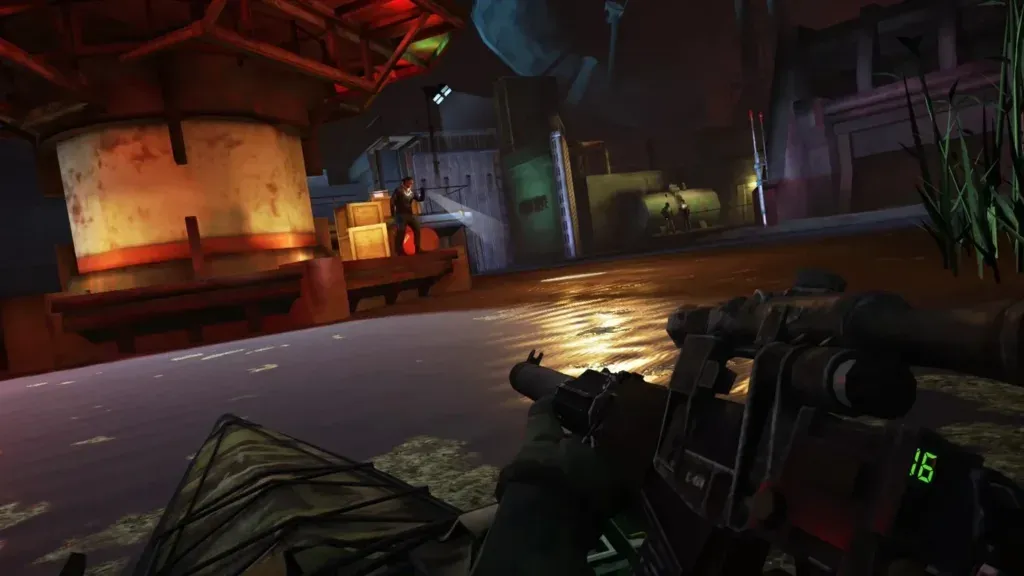
Developed by the veteran VR studio nDreams, Phantom: Covert Ops is a masterclass in solving the "VR locomotion problem." The game is played entirely from a seated position, as the player takes on the role of an elite tactical diver navigating hostile territory in a military-grade kayak. This design choice serves two purposes: it virtually eliminates motion sickness for sensitive players and provides a "grounded" physical anchor that enhances immersion. Players use their controllers to paddle through flooded Cold War-era facilities, utilizing suppressed weapons and environmental distractions to bypass enemy patrols. Its addition to the catalog represents a high-value gain for the service, as it remains one of the most uniquely designed stealth games in the medium’s history.

Chronology: The Evolution of Meta’s Subscription Strategy
To understand the significance of the July 2026 lineup, one must look at the trajectory of Meta’s subscription efforts over the past three years.
- June 2023: The Birth of Quest+ – Meta launched its initial subscription service, offering two games a month for a $7.99 fee. The early strategy was criticized by some for a lack of "AAA" titles, focusing instead on smaller indie experiences.
- Early 2024: The Catalog Introduction – Following the success of the Quest 3 launch, Meta introduced the "Games Catalog," moving closer to the "Game Pass" model. This allowed new subscribers to immediately access a library of 15-20 titles rather than waiting months to build a claimed library.
- Late 2025: The "Horizon" Rebrand – As Meta opened its operating system (Horizon OS) to third-party hardware manufacturers like ASUS and Lenovo, the service was rebranded from Quest+ to Horizon+. This signaled that the subscription would eventually be hardware-agnostic, following the user’s account across different VR headsets.
- July 2026: Consolidation and Quality – The current update represents a "maturation phase." By including established hits like Phantom: Covert Ops and Gun Club VR, Meta is demonstrating a commitment to high-production-value content that justifies the $59.99 annual price point.
Supporting Data: The Economics of Horizon+
The value proposition of the July update is quantifiable. Based on current Meta Store pricing, the total "MSRP value" of the July additions exceeds $70.00 USD:
- Gun Club VR: $19.99
- Dragon Fist: VR Kung Fu: $29.99
- Phantom: Covert Ops: $24.99 (Catalog value)
For a monthly subscriber paying $7.99, the immediate return on investment is nearly 9x the cost of entry. For annual subscribers ($59.99/year), the cost per month breaks down to approximately $4.99, making it one of the most cost-effective ways to build a VR library.
Furthermore, industry data suggests that subscription services are vital for VR retention. Internal Meta metrics have previously indicated that users with active subscriptions engage with their headsets 30% more frequently than non-subscribers. By providing a steady stream of "free" content, Meta mitigates the "shelf-dust" problem—where users buy a headset, play the initial pack-in titles, and then stop using the device due to the perceived high cost of individual games.
Official Responses and Industry Commentary
While Meta executives have remained focused on the broader "Horizon OS" rollout, the inclusion of Phantom: Covert Ops has sparked renewed interest from the developer community.
In a recent episode of the UploadVR Gamescast, industry experts discussed the enduring appeal of the nDreams stealth title. "Phantom: Covert Ops is a game we frequently go back to," noted Mike, a prominent VR commentator. "It’s a thrilling and unique stealth game that proves VR doesn’t need traditional ‘walking’ mechanics to be immersive. Its inclusion in the Horizon+ catalog is a massive win for people who missed it at launch."

Analysts suggest that Meta’s choice of titles for July reflects a data-driven approach to player preferences. Shooting simulators (Gun Club) and combat sports (Dragon Fist) consistently rank as the top-performing genres on the Quest platform. By offering the "best-in-class" versions of these genres through the subscription, Meta is effectively setting a quality bar for the rest of the store.
Implications: The Future of the VR Ecosystem
The July update for Horizon+ carries several long-term implications for the VR industry:
- Lowering the Barrier to Entry: As Meta prepares for potential lower-cost hardware iterations (rumored "Quest 3S" models), a robust subscription service is essential. New users can purchase a headset and, for an extra $8, immediately have access to a world-class library, removing the "sticker shock" of buying $30 games individually.
- Developer Sustainability: For studios like The Binary Mill and Ben Olding Games, being featured in Horizon+ provides a significant influx of capital and a massive surge in player base. This "second life" for older titles allows developers to fund the development of next-generation sequels.
- The Shift to Horizon OS: By tying the subscription to the "Horizon" brand rather than the "Quest" brand, Meta is preparing for a future where users might play these games on an ASUS ROG VR headset or a Lenovo productivity visor. Horizon+ is becoming the glue that holds the various hardware partners together.
- Competitive Pressure on Sony: With PlayStation VR2 struggling to find its footing in the subscription space compared to Meta’s rapid-fire updates, Horizon+ is widening the gap in terms of "software value."
In conclusion, the July 2026 update for Horizon+ is more than just a monthly refresh; it is a calculated move to solidify Meta’s dominance in the VR software market. By blending mechanical simulators, physics-heavy fighters, and innovative stealth action, Meta is ensuring that its "Horizon" remains the most enticing destination in the virtual landscape. Subscribers can claim their titles starting July 1st, with the one-month free trial remaining available for new users looking to test the waters of the metaverse.