
From Nomads to Settlers: Neolithic Dawn Announces Groundbreaking ‘Hearthfire’ Update for VR
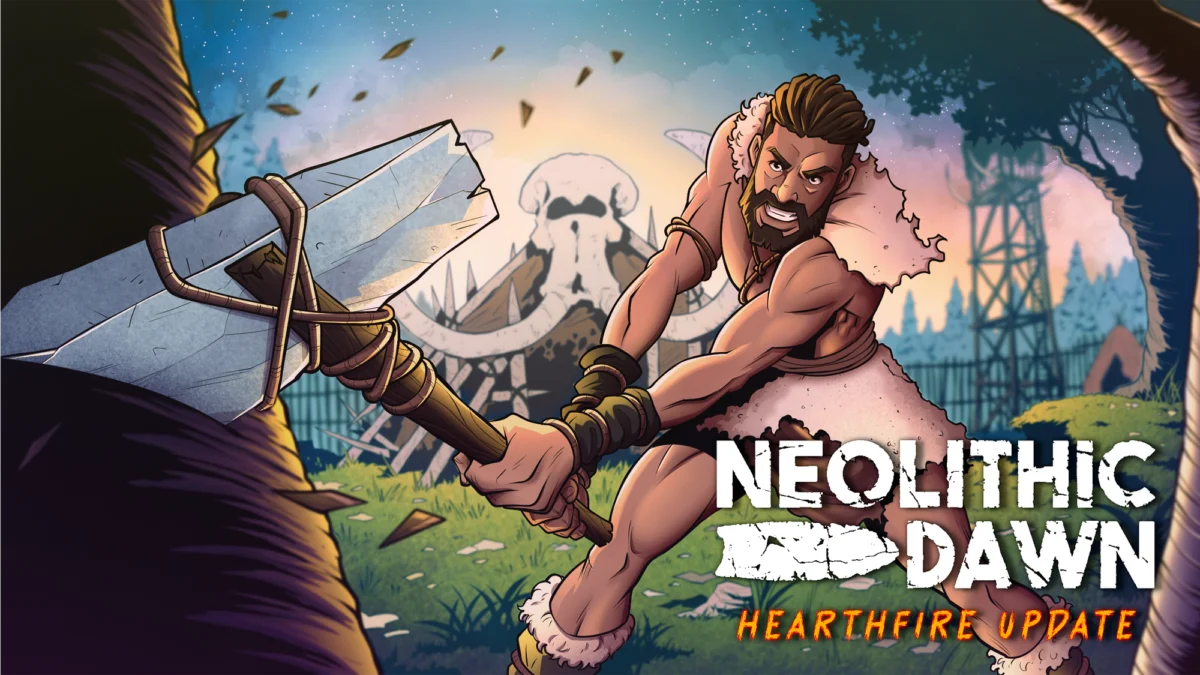
The virtual reality survival landscape is about to undergo a significant evolutionary shift. Neolithic LLC, the independent studio behind the ambitious physics-based survival title Neolithic Dawn, has officially announced its most substantial content expansion to date. Titled the "Hearthfire Update," this free expansion is scheduled to arrive in June for Meta Quest and PC VR platforms, promising to redefine the primitive survival experience by transitioning players from a nomadic existence to a sedentary, community-focused lifestyle.
Since its initial foray into Early Access, Neolithic Dawn has garnered attention for its uncompromising dedication to the "10,000 BC" setting. Unlike many survival games that lean into supernatural elements or futuristic tech, Neolithic Dawn focuses on the raw, tactile reality of the Stone Age. The upcoming June update represents a pivotal moment in the game’s development, introducing permanent base-building mechanics that will fundamentally alter how players interact with its sprawling open-world maps.
Main Facts: The Hearthfire Expansion at a Glance
The Hearthfire Update is designed to be more than a simple patch; it is a structural overhaul of the game’s core Survival Mode. For the first time, players will be able to move beyond the "temporary shelter" phase of the game. Previously, survival in Neolithic Dawn was a constant race against the elements, where players relied on natural rock formations, caves, or flimsy lean-tos to survive the night.
Key Features of the June Update:
- Permanent Base Building: Players can now establish permanent camps anywhere within the game’s open-world environments. This includes the ability to construct multi-room shelters using Neolithic materials.
- Domesticated Interiors: The update introduces the ability to place campfires, beds, and storage solutions inside completed structures, turning a simple hut into a functional home base.
- Dynamic Weather and Environmental Interactivity: In a major technical leap, the update introduces "Still Water Freezing." In colder climates or during winter cycles, bodies of water will solidify, affecting hydration strategies and traversal. Additionally, the game now features "Dry Grass Combustion," allowing players to clear land or create firebreaks by burning vegetation.
- Expanded Survival Mechanics: The update brings new building materials and refined physics interactions, ensuring that the act of construction feels as grounded and tactile as the rest of the game’s combat and gathering systems.
- Multi-Platform Availability: The update will be free for all current owners on Meta Quest (App Lab) and SteamVR.
Chronology: The Evolution of Neolithic Dawn
To understand the significance of the Hearthfire Update, one must look at the trajectory of Neolithic Dawn since its inception. The game was born out of a desire to create a "true" survival simulator—one where the player’s primary enemy is not a monster, but the environment itself.
2022–2023: The Foundation and Early Access
Neolithic Dawn entered the VR scene during a period when survival games were trending toward "gamified" mechanics (simplified crafting menus and "ghost" outlines). Neolithic LLC took the opposite approach, emphasizing a physics-heavy interaction model. When the game launched in Early Access last year, it introduced players to a brutal world where every stone sharpened and every spear thrown required physical effort and precision.
The Early Access period was defined by its "Nomadic Survival" loop. Players were forced to keep moving to find resources, as the lack of permanent structures meant that staying in one place for too long was a death sentence. This period also introduced the game’s "Novel Respawn Mechanic," which moved away from traditional "Game Over" screens in favor of a more immersive, lore-integrated system of reincarnation or lineage.
Early 2024: The Road to Hearthfire
Following the Early Access launch, the developers spent months gathering telemetry data and player feedback. The consensus was clear: while the physics and atmosphere were world-class, players felt a lack of "permanence." The desire to "tame" the wild and leave a mark on the world became the driving force behind the development of the Hearthfire Update.
June 2024: The Hearthfire Launch
The upcoming June release marks the end of the "Nomadic Era" and the beginning of the "Settlement Era." This update is viewed by the studio as the bridge between the game’s alpha state and its journey toward a full 1.0 release.
Supporting Data: The Physics of Prehistory
One of the standout features of Neolithic Dawn is its reliance on high-fidelity physics. Unlike flat-screen survival games where building a wall is a matter of clicking a button, Neolithic Dawn utilizes the VR medium to make construction a physical task.
Technical Specifications and Performance
The challenge for Neolithic LLC has been maintaining these complex physics calculations on standalone hardware like the Meta Quest 2 and Quest 3. The Hearthfire Update introduces a "modular physics" system for building. Instead of a single static mesh, shelters are comprised of individual components that interact with the game’s wind and weight systems.
- Environmental Interaction Data: The "Still Water Freezing" mechanic isn’t just a visual shader swap. It changes the physical properties of the water surface, allowing players to walk across lakes that were previously obstacles. This requires real-time temperature tracking across the game’s various biomes.
- Combustion Engine: The new grass-burning mechanic utilizes a propagation algorithm. Fire will spread based on wind direction and the density of "dry" vs. "wet" vegetation, providing players with a tool that is as dangerous as it is useful.
Platform Expansion
While the June update focuses on Quest and PC VR, the developers have confirmed that the game is currently being ported to PlayStation VR2 and Pico headsets. The PSVR2 version, in particular, is expected to utilize haptic feedback in the Sense controllers to simulate the resistance of wood, stone, and hide during the construction process.
Official Responses: The Developer’s Vision
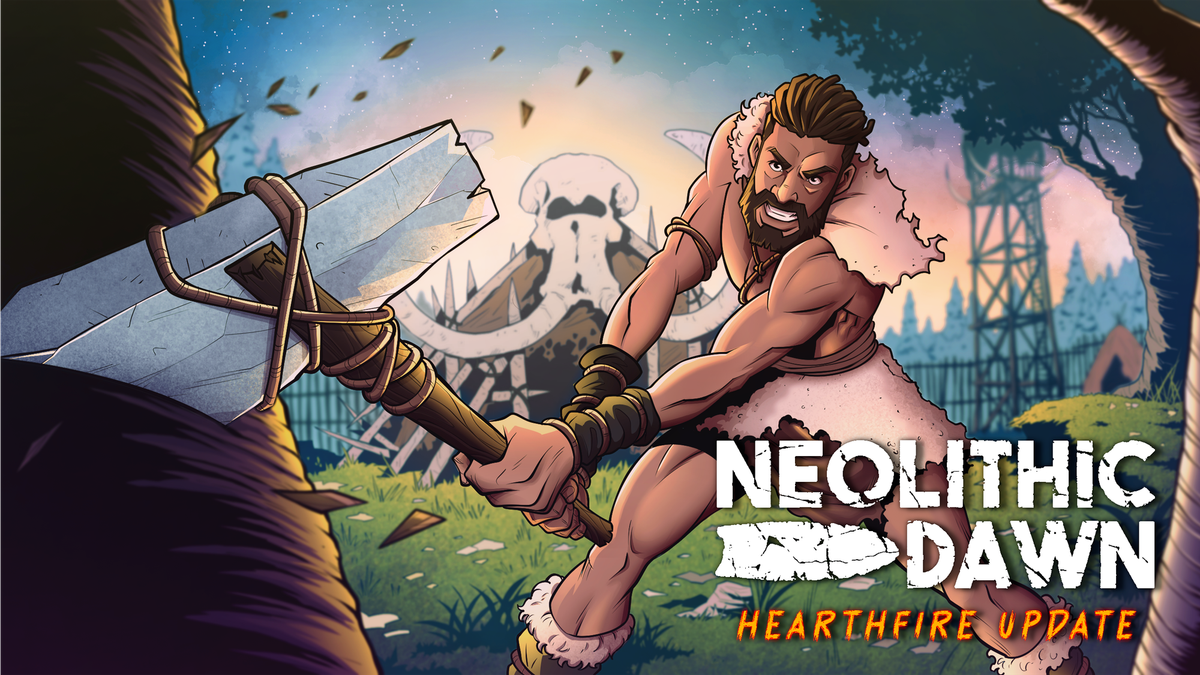
In statements accompanying the new trailer, Neolithic LLC emphasized that the Hearthfire Update is a response to the community’s desire for deeper role-playing elements. A spokesperson for the studio noted that "survival is only the first step of the human story. The second step is building a home."
The developers have been vocal about their commitment to an "immersion-first" philosophy. "We didn’t want a building system where things just ‘pop’ into existence," the studio shared in a recent developer blog. "We wanted the player to feel the weight of the thatch and the placement of the logs. Hearthfire is about making the player feel like they are truly inhabiting 10,000 BC, not just visiting it."
This sentiment is echoed in the game’s design choices. By allowing campfires and beds to be placed inside structures, the developers are addressing a long-standing request for a "safe haven" mechanic. In the current build, the world is relentlessly hostile; the Hearthfire Update provides a psychological reprieve, allowing the player to shut out the cold and the predators, if only for a night.
Implications: A New Standard for VR Survival?
The arrival of the Hearthfire Update has broader implications for the VR industry and the survival genre as a whole.
1. The "Forever Game" Model in VR
Most VR titles suffer from short playtimes and limited replayability. By introducing base building, Neolithic Dawn is positioning itself as a "forever game." Base building creates a "sink" for resources and time, encouraging players to spend dozens, if not hundreds, of hours perfecting their settlements. This shift is essential for the growth of the VR ecosystem, which desperately needs "deep" games to retain users.
2. Competition with Genre Titans
The VR survival space is currently dominated by titles like Green Hell VR and Song in the Smoke. However, Neolithic Dawn distinguishes itself through its specific historical setting and its "Hardcore Physics" approach. While Green Hell focuses on jungle survival and disease management, Neolithic Dawn is carving out a niche in "Environmental Mastery." The ability to freeze water and burn landscapes suggests a level of environmental agency that few other VR titles offer.
3. Hardware Pushing the Limits
The fact that these systems—dynamic fire propagation, freezing water, and physics-based construction—are coming to the Meta Quest is a testament to the optimization work being done by indie developers. It signals that standalone VR is moving past "tech demo" experiences and into the realm of complex, systemic simulations.
4. Future Potential for Multiplayer
While Neolithic Dawn is currently a solo-focused experience, the introduction of permanent bases lays the groundwork for potential future multiplayer or "tribe" mechanics. The ability to build a village suggests a future where players could inhabit a shared world, a prospect that would likely catapult the game to the top of the VR charts.
Conclusion
The Hearthfire Update represents a maturation of Neolithic Dawn. By moving from a game about "staying alive" to a game about "living," Neolithic LLC is tapping into the fundamental human drive to create and settle. When the update launches this June, it won’t just be adding new items to a crafting menu; it will be opening a new chapter in the virtual Stone Age.
For owners of the Meta Quest and SteamVR versions, the transition from nomad to settler will be free of charge, offering a compelling reason to return to the wilds of 10,000 BC. As the VR industry continues to seek out "killer apps" with depth and longevity, Neolithic Dawn’s evolution suggests that the future of the medium may well lie in our most distant past.




Leave a Comment