
Minions: The Fearsome Foes — A Deep Dive into a D20 Era Gem, Two Decades On
Main Facts: Unearthing a Cult Classic of the D20 Age
In the vibrant, sometimes chaotic landscape of early 2000s tabletop role-playing games, a period defined by the groundbreaking D20 System, independent publishers flourished, eager to contribute to the burgeoning universe of Dungeons & Dragons 3rd Edition. Among these was Bastion Press, which in 2002 released Minions: The Fearsome Foes, a third-party monster manual that, despite its unassuming packaging and a few quirks, carved out a niche for itself as a source of genuinely imaginative adversaries.
Originally reviewed on March 13th, 2002, Minions emerged as a 96-page softcover tome, distinguished by its full-color printing on glossy pages – a premium feature for its time. Far from a mere collection of low-level henchmen, as its somewhat misleading title might suggest, the book delivered a robust compilation of 92 unique monsters and templates, many of which were lauded for their originality and potential to inject fresh terror and intrigue into D20 campaigns. While the initial review highlighted concerns regarding its price point, inconsistent artwork, and occasionally peculiar naming conventions, it ultimately championed Minions for its substantive content, declaring it a "great third-party Monster Manual for D20" and "recommended" for its high quality.
Two decades later, Minions: The Fearsome Foes remains a testament to the creative zeal of the D20 era. For Dungeon Masters (DMs) still running D&D 3rd Edition campaigns, or those willing to adapt its concepts to newer systems like D&D 5th Edition, the book continues to offer a wealth of unique challenges and narrative hooks, transcending its initial branding missteps to be recognized as a valuable, if overlooked, contribution to the canon of fantasy gaming bestiaries.
Chronology: A Snapshot of the D20 Boom and Bastion Press’s Contribution
The turn of the millennium marked a transformative period for Dungeons & Dragons. With the release of D&D 3rd Edition in 2000, Wizards of the Coast introduced the Open Game License (OGL) and the D20 System, fundamentally altering the landscape of RPG publishing. This revolutionary move allowed third-party companies to produce content compatible with D&D 3rd Edition, leading to an explosion of supplements, settings, and monster manuals. Publishers, large and small, seized the opportunity to innovate, offering diverse takes on fantasy tropes and pushing the boundaries of what a monster could be.
It was into this fertile ground that Bastion Press, an independent publisher, launched Minions: The Fearsome Foes. Published in 2002, just two years into the D20 System’s lifespan, Minions represented Bastion Press’s ambition to stand out in an increasingly crowded market. The decision to invest in full-color, glossy pages was a clear attempt to signal premium quality, an important differentiator when many third-party products were still black-and-white or relied on more economical production methods.
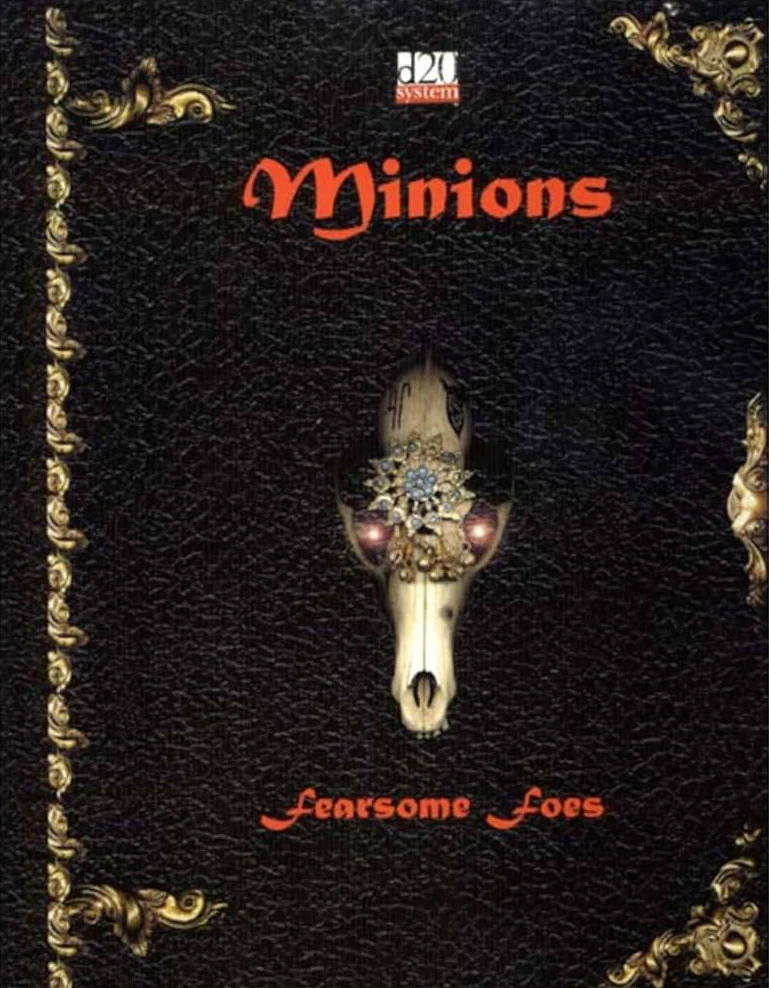
The initial review, published shortly after the book’s release, captured the immediate impressions of a discerning gamer. The reviewer lauded the intrinsic quality of the monster designs and the innovative "Campaign" sections but also articulated critical feedback regarding the product’s marketing. The title "Minions" was perceived as generic and misleading, failing to convey the book’s actual scope and the power of its contained creatures. This, coupled with a cover design described as consistently "weak" for Bastion Press at the time, likely led to the book being "overlooked or underestimated at first glance" by many potential buyers in retail stores.
Despite these initial presentation hurdles, Minions found its audience. The reviewer’s post-script, penned years after the initial assessment, underscores the product’s enduring utility, noting that it was "quite a bit of use" for several years. This longevity speaks volumes about the quality of the internal content, suggesting that once DMs delved past the cover, they discovered a treasure trove of usable and inspiring material. The absence of a D&D 5th Edition update, while a missed opportunity for a broader contemporary audience, highlights its particular resonance with the D&D 3rd Edition community, where it continues to be valued by those who maintain campaigns in that system. The journey of Minions from a potentially mispackaged new release to a quietly revered resource illustrates the power of strong game design to overcome initial marketing challenges.
Supporting Data: A Deep Dive into Ingenious Design and Critical Flaws
Minions: The Fearsome Foes is a study in contrasts, a compelling blend of brilliant conceptual design and sometimes perplexing execution in its peripheral elements. At its core, the book’s substance lies in its extensive collection of 92 monsters and templates, a roster that largely shies away from generic fodder in favor of truly unique and memorable creatures.
The "Good Stuff": Monsters That Inspire
The strength of Minions unequivocally rests on the creativity and utility of its monster entries. The book doesn’t just present stat blocks; it offers creatures imbued with lore, tactical considerations, and most importantly, hooks for storytelling. This commitment to narrative integration is perhaps best exemplified by the inclusion of a "Campaign" section for each monster, a feature that was remarkably forward-thinking for its time. These sections provided adventure seeds, environmental considerations, and suggestions for how to weave each creature seamlessly into ongoing campaigns, transforming a simple monster manual into a valuable campaign-building resource.
Let’s look closer at some standout examples that captivated the original reviewer and demonstrate the book’s inventive spirit:
- Amberjuron: More than just a monstrous owl, the Amberjuron is presented as a sentient, millennia-old enigma of the forest. Its disguise as a common snowy owl, betrayed only by the spark of intelligence in its eye, makes it an excellent plot device. These creatures are not for combat; they are sources of ancient knowledge and rare magic, requiring diplomacy and clever role-playing to interact with. They represent a refreshing departure from the typical "kill it and take its loot" mentality, forcing players to think beyond immediate conflict.
- Am-Ren: This demon’s ability to steal the very names, and thus the identities, of its victims is a stroke of psychological horror. Imagine a PC slowly losing their sense of self, their memories fading, all because of an encounter with an Am-Ren. This monster provides rich role-playing opportunities and a deeply unsettling threat that goes beyond physical harm, challenging players to confront existential dread.
- Blessed Ring: Drawing inspiration from traditional folklore, the Blessed Ring reimagines the fairy ring with a dark, D20 twist. A simple circle of toadstools transforms into an impenetrable dome, testing the moral alignment of those who enter. Pure-hearted individuals find sanctuary, while the wicked are slowly digested. This environmental hazard serves as both a moral compass and a potential trap, offering a unique encounter that can be stumbled upon or sought out for protection.
- Cacogen: Stealthy, undead assassins crafted from the deformed and ostracized, Cacogens are inherently tragic and terrifying. Their origins lend them a pathos that can be exploited for narrative depth, while their role as silent killers provides a formidable challenge for any party. They are not just mindless zombies; they are instruments of malice, capable of strategic strikes.
- Ebant: A "dark treant" might sound simple, but the execution of the Ebant elevates it beyond a mere evil tree. It embodies the corruption of nature, a twisted guardian of blighted lands, offering a thematic antagonist for environmentally-focused campaigns or those dealing with creeping decay.
- Hearth Horror: This concept ingeniously turns architectural ruins into living, malevolent entities. A Hearth Horror is an undead force that compels mortals to rebuild its original form, leading to recursive cycles of construction and destruction. It provides an excellent explanation for why ancient evils persist and how cults might form around seemingly inanimate objects, offering a persistent, insidious threat.
- Mirror Fiend: A powerful golem that resides within and emerges from mirrors, this creature offers dynamic combat scenarios and a clear vulnerability. The ability to regenerate by retreating into its mirror creates tension, while the potential to destroy the mirror for a decisive victory provides a clever tactical challenge. It plays on universal fears of reflections and what might lurk beyond the looking glass.
- Quickener: At a formidable CR 20, the Quickener is designed to challenge high-level parties not just physically, but intellectually. Its ability to absorb and then replicate any spell cast at it demands careful planning and unconventional tactics. This monster forces players to reconsider their standard spellcasting strategies, making for truly memorable, high-stakes encounters.
- Slather: A monstrous mimic on a grand scale, the Slather disguises itself as building entrances or dungeon doorways, swallowing those who pass through its "doors." This creates immediate environmental danger and a sense of paranoia, turning even mundane architectural features into potential death traps. It’s a brilliant way to add unexpected peril to exploration.
- Sync: Perhaps the most original and disturbing concept, Syncs are humanoids with featureless faces who, in combat, slowly assume the features and adapt to the tactics of their chosen target. As they mimic, they grow stronger, faster, and more adept, turning a seemingly even fight into a race against time. This "doppelganger-plus" concept creates a powerful psychological threat, forcing PCs to act decisively before they are completely outmatched, instilling a genuine sense of panic.
These examples collectively demonstrate Minions‘ success in moving beyond generic fantasy, offering creatures that are not only mechanically sound but also deeply imaginative and ripe for narrative exploitation.
Critiques: Missteps in Presentation and Minor Flaws
Despite its rich internal content, Minions was not without its drawbacks, many of which stemmed from its external presentation and a few design choices.
- Branding and First Impressions: The most significant critique centered on the product’s title and cover art. "Minions: The Fearsome Foes" suffered from a generic and ultimately misleading title. The term "minion" often implies lesser adversaries, cannon fodder, which stood in stark contrast to the powerful and unique creatures within. This misnomer, combined with what the reviewer described as a "weak" cover design (a recurring issue for Bastion Press at the time), created a substantial barrier to entry. In a competitive market saturated with new D20 releases, first impressions were paramount. A product that looked generic or misrepresented its content was easily overlooked, regardless of its internal quality. This underscores a crucial lesson for independent publishers: even exceptional content needs effective packaging to capture attention.
- Naming Conventions: While many monsters boasted evocative names, a few were noted for being "cheesy." The "cavernivore," for instance, evoked confusion rather than fear. More memorably, the "chortler," a hyena-like creature, attacked with a "deadly cloud of dandruff." Such instances, while perhaps intended to be quirky, risked undermining the serious tone and immersion that the stronger monster concepts achieved. A handful of these less-than-stellar names could unfortunately detract from the overall professional feel of the manual.
- Over-reliance on Humanoids: The reviewer expressed a personal preference for fewer humanoid variants, citing the "just like goblins, but they have the head of a dog!" syndrome. While acknowledged as a subjective taste, it points to a common challenge in monster manual design: balancing truly alien or unique forms with more familiar, humanoid adversaries. While Minions largely succeeded in originality, a few entries might have leaned too heavily on simple racial modifications.
- Artwork Quality: The visual presentation, despite the full-color, glossy pages, was a point of contention. While every monster (save one) received an illustration, the quality was largely described as functional rather than inspiring. The reviewer noted, "There are less than a half dozen pictures in Minions that I would actually do that with," referring to the act of holding up a picture to show players. In an era where iconic monster art could define a creature for generations, Minions‘ illustrations, while not actively detracting, failed to elevate the material. Stronger, more evocative artwork could have significantly enhanced the product’s perceived value and justified its higher price point.
- Price Point: At $24.95 for a 96-page softcover, even with full-color printing, Minions was considered "a hard pill to swallow." This pricing was on the higher end for a supplementary product of its page count in 2002. While the quality of the content was high, the lack of equally high-quality, inspiring artwork made it difficult for the price to feel fully justified to some consumers. The reviewer suggested a $20 price point would have made it an unhesitating recommendation, highlighting the delicate balance between production costs, content value, and market perception.
In essence, Minions: The Fearsome Foes showcased an abundance of creative genius in its monster design, complemented by innovative campaign integration. However, its journey to player tables was likely hampered by marketing and presentation choices that failed to adequately convey the depth and originality contained within its pages.
Official Responses: Navigating the Independent Publishing Landscape
In the context of a two-decade-old review of an independent D20 product, "official responses" from the publisher regarding specific critiques are rare and largely untraceable. Bastion Press, like many third-party publishers of the D20 era, operated in a dynamic and often challenging environment. The feedback presented in the review — particularly concerning branding, cover art, and price point — likely reflected common struggles for smaller outfits attempting to compete with industry giants like Wizards of the Coast.
However, the review itself offers a tantalizing glimpse into Bastion Press’s potential trajectory. The mention that the "forthcoming Oathbound looks like its going to completely reverse this trend" regarding cover design suggests that Bastion Press might have been aware of or actively working to address feedback on their visual presentation. Oathbound: The Complete D20 (originally published in 2003, a year after Minions) indeed featured a more striking and evocative cover, indicating a possible evolution in their approach to product aesthetics and marketing. This demonstrates a natural learning curve inherent in independent publishing, where early products, while strong in content, might serve as crucial learning experiences for future releases.
For publishers during the D20 boom, balancing creative ambition with practical constraints like budget for artwork, marketing, and production was a constant tightrope walk. The decision to print Minions in full color on glossy pages, despite the high price point and average art, might have been a strategic choice to signal quality and differentiate the product, even if it led to a less competitive final price. Ultimately, the "official response" of Bastion Press can be inferred from their subsequent product releases, which suggest an ongoing effort to refine their brand and presentation while continuing to deliver innovative content. The longevity of Minions on platforms like DriveThruRPG further suggests that its intrinsic value was recognized and appreciated by a dedicated segment of the gaming community, allowing it to persist despite its initial marketing challenges.
Implications: A Lasting Legacy for D&D 3rd Edition and Beyond
The enduring relevance of Minions: The Fearsome Foes stretches far beyond its initial release, leaving several significant implications for tabletop RPG design, player experience, and the legacy of the D20 System.
A Pillar for D&D 3rd Edition Campaigns
For DMs who continue to run Dungeons & Dragons 3rd Edition or 3.5 Edition campaigns, Minions remains an invaluable resource. The monsters, designed specifically for this ruleset, integrate seamlessly into existing campaigns, offering a wealth of encounters that can surprise and challenge even veteran players. The "Campaign" sections, in particular, provide timeless narrative seeds that are as useful today as they were two decades ago. The book serves as a reminder that the depth and breadth of content created during the D20 era are still viable and inspiring, resisting obsolescence for dedicated players of those editions. Its status as a "great" monster manual, one that "inspires you to create whole adventures," underscores its profound utility for DMs seeking to craft rich, engaging storylines.
Influence on Monster Design Philosophy
While not a mainstream, blockbuster hit, Minions‘ emphasis on truly original concepts and the integration of adventure hooks with each monster entry speaks to a progressive design philosophy. This approach, where monsters are not just stat blocks but narrative catalysts, has become more prevalent in modern RPG design. Contemporary monster manuals often include more lore, environmental context, and adventure ideas, a trend that Minions was arguably ahead of its time in championing. Its inventive creatures, like the identity-stealing Am-Ren or the adapting Sync, demonstrate that even within established fantasy frameworks, there’s always room for genuinely fresh and unsettling ideas. This creative audacity likely inspired other designers, even if subtly, to push the boundaries of monster creation.
Lessons for Independent Publishers
The story of Minions offers critical lessons for independent publishers in any creative field. It highlights the delicate balance between exceptional content creation and effective product presentation. A compelling core product, as Minions clearly possessed, can overcome initial marketing hurdles through word-of-mouth and sustained utility. However, the initial struggles with its title, cover art, and price perception serve as a cautionary tale: even brilliant ideas can be overlooked if their packaging doesn’t adequately convey their value. Publishers must invest not only in the quality of their content but also in branding, visual design, and strategic pricing to ensure their products reach their intended audience.
The Digital Renaissance and System Agnosticism
The availability of Minions on digital platforms like DriveThruRPG gives it a new lease on life, making it accessible to a global audience long after its physical print run. While it lacks an official D&D 5th Edition update, the core concepts and narrative potential of its monsters are highly adaptable. A skilled DM can easily convert the stat blocks or, more importantly, simply draw inspiration from the creature’s unique abilities and lore to create homebrew versions for any fantasy RPG system. This speaks to the system-agnostic power of good ideas; compelling monsters, regardless of their original mechanical framework, can transcend specific rulesets to enrich diverse gaming experiences.
The Enduring Debate: "Good" vs. "Great" Monster Manuals
The reviewer’s distinction between a "good" monster manual (one from which you use "at least a couple dozen monsters") and a "great" one (one that "inspires you to create whole adventures") provides a valuable metric for evaluating such products. By this standard, Minions: The Fearsome Foes "veers closer to greatness than not." This assessment elevates the book beyond a simple collection of foes to a genuine wellspring of creativity for DMs. Its legacy is not just in the individual monsters it introduced, but in the narrative possibilities it unlocked, proving that even a product with minor flaws can achieve significant impact through sheer imaginative force.
In conclusion, Minions: The Fearsome Foes stands as a testament to the innovative spirit of the D20 System era. Despite its initial packaging challenges and a few eccentricities, its core content of original, well-conceived monsters and integrated campaign ideas solidified its place as a cherished resource for those who value depth and creativity in their tabletop adventures. Two decades on, it continues to inspire, reminding us that true quality, regardless of its initial presentation, eventually finds its well-deserved recognition among the dedicated players of the game.
Style: 4/5
Substance: 4/5
Author: Greg Dent (Lead Designer)
Publisher: Bastion Press, Inc.
Line: D20
Price: $24.95 (original retail price)
ISBN: 0-9714392-1-4
Product Code: BAS1000
Pages: 96

Leave a Comment