
Molly Bounds Illuminates the Liminal in "The Light That Loses, The Night That Wins" at Mrs. Gallery
New York, NY – Mrs. Gallery is proud to present "The Light That Loses, The Night That Wins," the highly anticipated New York debut solo exhibition of Los Angeles-based artist Molly Bounds. The exhibition, which opened on the vernal equinox—a symbolic moment of equilibrium between day and night—offers a profound exploration of light as a dynamic force, shaping perception, time, and the human psyche. On view at the gallery’s 6040 56th Drive location through May 2, 2026, this collection of new paintings marks Bounds’ second presentation with Mrs. Gallery, following her impactful debut at The Armory Show in September 2025.
A Deep Dive into Bounds’ Luminous Narratives
Molly Bounds’ artistic practice is characterized by its keen observation of human emotion and its nuanced portrayal of transitional states. In "The Light That Loses, The Night That Wins," she positions light not merely as an illumination source, but as an active protagonist. Light, in Bounds’ oeuvre, is a chameleon: it can conceal and reveal, ushering in moments of profound introspection or sudden revelation. This duality mirrors the relentless march of time, a theme that permeates the exhibition, drawing parallels to the cyclical nature of seasons and the personal transformations they often herald.
The exhibition’s title itself is a poetic evocation of this central theme. It suggests a constant interplay, a subtle negotiation between opposing forces. The vernal equinox, a time of balance, serves as a fitting backdrop for Bounds’ exploration of these delicate equilibria. Her subjects are depicted in moments of both quiet contemplation and unscripted action, existing on the cusp of significant shifts, much like the transition from the dormancy of winter to the burgeoning life of spring.
Chronology of Artistic Revelation: From Armory Show to Solo Debut
Molly Bounds’ engagement with Mrs. Gallery began with a notable presence at The Armory Show in September 2025. This initial presentation served as a powerful introduction of her distinctive artistic voice to the New York art scene, generating significant interest and anticipation for her subsequent solo exhibition. "The Light That Loses, The Night That Wins" represents the culmination of this burgeoning relationship, offering a more in-depth and immersive experience of Bounds’ evolving artistic vision. The decision to open the exhibition on the vernal equinox underscores a deliberate curatorial choice to align the artwork with a potent natural phenomenon, amplifying its thematic resonance. The extended run of the exhibition, through May 2, 2026, provides ample opportunity for a broad audience to engage with Bounds’ compelling body of work.
Supporting Data: Unpacking the Psychological Depths of Light and Shadow
Bounds’ mastery lies in her ability to capture the ephemeral, the unspoken emotions that lie beneath the surface of everyday existence. Her interior scenes are particularly potent, featuring figures in states of repose that subtly morph into disquietude. These are not mere representations of bodies at rest; they are psychological portraits, delving into the inner landscapes of individuals grappling with dormancy, fatigue, and the anxieties that often accompany such states.
"The Armchair": This particular painting exemplifies Bounds’ ability to weave together comfort and underlying tension. The warm, inviting glow of a fireplace bathes a richly textured interior, creating a stark contrast with the cool, encroaching blue of the early evening sky visible through the window. This juxtaposition is more than just an aesthetic choice; it reflects the internal state of the subject. As the viewer gazes upon the scene, the initial impression of peaceful contemplation gradually gives way to a palpable sense of unease. The mind, it seems, is not at rest but actively engaged in a complex internal dialogue—scheming, planning, or perhaps simply wrestling with unspoken thoughts. The unraveling upholstery seams serve as a visual metaphor for this internal fraying, a subtle indication that all is not as serene as it initially appears. The woman’s vacant stare, lingering with an almost eternal quality, leaves the viewer questioning whether she is in a state of blissful detachment or something far more unsettling. This ambiguity is a hallmark of Bounds’ work, inviting prolonged contemplation and personal interpretation.
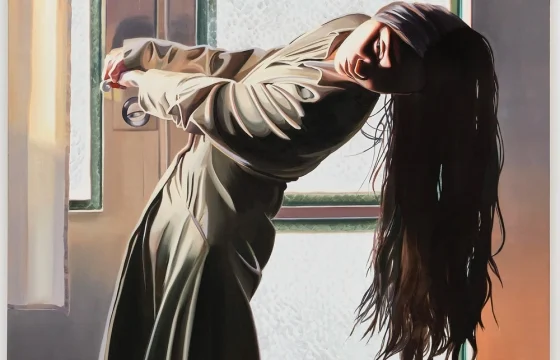
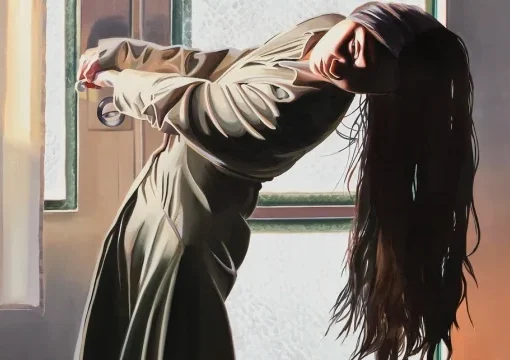
"Privacy Glass": In another arresting interior, "Privacy Glass" presents a figure deliberately sequestered from the external world. Bounds employs a dramatic interplay of warm and cool hues to render this scene, further emphasizing the subject’s isolation. The privacy glass itself acts as a fascinating element, diffusing the incoming light to cast a dramatic illumination on the figure from behind, while simultaneously allowing a distinct beam of external light to penetrate the interior. This interplay of light and shadow serves to obscure the subject’s face, drawing the viewer’s attention to the draped clothing and the overall form. The composition and dramatic lighting bear a striking resemblance to the chiaroscuro techniques of Georges de La Tour, a master of capturing intimate, candlelit scenes. Like the vanitas paintings of old, Bounds’ "Privacy Glass" conveys a profound sense of the fleetingness of time and the inevitable encroachment of darkness, both literal and metaphorical. The obscured face suggests a withholding, a deliberate act of concealment that adds layers of mystery and psychological depth to the narrative.
Moments of Escapism and Optimism: While many of Bounds’ works delve into the introspective and the potentially unsettling, the exhibition also offers moments of profound escapism and undeniable optimism. Paintings such as "It Sings in Me" and "Among of Green, Again" depict figures moving with an uninhibited freedom amidst rolling green hills, bathed in the radiant glow of the sun. The landscapes are rendered with a bucolic beauty, perhaps even an idealized perfection, prompting the question of their reality. Are these dreamscapes, memories, or projections of an inner desire? For Bounds, the definitive answer is secondary to the emotional impact. These works are about the power of creating optimism, fostering a belief in renewal, and celebrating the potential for rebirth. In stark contrast to the pensive interiority of other pieces, these landscapes pulse with a sense of urgency, celebration, possibility, and the boundless nature of fantasy. They serve as a powerful counterpoint, a reminder that even after the deepest darkness, spring—and the hope it represents—ultimately prevails.
Official Responses and Critical Acclaim
The critical reception to Molly Bounds’ New York debut has been overwhelmingly positive. Art critics and curators have lauded her sophisticated use of light and shadow to explore complex psychological states. The gallery’s press release highlights the "versatility and ever-changing nature" of light as central to Bounds’ narrative, a sentiment echoed in numerous reviews.
One prominent art critic noted, "Bounds has a rare gift for capturing the subtle shifts in human emotion, transforming everyday moments into profound meditations on time, solitude, and the search for meaning. ‘The Light That Loses, The Night That Wins’ is a testament to her evolving mastery." Another reviewer praised the exhibition’s "hauntingly beautiful exploration of liminal spaces, where stillness and urgency coexist, and the boundaries between reality and imagination blur." The deliberate choice to open on the vernal equinox was also widely recognized as a thoughtful curatorial decision that enhanced the exhibition’s thematic depth.
Implications and the Enduring Power of Light
"The Light That Loses, The Night That Wins" offers more than just a collection of aesthetically pleasing paintings; it presents a compelling invitation to reflect on our own internal landscapes and our relationship with the passage of time. Bounds’ work encourages viewers to consider the dualities that define human experience: the interplay of comfort and unease, solitude and connection, introspection and action.
The exhibition’s exploration of light as a protagonist suggests that even in moments of darkness, there is an inherent dynamism, a constant flux that holds the potential for revelation and renewal. The "night that wins" is not necessarily a victory of despair, but a natural part of the cycle, a period of rest and gestation that precedes the eventual triumph of light. Bounds’ art reminds us that transformation is often born from these transitional moments, these liminal spaces where the old gives way to the new.
In an era often characterized by rapid change and overwhelming information, Bounds’ focus on contemplative stillness and the internal world offers a much-needed counterpoint. Her paintings provide a space for introspection, for confronting the complexities of our own emotions, and for finding beauty and meaning in the quiet moments of our lives. "The Light That Loses, The Night That Wins" is a significant artistic achievement, cementing Molly Bounds’ position as a vital voice in contemporary art and offering a profound and resonant experience for all who engage with her luminous narratives.

Leave a Comment