BABYLON, MESOPOTAMIA – In the vast pantheon of ancient Mesopotamian deities, few figures commanded the reverence and exhibited the staying power of Nabu. Known variously as Tutu, this Babylonian god was a cornerstone of civilization, embodying wisdom, learning, prophecy, and the sacred art of writing. More than just a divine scribe, Nabu was also responsible for the abundant harvest and the vitality of all growing things, his very name, "the Announcer," resonating with his creative and prophetic power to call forth words, life, and the visions of the future. His profound influence transcended empires, outlasting many of his divine counterparts and leaving an indelible mark on subsequent civilizations.
Main Facts: The Multi-Faceted Divinity
Nabu’s dominion was expansive, encompassing both intellectual and agricultural spheres, a duality that underscored his vital role in Babylonian society. As the patron of scribes and scholarship, he was the ultimate source of divine knowledge, guiding the hands that etched cuneiform into clay and inspiring the minds that interpreted omens and composed sacred texts. His association with prophecy cemented his status as a revealer of destinies, holding sway over the "Tablet of Fate of the gods," as noted by scholar E. A. Wallis Budge. This power extended to influencing the lifespan of mortals, granting or prolonging days—a testament to his immense authority.
Beyond the realm of intellect, Nabu was a life-giver. His connection to the harvest and all growing things ensured the fertility of the land, a critical aspect for an agrarian society. This combination of intellectual prowess and life-sustaining power made him an indispensable deity, second only to Marduk, the king of the gods and patron of Babylon. His primary cult center, the grand temple-ziggurat of Ezida in Borsippa, stood as a testament to his prominence, often referred to as a "second Babylon" due to its religious significance. Nabu’s worship became so pervasive that he was adopted by the Assyrians, the Greeks, and the Romans, a remarkable feat of cultural assimilation that speaks to his universal appeal and the enduring power of his divine attributes.
The Genesis of a Divine Scribe: Nabu’s Chronological Ascent
Nabu’s journey to divine prominence is a fascinating narrative of evolution and syncretism, deeply rooted in the ancient religious landscape of Mesopotamia. His origins can be traced back to an even older Sumerian goddess, Nisaba (also known as Nidaba or Nissaba), the goddess of writing, learning, and accounts. Nisaba is attested to as early as the Early Dynastic period (circa 2900 to circa 2350/2334 BCE), a testament to the profound antiquity of the reverence for literacy in the region. Sumerian hymns and compositions often concluded with the ritual phrase, "Praise be to Nisaba!" a paradigm that would later be directly adopted for Nabu, signifying a clear lineage of intellectual patronage.
As Mesopotamian civilization progressed, particularly into the Old Babylonian period (circa 1894-1595 BCE), Nabu’s popularity surged. This era witnessed a broader societal and religious shift, where male deities often gained prominence at the expense of older goddesses. King Hammurabi (1792-1750 BCE), a pivotal figure in Babylonian history, played a significant role in solidifying the state-sponsored worship of male gods, further elevating figures like Nabu within the pantheon. While Nisaba occasionally appeared in later myths as Nabu’s divine assistant and wife, meticulously maintaining the library of the gods—much like the Egyptian goddess Seshat worked alongside Thoth—Nabu increasingly absorbed and personified the attributes previously held by his Sumerian predecessor.
His marital connections also evolved. Initially, his consort was Tashmit (Tasmetu). Later, Nanaya, who was originally the divine partner of the Sumerian god Muati, became associated with Nabu through a process of syncretism, further broadening his divine connections and sphere of influence.
Crucially, Nabu’s relationship with Marduk, Babylon’s supreme deity, underwent a significant transformation. During earlier periods, Nabu was primarily regarded as Marduk’s vizier and scribe, a trusted minister within the divine court. However, following the Kassite period (circa 1595 BCE), a new theological narrative emerged, firmly establishing Nabu as Marduk’s son. This familial link was not merely ceremonial; it bestowed upon Nabu an almost equal measure of power and authority, positioning him as a formidable force in the divine hierarchy and ensuring his central role in the religious life of Babylon. This elevation as the son of Marduk, and thus the grandson of Enki (also known as Ea), the primordial god of wisdom, further cemented Nabu’s inherent connection to profound knowledge and creation.
Symbols of Sovereignty and Intellect: Iconography and Cultic Practice
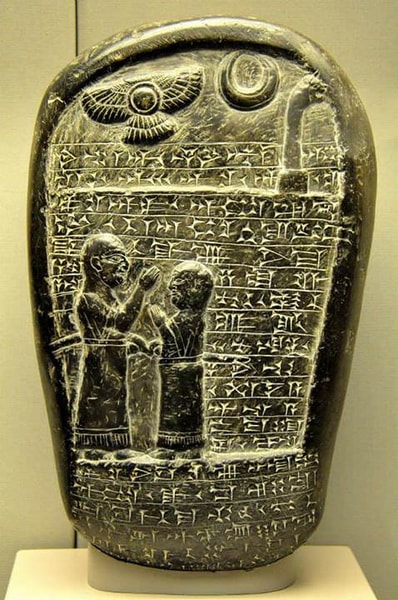
Nabu’s distinct iconography served as a visual language to convey his multifaceted powers and divine status. His most fundamental symbols were the wedge-shaped cuneiform mark and a stylus at rest upon a writing tablet, direct representations of his patronage over writing and knowledge. These symbols underscored the reverence for literacy in a society where the ability to read and write was a specialized, often sacred, skill.
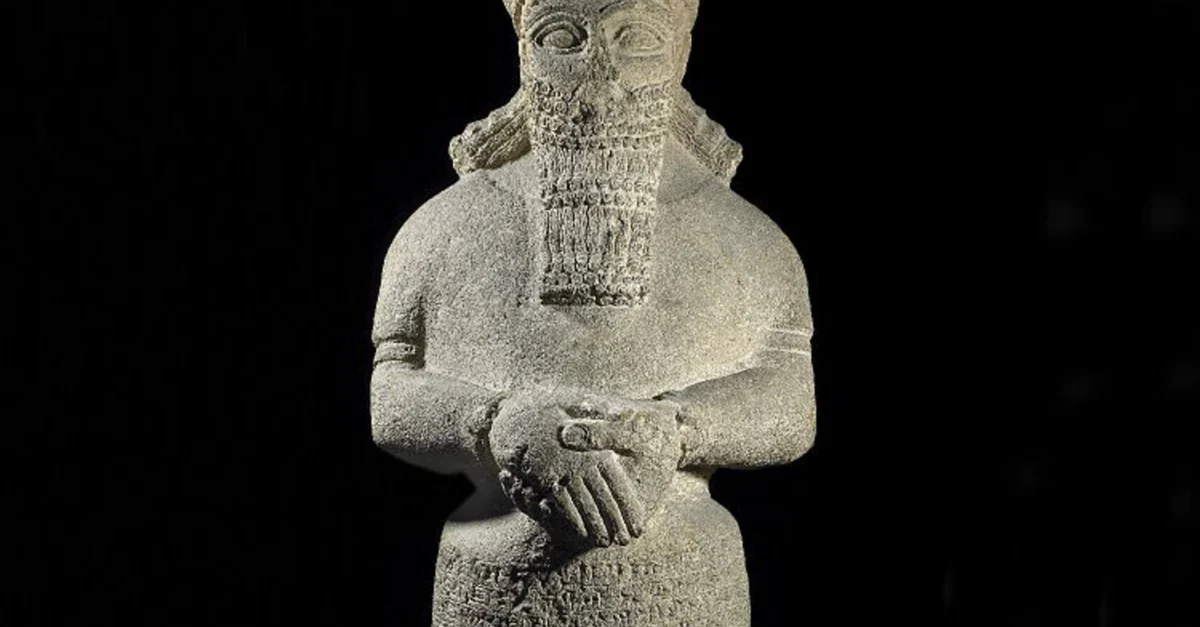
Beyond these abstract symbols, Nabu was frequently depicted in human form, portrayed as a majestic, bearded man clad in royal garb. In his hand, he invariably held a stylus, signifying his role as the divine scribe. A striking feature of his depictions was his stance upon the back of a snake-dragon, known as the Mushussu Dragon. This powerful protective spirit, often associated with Marduk and other prominent gods, was a symbol of divine authority and might, famously appearing on the magnificent Ishtar Gate of Babylon. Nabu’s association with the Mushussu reinforced his connection to the highest echelons of the Mesopotamian pantheon and his role as a guardian of divine order.
His primary cult center, Borsippa, situated near Babylon, was of immense religious significance. The temple-ziggurat of Ezida, dedicated to Nabu, was considered almost as important as the Esagila, Marduk’s grand temple complex in Babylon itself. The priests of Nabu at Borsippa were highly esteemed, responsible for the care of the god’s statue, the intricate rituals, and the administration of the vast temple complex. This reverence for Nabu naturally extended to his earthly representatives, the scribes and priests, whose work was seen as a holy calling, directly inspired by the divine patron of wisdom.
The invention of cuneiform writing in Mesopotamia by the Sumerians, circa 3600/3500 BCE, was a monumental achievement, born perhaps from the pragmatic needs of trade and long-distance communication. Yet, like in Egypt with hieroglyphs, this groundbreaking technology was universally regarded as a divine gift. For the Babylonians, that gift flowed primarily from Nabu. As scholar E. A. Wallis Budge eloquently stated:
"He was endowed with great wisdom, like his father; and he acted as scribe to the gods; he had charge of the Tablet of Fate of the gods and had the power of prolonging the days of men. Like the Egyptian Thoth, his eyes travelled over the circuit of the heavens and over all the earth. He was the personification of knowledge and, as a god of vegetation, he caused the earth to produce abundant crops." (85)
This description encapsulates Nabu’s comprehensive power: his divine wisdom mirroring Marduk’s, his executive role as the celestial record-keeper, his control over human destiny, his cosmic omniscience, and his essential function as a bringer of agricultural fertility. This syncretic nature, combining intellectual and life-giving attributes, made Nabu an indispensable deity for a society deeply reliant on both sophisticated administration and agricultural prosperity. His identification with the planet Mercury, known for its swiftness and association with communication, further solidified his reputation as a master of divine messages and intellectual pursuits. Moreover, Nabu’s conceptual parallels extended far beyond Mesopotamia, aligning him with the Egyptian Thoth (god of writing, magic, wisdom), the Greek Apollo (god of prophecy, poetry, music), and the Roman Mercury (messenger god, god of commerce, eloquence), illustrating a trans-cultural recognition of his core attributes.
The Akitu Festival: Nabu’s Pivotal Role in Babylon’s Renewal
Among the myriad festivals celebrated by the Mesopotamians, the Akitu festival stood as the most significant, a twelve-day spectacle of immense religious and civic importance that marked the beginning of the New Year and honored the gods and the annual harvest. While its rituals varied across communities—some like Ur celebrated twice a year, others like Babylon once—the spring equinox Akitu in Babylon was a grand public event, a profound expression of communal faith and renewal. In this elaborate drama, Nabu played an absolutely pivotal role, underscoring his indispensable connection to Babylon’s spiritual and political well-being.
The festival unfolded over twelve meticulously choreographed days:
Day One: Preparations commenced. While priests attended to Marduk’s sanctuary, the Esagila, in Babylon, Nabu’s temple, the Ezida, in Borsippa also underwent ceremonial cleansing and preparation.
Day Two: Marduk’s high priest performed a renewal ceremony, praying for the god’s continued protection and expressing gratitude for his blessings upon Babylon.
Day Three: The high priest at Babylon oversaw the creation of two wooden dolls, believed to represent human worshippers of Nabu, though their precise form and significance remain debated.
Day Four: This day saw Nabu’s direct involvement. While Marduk’s high priest and lesser clergy offered prayers to the supreme god, the king of Babylon embarked on a ceremonial journey to Borsippa. His mission: to personally escort the revered statue of Nabu back to Babylon. This royal pilgrimage was a profound act, symbolizing the city’s dependence on Nabu’s wisdom and prophetic guidance. Concurrently, back in Babylon, the high priest honored Marduk and his consort Sarpanitum and recited the Enuma Elish, the Babylonian creation epic, which chronicled Marduk’s ascent as king of the gods and creator of humanity.
Day Five: As priests ritually purified the temples of Marduk and Nabu, a dramatic ceremony unfolded. The shrine of Nabu in Babylon was covered with a canopy of gleaming gold, awaiting his arrival. Upon the king’s return with Nabu’s statue, a powerful act of humbling debasement occurred. The high priest divested the king of his royal insignia, slapped his face, and forced him to kneel before Nabu’s holy image. On his knees, the king made a "negative confession," swearing that he had not abused his authority or forsaken Babylon’s interests—a ritual reminiscent of the Egyptian Book of the Dead’s Negative Confession and the biblical Ten Commandments. The priest would then slap the king’s face again until tears flowed, signifying genuine contrition. Following this, the king joined the priests in prayer, and sacrifices were made to Mercury, the celestial body associated with Nabu. The statue of Nabu was then placed in its shrine, concluding the day with city-wide prayers.
Day Six: Statues of gods from other cities arrived in Babylon and were positioned between Nabu’s shrine and Marduk’s temple. The two wooden figures created on Day Three were brought forth, offered to Nabu, decapitated, and ritually burned. While Bertman suggests this might symbolize ancient human sacrifice or an unknown myth, its exact meaning remains elusive.
Days Seven and Eight: The king "took the hand" of Marduk’s statue, pledging allegiance, and led him out of the temple into a grand procession. This marked the public crescendo of the festival. The procession made its way to the Shrine of Destinies near Nabu’s sanctuary, where Nabu was called upon to deliver his prophecy regarding the king and the coming year, which was meticulously recorded by the priests. The gods’ statues were positioned to honor the king, and a sacred marriage ritual, possibly involving the king and a priestess representing Inanna, may have occurred. The procession then continued, carrying Marduk out of the city to the bit-Akitu shrine, a lush park setting.
Days Nine and Ten: A grand public banquet, replete with food, drink, and entertainment provided by the state, was held in the bit-Akitu park.
Day Eleven: Marduk’s statue, accompanied by the other gods, was brought back into Babylon, stopping once more at Nabu’s shrine. Here, the prophecy Nabu had given on Day Seven was publicly read aloud. A closing ceremony, attended by priests, nobility, and visiting dignitaries, concluded the formal observances.
Day Twelve: The festival concluded with public ceremonies surrounding Nabu. His statue was then carefully taken from its shrine and began its short journey back to Borsippa by ship. As Nabu departed, the statues of the other visiting gods also returned to their respective cities.
The Akitu festival’s strict requirements underscored Nabu’s critical importance. While the Marduk Prophecy documented instances when Marduk’s statue was absent due to conquest, rendering the festival impossible, the Akitu Chronicles similarly noted years when Nabu remained in Borsippa because Marduk was not in Babylon. This highlights Nabu’s indispensable role, demonstrating that the festival, and thus the annual renewal of Babylon, could not proceed without the presence and prophetic wisdom of the divine Announcer.
Official Sanction and Religious Mandate
Nabu’s enduring popularity and central role were not merely a matter of popular devotion; they were deeply interwoven with official state and religious policy across multiple Mesopotamian empires. The elaborate rituals of the Akitu festival, particularly those involving the king, served as a powerful testament to Nabu’s officially sanctioned status. The king’s ceremonial journey to Borsippa to retrieve Nabu’s statue was a diplomatic and religious act of the highest order, publicly acknowledging Nabu’s authority and the necessity of his divine counsel for the welfare of the state. The king’s humbling confession before Nabu’s image underscored the supremacy of divine will over temporal power, a crucial message reinforced annually by the religious establishment.
Furthermore, the high status accorded to Nabu’s priests in Borsippa and their intricate management of the Ezida temple complex speaks volumes about the institutional support for his cult. These priests were not just religious figures; they were keepers of knowledge, interpreters of prophecy, and administrators of a significant religious hub, reflecting the state’s investment in Nabu’s domain.
The broader socio-religious trends of the Old Babylonian period, which saw the elevation of male deities, can be viewed as a kind of "official response" to changing cultural values. Nabu, embodying wisdom and prophecy, perfectly aligned with the intellectual and administrative needs of a complex urban society, making his promotion by the ruling elite a logical strategic choice.
Perhaps the most significant official endorsement came with his adoption by the Assyrians. When the mighty Assyrian Empire integrated Nabu into their pantheon as the son of their supreme god Ashur, it represented a strategic move to legitimize his worship across vast territories. This act decoupled Nabu from his specific political associations with Babylon, unlike Marduk, who remained firmly tied to the city. This official integration into the Assyrian state cult allowed Nabu’s influence to spread throughout the empire, demonstrating a pragmatic recognition of his universal appeal and the power of his attributes beyond sectarian boundaries.
An Enduring Divinity: Nabu’s Lasting Implications
Nabu’s legacy is remarkable not only for its depth but also for its extraordinary longevity. Unlike many gods whose worship waned with the fall of their sponsoring empires, Nabu transcended such political vicissitudes. Even after the collapse of the formidable Assyrian Empire in 612 BCE, when statues of politically charged deities like Ashur and Marduk were often desecrated by conquering Medes, Babylonians, and Persians, Nabu’s statue was often spared and continued to be honored. Scholar Gwendolyn Leick notes that Nabu "endured when other gods, who had been more closely identified with political power (e.g., Marduk) had lost popularity" (123). This resilience speaks to the inherent value placed on his core attributes—wisdom, writing, and prophecy—which remained relevant regardless of political shifts.
His worship continued robustly throughout Mesopotamia and spread far beyond its borders, finding adherents in Egypt, Anatolia (modern-day Turkey), and Syria. By the time of the Roman Emperor Augustus (27 BCE to 14 CE), Nabu was known and venerated in Greece and Rome, where he was readily identified with Apollo and Mercury, respectively. This trans-cultural syncretism illustrates his universal appeal and the timeless nature of the concepts he embodied.
Nabu’s influence even extended into Abrahamic traditions. He is referred to as Nebo in the Bible, mentioned alongside Marduk (called "Bel") in Isaiah 46:1-2, a testament to his prominence in the ancient Near East. The very name of Mount Nebo, the legendary site from which Moses gazed upon the Promised Land and where he is traditionally buried, carries Nabu’s name, providing a profound link to a deity whose memory stretched across millennia.
Ultimately, Nabu’s enduring veneration highlighted the profound societal value placed on the written word itself. By establishing a divine patron for knowledge and writing, Mesopotamian civilization elevated literacy from a mere utilitarian craft for administration and communication to a sacred art form. For scribes and scholars, their work was not simply a profession but a "holy calling," inspired and overseen by Nabu. Through his divine patronage, Nabu ensured that writing became an essential tool for preserving the present for the future, safeguarding history, wisdom, and prophecy for generations to come. His story is a powerful reminder that even amidst the rise and fall of empires, the pursuit of knowledge and the power of the written word can hold a truly immortal resonance.
Ashur, Mesopotamia – The discovery of "The Marduk Prophecy," an ancient Assyrian document dating between 713 and 612 BCE, offers a profound window into the intricate tapestry of Mesopotamian
TOKYO, Japan – April 18, 1942 – In a daring and audacious strike that reverberated across the globe, 16 US B-25 Mitchell bombers, launched from the aircraft carrier USS Hornet, delivered a shocking bl
LONDON, UK – In an age where timeless narratives continue to captivate new generations, author Laura Sampson has masterfully breathed new life into a beloved European folktale with her latest work, En






Leave a Comment