
Hammurabi: Architect of Empire and Law in Ancient Mesopotamia
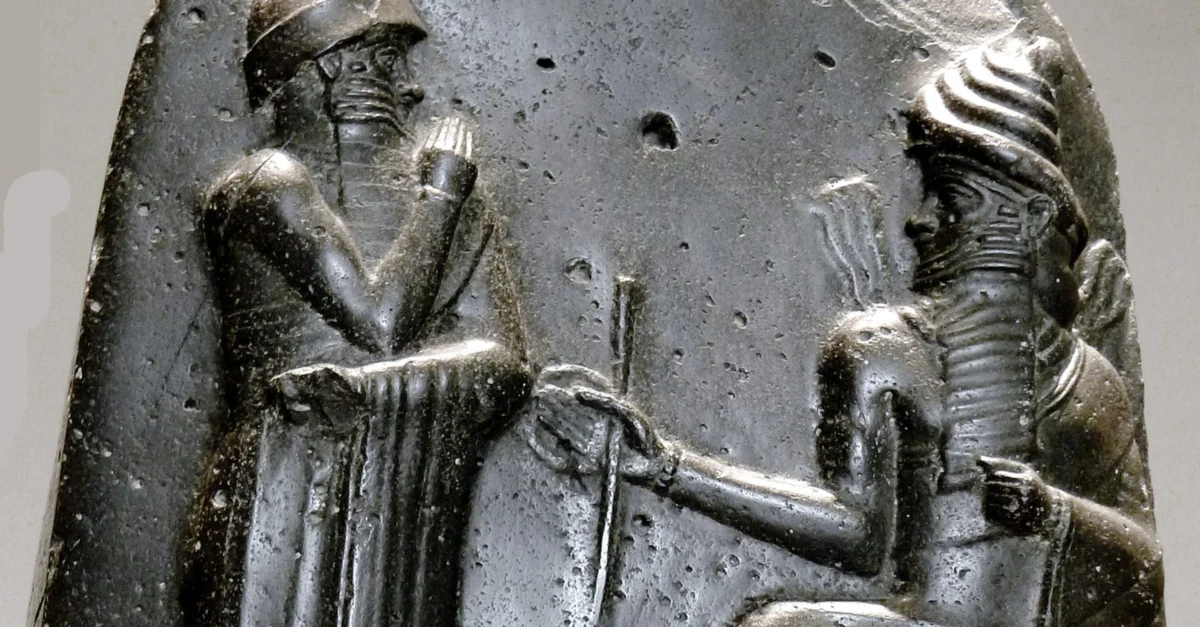
Babylon, Mesopotamia – The name Hammurabi (reign 1792-1750 BCE), sixth king of the Amorite First Dynasty of Babylon, resonates through history as a colossal figure who not only forged an empire but also bequeathed to posterity one of the most influential legal codes of antiquity. His reign marked a pivotal era in Mesopotamian history, transforming a nascent regional power into a dominant force and laying down principles of governance and justice that would echo for millennia, even influencing later legal traditions such as the Mosaic Law found in the Bible.
Hammurabi’s strategic brilliance allowed him to achieve what no ruler before him had: the successful governance of all of Mesopotamia without sustained revolt following his initial conquests. His political acumen, combined with military might and a profound commitment to administrative order, solidified Babylon’s preeminence and established a benchmark for subsequent empires.
The Dawn of an Empire: Background and Ascension
Known also as Ammurapi and Khammurabi, he ascended the throne following his father, Sin-Muballit (reign 1812-1793 BCE). While Sin-Muballit had successfully stabilized the kingdom, undertaking numerous public works projects and fortifying the fledgling city of Babylon, he had been unable to expand its territorial reach significantly. Upon Hammurabi’s ascension, the Kingdom of Babylon was a modest entity, encompassing only the cities of Babylon, Kish, Sippar, and Borsippa. This relatively confined domain stood in stark contrast to the sprawling empire Hammurabi would ultimately construct.
The Amorites, a nomadic Semitic people, had migrated into Mesopotamia prior to the 3rd millennium BCE from the coastal regions of Eber Nari (modern-day Syria). By 1984 BCE, they had established themselves as rulers in Babylon, gradually integrating into the existing Sumerian-Akkadian cultural tapestry while retaining distinct traditions. Hammurabi inherited this Amorite legacy, poised at a critical juncture in the region’s complex geopolitical landscape.
Babylon’s Humble Beginnings
At the outset of Hammurabi’s reign, the Mesopotamian world was a mosaic of independent city-states, each vying for supremacy, resources, and control over lucrative trade routes. While Babylon was growing in stature, it was by no means the dominant power. Hammurabi’s early years were characterized by consolidation rather than outward expansion, a strategic decision that would prove foundational. He centralized and streamlined his administration, a crucial step in ensuring efficient governance and resource mobilization for future campaigns. This involved improving the bureaucratic apparatus, ensuring reliable tax collection, and laying the groundwork for a unified legal and administrative framework.
The Shadow of Larsa
The primary rival to Babylon’s aspirations was the southern city-state of Larsa. Under the formidable King Rim Sin I, Larsa had become the most lucrative trade center on the Persian Gulf, its wealth fueling an aggressive expansionist policy that brought most of the southern Mesopotamian cities under its sway. Sin-Muballit had previously attempted to challenge Larsa’s dominance but suffered a decisive defeat. The circumstances surrounding Sin-Muballit’s abdication in favor of Hammurabi are not entirely clear, but some historians speculate that Rim Sin I might have perceived the younger Hammurabi as a less immediate threat, a miscalculation that would profoundly alter the course of Mesopotamian history.
Historian Will Durant vividly captures Hammurabi’s early persona: "At the outset of [Babylonian history] stands the powerful figure of Hammurabi, conqueror and lawgiver through a reign of forty-three years. Primeval seals and inscriptions transmit him to us partially – a youth full of fire and genius, a very whirlwind in battle, who crushes all rebels, cuts his enemies into pieces, marches over inaccessible mountains, and never loses an engagement. Under him the petty warring states of the lower valley were forced into unity and peace, and disciplined into order and security by an historic code of laws." (Durant, 219).

Hammurabi initially gave Rim Sin I no cause for alarm. His first five years were dedicated to internal development: continuing his father’s building programs, enlarging and heightening the city walls of Babylon, and initiating public works. He paid meticulous attention to the needs of his people, improving irrigation systems essential for agriculture, maintaining urban infrastructures, and constructing opulent temples to the gods, particularly Marduk, Babylon’s patron deity. All the while, beneath this facade of peaceful administration, Hammurabi was meticulously training and organizing his military forces, preparing for the audacious campaigns that would reshape Mesopotamia.
Master Strategist: Unifying Mesopotamia
Scholar Stephen Bertman highlights Hammurabi’s multifaceted character, crucial to his early successes: "Hammurabi was an able administrator, an adroit diplomat, and canny imperialist, patient in the achievement of his goals. Upon taking the throne, he issued a proclamation forgiving people’s debts and during the first five years of his reign further enhanced his popularity by piously renovating the sanctuaries of the gods, especially Marduk, Babylon’s patron. Then, with his power at home secure and his military forces primed, he began a five-year series of campaigns against rival states to the south and east, expanding his territory." (Bertman, 87). This blend of internal consolidation, public goodwill, and strategic military preparation defined his approach.
Campaigns in the South
Hammurabi’s expansion began in earnest around 1787 BCE. His first major strategic move involved a temporary alliance with his rival, Rim Sin I of Larsa, to counter a more immediate threat: the invading Elamites from the east. Once the Elamite threat was neutralized, Hammurabi, ever the pragmatist, swiftly dissolved the alliance. He then turned his attention to Larsa’s holdings, skillfully forming new alliances with other city-states like Nippur and Lagash to conquer Uruk and Isin, cities previously under Larsa’s control.
Hammurabi’s diplomatic maneuvering was characterized by its opportunism. Alliances were forged and broken with a calculated ruthlessness that consistently served Babylonian interests. It remains a curious aspect of ancient Mesopotamian politics that other rulers, despite witnessing Hammurabi’s repeated betrayals, continued to enter into pacts with him, perhaps underestimating his long-term ambition or swayed by his immediate strategic offers.
Having secured Uruk and Isin, Hammurabi then turned on his former allies, Nippur and Lagash, conquering them before launching his decisive strike against Larsa itself. A key tactic he employed, a refined version of a method previously used by his father, involved manipulating water sources. He would dam up rivers to deprive besieged cities of water or, conversely, release dammed waters to flood the city, disrupting defenses and creating chaos before mounting an assault. This ingenious, albeit devastating, strategy proved highly effective. With the fall of Larsa, the last significant southern opposition to Babylonian hegemony collapsed.
The Fall of Mari and Northern Expansion
With southern Mesopotamia firmly under his control by around 1762 BCE, Hammurabi turned his gaze north and west. The Amorite Kingdom of Mari, located in modern-day Syria, had long been an ally of Babylon, and relations between Hammurabi and Mari’s King Zimri-Lim (reign circa 1775-1760 BCE) had been ostensibly friendly. Zimri-Lim had led successful campaigns in the north, and Mari had flourished, boasting one of the region’s largest and most opulent palaces, a testament to its wealth derived from extensive trade along the Euphrates River.
The exact motivations for Hammurabi’s betrayal of Mari have been debated by scholars, but the strategic rationale appears clear: Mari was a critical hub for trade and possessed valuable water rights along the Euphrates. Direct control over such a prosperous and strategically vital city would eliminate the need for negotiations and consolidate Babylonian power. In 1760 BCE, Hammurabi struck swiftly. What remains a greater mystery, however, is his decision to utterly destroy Mari, rather than simply conquering and integrating it as he had with other cities. Most conquered territories were absorbed, repaired, and improved under Babylonian administration. The destruction of Mari stands as a singular exception, leading many to surmise that Hammurabi saw Mari as an insurmountable rival to Babylon’s claim as the greatest city of Mesopotamia. Zimri-Lim is believed to have perished in this conflict, vanishing from historical records after 1760 BCE.
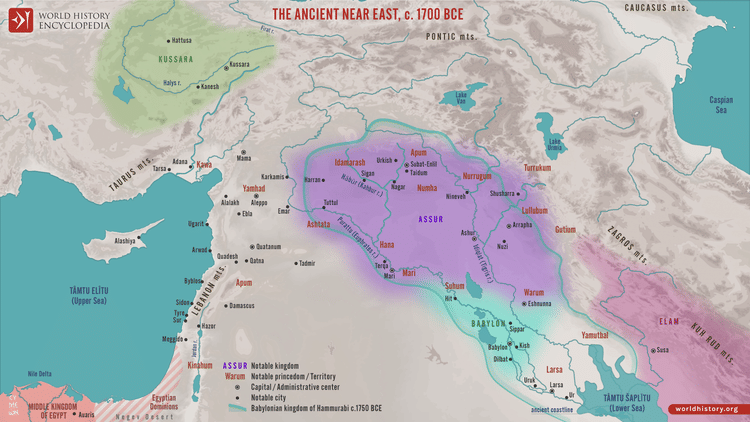
From Mari, Hammurabi continued his relentless march, conquering Ashur and the region of Assyria, and finally Eshnunna (again employing the damming tactic). By 1755 BCE, Hammurabi had achieved his monumental ambition: the unification of virtually all of Mesopotamia under the centralized authority of Babylon, a feat of imperial expansion unprecedented in its scale and stability.
The Pillar of Justice: Hammurabi’s Code and Governance
Beyond his military prowess, Hammurabi was renowned as a meticulous administrator and a dedicated leader. The popular title bestowed upon him during his lifetime, bani matim, "builder of the land," reflected his extensive public works and infrastructure projects throughout the vast region he governed.
A King Dedicated to His People
Documents from his reign, including administrative letters and directives concerning canal construction, food distribution, urban beautification, and legal issues, corroborate Hammurabi’s self-perception as a ruler committed to the welfare of his people. This ethos is powerfully articulated in the prologue to his celebrated law code:
"When the lofty Anu, King of the Annunaki and Bel, Lord of Heaven and Earth, he who determines the destiny of the land, committed the rule of all mankind to Marduk, when they pronounced the lofty name of Babylon, when they made it famous among the quarters of the world and in its midst established an everlasting kingdom whose foundations were firm as heaven and earth – at that time Anu and Bel called me, Hammurabi, the exalted prince, the worshipper of the gods, to cause justice to prevail in the land, to destroy the wicked and the evil, to prevent the strong from oppressing the weak, to enlighten the land and to further the welfare of the people. Hammurabi, the governor named by Bel, am I, who brought about plenty and abundance." (Durant, 219).
This prologue is not merely self-aggrandizement; it outlines a clear mandate for just rule, divinely sanctioned, with a focus on protecting the vulnerable and ensuring prosperity.
The Genesis of the Code
While often mistakenly cited as the first law code in history, Hammurabi’s Code (circa 1772 BCE) is undeniably the most famous and influential from antiquity preceding biblical law. Earlier Mesopotamian legal compilations, such as the Code of Ur-Nammu (circa 2100-2050 BCE), existed. However, Hammurabi’s Code differed in crucial aspects, reflecting the evolving social and political landscape of his multi-ethnic empire.
Paul Kriwaczek elaborates on this distinction: "Hammurabi’s laws reflect the shock of an unprecedented social environment: the multi-ethnic, multi-tribal Babylonian world. In earlier Sumerian-Akkadian times, all communities had felt themselves to be joint members of the same family, all equally servants under the eyes of the gods. In such circumstances disputes could be settled by recourse to a collectively accepted value system, where blood was thicker than water, and fair restitution more desirable than revenge. Now, however, when urban citizens commonly rubbed shoulders with nomads following a completely different way of life, when speakers of several west Semitic Amurru languages, as well as others, were thrown together with uncomprehending Akkadians, confrontation must all too easily have spilled over into conflict. Vendettas and blood feuds must often have threatened the cohesion of the empire." (Kriwaczek, 180).
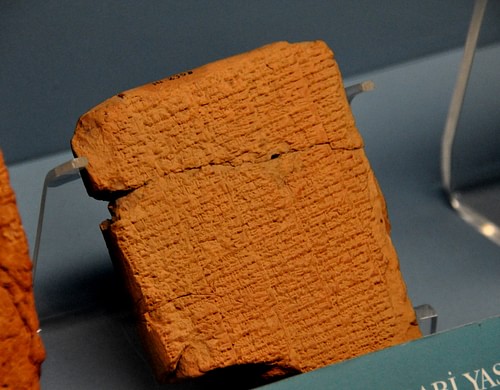
The Code of Ur-Nammu, for instance, assumed a communal understanding of divine will and proper societal conduct, with the king administering justice on behalf of the gods. As scholar Karen Rhea Nemet-Najat notes, "The king was directly responsible for administering justice on behalf of the gods, who had established law and order in the universe." (Nemet-Najat, 221). However, in Hammurabi’s diverse empire, such communal understanding could no longer be presumed. His code aimed to prevent destructive vendettas by clearly articulating crimes and their state-administered punishments, thereby standardizing justice across varied cultural backgrounds.
Lex Talionis and the Ordeal
Unlike the Code of Ur-Nammu, which often prescribed fines or restitution for offenses, Hammurabi’s Code famously enshrined the principle of Lex Talionis, or retributive justice – the concept of "an eye for an eye, a tooth for a tooth." This strict proportionality of punishment to crime is exemplified in passages such as:
- "If a man put out the eye of another man, his eye shall be put out."
- "If he break another man’s bone, his bone shall be broken."
- "If a man knock out the teeth of his equal, his teeth shall be knocked out."
- "If a builder build a house for someone, and does not construct it properly, and the house which he built fall in and kill its owner, then that builder shall be put to death. If it kill the son of the owner of the house, the son of that builder shall be put to death."
This principle, later echoed in the biblical Book of Exodus (e.g., Exodus 21:22-25), provided a clear, albeit harsh, framework for justice that minimized ambiguity and personal vengeance.
Despite the explicit written laws, the determination of guilt or innocence in the most serious cases, particularly adultery and sorcery, often relied on the ancient method of the "ordeal." This involved the accused performing a perilous task, typically plunging into or swimming a certain distance across the "divine river" (the Euphrates). Survival indicated innocence, while failure signified guilt. Hammurabi’s Code stipulates: "If a man’s wife has been pointed out because of another man, even though she has not been caught with him, for her husband’s sake she must plunge into the divine river." If she survived, her accuser would face punishment for false witness, often death. The ordeal underscored the belief that divine judgment would reveal the truth, especially in matters that threatened the core social fabric.
Sorcery, in ancient Mesopotamia, encompassed acts perceived as defying the known will of the gods, asserting power reserved only for the divine. Such infractions were considered profoundly destabilizing and were met with severe penalties.
End of an Era: Legacy and Dissolution
By 1755 BCE, Hammurabi, having reached the zenith of his power, was an aging and ailing monarch. In his final years, his son Samsu-Iluna assumed increasing responsibilities of the throne, formally taking full reign in 1749 BCE. Hammurabi’s death in 1750 BCE marked not just the end of a remarkable reign but also the beginning of the swift unraveling of his meticulously constructed empire.
The Fragile Successor State
The conquest of Eshnunna, while a triumph for Hammurabi, inadvertently removed a crucial eastern buffer state that had historically shielded Mesopotamia from incursions by groups like the Hittites and Kassites. News of the great king’s weakening health and eventual demise emboldened these eastern tribes, who began to prepare their armies for invasion.
Samsu-Iluna inherited a vast but inherently fragile empire. He struggled to maintain control over the diverse regions his father had unified, simultaneously fending off external threats and suppressing internal revolts. Within a year of Hammurabi’s death, the expansive kingdom began to fragment. City-states that had been absorbed into the Babylonian sphere seized the opportunity to reassert their autonomy, securing their borders and declaring independence.
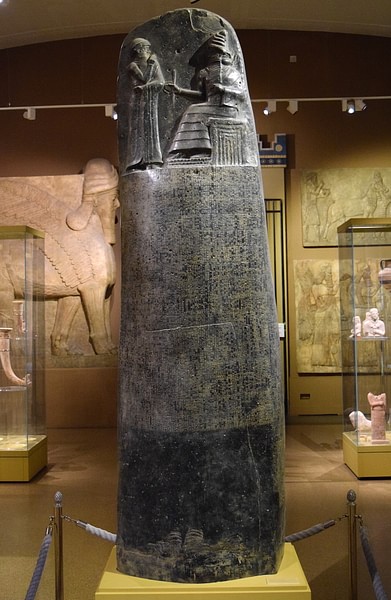
None of Hammurabi’s successors possessed the unique blend of military genius, diplomatic skill, and administrative foresight required to hold the empire together. The subsequent decades saw a steady decline in Babylonian power. In 1595 BCE, the Hittites sacked Babylon, delivering a devastating blow. They were followed by the Kassites, who conquered and renamed the city, establishing their own dynasty. The Elamites, whom Hammurabi had decisively defeated decades earlier, re-emerged as a regional power and, in a symbolic act of retribution, carried off the stele bearing Hammurabi’s Law Code. This monumental stele, bearing the full text of his laws, was later discovered in the Elamite city of Susa in 1901, providing invaluable insight into ancient Mesopotamian jurisprudence.
Hammurabi’s Enduring Influence
Hammurabi is primarily remembered today as a pioneering lawgiver whose comprehensive code established a standard for subsequent legal systems. However, in his own time, he was celebrated as the visionary ruler who unified Mesopotamia under a single governing body, a feat comparable to that achieved by Sargon of Akkad (reign 2334-2279 BCE) centuries before. Hammurabi consciously linked himself to great imperialists like Sargon, proclaiming himself "the mighty king, king of Babylon, king of the Four Regions of the World, king of Sumer and Akkad, into whose power the god Bel has given over land and people, in whose hand he has placed the reins of government." Like Sargon, he asserted that his legitimate rule was divinely ordained.
Yet, a key distinction between Hammurabi and his imperial predecessors lies in the relative stability of his rule. Unlike Sargon the Great, whose multi-ethnic empire was frequently plagued by internecine strife and rebellions, Hammurabi presided over a kingdom that, for the most part, enjoyed relative peace and order following his initial conquests. Gwendolyn Leick aptly summarizes his unique abilities: "Hammurabi remains one of the great kings of Mesopotamia, an outstanding diplomat and negotiator who was patient enough to wait for the right time and then ruthless enough to achieve his aims without stretching his resources too far." (Leick, 83).
It is a testament to his governance that, with the notable exception of Mari, Hammurabi rarely had to reconquer cities and regions. His focus, once control was established, shifted to improving the infrastructure and standard of living for the inhabitants. His legacy as a lawgiver is not merely a collection of rules but a reflection of his genuine concern for social justice, administrative order, and the long-term welfare of the diverse peoples under his unified Mesopotamian empire. Hammurabi’s reign stands as a towering achievement in the annals of ancient history, a testament to the power of strategic vision, military might, and the enduring quest for justice.




Leave a Comment