Elevating the Cinematic Experience: A Comprehensive Guide to High-Fidelity Home Theater Upgrades
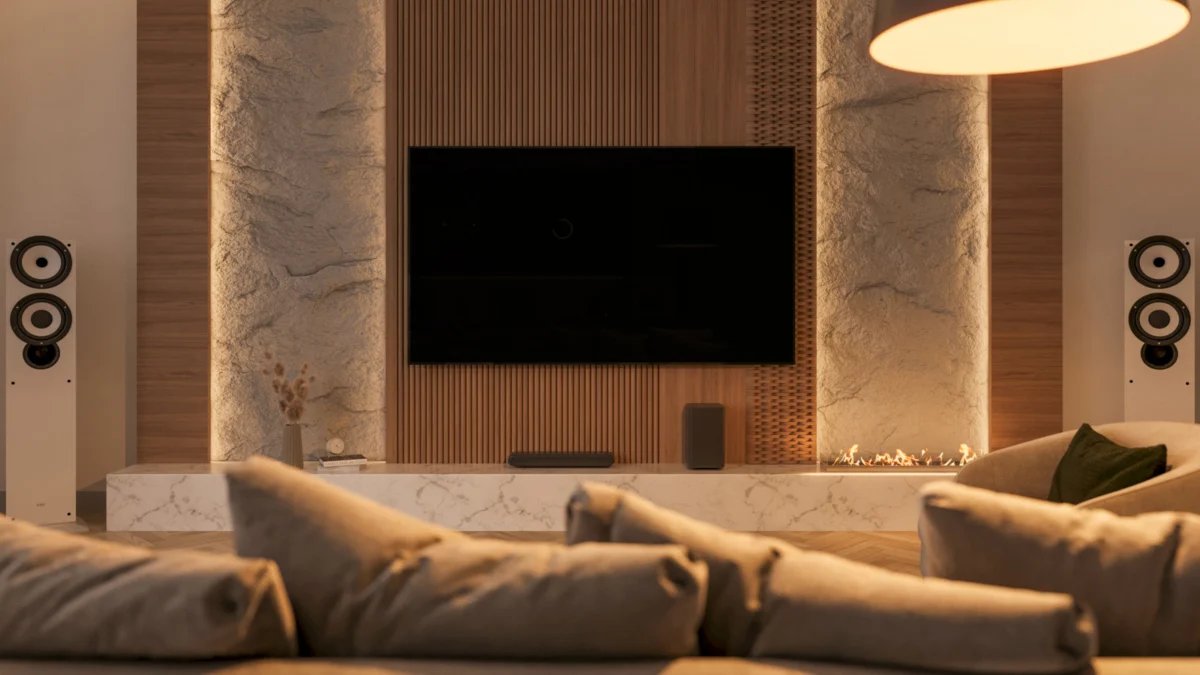
In an era where the boundary between the local multiplex and the living room is increasingly blurred, the pursuit of the "perfect" home theater has transitioned from a niche hobby for the wealthy into a modular, accessible journey for the modern cinephile. While the visual prowess of OLED and Mini-LED televisions often commands the spotlight, home theater enthusiasts argue that sound is responsible for more than 50% of the emotional impact of a film.
Building an immersive audio environment—ranging from a modest 2.1 setup to a complex 9.1.2 Dolby Atmos configuration—is no longer a process that requires a single, bank-breaking investment. Instead, the modern approach emphasizes strategic, incremental upgrades. By focusing on critical components such as center-channel clarity, physical media fidelity, and acoustic room treatments, homeowners can transform a lackluster "TV room" into a world-class private cinema.
Main Facts: The Five Pillars of Audio Enhancement
According to veteran home theater enthusiasts and audio engineers, five specific upgrades offer the highest "return on investment" regarding both sonic performance and long-term satisfaction.
1. The Center Channel: The Anchor of Narrative
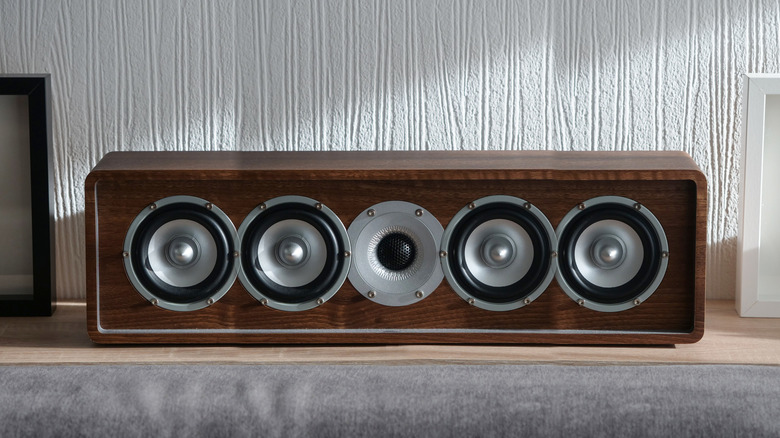
Often overshadowed by massive floor-standing tower speakers, the center channel is arguably the most vital component in a surround sound system. It is responsible for approximately 70% of a movie’s soundtrack, including nearly all dialogue and center-panned vocals. While AV receivers can create a "phantom center" by splitting audio between the left and right speakers, a dedicated center channel ensures that dialogue remains crisp and intelligible, even during chaotic action sequences.
2. High-Resolution Physical Media
Despite the convenience of streaming services like Netflix and Disney+, the "bitrate bottleneck" remains a significant hurdle for audiophiles. A 4K UHD Blu-ray player provides uncompressed or lossless audio formats (such as Dolby TrueHD and DTS-HD Master Audio) that streaming platforms simply cannot match due to bandwidth constraints.
3. Spatial Audio and Verticality
The introduction of object-based audio, specifically Dolby Atmos and DTS:X, changed the geometry of home theater. By adding a vertical dimension—either through in-ceiling speakers or up-firing modules—sound is no longer restricted to a horizontal plane. It allows for "sound objects" to move overhead, simulating environments like rain falling from above or a helicopter passing over the listener.
4. Tactile Transducers (Bass Shakers)
For those who want to "feel" the movie without waking the neighbors, bass shakers (tactile transducers) represent a novel solution. These devices attach to the frame of home theater seating, converting low-frequency signals into physical vibrations. This provides the sensation of a massive subwoofer’s impact at a fraction of the volume.
5. Acoustic Room Treatment
The most expensive speakers in the world will sound mediocre in a room with poor acoustics. Sound waves reflect off hard surfaces—glass windows, hardwood floors, and drywall—creating "muddy" audio. Strategic use of acoustic panels, bass traps, and heavy curtains is often the most cost-effective way to improve a system’s clarity.
Chronology: The Evolution of a Home Theater Build
The path to an enthusiast-grade system is rarely linear, but it generally follows a chronological progression of hardware acquisition and environmental optimization.
Phase I: The Stereo Foundation (Years 0–1)
Most enthusiasts begin by moving away from integrated TV speakers. The initial step is usually a 2.0 or 2.1 system (two speakers and a subwoofer). During this phase, the focus is on establishing a wide "soundstage" and offloading low-frequency duties to a dedicated sub, which allows the main speakers to operate more efficiently.
Phase II: The Dialog and Surround Expansion (Years 1–3)
Once the foundation is set, the center channel is added to anchor the dialogue. This is followed by the addition of "surround" speakers placed to the sides or rear of the listener. This marks the transition into true 5.1 surround sound, the industry standard for decades.
Phase III: The Leap to Object-Based Audio (Years 3–5)
As the user becomes more sophisticated, they often upgrade their AV receiver (AVR) to support Dolby Atmos. This involves installing height channels. Chronologically, this is also when many enthusiasts realize the limitations of streaming audio and invest in a dedicated 4K Blu-ray player to feed their high-end speakers the "lossless" data they deserve.
Phase IV: Environmental Refinement (The "Endgame")
The final stage of the chronology involves perfecting the room itself. This is a shift from buying more gear to making the existing gear work better. This includes professional calibration, the installation of acoustic treatments, and the integration of tactile transducers for a multi-sensory experience.
Supporting Data: Bitrates, Frequencies, and Physics
To understand why these upgrades are effective, one must look at the technical data that differentiates "standard" audio from "high-fidelity" audio.
| Feature | Streaming Audio (Average) | 4K Blu-ray (Physical) |
|---|---|---|
| Audio Format | Compressed (Dolby Digital Plus) | Lossless (Dolby TrueHD/DTS-HD) |
| Max Bitrate | ~640 – 768 kbps | Up to 24.5 Mbps |
| Sample Rate | 48 kHz | Up to 192 kHz |
| Dynamic Range | Limited/Compressed | Full Cinematic Range |
The "Voice Matching" Factor:
Data suggests that "timber matching" or "voice matching" the front three speakers (Left, Center, Right) is crucial. Using the same driver material—such as silk-dome tweeters across all three—ensures that as a sound moves from left to right, its tonal quality doesn’t change.
Acoustic Absorption:
Testing shows that a standard 2-inch thick acoustic panel can absorb up to 95% of sound energy at frequencies above 500Hz. Without these panels, those waves bounce back into the room, creating "comb filtering" which cancels out certain frequencies and makes speech harder to understand.
Official Responses: Industry Perspectives
Leading organizations in the audio-visual space have consistently emphasized that the "home experience" is now a priority for content creators.
Dolby Laboratories has frequently stated that Atmos is not just about "more speakers," but about "object-based" engineering. In official deployment guides, Dolby recommends that for the most immersive experience, height speakers should be placed at specific angles (usually 45 degrees relative to the listener) to ensure the brain perceives the sound as being truly overhead rather than just "high up on a wall."
THX Ltd., founded by George Lucas, maintains rigorous standards for what constitutes a "reference" theater. Their official stance emphasizes the "noise floor" of a room. They argue that reducing the ambient noise of a room (through insulation and curtains) is just as important as the maximum volume a speaker can reach.
Speaker Manufacturers (e.g., Klipsch, SVS, KEF):
Major manufacturers have shifted their product lines to be more modular. For example, Klipsch now designs "Atmos-ready" towers with integrated wiring for up-firing modules, acknowledging that consumers prefer a "stepped" upgrade path rather than a "rip and replace" approach.
Implications: The Future of the Living Room
The shift toward high-end home audio upgrades has profound implications for the entertainment industry and consumer behavior.
1. The Death of the "Black Box" Home Theater in a Box
The "Home Theater in a Box" (HTiB) era is largely over. Consumers now realize that these proprietary, all-in-one systems offer no upgrade path. The implication is a healthier market for "separates"—dedicated receivers, amplifiers, and speakers—that can last for decades, reducing electronic waste.
2. The Resurgence of Physical Media
While streaming is king for convenience, the "enthusiast" market has saved the physical disc from extinction. Manufacturers like Panasonic and Magnetar are producing high-end players specifically for this demographic. The implication is that "ownership" of media remains a vital component of the high-fidelity ecosystem.
3. The Integration of AI and Room Correction
Modern AV receivers now use sophisticated AI-driven software (like Dirac Live or Audyssey) to measure the room’s acoustics and "EQ" the speakers automatically. This implies that even rooms with "bad" architecture can be sonically salvaged through digital processing.

4. The "Haptic" Frontier
As home theaters move into the haptic space with bass shakers and motion seating, the definition of "listening" is changing. We are moving toward an era of "sensory immersion" where audio is felt through the skin and bone, not just heard through the ears.
In conclusion, building a home theater is a marathon, not a sprint. By prioritizing the center channel for clarity, physical media for data integrity, and room acoustics for precision, any enthusiast can create a cinematic sanctuary that rivals the best professional theaters in the world.