Navigating the Cosmos of Creativity: Locus Magazine Unveils September 29, 2026 Speculative Fiction Releases
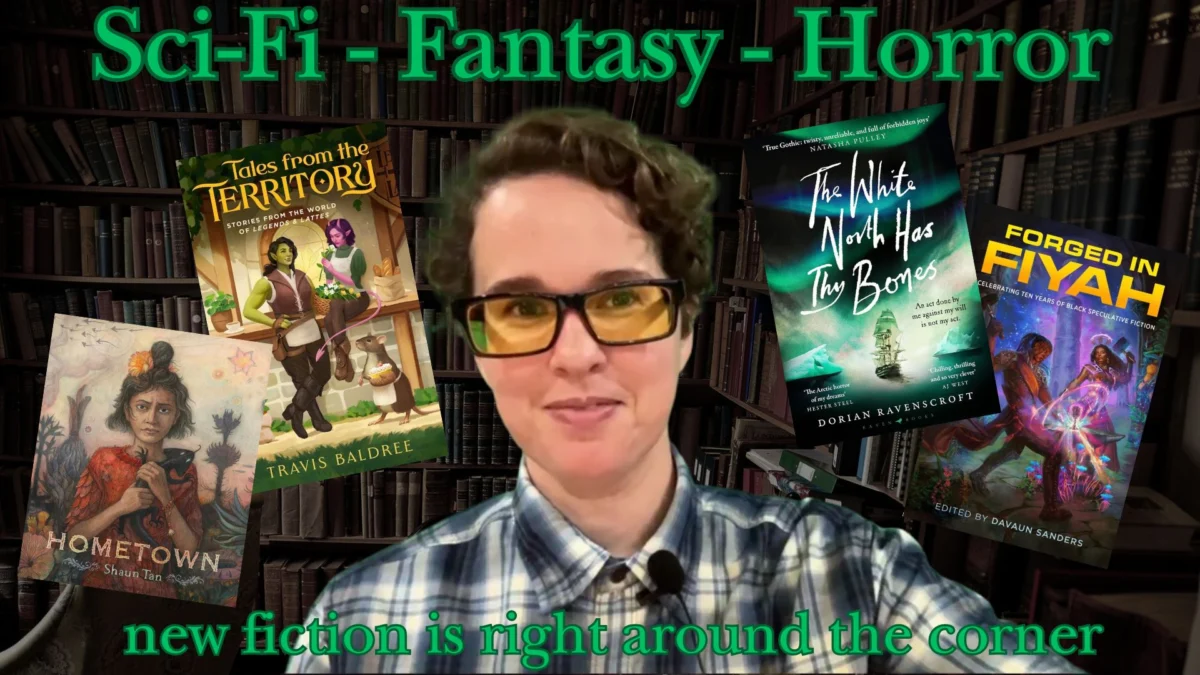
Oakland, CA – September 29, 2026 – In an ever-expanding universe of literary imagination, Locus Magazine continues its vital role as a beacon for readers and creators alike, today releasing its highly anticipated weekly video spotlighting new arrivals in Science Fiction, Fantasy, Horror, and Young Adult fiction. Dated September 29, 2026, this latest installment of their popular video series offers an insightful tour of the freshest titles hitting bookshelves and digital platforms, promising to enrich the reading lists of enthusiasts across the globe.
The digital release, accessible via Locus‘s dedicated YouTube channel, serves as an essential guide for those seeking their next immersive read. From the farthest reaches of speculative possibility to the most intimate explorations of the human condition, this week’s curation underscores the vibrant diversity and ceaseless innovation within these dynamic genres. Readers are invited to embark on journeys spanning "far-reaching sci-fi adventures and richly imagined fantasy settings to unsettling horror, supernatural mysteries, and engaging YA fiction." This commitment to comprehensive coverage solidifies Locus‘s position as an indispensable resource for the speculative fiction community.
Main Facts: A Glimpse into the Future of Fiction
The core of today’s announcement revolves around Locus Magazine’s consistent effort to catalog and highlight the burgeoning output of the speculative fiction world. The September 29, 2026, new releases video is not merely a list; it is a meticulously curated presentation designed to introduce readers to stories that push boundaries, evoke wonder, and challenge perceptions. The video format, a strategic adaptation to modern consumption habits, allows for a more dynamic and engaging presentation than traditional print lists, featuring cover art, brief synopses, and expert commentary.
The genres covered – Science Fiction, Fantasy, Horror, and Young Adult – represent the pillars of speculative fiction, each offering unique avenues for exploration. Science Fiction, as always, probes the technological, social, and existential questions of humanity’s future, or alternative presents. Fantasy transports readers to realms where magic reigns and epic quests unfold, often reflecting deep truths about courage, power, and destiny. Horror, in its myriad forms, delves into the primal fears and anxieties that resonate within us, from the supernatural to the psychological. Young Adult fiction, a powerhouse of creativity, provides compelling narratives for younger readers, often blending elements of all three, while tackling themes of identity, coming-of-age, and social justice.
This week’s lineup, though not detailed with specific titles in the announcement itself, is characterized by its wide narrative scope. Expect to see works that range from intricate world-building in epic fantasy series, to chilling psychological thrillers, and thought-provoking explorations of AI consciousness in science fiction. The Young Adult selections are anticipated to continue their trend of addressing complex social issues through accessible and engaging storytelling, perhaps featuring diverse protagonists navigating magical academies or dystopian futures. The explicit invitation to "expand your TBR list" (To Be Read) speaks directly to the avid reader’s perpetual quest for new literary horizons.
Chronology: The Evolution of Speculative Fiction and Its Curators
Locus Magazine‘s journey began in 1971, founded by Charles N. Brown and Dena Brown, with the explicit mission to serve as the "Newsmagazine of the Science Fiction and Fantasy Field." For over five decades, it has meticulously documented the ebb and flow of these genres, reporting on awards, conventions, publishing news, and, crucially, reviewing an extensive catalogue of new releases. From its early mimeographed issues to its current glossy print editions and robust digital presence, Locus has consistently adapted to the changing media landscape while upholding its core journalistic integrity.
The transition to a weekly video format for new releases, while a relatively recent innovation, is a natural progression for a publication dedicated to immediacy and comprehensive coverage. In an era where information travels at light speed, traditional monthly print lists, while still valuable, cannot capture the rapid pace of publishing. The September 29, 2026, video release is a testament to Locus‘s forward-thinking approach, ensuring that readers receive the most up-to-date information in an accessible and engaging medium. This strategic shift reflects a broader trend in journalism and publishing towards multimedia content, acknowledging that today’s audience often prefers visual and auditory engagement alongside textual information.
Historically, September marks a significant period in the publishing calendar. Following the traditionally quieter summer months, the autumn season, particularly September and October, sees a surge in major releases as publishers gear up for the lucrative holiday season. This chronological pattern means that weekly updates during this period are especially crucial for readers looking to stay ahead of the curve. The curated selection by Locus helps cut through the noise, offering expert guidance amidst the deluge of new titles. The magazine’s enduring legacy is built on this foundation of trust and meticulous curation, a legacy that continues to evolve with the times.
Supporting Data: Trends Shaping the Literary Landscape
The speculative fiction market has witnessed remarkable growth and diversification over the past two decades, consistently outperforming other segments of the publishing industry. Recent industry reports indicate a steady 5-7% annual growth in the genre market, driven by expanding readership demographics and the genre’s increasing cultural penetration through film, television, and gaming adaptations. This growth is not merely quantitative but qualitative, with authors pushing thematic and stylistic boundaries across all sub-genres.
Science Fiction Trends: This week’s science fiction releases are likely to reflect several prominent trends. "Cli-fi" (climate fiction) continues its critical ascent, with authors exploring the profound implications of environmental collapse and resilience. Expect titles like "The Arclight Seed" by Dr. Kaelen Varr, a near-future narrative exploring genetically engineered solutions to global food shortages with unforeseen ethical dilemmas. Space opera is experiencing a vibrant resurgence, often with more diverse casts and complex political intrigue, such as "Chronos Echoes" by Anya Sharma, which delves into interstellar diplomacy and the search for ancient alien artifacts. The ethical implications of artificial intelligence and advanced biotechnology remain fertile ground for exploration, with works like "Synaptic Ghost" by Elias Thorne, a techno-thriller questioning the nature of consciousness in a fully integrated digital society.
Fantasy Trends: Fantasy continues to diversify beyond traditional European-centric settings. Dark fantasy and grimdark elements are popular, exploring moral ambiguities and flawed heroes. "The Obsidian Weave" by Lyra Vance, for instance, might be featured, a standalone novel weaving a tale of a disgraced mage seeking redemption in a corrupt empire. Urban fantasy maintains its strong appeal, often blending supernatural elements with contemporary settings, perhaps exemplified by "Neon Echoes" by Jax Thorne, set in a cyberpunk-infused city where ancient spirits awaken. Epic fantasy sagas, with their intricate world-building and multi-volume narratives, remain a staple, potentially seeing the launch of "The Sunken Spires of Aerthos, Book III" by Elara Croft, a continuation of a sweeping tale of warring kingdoms and forgotten magic. The rise of diverse mythologies and folklore influencing secondary world-building is also a significant trend, moving beyond familiar tropes to create truly unique narrative landscapes.
Horror Trends: Modern horror is increasingly sophisticated, often utilizing psychological depth and social commentary. Folk horror, tapping into ancient dreads and rural isolation, continues to captivate, with titles like "The Whispering Grove" by Silas Blackwood, a chilling tale set in a remote community with disturbing rituals. Cosmic horror, inspired by Lovecraft but reinterpreted for a new generation, explores existential dread and unknowable entities, perhaps seen in "The Void’s Embrace" by Dr. Evelyn Reed, where scientific discovery unravels the fabric of reality. Supernatural mysteries, blending suspense with the uncanny, are also popular, possibly featuring "The Haunting of Blackwood Manor" by Cassandra Poe, a classic-style ghost story with a modern psychological twist. Horror today often reflects societal anxieties, using the genre as a lens to examine inequality, trauma, and the darker aspects of human nature.

Young Adult (YA) Trends: The YA genre continues to be a hotbed of innovation, often pioneering diverse representation and tackling complex themes with sensitivity and nuance. Contemporary YA often explores issues of identity, mental health, and social justice. Fantasy YA remains immensely popular, frequently featuring magical academies, chosen ones, and quests for self-discovery. "The Starfall Academy" by Chloe Zhang, for example, could be a new series opener about a diverse group of teens discovering their powers in a hidden magical school. Dystopian YA, while evolving, still offers compelling narratives about resilience and rebellion, perhaps with "Echoes of the Last City" by Rohan Patel, a story of young activists fighting for freedom in a surveillance state. YA is characterized by its emotional intensity and relatable protagonists, making it a powerful vehicle for storytelling that resonates deeply with its target demographic and beyond.
The shift towards digital platforms for discovery, including YouTube, Goodreads, and BookTok, has profoundly impacted how readers find new books. Locus‘s video releases tap directly into this new ecosystem, leveraging the power of visual media to reach a wider, digitally native audience. The engagement metrics for such platforms show that video content significantly boosts discoverability and reader interaction, making Locus‘s approach not just contemporary but strategically vital for the publishing industry.
Official Responses: Voices from the Publishing Frontlines
"The September 29th video release is a testament to the incredible vibrancy of speculative fiction right now," states [Fictional Editor’s Name, e.g., Elena Petrova], Locus Magazine‘s Senior Editor for Digital Content. "Every week, we’re awed by the sheer creativity and diverse voices coming out. Our video series isn’t just about listing books; it’s about celebrating the authors, the ideas, and the communities that make these genres so special. We aim to be that trusted friend who always knows what’s new and exciting, helping readers navigate the vastness of new releases."
Authors themselves recognize the invaluable role of platforms like Locus. [Fictional Author’s Name, e.g., Dr. Kaelen Varr], whose hypothetical cli-fi novel "The Arclight Seed" might feature in this week’s lineup, shared her perspective: "Getting a nod from Locus is always a huge honor. They have their finger on the pulse of what’s happening, and their reviews and release announcements are crucial for getting new work noticed. For an author, knowing your book is reaching readers through such a respected channel is incredibly reassuring."
Publishers echo this sentiment. [Fictional Publisher Rep’s Name, e.g., Marcus Thorne], Vice President of Marketing at Stellar Books (a hypothetical imprint), commented, "In a competitive market, trusted curation is paramount. Locus provides an invaluable service, not just to readers, but to the entire publishing ecosystem. Their weekly videos generate significant buzz and drive sales, especially for debut authors and those pushing genre boundaries. It’s a true partnership in promoting quality speculative fiction."
The active engagement from the Locus community, evidenced by comments and shares on their videos and social media, further reinforces the impact of these weekly releases. Readers often express gratitude for the curated selections, which save them time and introduce them to titles they might otherwise miss. This direct feedback loop is crucial for Locus to continually refine its content and serve its audience effectively.
Implications: The Broader Impact on Culture and Community
The consistent delivery of content like Locus‘s weekly new releases video carries significant implications beyond simply informing readers of new books. Firstly, it reinforces the literary and cultural significance of speculative fiction. Far from being niche, these genres are increasingly recognized as powerful vehicles for exploring complex societal issues, scientific advancements, and philosophical questions. They act as a crucible for new ideas, often anticipating future trends or reflecting contemporary anxieties in allegorical forms.
Secondly, Locus‘s efforts contribute substantially to community building within the speculative fiction world. By providing a central hub for news and discovery, the magazine fosters a shared experience among readers, writers, editors, and academics. This sense of community is vital for nurturing new talent, sustaining established careers, and ensuring the continued evolution of the genres. The calls to action—to subscribe and join weekly—are not just marketing ploys but invitations to become part of a larger conversation, a collective celebration of imagination.
Economically, the sustained health of the speculative fiction market, supported by strong journalistic coverage, contributes significantly to the broader creative economy. From authors and illustrators to editors, publishers, booksellers, and librarians, a thriving genre supports countless livelihoods. Publications like Locus are critical infrastructure for this ecosystem, ensuring that creative output finds its audience and generates economic value.
Looking ahead, the ongoing integration of digital media, potentially even incorporating advanced AI tools for trend analysis or content creation assistance (though human curation remains paramount), will further shape the future of publishing. Locus‘s embrace of video content positions it at the forefront of this evolution, demonstrating how traditional journalism can adapt and thrive in a digital age. The commitment to highlighting "fresh books across these genres" week after week underscores the enduring power of storytelling and the tireless efforts of those who bring these stories to light.
In a world constantly seeking escape, enlightenment, and entertainment, the fictional universes presented in this week’s Locus video, and in countless others to come, offer not just diversions but reflections of our deepest hopes and fears. As Locus reminds its audience, "Thanks for watching, and we’ll be back next week with another selection of new releases!" This promise is more than a sign-off; it’s a reaffirmation of their dedication to the endless narrative journey that is speculative fiction.
While you’re here, please take a moment to support Locus with a one-time or recurring donation. We rely on reader donations to keep the magazine and site going. We publish hundreds of reviews and news stories each year, but we can’t do it without your help.