Nergal: The Mesopotamian God of War, Death, and Destruction
Baghdad, Iraq – In the vast pantheon of ancient Mesopotamian deities, few figures loom as fearsome and complex as Nergal. Known also by the names Erra and Irra, this formidable god embodied the relentless forces of death, war, and destruction, shaping the spiritual landscape of civilizations from the Sumerians to the Neo-Babylonians. From his humble origins as a regional agricultural deity to his eventual ascendancy as a universal force of cosmic chaos, Nergal’s narrative offers a profound glimpse into humanity’s age-old struggle to comprehend suffering, disease, and the inevitability of mortality.
Main Facts: The Destructive Divinity
Nergal’s primary identity is rooted in his dominion over death, war, and destruction. He originated in the ancient Sumerian city of Kutha, likely during the Early Dynastic I period (circa 2900-2750/2700 BCE), where he was initially venerated as a deity with agricultural ties. His temple in Kutha, known as E-meslam, bestowed upon him the epithet Meslamtaea, meaning "He Who Comes Forth from Meslam." This early association with the scorching summer sun, which withered crops and brought hardship, quickly linked him to destructive power, setting the stage for his evolution into a more formidable, universal deity.
By the Ur III period (circa 2112 to circa 2004 BCE), Nergal had transcended his regional agricultural roots, becoming widely recognized as the god of plague, pestilence, and death. His worship flourished throughout various Mesopotamian empires, including the Neo-Assyrian and potentially extending into the early Achaemenid Empire. What began as a local fear of crop failure under a relentless sun matured into a profound reverence for a deity who personified the most brutal aspects of existence.
Intriguingly, Nergal’s identity became inextricably intertwined with another god, Erra (or Irra) of Babylon. While initially distinct, these deities eventually merged in the Mesopotamian consciousness. As scholar Jeremy Black observes, "The gods Nergal and Erra were originally separate deities, but later became so closely identified as to lose their independent characters" (135). Today, they are largely considered one and the same, their names used interchangeably to denote the destructive divine force.
Chronology: Evolution Through Eras
The trajectory of Nergal’s worship provides a fascinating chronological journey through Mesopotamian history, reflecting changing societal concerns and theological developments.
Early Beginnings in Kutha
Nergal’s earliest manifestations are tied to Kutha, an important Sumerian city. Here, he was Meslamtaea, a god whose power was initially observed in the natural world. The high summer sun, particularly the intense afternoon heat, was a double-edged sword: vital for growth, but also capable of devastating crops and bringing famine. This destructive aspect of the sun was interpreted as the "intense fury" of Meslamtaea, establishing his early link with destruction, even if primarily agricultural. This foundational association with natural calamity laid the groundwork for his later, broader roles.
Universal Deity by Ur III
As Mesopotamian civilization progressed, so did the scope of Nergal’s influence. By the Ur III period, the regional deity of Kutha had transformed into a universal god, his portfolio expanding beyond agricultural blights to encompass war, pestilence, and general death. This shift reflects a maturing theology that sought to attribute widespread, inexplicable suffering to a powerful, singular entity. His cult spread beyond Kutha, with temples and shrines dedicated to him appearing in major urban centers across southern Mesopotamia, including Ur, Uruk, Lagash, Isin, Nippur, and Dilbat, as well as Babylon. The Assyrians, known for their martial prowess, also adopted Nergal into their pantheon, appreciating his association with warfare.
Syncretism and Enduring Worship
The syncretism of Nergal with Erra, particularly prominent during the Neo-Assyrian and Neo-Babylonian periods, solidified his identity as the ultimate bringer of chaos. The epic poem The Wrath of Erra, dating to circa 800 BCE, vividly portrays this merged identity, showcasing his destructive impulses. His worship endured well into the Neo-Babylonian period (626-539 BCE) and possibly even into the early Achaemenid Empire, demonstrating the deep-seated cultural and religious significance of a deity representing the darker aspects of existence.
Biblical and Hittite Mentions
Nergal’s influence even reached beyond Mesopotamia. He is mentioned in the Hebrew Bible in II Kings 17:30, where the people of Kutha are said to have "made Nergal" as one of their gods after being resettled in Samaria by the Assyrian king. This brief mention underscores his widespread recognition in the ancient Near East.
Furthermore, the Hittites knew a similar deity, Aplu, whom they associated with plague. Aplu/Nergal is frequently referenced toward the end of the reign of the Hittite king Suppiluliuma I (1344-1322 BCE), held responsible for a devastating plague that swept through the region, claiming even the life of the great king himself. This cross-cultural attribution of natural disaster to Nergal-like figures highlights the universal human need to rationalize widespread suffering.
Supporting Data: Iconography, Lineage, and Cult
To truly grasp Nergal’s stature, it is crucial to examine the tangible and conceptual elements that defined him: his visual representations, his divine family, his various names, and the practices of his worship.
Striking Iconography and Symbolic Beasts
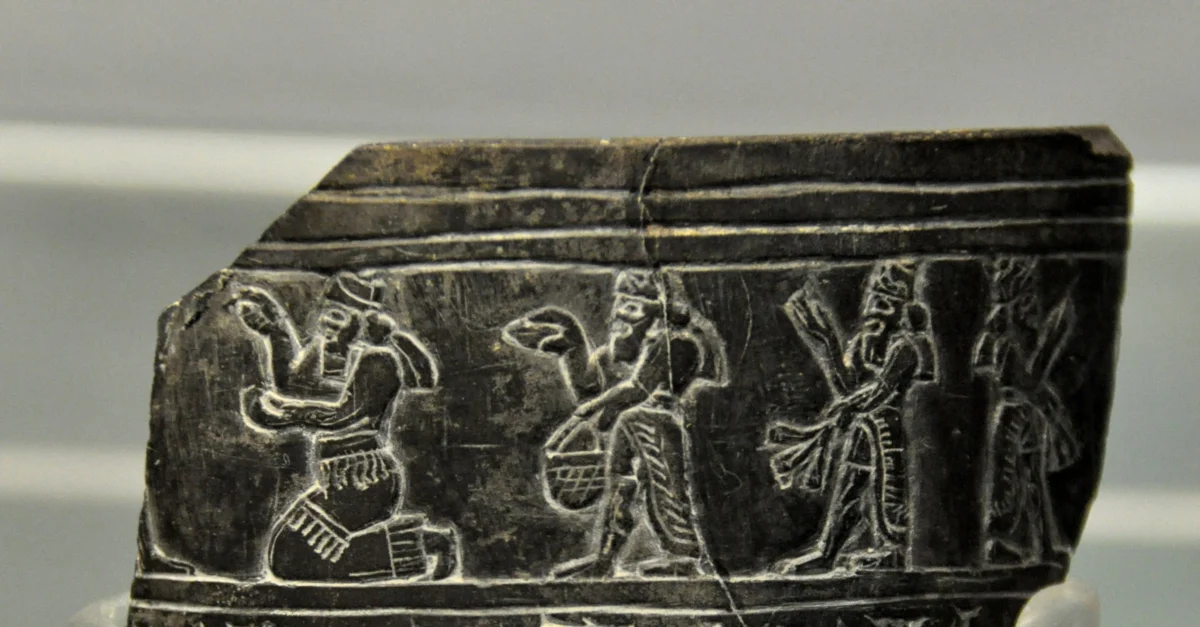
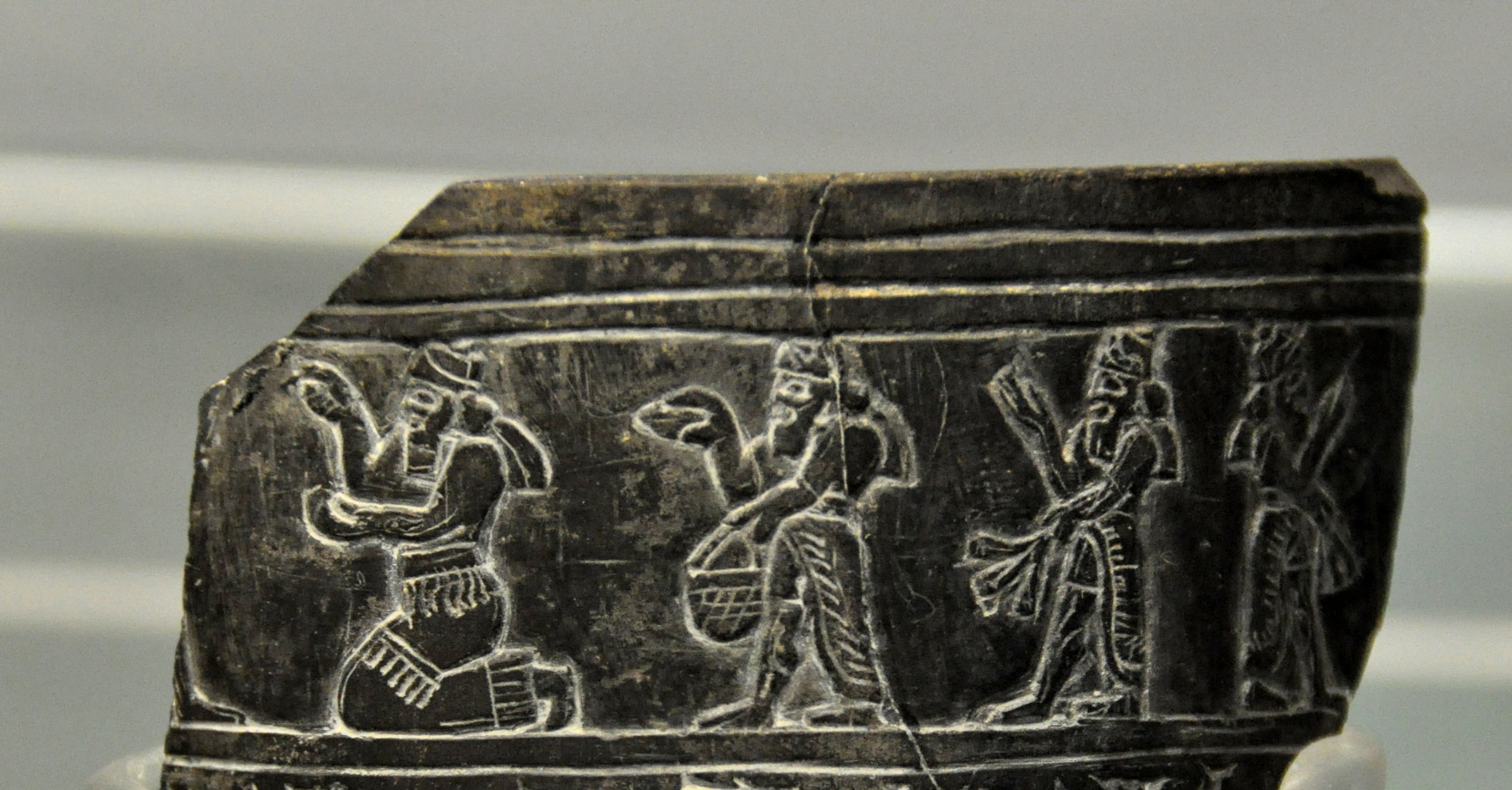
Nergal’s iconography powerfully conveys his destructive essence. He is typically depicted as a striding man, clad in long robes, with one foot crushing a human figure – a clear visual metaphor for his role in dispensing death. In his hands, he wields a mace topped by a fearsome double lion’s head and carries a scimitar, weapons of immense power and lethal intent. The lion and the bull, animals representing formidable natural and supernatural strength in Mesopotamia, are also strongly associated with him, further emphasizing his raw, untamed power. This visual language cemented his image as a dominant, intimidating force.
Divine Lineage and Consort
In the Mesopotamian pantheon, Nergal’s parentage is generally attributed to Enlil, the chief god of wind, air, earth, and storms, and Ninlil, the goddess of the air. However, he is also occasionally referred to as the son of Belet-ili, another name for the mother goddess Nintud/Nintur/Ninhursag, who was credited with the creation of human beings.
While the original article’s bullet list for consorts was empty, his most significant association is undoubtedly with Ereshkigal, the queen of the underworld. Their legendary marriage, a pivotal myth, solidifies her as his primary consort, making them the formidable rulers of the Realm of No Return. Other consorts may have been mentioned in localized traditions, but Ereshkigal stands as his enduring partner in the divine hierarchy.
Epithets of Fury and Destruction
Nergal’s various epithets offer further insight into his character. The interpretation of his name as "dunghill cock" might seem incongruous with his fearsome image, perhaps suggesting a connection to common mortality or a more ancient, agricultural aspect. However, his other epithets leave no room for ambiguity: "raging king," "furious king," "fighting cock," and "the burner." Each of these titles underscores his intense, unbridled aggression and his capacity for widespread annihilation. These epithets were not merely decorative; they were invocations of his power, acknowledging the terrifying nature of his dominion.
Centers of Worship and the Cult of the Dead
Kutha remained Nergal’s primary cult center, a sacred site where his earliest and most profound worship was concentrated. However, as his influence expanded, so did the geographical spread of his veneration. Temples and shrines dedicated to Nergal were established across southern Mesopotamia, in cities like Ur, Uruk, Lagash, Isin, Nippur, and Dilbat. His cult also found a strong foothold in Babylon and was enthusiastically embraced by the Assyrians, whose martial culture resonated with his warlike attributes.
A crucial aspect of Nergal’s worship, especially once he became associated with the underworld, was his central role in the Cult of the Dead. Priests would offer sacrifices to Nergal on behalf of souls in the underworld, seeking his favor or intervention in the afterlife. This practice highlights his dual nature: a bringer of death, but also a potent figure to appease for the well-being of the deceased, demonstrating a complex relationship between humanity and the deity of destruction.
Cross-Cultural Parallels
Nergal’s archetypal role as a god of war and destruction finds parallels in other ancient cultures. He shares similarities with Ninurta, the Sumerian/Akkadian god of war and hunting, and Aplu, the Hurrian/Hittite god of plague. In the Greco-Roman world, his attributes align with Ares, the Greek god of war, and Mars, his Roman counterpart. These comparisons underscore a universal human need to personify and understand the forces of conflict and pestilence that perpetually threatened their existence.
Official Responses: Explaining the Inexplicable
Mesopotamian theology, like many ancient belief systems, grappled with the problem of suffering in a world supposedly governed by benevolent gods. Nergal provided a powerful, albeit terrifying, "official response" to this conundrum, offering a divine explanation for chaos, plague, and war.
Character and Purpose: Destruction Incarnate
Nergal primarily symbolizes the raw, destructive force inherent in both human nature and the natural world. Unlike deities who might mete out punishment for transgression, Nergal’s destruction often appears arbitrary and without remorse. He is never depicted regretting his actions, simply acting according to his inherent nature. Jeremy Black highlights this, noting how Nergal lays waste to Babylon in one story "apparently because destruction is simply in his nature, rather than to punish sin" (136). His rampages, often attributed to his notoriously bad temper, provided a framework for understanding seemingly meaningless suffering.
Scholar Yagmur Heffron elaborates on this specific aspect: "Nergal represents a very particular aspect of death, one that is often and rightly interpreted as inflicted death, for Nergal is also the god of plague and pestilence as well as being closely associated with warfare… In his aspect of a war god, Nergal accompanies the king into battle, delivering death to the enemy. Death brought on by Nergal also had a supernatural dimension, disease often being attributed to demonic agency in Mesopotamia" (1). Thus, Nergal wasn’t just a force; he was an active agent of misfortune, capable of direct intervention.
Reconciling Chaos with Cosmic Order
The Mesopotamian gods were believed to have created humanity to maintain universal order and ward off the forces of chaos. Plague, pestilence, famine, and war – all seemed to contradict the benevolent intentions of the principal deities. Gods like Nergal, however, offered a theological explanation for these calamities. While the higher gods might have the best intentions, malevolent spirits, demons, or even a deity like Nergal, acting on his own destructive impulses, could interfere with their plans and unleash suffering upon communities. This allowed people to maintain faith in the overarching benevolence of the divine, even in the face of widespread disaster.
Mythological Explanations: The Wrath of Erra
The epic poem The Wrath of Erra (circa 800 BCE) perfectly illustrates this theological "response" to inexplicable destruction. In this myth, Nergal (as Erra) grows restless and lethargic, his weapons gathering dust. Scholar Stephen Bertman describes how "Even his weapons, gathering dust in storage, complain. Their rebuke rouses him from inertia and he decides, contrary to [his vizier] Ishum’s counsel, to attack Babylon" (161).
To achieve his aim against Babylon, which is under the protection of the mighty god Marduk, Erra employs cunning. He visits Marduk, feigning concern over the chief god’s shabby attire. Embarrassed, Marduk admits his wardrobe needs updating but claims he lacks the time. Erra then offers to guard Babylon while Marduk attends to his sartorial needs, an offer Marduk gratefully accepts. Once Marduk is safely away, Erra unleashes his fury. People are slaughtered, buildings crumble, and as Bertman notes, "Once again, Ishum counsels prudence, but to no avail. Young and old are put to death, fathers bury their sons, and the righteous perish together with the wicked" (161).
After his rampage, Erra stops the carnage and offers a prophecy of a future leader who will unify and protect the people, a clear indication that this day was not it. When confronted by the other gods, Erra offers no apology, simply justifying his actions by stating, "When I get angry, I break things!" Ishum then prophesies that a remnant will survive and flourish anew, concluding the poem with a hymn of praise for Erra, the god of war. This myth thus served as a powerful narrative for communities reeling from invasions or natural disasters, attributing the suffering to the uncontrollable whims of a powerful god. Black suggests the narrative "may mirror invasions of the country between the twelfth and ninth centuries BCE by tribal, nomadic peoples such as the Aramaeans or Suteans" (136). Nergal, in this context, provided a reason for the seemingly unreasonable.
Containing the Chaos: The Marriage of Ereshkigal and Nergal
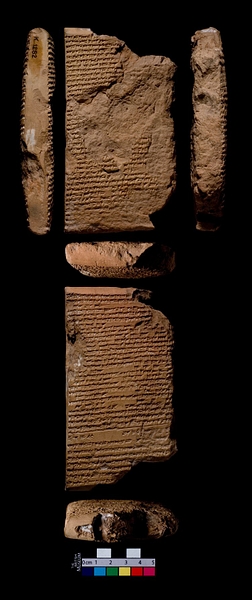
Another significant myth, The Marriage of Ereshkigal and Nergal (dating from before the 15th century BCE), offers a theological "response" that attempts to contain Nergal’s destructive potential. This myth, known from copies found in Egypt (Amarna Letters) and Turkey (Sultantepe), and a more complete Neo-Babylonian version, centers on Enki, the god of wisdom, subtly manipulating events to send Nergal to the underworld, effectively placing him under Ereshkigal’s influence.
The story begins with the gods preparing a grand banquet. Ereshkigal, as queen of the underworld, cannot attend, nor can the other gods descend. Enki arranges for Ereshkigal’s son, Namtar, to collect her share of the feast. At the banquet, all the gods rise to honor Namtar, save for Nergal. Insulted, Namtar reports this disrespect to his mother, who, enraged, demands that Nergal be sent to her so she can kill him.
Enki, foreseeing this, equips Nergal with 14 demon escorts to assist him at the seven gates of the underworld. As Nergal passes through each gate, he posts two demons to keep it open, defying Ereshkigal’s command for the gates to be barred behind him. Upon reaching the throne room, Nergal overpowers Namtar and drags Ereshkigal to the floor, threatening her with his axe. She pleads for her life, offering to be his wife and share her power. Nergal consents, and they kiss, pledging eternal union.
However, war and death cannot be permanently confined. Enki’s provision of the gate-keeping demons ensures Nergal’s ability to leave the underworld for six months each year to roam the upper world. This myth offered a simple explanation for seasonal warfare but, more profoundly, showcased the goodwill of gods like Enki in attempting to control the war god and spare humanity from ceaseless destruction, even if complete containment was impossible.
Implications: Legacy of the Destroyer-Protector
Nergal’s profound impact extended beyond theological explanations, influencing daily practices, protective rituals, and even leaving a lasting imprint on later Abrahamic religions.
The Paradox of Protection
Despite his fearsome destructive tendencies, Nergal was frequently invoked as a protector. This paradox stemmed from the belief that only a god with such immense power over death and destruction could effectively combat evil spirits and forces of chaos. Whether residing in the underworld with Ereshkigal or roaming the earth, he could be called upon to battle malevolent demons. He was particularly significant in exorcism rituals and features prominently in numerous prayers and incantations.
One Babylonian incantation powerfully illustrates this protective role: "I am the priest of Ea. I am the magician of Eridu. Shamash is before me, Sin is behind me. Nergal is at my right hand, Enurta is at my left hand. When I draw near the sick man, when I lay my hand on his head, may a kindly Spirit, a kindly Guardian, stand at my side! Whether thou art evil Ghost, or evil Devil, or evil God, or evil Fiend, or sickness, or death, or a Phantom of Night, or a Wraith of the Night, or fever, or deadly pestilence, get thee gone from before me; go forth from the house" (Wallis Budge, 118). In this potent invocation, Nergal is placed at the priest’s right hand, signifying his crucial role alongside other powerful deities like Ea (wisdom), Shamash (sun), Sin (moon), and Ninurta (war/hunting) in expelling malevolent forces. His very nature as a destroyer made him the ultimate deterrent against other destructive entities.
The Unheeded Prayers: Aplu and the Plague
Yet, this protective aspect had its limits. As seen with the Hittite deity Aplu, who was identified with Nergal, prayers for salvation from a plague for which he was responsible would likely go unheeded. When Aplu/Nergal was unleashing pestilence, as during the reign of Suppiluliuma I, one was essentially praying to the cause of one’s suffering. In such cases, the god was believed to continue his rampage until his destructive impulses were satisfied or the "death toll" deemed sufficient. This highlights the terrifying and uncontrollable aspect of Nergal, demonstrating that even divine intervention had its limits and that certain forces were simply beyond human, or even collective divine, control.
Enduring Legacy in Later Religions
Nergal’s destructive nature and profound association with the underworld and death left an indelible mark that resonated into later religious traditions. His iconography, often depicting him as a fearsome, aggressive figure, and his character as a bringer of chaos were assimilated into the imagery of the devil in early Christianity. Like the Egyptian god Set, who represented disorder and was associated with the color red, Nergal embodied the forces that resisted cosmic harmony and the benevolent will of the heavens. These attributes – destruction, association with the underworld, red imagery, and a rebellious nature – found echoes in the Judeo-Christian vision of God’s adversary, Satan.
In conclusion, Nergal was far more than a simple god of death; he was a complex and indispensable figure in Mesopotamian cosmology. He provided a vital framework for understanding the inexplicable horrors of war, pestilence, and death, offering a theological justification for suffering that allowed ancient peoples to maintain faith in their divine protectors. As both a terrifying destroyer and a potent protector, his enduring presence in myths, cults, and even later religious traditions underscores humanity’s persistent need to confront, understand, and, perhaps, even appease the darkest aspects of existence.