Nuart Aberdeen 2026: Poetry Takes Center Stage in Groundbreaking Street Art Festival
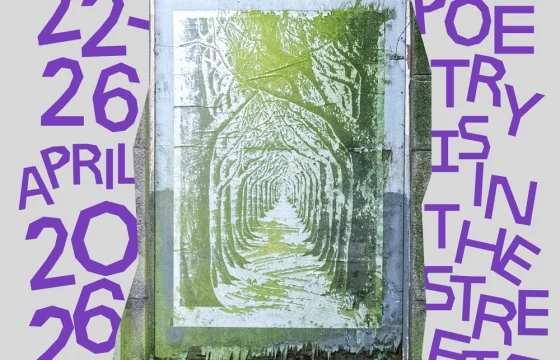
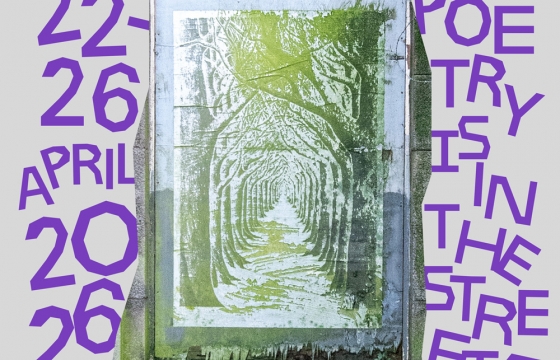
Aberdeen, Scotland – April 22-26, 2026 – The vibrant streets of Aberdeen are set to transform into an open-air gallery once again as Nuart Aberdeen unveils its highly anticipated 2026 edition. This year, the globally renowned street art festival embarks on a bold and pioneering trajectory, dedicating its primary focus to poetry and text-based artistic expressions. This deliberate shift marks a significant moment, potentially positioning Nuart Aberdeen as the world’s first street art festival to champion this specific genre so prominently.
For years, the large-scale, colorful figurative mural has largely defined the visual landscape of street art festivals. While Nuart Aberdeen has consistently supported and showcased this dynamic art form, the festival’s curators, Martyn Reed and his team, acknowledge the inherent limitations of such works. The substantial resources and logistical complexities involved in producing monumental murals, while visually impactful, can inadvertently create a barrier to entry, making them less accessible and democratic for aspiring artists and the general public.
This year’s festival aims to dismantle those barriers, fostering a more inclusive and participatory street art culture. Nuart Aberdeen’s enduring mission, as articulated by founder and curator Martyn Reed, extends beyond the mere presentation of established artists. It is deeply rooted in inspiring and cultivating the next generation of creative voices, particularly those who may not possess formal art education or have privileged access to the arts.
"Our primary goal has always been not just to produce art, but to also inspire and produce the next generation of artists," Reed states. "This is a lofty aspiration, especially as it often conflicts with the stated needs of sponsors and partners, on paper at least. No one stands in front of a tower block mural and thinks, ‘I’ll pop home and have a go myself on the gable end of Gran’s house.’"
The festival’s curatorial vision for 2026 is informed by a keen observation of the street art landscape and its evolutionary potential. Reed highlights the demonstrable impact of smaller, more human-scale interventions – stencils, paste-ups, and localized artistic actions – in fostering a sense of creative possibility. The ease of replication, exemplified by the iconic Banksy stencil which requires little more than basic tools and an idea, is identified as a foundational element of this culture’s proliferation. This principle is evident in the festival’s own history, with several participating artists and producers having begun their journeys as assistants and volunteers at previous Nuart Aberdeen events.
A City as Canvas: Embracing New Frontiers
Nuart Aberdeen has historically distinguished itself by not only featuring prominent muralists but also by actively exploring and experimenting with novel forms and concepts that redefine the city itself as a dynamic canvas. This commitment to innovation has been consistently supported by a network of progressive partners who recognize the transformative power of public art. The 2026 festival continues this tradition, pushing the boundaries of what street art can be.
The genesis of this year’s thematic focus on poetry and text stems from Reed’s contemplation of the delicate balance required in public art programming. This involves satisfying the expectations of partners and tourism bodies, captivating the public imagination, and producing works that intrigue scholars while simultaneously inspiring emerging artists. In a moment of profound reflection, Reed envisioned a city devoid of public artistic expression, where all art was confined to guarded institutional spaces. This stark imagery immediately brought to mind the iconic graffiti that adorned the walls of Paris during the 1968 student uprisings, a period of intense creative outpouring. The potent slogan, "La poésie est dans la rue" – "Poetry is in the Streets" – resonated deeply, sparking the question of whether Nuart Aberdeen could harness a similar energy to revitalize and energize the contemporary street art culture.
Further reinforcing this thematic direction was a recollection of pioneering UK graffiti writer Mode2’s insightful commentary on the proliferation of graffiti culture in the 1980s. Mode2 observed that the accessibility of graffiti was its key to widespread adoption. He noted that for individuals who struggled with traditional artistic skills in school, finding themselves at the bottom of the academic hierarchy, graffiti offered a democratic alternative. The ability to engage with and create graffiti, Mode2 suggested, required little more than a fundamental understanding of the alphabet – "your ABCs."
These two seemingly disparate but profoundly influential moments – the revolutionary spirit of Parisian graffiti and the accessible nature of early graffiti lettering – coalesced to form the conceptual bedrock of Nuart Aberdeen 2026. The festival’s exploration of poetry and text-based art is a conscious effort to tap into forms of creative expression that are inherently accessible to everyone. Reed expresses his hope that this year’s festival will ignite the public’s imagination, mirroring the profound impact that early bubble letters and Banksy stencils had on a generation.
A Carefully Curated Program: Words as Brushstrokes
The selection of artists for Nuart Aberdeen 2026 reflects a deliberate commitment to showcasing diverse voices and approaches within the realm of text-based street art. The lineup promises a rich tapestry of styles, from subtle interventions to bold pronouncements, all united by their engagement with language as a primary artistic medium.
Key Artists and Their Potential Contributions:
- Alisa Oleva (UK): Known for her evocative and often ephemeral interventions that weave narratives into urban spaces, Oleva’s work frequently explores themes of memory, displacement, and human connection. Her contributions could manifest as poetic inscriptions or site-specific textual installations that invite quiet contemplation.
- Ciarán Glöbel (SCT): A prominent figure in the Scottish street art scene, Glöbel’s work often blends bold graphic design with powerful social commentary. His approach to text could be visually striking, utilizing typography as a design element to amplify his messages.
- dr.d AKA Subvertiser (UK): This artist is renowned for their satirical and politically charged stencil work, often subverting existing imagery with witty and critical text. Subvertiser’s contributions are likely to be sharp, insightful, and humorously provocative, challenging perceptions and sparking dialogue.
- HICKS (UK): HICKS is celebrated for their distinctive lettering styles and their ability to imbue simple phrases with profound meaning. Their work often carries a positive and uplifting message, bringing moments of unexpected joy to public spaces.
- James Klinge (SCT): Klinge’s artistic practice often involves a deep engagement with the local context of his work. His text-based pieces might explore the unique vernacular and history of Aberdeen, weaving in local stories and sentiments.
- KMG (SCT): While specific details of KMG’s approach are yet to be fully revealed, their inclusion suggests a focus on innovative textual applications within the street art context, potentially incorporating elements of graphic design or conceptual art.
- Molly Hankinson (UK): Hankinson’s work often features delicate and introspective text, exploring themes of mental health, identity, and personal experience. Her contributions could offer moments of vulnerability and emotional resonance within the urban environment.
- Remi Rough (UK): A highly respected figure in the global graffiti and street art scene, Remi Rough’s work is characterized by its sophisticated use of color and form, often incorporating elements of abstract expressionism. His textual pieces could be a fusion of visual dynamism and lyrical content.
- Robert Montgomery (SCT): Montgomery is globally recognized for his poetic installations, often using traditional printing techniques to create large-scale textual works that engage with existential themes and the beauty of the everyday. His contributions are expected to be profound and visually arresting.
- The Rebel Bear (SCT): Known for his distinctive character-based stencils and often humorous or satirical messages, The Rebel Bear’s work brings a playful yet pointed edge to public spaces. His text-based pieces are likely to be engaging and thought-provoking.
- The Writing Is On The Wall (UK): This collective’s name itself suggests a focus on the power of written messages in public spaces. Their contributions could range from overt social commentary to more abstract explorations of language and its impact.
- Trackie McLeod (SCT): McLeod’s work often carries a strong sense of place and identity, frequently engaging with Scottish culture and heritage. His textual art could offer unique insights into the local context of Aberdeen.
- V2K | (LT – SCT): This artist’s dual nationality suggests a potentially broader perspective on language and culture. Their work could explore the intersections of different linguistic traditions or offer a unique commentary on globalized society.
Supporting Data: The Growing Influence of Text in Public Art
The increasing prominence of text and poetry in street art is not an isolated phenomenon but reflects a broader trend in contemporary art and public engagement. Studies have shown that text-based art can have a unique ability to connect with audiences on an intellectual and emotional level, prompting reflection and encouraging dialogue.
- Accessibility and Democratization: As Martyn Reed highlighted, the inherent accessibility of language and basic literacy makes text-based art a powerful tool for democratizing artistic creation and consumption. Unlike complex visual techniques, the understanding and appreciation of written words are widespread.
- Direct Communication: Poetry and text can convey messages with a directness and immediacy that visual art sometimes struggles to achieve. This allows artists to address social, political, and personal issues with clarity and impact.
- Intellectual Engagement: Text-based art often invites a deeper level of intellectual engagement, prompting viewers to consider meaning, context, and personal interpretation. This can lead to more profound and lasting connections with the artwork.
- Historical Precedent: The use of text in public spaces has a rich history, from ancient inscriptions and religious texts to revolutionary slogans and protest banners. This year’s focus at Nuart Aberdeen taps into this long-standing tradition of using words to communicate and inspire.
- The Power of the Ephemeral: Many text-based street art forms, like stencils and paste-ups, are inherently ephemeral. This transient nature can enhance their impact, creating a sense of urgency and encouraging viewers to experience them before they disappear.
Official Responses and Community Impact
The announcement of Nuart Aberdeen 2026’s poetic focus has been met with enthusiasm from various stakeholders. Local authorities and cultural organizations have expressed their support for the festival’s innovative approach, recognizing its potential to further enhance Aberdeen’s reputation as a vibrant cultural destination.
"We are incredibly excited to see Nuart Aberdeen continue to push creative boundaries," stated a representative from Aberdeen City Council. "This year’s focus on poetry and text-based art offers a unique opportunity to engage the public in new and meaningful ways, celebrating the power of language and artistic expression within our city."
Local businesses and community groups have also voiced their anticipation. The festival is expected to draw significant international attention, boosting tourism and providing a platform for local artists and creatives to showcase their talents. The emphasis on accessible art forms is particularly welcomed by educators and community leaders who see it as an opportunity to inspire young people and foster a greater appreciation for the arts.
Implications for the Future of Street Art
Nuart Aberdeen 2026’s bold commitment to poetry and text-based art carries significant implications for the broader street art landscape. By prioritizing these often-underrepresented forms, the festival is not only diversifying the conversation but also challenging established norms and opening up new avenues for artistic exploration.
- Shifting Perceptions: This festival has the potential to significantly shift public perception of street art, moving beyond the solely visual to embrace the intellectual and lyrical. It can elevate poetry and text from secondary elements to primary artistic statements within the urban environment.
- Inspiring New Generations: By demonstrating the accessibility and impact of text-based art, Nuart Aberdeen 2026 could inspire a new wave of artists who may not have previously considered themselves part of the street art community. This could lead to a more diverse and inclusive future for the movement.
- Fostering Deeper Engagement: The intellectual and emotional resonance of poetry can foster deeper and more sustained engagement with public art. This could encourage viewers to spend more time with the artworks, to reflect on their meanings, and to discuss them with others.
- Redefining the "Canvas": By focusing on text, the festival implicitly broadens the definition of the "canvas." Walls are no longer just surfaces for imagery but become platforms for dialogue, reflection, and the dissemination of ideas.
- A Model for Other Festivals: The success of Nuart Aberdeen’s thematic approach could serve as a model for other street art festivals worldwide, encouraging them to explore diverse and underrepresented artistic genres and to prioritize inclusivity and accessibility.
As the streets of Aberdeen prepare to be adorned with the power of words, Nuart Aberdeen 2026 promises to be an unforgettable celebration of language, art, and the enduring human impulse to communicate, inspire, and connect. The festival is not merely an exhibition; it is an invitation to engage with the poetry that already exists within our urban landscapes and to discover the artist within ourselves.