"Of Magic and Empire" Ignites Debate in Epic Fantasy Landscape
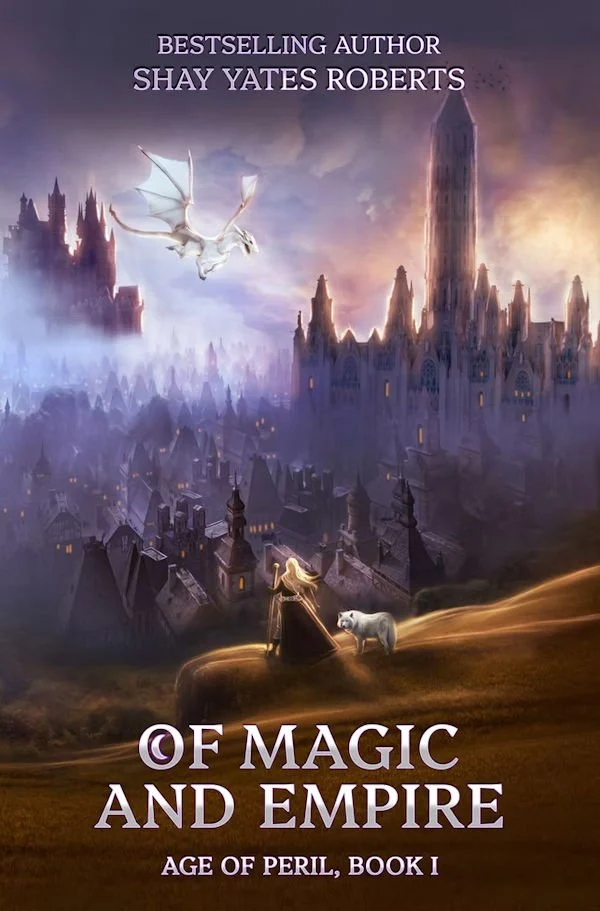
A bold new epic fantasy, "Of Magic and Empire," by Shay Yates Roberts, has entered the literary arena, promising a grand adventure steeped in rich magical lore and complex political intrigue. The novel, set to be a significant release, has already begun to generate discussion within the fantasy community, particularly for its commitment to traditional epic scope in an evolving genre landscape.
The impending release of "Of Magic and Empire" in 2026, as evidenced by early promotional materials and cover art, positions it as a potential cornerstone for readers craving expansive world-building and a classic hero’s journey. Early critical impressions, such as the comprehensive review from Julia Kitvaria Sarene of Fantasy Faction, highlight the book’s ambitious scope and its distinct approach to magic, which appears to be intricately woven into every facet of its fictional realm.
Roberts’ debut or latest offering appears to deliberately defy a recent trend in fantasy literature towards more grounded, less overtly magical narratives. Instead, "Of Magic and Empire" reportedly plunges readers headfirst into a world where magic is not merely an aesthetic flourish but a fundamental force shaping religion, military strategy, and daily life. This commitment to an overtly magical setting has been praised as a "refreshing" divergence, appealing to those who yearn for the grand, high-fantasy epics of yesteryear.
Main Facts: An Empire Besieged by a Baffling Affliction
"Of Magic and Empire" introduces readers to a realm forged by magic, now teetering on the brink of collapse due to a mysterious and terrifying affliction known as the Frenzy. This malady is described as a force that strips away the very essence of humanity – love, kindness, and self-restraint – leaving its victims in a state of chaotic abandon. The survival of the empire hinges on understanding and combating this pervasive threat.
At the heart of this unfolding crisis are three disparate individuals, each burdened by their own unique challenges and societal standing, yet united by the Empress’s desperate plea for aid. These unlikely adventurers form the core of the narrative:
- Jesmyn: A mage of extraordinary talent, Jesmyn endures societal ridicule stemming from a "peculiarity of birth." Despite her immense magical prowess, she navigates a world that judges her for something beyond her control, making her quest not only about saving the empire but also about forging her own identity. Her character is particularly noted for her literalness and difficulty with subtext, traits that are portrayed with sensitivity rather than as mere quirks.
- Sperling: A scholar of unique gifts, Sperling is driven by a profound personal struggle to preserve his fractured family. His intellect and academic acumen are his primary weapons, suggesting a narrative thread that delves into the power of knowledge and research in confronting existential threats. His journey is thus intrinsically linked to his emotional landscape and personal stakes.
- Aurisma: A powerful cleric, Aurisma finds herself suffering a rare and severe punishment, a consequence of her defiance against her superiors. Her character introduces themes of religious dogma, institutional power, and the personal cost of challenging established authority. Her spiritual strength and healing abilities will undoubtedly be crucial, but her internal conflict adds layers of complexity to her heroism.
When the Frenzy strikes with devastating effect, these three troubled souls, alongside a cast of trusted companions, embark on separate but interconnected quests. Their mission: to uncover the genesis of the Frenzy and halt its destructive spread. However, their path is far from clear. The empire itself is a labyrinth of competing interests, with rival political, religious, and military factions vying for power, their infighting proving as perilous as the Frenzy itself. This internal strife highlights the fragility of imperial power and the constant struggle between unity and self-interest.
The search for answers ultimately propels these heroes beyond the familiar comforts of civilization, into the untamed "wildlands." Here, they are destined to confront the true source of the affliction – an "evil born of ancient sin." This confrontation promises to exact a heavy toll, challenging their resolve, testing their loyalties, and forcing them to face the deepest fears of their world and themselves. The narrative thus sets the stage for a classic confrontation between nascent heroism and an ancient, deeply rooted malevolence.
Chronology: A Multi-Threaded Quest Against Spreading Chaos
The narrative structure of "Of Magic and Empire" unfolds through a multi-threaded chronology, tracing the individual journeys of Jesmyn, Sperling, and Aurisma as they each tackle distinct facets of the overarching crisis. This approach allows Roberts to present a comprehensive view of the Frenzy’s impact across different strata of society and geographical regions, even if, as noted by some critics, it sometimes lends itself to an episodic feel rather than a continuously escalating threat.
The story commences with the devastating onset of the Frenzy, a sudden and catastrophic event that strips individuals of their empathy and self-restraint, plunging the affected regions into chaos. This initial disaster acts as the catalyst, compelling the Empress – a figure whose desperation underscores the gravity of the situation – to issue a desperate call for aid, mobilizing the empire’s most capable, albeit often flawed, individuals.
Jesmyn, the exceptionally skilled mage, embarks on her quest, likely using her magical acumen to investigate the arcane origins or manifestations of the Frenzy. Her journey is paralleled by Sperling, the scholar, whose path would logically involve delving into ancient texts, forgotten histories, or scientific inquiry to understand the affliction’s nature. Aurisma, the powerful cleric, with her unique spiritual insights and healing capabilities, would likely focus on the more existential or spiritual dimensions of the Frenzy, perhaps seeking divine or primal solutions.
As these separate quests progress, the protagonists navigate not only the direct threats posed by the Frenzy but also the treacherous landscape of imperial politics. The reviewer highlights the omnipresent danger posed by "rival political, religious, and military factions," whose "infighting is as dangerous as Frenzy itself." This internal conflict creates a constant undercurrent of tension, forcing the heroes to contend with betrayal, sabotage, and divergent agendas that frequently impede their progress. The chronology of their individual quests is thus intertwined with the escalating tensions of a fractured empire, where trust is a rare commodity.
A crucial turning point in each storyline is the move beyond the "cradle of civilization" into the "wildlands." This geographical shift signifies a deeper immersion into the unknown and a confrontation with primal forces. It is in these untamed territories that the heroes are expected to face the ultimate antagonist – "the pitiless terror behind the affliction—an evil born of ancient sin." The narrative, therefore, builds towards these climactic encounters, promising a revelation of the Frenzy’s true source and the immense cost of combating such an ancient malevolence.
While the reviewer suggests that the book’s pacing can sometimes feel like "a series of episodes" rather than a continuous escalation of threat, the overarching chronological framework still points to a journey of discovery and confrontation. The rapid formation of companionships, a point of critique, also plays into this chronology, indicating a world where necessity forges bonds quickly, even if the emotional depth of these connections is perceived to develop at an accelerated pace. By the conclusion of "book one," the immediate crisis might be addressed, but the reviewer’s observation that "everyone feels more or less safe" suggests that the true, long-term implications of the ancient evil and the Frenzy itself are likely reserved for future installments, establishing a broader chronological arc for the series.
Supporting Data: World-Building, Character Dynamics, and Genre Nuances
The critical reception of "Of Magic and Empire" by Julia Kitvaria Sarene offers a wealth of supporting data that illuminates the novel’s strengths and areas for potential refinement. Sarene’s review underscores Roberts’ dedication to comprehensive world-building and a nuanced portrayal of magic, while also pointing out certain narrative choices that might impact reader engagement.
Expansive World-Building and Intricate Magic System:
Roberts’ creation is lauded for its sheer scale and detail. The presence of "maps, a glossary, and enough lore to keep worldbuilders happy" confirms a meticulously constructed world. This commitment to verisimilitude is a significant draw for epic fantasy aficionados. Crucially, the magic system is not merely window dressing; it is "varied and present in generous amounts, woven into different parts of society in ways that feel distinct." This integration suggests a living, breathing world where magic has tangible impacts on religion, military operations, and daily life, rather than existing as an isolated phenomenon. Sarene notes that magic is "presented as a given rather than explained in depth," which, while potentially challenging for readers who prefer explicit system mechanics, allows for immersion into a world where magic is simply part of the natural order.
Character Portrayal and Companionships:
The protagonists – Jesmyn, Sperling, and Aurisma – are universally described as "likeable and genuinely good company." Jesmyn, in particular, receives special mention. Her "literalness and her difficulty reading between the lines are treated as simply part of who she is, not a quirk to overcome or a punchline." This sensitive portrayal of a character with unique cognitive traits is a significant highlight, fostering genuine warmth and respect. Her relationship with her companion, Zanther, is cited as a prime example of the "warm without being saccharine" friendships that develop.
However, a notable critique emerges regarding the pace of these burgeoning relationships. Sarene observes that "strangers become trusted companions almost before the conversation has ended," a phenomenon occurring "across all three storylines." This rapid bonding, while contributing to the novel’s adventurous spirit, is perceived as a missed opportunity for deeper character development. "A little more time in the getting-to-know-you stage, a little more early friction," it is argued, "would have made those bonds feel properly earned."
Narrative Stakes and Character Depth:
Perhaps the most significant area for potential growth highlighted by the review is the perceived lack of high stakes and consequences. Sarene states, "the book’s main weakness is almost nothing in it costs very much. Characters adapt quickly, recover quickly, and move on quickly." This rapid resolution of crises, coupled with characters who are "good people and capable ones, pleasant to spend time with, but almost entirely without edges," leads to a feeling that moments of danger lack genuine gravitas. The narrative risks feeling "more as a series of episodes than a building threat," diminishing the sense of accumulating peril that often defines epic fantasy. The implication is that a few "more genuine flaws" in the protagonists could imbue the moments of danger with a more profound sense of loss or challenge.
Genre Positioning:
Sarene explicitly positions "Of Magic and Empire" against contemporary trends, noting that "I’ve read a lot of fantasy going lean on magic lately. Of Magic and Empire is not interested in that trend." This positions Roberts’ work as a refreshing return to a more traditional, magic-rich epic fantasy, catering to a specific reader demographic. The review concludes by identifying the novel as a "very solid choice" for those "looking for epic fantasy that is expansive and adventurous without being punishing or dark." This clearly defines its niche within the broader fantasy genre, appealing to readers who prefer optimism and grand adventure over grimdark realism.
Reviewer’s Background Context:
Julia Kitvaria Sarene’s background significantly informs her critique. As a Munich native with "21 years working as a bookseller," she possesses an intimate understanding of reader preferences and genre trends. Her self-professed "unmistakable love for all things fantasy" and her disdain for romance novels ("dragons are more common than love triangles") underscore her expertise in the genre. Her experience in guiding countless customers to "their next literary adventure" lends weight to her judgment, making her an ideal arbiter for a book aiming for broad appeal within the fantasy community. Her appreciation for "older books as well as the latest fantasy releases" ensures a balanced perspective, allowing her to contextualize "Of Magic and Empire" within the historical evolution of epic fantasy.
Official Responses: Authorial Intent and Market Positioning
While direct official responses from author Shay Yates Roberts or their publisher regarding the specific points raised in the review are not yet available, the very nature and structure of "Of Magic and Empire," as meticulously detailed by Julia Kitvaria Sarene, strongly suggest deliberate authorial intent and a calculated market positioning.
Authorial Intent:
Roberts’ decision to craft a narrative that is "not interested" in the trend of "lean on magic" fantasy speaks volumes about their vision. This choice implies a conscious effort to return to, or perhaps reaffirm, the core tenets of classic epic fantasy. The intricate integration of magic into every aspect of the fictional society – religion, military, and daily life – is not merely a stylistic flourish but indicative of a deep commitment to constructing a world where magic is a fundamental, pervasive force. This suggests an author who delights in the grandeur and imaginative potential of high fantasy, aiming to provide readers with an immersive experience rich in magical wonder. The creation of a vast world, complete with maps, a glossary, and extensive lore, further reinforces the image of an author dedicated to meticulous world-building, inviting readers to get lost in the intricate tapestry of their creation.
Furthermore, the portrayal of the three protagonists – Jesmyn, Sperling, and Aurisma – as fundamentally "good people and capable ones," despite their personal struggles, points to an authorial preference for heroic archetypes that are morally upright and relatable. While the review notes a lack of "edges" or deep flaws, this could be interpreted as a deliberate choice to craft characters who are inherently admirable and easy to root for, aligning with a more traditional heroic narrative often found in classic epic fantasy. The focus on "enjoyable quests" and an "expansive and adventurous without being punishing or dark" tone suggests an author who prioritizes reader enjoyment and escapism over the gritty realism or moral ambiguity prevalent in some modern fantasy.
Market Positioning:
From a publishing perspective, "Of Magic and Empire" appears to be strategically positioned to capture a significant segment of the fantasy readership that feels underserved by current trends. The explicit mention of the book as not being "punishing or dark" clearly signals its appeal to readers who prefer optimistic, grand adventures. This caters to a demand for comfort reading within the genre – stories that offer excitement and escapism without the emotional toll of darker, more violent, or morally ambiguous narratives.
The emphasis on an "epic" scale, with "three leads on separate quests, all circling the same affliction," also aligns with the commercial success of multi-perspective fantasy series. This structure allows for broad appeal, offering diverse entry points for readers to connect with different characters and plotlines. The promise of an ancient evil and a world "forged by magic" taps into universal fantasy tropes that have proven to be perennial bestsellers.
Moreover, the release of "book one" (as implied by the review’s concluding remarks) positions "Of Magic and Empire" as the beginning of a potential series. This is a common and successful strategy in epic fantasy publishing, designed to build a dedicated readership over multiple volumes, fostering long-term engagement and investment in the world and its characters. The publisher, therefore, likely views this novel as a cornerstone for a franchise, aiming to cultivate a loyal following eager for subsequent installments that will further explore the intricacies of Roberts’ magical empire and the continuing struggle against the Frenzy. The 2026 release date, indicated by promotional images, suggests a carefully planned rollout, building anticipation for a major new entry into the fantasy canon.
Implications: Reshaping Genre Expectations and Reader Preferences
The arrival and initial reception of "Of Magic and Empire" carry several significant implications for the broader fantasy genre, influencing both authorial trends and reader expectations.
Reaffirmation of Traditional Epic Fantasy:
In an era where "grimdark" and "low fantasy" have gained considerable traction, Roberts’ novel serves as a powerful reaffirmation of traditional epic fantasy. Its commitment to a magic-rich world, clear heroic archetypes, and an expansive, adventurous tone suggests that there is still a robust appetite for the classic tropes of the genre. This could inspire other authors to explore similar territory, potentially leading to a resurgence of high-magic, high-stakes narratives that prioritize grand escapism. The success of "Of Magic and Empire" could demonstrate that the market for "non-dark" fantasy remains strong and viable.
The Balance of Stakes and Enjoyment:
The critique regarding the lack of narrative cost and character "edges" highlights a crucial ongoing discussion within fantasy literature: the balance between making a story impactful through genuine peril and maintaining an enjoyable, adventurous tone. While some readers crave the emotional weight and realism of characters facing dire consequences, others seek narratives that are less punishing and more uplifting. "Of Magic and Empire" seems to cater to the latter, implying that a segment of the readership values consistent enjoyment and likable characters over relentless tension and moral ambiguity. This could influence how authors and publishers approach character development and plot construction, prompting a reevaluation of what constitutes "high stakes" for different reader demographics.
The Role of World-Building:
The glowing praise for the novel’s world-building, including its maps, glossary, and extensive lore, underscores the enduring importance of immersive environments in fantasy. In a genre often defined by its imaginative settings, "Of Magic and Empire" demonstrates that meticulous world-crafting remains a cornerstone of reader engagement. This reinforces the idea that a well-realized fictional universe can be as compelling as its characters or plot, serving as a powerful draw for readers seeking deep dives into new realities.
Impact on Character Development Tropes:
Jesmyn’s portrayal, specifically her literalness being treated as a characteristic rather than a flaw to overcome, has implications for how diverse character traits are handled in fantasy. This approach fosters inclusivity and nuanced representation, moving away from narratives where "peculiarities" are solely sources of conflict or humor. It suggests a growing demand for characters whose unique attributes are integrated respectfully into their identities, offering a more realistic and empathetic portrayal of individuality within fantastical settings.
Implications for Series Development:
As "book one" of what is likely to be a multi-volume series, the initial critiques provide valuable feedback for future installments. If Roberts chooses to address the concerns about quick-forming friendships and a perceived lack of consequences, subsequent books could evolve to offer deeper emotional resonance and escalating tension. This iterative process of authorial response to critical reception can shape the trajectory of an entire series, influencing how characters grow, how relationships deepen, and how the overarching threat of the Frenzy is ultimately resolved. The potential for the ancient evil to exact a "terrible toll" could be more fully explored in later volumes, deepening the series’ impact.
Ultimately, "Of Magic and Empire" stands as a significant entry, not just for its own merits but for its potential to contribute to the ongoing dialogue about the direction and diversity of the fantasy genre. Its success, or even its contentious points, will undoubtedly shape future trends, encouraging a richer, more varied landscape for both authors and readers alike.