Organizing the Great Flood: A Deep Dive into the Cozy Sorting Mechanics of ‘Tidy Up the Ark’
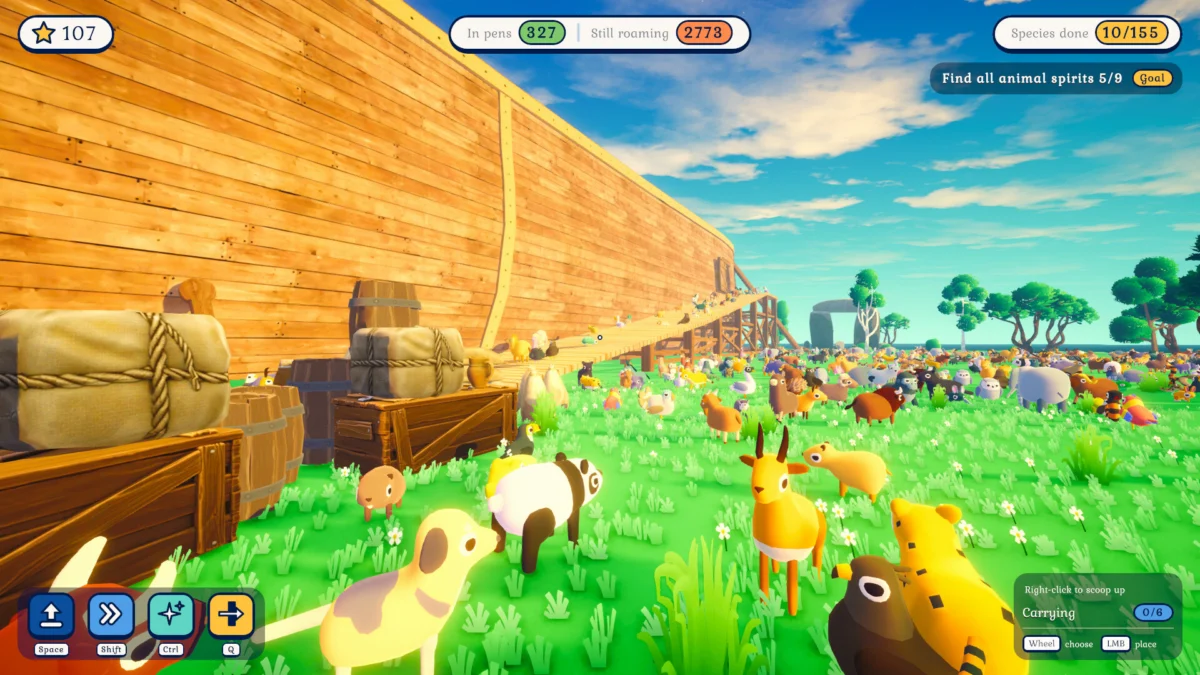
The indie gaming landscape has witnessed a significant paradigm shift over the last half-decade. While high-octane action and complex narrative RPGs continue to dominate the AAA market, a quieter revolution has taken hold in the independent sphere: the rise of the "cozy game." Defined by low-stress environments, satisfying feedback loops, and often domestic or organizational themes, these games—such as Unpacking, PowerWash Simulator, and A Little to the Left—have turned mundane chores into digital therapy. The latest entry into this burgeoning genre is Tidy Up the Ark, a title that reimagines the biblical narrative of Noah’s Ark not as a harrowing tale of survival, but as a meticulously structured organizational challenge.
Main Facts: A New Interpretation of an Ancient Vessel
Tidy Up the Ark departs from the traditional Sunday-school narrative that suggests two of every animal boarded the vessel. In this digital iteration, the scale is significantly increased, requiring players to manage and pen 20 individuals of each species. The game is fundamentally a 3D organizational simulator where the primary objective is to transition the Ark from a state of chaotic animal roaming to a structured, ready-to-sail environment before the arrival of the "Great Flood."
The gameplay environment is a massive, three-tiered ark, with each floor dedicated to a specific dietary category of the animal kingdom:
- The Herbivore Floor: Dedicated to plant-eaters.
- The Omnivore Floor: Dedicated to those with a varied diet.
- The Carnivore Floor: Dedicated to meat-eaters.
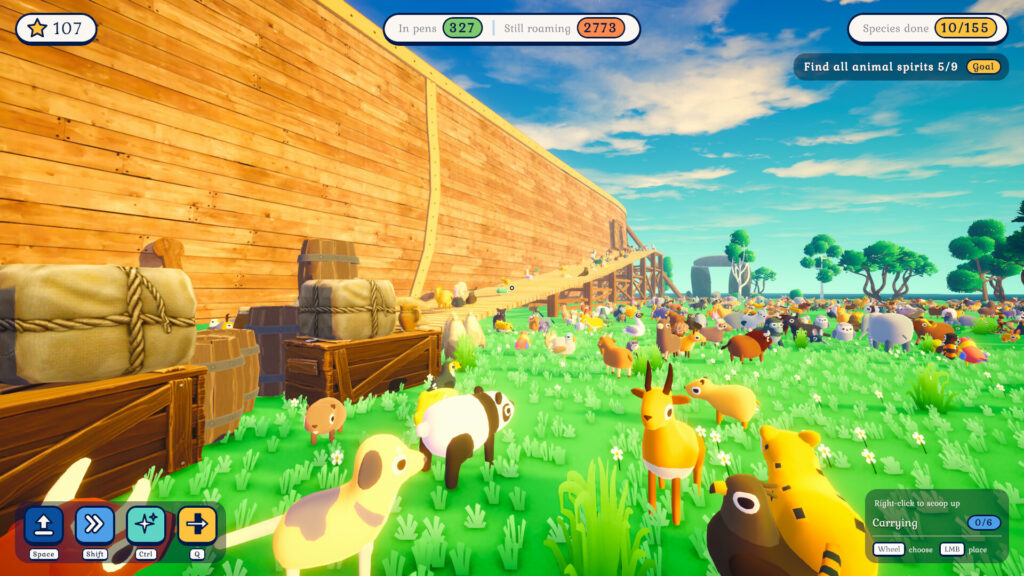
The game utilizes a "clean-up" style of progression. Players do not just move animals; they witness a visual transformation of the environment. As animals are placed in their designated pens, the Ark becomes less cluttered, movement becomes easier, and the sense of impending doom from the flood is replaced by the satisfaction of a job well done.
Chronology of Gameplay: From Chaos to Order
The player’s journey in Tidy Up the Ark begins in a state of overwhelming disorder. Animals of various species are scattered across the three floors, frequently wandering out of their intended zones.
Phase 1: The Initial Survey
Upon entering the Ark, the player is introduced to the three-floor layout. Most animals are found on their correct floor (e.g., a lion on the carnivore floor), but they are not yet secured in their pens. The initial gameplay loop involves identifying which animals are roaming free and locating their specific residential pens. Each pen is designed to hold 20 individuals, creating a high-volume sorting task that requires multiple trips and strategic planning.
Phase 2: Establishing the "Home" Mechanic
One of the game’s core user-friendly features is the "Home" assignment. Once a player assigns a specific species to a pen, the game locks that association. If a player picks up a new animal and attempts to place it in an empty pen, a UI notification informs them if that species already has a designated home elsewhere. This prevents the frustration of split populations and allows the player to focus on the logistics of transport rather than the stress of memorization.

Phase 3: The Upgrade Path
As players successfully pen animals, they earn "Stars," the game’s primary currency. The early game is limited by a "Pocket" capacity, which restricts the player to carrying only five animals at a time. To progress efficiently, players must seek out a Donkey character—the Ark’s resident merchant—to pay for inventory upgrades. Increasing the carrying capacity is essential for the later stages of the game when the distance between roaming animals and their pens increases.
Phase 4: Mastery and Traversal
In the mid-to-late game, players encounter "Ghost Animals." These ethereal entities provide supernatural boons that significantly alter the game’s traversal mechanics. Some ghosts grant the ability to jump higher, while others allow for a "phase forward" or dash move. These abilities transform the game from a slow-paced walking simulator into a more efficient, high-speed sorting operation, allowing players to navigate the verticality of the three-story Ark with ease.
Supporting Data: The Mechanics of Organization
To understand the appeal of Tidy Up the Ark, one must look at the data-driven design of its sorting mechanics. The game relies on a series of "soft" and "hard" constraints to guide the player:
- Categorization Feedback: The game does not require the player to be a zoologist. If a player attempts to bring a herbivore to the carnivore floor or pen, the game provides an immediate message. This lowers the barrier to entry, ensuring the "cozy" nature of the game remains intact.
- Volumetric Challenges: By requiring 20 of each animal rather than two, the developers have ensured that the game cannot be completed in a single sweep. This creates a "slow burn" experience. The player must engage in repetitive but meditative cycles of gathering and depositing.
- Visual Progression: As the "population density" of the open corridors decreases, the game’s frame rate and the player’s ease of movement theoretically improve. This provides a tactile sense of progress—the Ark literally feels "lighter" and more "tidy" as the animals are tucked away.
The organizational strategies employed by players are varied. Early playtests and player reports suggest that users naturally gravitate toward different sorting philosophies. Some players prefer "Species Grouping" (e.g., putting all snake-like creatures in a row), while others prefer "Aesthetic Grouping" (organizing pens by the color of the animals). The game supports this emergent gameplay by allowing players to choose which pens house which species, provided they are on the correct floor.
Official Context and Market Position
While the developers have not released a formal "corporate" response to the game’s reception, the release of a public demo on Steam serves as an official statement of intent. The game is currently in its pre-release phase, utilizing the Steam Next Fest model of gathering player feedback through a playable vertical slice.
Industry analysts note that Tidy Up the Ark is tapping into the "Satisfying Cleanup" niche that has proven highly profitable. The "Official Announcement Trailer" emphasizes the "mindless" yet "engaging" nature of the game, positioning it as a title for players looking to decompress after work. The choice of the Noah’s Ark theme is also a calculated move—it provides a universally recognized framework that justifies the massive scale of the sorting task without needing heavy-handed exposition.
Implications: The Psychology of Tidying
The release of Tidy Up the Ark carries several implications for the future of indie game design and the psychological well-being of its audience.
1. The "Marie Kondo" Effect in Digital Spaces
There is a documented psychological benefit to "tidying up," even in a virtual environment. Sorting games provide a sense of agency and control that is often lacking in real life. By taking a chaotic environment (the crowded Ark) and imposing order upon it, players experience a dopamine release associated with completion and categorization. Tidy Up the Ark maximizes this by making the animals "cute" and the UI non-punishing.
2. Accessibility and "Low-Stakes" Gaming
The inclusion of features like "Wrong Pen" messages and dietary floor-locking suggests a move toward radical accessibility. Tidy Up the Ark is a game that can be played by children and adults alike, regardless of their familiarity with complex gaming tropes. This broadens the potential market and reinforces the idea that games do not need "fail states" or "game over" screens to be compelling.
3. The Evolution of the Ark Narrative
By subverting the "two-by-two" rule, the game moves away from the religious or survivalist aspects of the Noah story and focuses on the logistical reality of such an undertaking. It humanizes the myth by turning it into a management task, making the "Great Flood" less about a terrifying cataclysm and more about a deadline for an organizational project.
4. The Value of the Demo
In an era where many games are released in "Early Access" with numerous bugs, the presence of a polished Steam demo for Tidy Up the Ark indicates a developer confidence in the core loop. It allows the "cozy" community to "test-drive" the vibe of the game—a crucial step for a genre where "feel" and "atmosphere" are more important than technical specs or graphical fidelity.
Conclusion
Tidy Up the Ark stands as a testament to the enduring appeal of organization. By combining a classic historical narrative with the modern mechanics of the "clean-up" genre, it offers a unique, low-stress experience that rewards patience and memory. As the game moves toward its full release, it is poised to become a staple for those who find peace in the process of putting everything in its right place.
For those interested in experiencing the "slow burn" of animal husbandry and architectural organization, the demo is currently available for download on Steam, where players can also wishlist the title to stay updated on its final voyage.