
Publishing Landscape Shifts: "Dad Books" Fade, AI Looms, and Traditional Publishers Face Economic Headwinds
Week Ending May 22, 2026
The publishing world is navigating a period of profound transformation, marked by a significant decline in traditional nonfiction sales, a contentious debate surrounding artificial intelligence, and a persistent economic squeeze on established publishing houses. This week’s "Author Update" delves into these critical trends, revealing a complex ecosystem grappling with evolving reader habits, technological disruption, and internal cultural shifts.
The Fading Appeal of "Dad Books" and the Publishing Echo Chamber
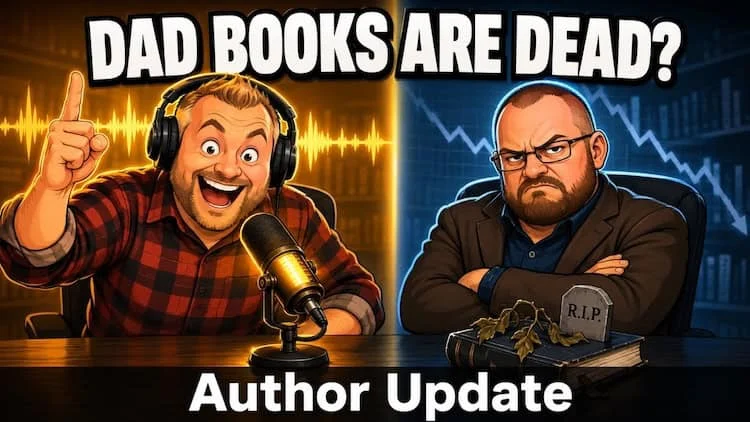
A stark reality is emerging for the print nonfiction market, particularly the segment once dominated by biographies, history, and political titles, often dubbed "dad books." According to The Wall Street Journal, these genres have experienced a consistent sales decline for four consecutive years, now representing the weakest segment of the print market. Data from Circana BookScan through May 9, 2026, indicates an almost 8% drop in nonfiction print sales, with politics and current affairs titles experiencing a precipitous 19% decrease. This stands in stark contrast to the robust sales of Ron Chernow’s earlier biographies, highlighting a significant shift in reader engagement.
The decline is attributed, in part, to the migration of audiences to alternative content platforms. Men, who historically constituted a significant portion of the readership for in-depth nonfiction, are increasingly turning to podcasts like Hardcore History and The Joe Rogan Experience. Podcast consumption among men has surged, rising from 46% in 2023 to 62% in the prior month, suggesting a preference for serialized, audio-first content. Barnes & Noble CEO James Daunt observes a similar trend, noting that in times of perceived global volatility, readers often gravitate towards immediate news rather than books offering deeper historical context.

Crucially, the analysis points to a significant disconnect between the traditional publishing industry and its potential audience. An examination of hiring data from Publishers Weekly‘s Salary & Jobs Survey reveals that only 11% of new hires in the last five years were men, with 79% being women and 10% identifying as non-binary or other. This demographic skew suggests a publishing workforce that may not adequately represent or understand the perspectives of a broad segment of the male nonfiction audience. Further data from Lee & Low surveys indicate that roughly 31% of publishing staff identify as LGBTQ+. While diversity is a valued goal, the concentration of hires within specific demographic groups raises questions about the industry’s ability to connect with a more diverse readership.
This internal demographic trend is mirrored in political affiliations. OpenSecrets data shows that the books, magazines, and newspapers industry has overwhelmingly directed campaign contributions to Democrats since 2020, with many publishing houses and newsrooms exhibiting near-universal support for the party. A 2021 UnHerd survey found that 100% of U.S. book-publishing respondents self-identified as left-leaning. This homogeneity, critics argue, creates an "echo chamber" where the industry’s internal worldview limits its capacity to produce content that resonates with a broader spectrum of the American populace, particularly those who voted for Donald Trump.
Industry executives often blame external factors like podcasts, Substack newsletters, YouTube, and Netflix documentaries for the sales slump. However, the argument presented is that the core issue is a lack of diverse perspectives within publishing houses. When an industry purges employees or overlooks individuals who hold differing political or cultural viewpoints, it risks alienating a significant portion of the potential market. The inability to authentically represent or even comprehend the interests of a majority of Americans who voted for Trump, for instance, directly impacts the ability to acquire and market books that would appeal to them.
Furthermore, the financial landscape has shifted dramatically. While the Obamas secured a substantial $65 million advance for two nonfiction books, Joe Rogan’s Spotify deal for exclusive podcasting rights reportedly reached $200 million. This disparity suggests that for true experts in various fields, the podcasting and online content creation space now offers significantly greater financial incentives than traditional book publishing.

Barnes & Noble CEO’s Stance on AI-Written Books Sparks Controversy
The rapidly evolving role of artificial intelligence in content creation has ignited a firestorm of debate, particularly following statements from Barnes & Noble CEO James Daunt regarding the potential stocking of AI-written books. In an interview on May 18, Daunt expressed an openness to selling AI-generated books, provided they are transparently labeled, do not infringe on existing creators’ work, and demonstrate genuine customer demand.
Daunt framed his position around transparency and consumer choice, acknowledging that a significant portion of the 300,000 titles in Barnes & Noble stores may already contain AI-generated elements without the company’s knowledge. He expressed skepticism about the near-term commercial viability of AI-written books and advocated for a "common sense and acceptance" approach while ensuring authenticity.
However, these comments were met with immediate and fierce criticism from authors and readers across social media platforms. Many argued that AI-generated content poses a direct threat to the livelihoods of human creators and risks inundating bookstores with low-quality material. Calls for boycotts of Barnes & Noble quickly emerged, with critics questioning the efficacy of labeling alone, given that AI models are trained on vast corpuses of human-written work.
In subsequent clarifications to various media outlets, including the Los Angeles Times and Publishers Weekly, Barnes & Noble spokespeople emphasized that the company "does not endorse or intentionally sell AI-generated books" and "takes active measures to exclude all AI-generated books from our online offerings and never knowingly orders any for in-store stock." The company reiterated its demand for clear labeling from publishers and stated it would sell AI-generated books only if there was demonstrable customer demand, such as through special orders, and only if reputable publishers were involved. Leadership expressed the belief that widespread customer demand for such books is "very unlikely."

Despite these clarifications, the initial statement highlighted the growing tension between established retail channels and the burgeoning AI content landscape. Barnes & Noble’s aggressive expansion under Daunt’s leadership, with 702 stores by the end of 2025 and continued growth in 2026, underscores the enduring importance of physical retail for book discovery. However, the company’s stance on AI-generated content serves as a significant marker in the industry’s ongoing adaptation to technological disruption. Authors are advised to closely monitor publisher contract language, submission guidelines regarding AI disclosure, and evolving reader sentiment.
Traditional Publishing’s Financial Strain: Inflation-Adjusted Losses Persist
The Association of American Publishers (AAP) StatShot report, released on May 18, 2026, revealed that sales across more than 1,416 publishers reached $2.9 billion in the first quarter of 2026, a nominal increase of 0.9% over the same period in 2025. While this figure might appear positive on the surface, a deeper analysis accounting for inflation paints a far less optimistic picture.
Trade book sales totaled $2.2 billion, a modest 0.2% increase. Adult titles saw a 0.5% decline, while children’s and young adult books experienced a 2.6% rise. Religious presses reported a 1.4% decrease, whereas professional and scholarly publishing saw a healthy 5.7% gain. Educational materials for PreK-12 and higher education combined increased by 3.2%.
However, when adjusted for inflation, which averaged approximately 2.7% for the quarter based on U.S. Bureau of Labor Statistics data, the nominal sales gain translates into a real-term contraction of roughly 1.8%. This means that despite a reported increase in revenue, the industry as a whole sold less in real terms.

Specific categories revealed more granular trends. Digital audio in trade books surged by a robust 15.9%, indicating a continued shift towards audio consumption. Conversely, eBooks saw a 5% decline. Adult nonfiction hardcover sales plunged by a significant 15.6%, with trade paperback also falling by 4.7%. Children’s and YA nonfiction experienced strong growth at 16.8%, while fiction saw a slight dip of 0.7%.
The persistent inflation-adjusted losses underscore the economic pressures facing traditional publishers. Trade publishing, in real dollar terms, remains essentially flat, leading to squeezed advances and reduced marketing budgets. Authors in adult nonfiction are particularly vulnerable, facing sharp declines in both print and digital formats. Genre fiction, children’s and YA nonfiction, and audio-first projects continue to outperform, offering avenues for growth.
The rise of independent authors and publishers is also a significant factor. These independent entities, often targeting underserved markets and readerships, are steadily gaining market share. Authors on the right, in particular, are finding significant success by directly catering to a conservative audience, often achieving sales figures that rival entire traditional publishing houses. The ability of indie authors to retain a larger portion of the revenue, sometimes selling direct to consumers and making up to 80 cents on the dollar, provides a substantial financial advantage.
The growth of platforms like Kindle Unlimited, with payouts increasing from $62 million to $64 million per month in 2026 and a significant rise since 2020, further illustrates the dynamism of the independent publishing sector. As traditional publishers grapple with declining sales and the challenges of reaching a diverse audience, the independent scene, particularly in genres with dedicated followings, demonstrates sustained growth that outpaces inflation.

James Patterson’s $10 Million Pledge for Adolescent Literacy Amidst Industry Challenges
Bestselling author James Patterson has committed $10 million to establish the Patterson Institute of Early Adolescent Literacy at Vanderbilt University. This initiative aims to bolster research, student tutoring, and teacher training specifically for grades four through eight, a critical period where reading scores have shown a significant decline according to recent NAEP data. Patterson, who has already donated over $220 million to literacy causes, seeks to re-engage middle schoolers who may view reading as uncool or are distracted by other media.
This significant investment comes at a time when the publishing industry, particularly the middle-grade segment, faces ongoing challenges. A decline in literacy rates and birth rates presents a long-term concern for the future of reading. Patterson’s own success, often characterized by writing for the "one-book-a-year reader" at the beach, highlights the importance of accessible and engaging storytelling. However, the article suggests that an author like Patterson, if starting today, might struggle to secure a traditional publishing contract due to current industry diversification mandates, particularly if perceived as not being "diverse enough."
The piece posits that authors like Tom Clancy, whose work might be deemed too politically charged or from a perspective deemed outdated by some within the current publishing establishment, would likely find it challenging to break through today. Instead, such authors might thrive in the indie space, capitalizing on direct audience engagement and circumventing traditional gatekeepers. Patterson himself, it is suggested, would also find significant success as an independent author in the current market.
The establishment of the Patterson Institute is lauded as a generous and vital contribution to the literary landscape and broader American society, with hopes for its success in fostering a love of reading among young people.

AI’s Expanding Influence: From Music Licensing to Authorial Tools
The creative industries are increasingly grappling with the implications of generative AI, with music serving as an early indicator of broader trends. Spotify and Universal Music Group announced landmark licensing agreements on May 21, 2026, enabling Premium subscribers to create covers and remixes of participating artists’ songs using generative AI. This opt-in model, requiring artist consent and providing revenue shares to rights holders, offers a potential blueprint for how other creative fields, including publishing, might navigate AI-generated derivatives.
This development signals a future where readers might engage with stories in highly personalized ways. The potential for AI-powered tools to generate "spinoffs" or "prequels" based on user prompts, or even to incorporate readers directly into narratives, is becoming increasingly plausible. While this opens new avenues for interactive storytelling and reader engagement, it also raises complex questions about intellectual property, authorial control, and the potential for unauthorized creation of derivative works.
The rise of "promptonyms" like "Elara Voss" further illustrates the subtle yet pervasive influence of AI in creative output. AI researcher Brian Roemmele highlighted how statistically favored names, like Dr. Elara Voss for a brilliant female scientist or archivist, emerge from large language models due to patterns in their training data. This creates a feedback loop, where AI-generated content featuring these names enters subsequent datasets, leading to their repeated appearance across various AI models and platforms. Journalist Max Read previously documented this phenomenon, noting a significant increase in books attributed to "Elara Voss" on Amazon. Similar patterns are observed for male leads and character archetypes, suggesting that AI, without careful prompting and human intervention, defaults to predictable and often generic outputs.
This tendency towards homogenization poses a challenge for authors aiming for originality and discoverability. The emergence of recognizable "AI tells" can lead readers to dismiss such works as "AI slop," hindering their potential audience. The research on "model collapse," which suggests that training on synthetic data erodes diversity, provides a theoretical underpinning for these observed patterns. Authors are encouraged to utilize sophisticated tools for character generation and to employ detailed, paragraph-based prompts rather than simple sentences to guide AI more effectively.

Google’s AI Advancements: Conversational Drafting and Agentic Support
Google’s developer conference, Google I/O 2026, unveiled significant advancements in AI that directly impact the creative process for authors. The introduction of "Docs Live" and "Gemini Spark" transforms Google Docs and the broader Workspace suite into conversational AI partners capable of handling drafting, research, and organization.
Docs Live allows authors to dictate ideas, outlines, or even rambling thoughts, with Gemini instantly structuring them into formatted documents. The tool can pull relevant information from Gmail, Drive, and the web in real-time, enabling a dynamic and iterative drafting process. Gemini Spark acts as a 24/7 personal agent powered by the new Gemini 3.5 Flash model, capable of writing emails, creating outlines, monitoring tasks, and extracting information from various Google applications.
These features promise to accelerate the drafting process by reducing "blank-page paralysis" and typing fatigue. For indie authors operating on tighter budgets, these enterprise-level productivity tools, available through Pro and Ultra subscription tiers, offer significant advantages. Google’s commitment to clearer provenance through expanded SynthID watermarking and C2PA credentials also addresses concerns about the origin of AI-generated content.
While these tools offer powerful new capabilities, some observers note that Google’s announcements often focus on future developments rather than immediate, fully realized products, suggesting a potential lag in the AI race. The increasing cost of AI models, with Gemini 3.5 Flash reportedly being more expensive than its predecessor, also indicates a shift away from the initial "AI subsidy era" towards more economically driven pricing models.

The Rising Cost of AI Tools: Are Humans Becoming More Economical?
A surprising economic reality is emerging in the enterprise AI space: the cost of advanced AI coding tools is unexpectedly high, leading major companies to re-evaluate their adoption strategies. Reports from financial commentator Hedgie Markets and publications like The Verge and Forbes indicate that companies like Microsoft are canceling internal Claude Code licenses, and Uber has exhausted its entire 2026 AI budget within the first four months of the year due to heavy usage of AI coding assistants.
GitHub’s transition to usage-based billing for Copilot, tied directly to token consumption, further signals a shift away from fixed-price models. Procurement data suggests that AI-related software prices are increasing at renewal. This trend challenges the initial assumption that AI tool costs would continue to fall. Heavy usage, particularly in complex agentic coding workflows, has led to token consumption that often rivals or exceeds the payroll costs of the human roles these tools were intended to augment.
This economic recalibration has significant implications for authors who rely on AI tools for drafting, editing, marketing, and even light coding. Usage-based pricing and rising base rates can lead to unpredictable and potentially substantial bills for power users. As the cost of raw AI generation increases, the inherent advantages of human creators—voice, curation, emotional judgment, and final quality control—gain a stronger economic moat. Authors who strategically employ AI as a disciplined co-pilot, rather than viewing it as a complete replacement for human input, are likely to maintain better cost control and achieve higher output quality.
The current period is characterized as a "golden age" of subsidized AI tools, where relatively low monthly subscriptions offer access to significant computing power. However, this era may be transient, with token costs projected to double annually. The increased expense of AI is ironically leading to a situation where human labor might become more economically viable for certain tasks, a scenario that could allow individuals to retain their jobs despite the widespread fear of AI-driven displacement.

The "Elara Voss" Phenomenon: AI’s Default Settings and the Quest for Originality
The recurring appearance of names like "Elara Voss" in AI-generated fiction highlights a critical challenge: the tendency of current language models to default to statistically favored outputs, leading to a homogenization of creative content. These "promptonyms" emerge from patterns in training data, creating a self-reinforcing loop where AI-generated works featuring these names enter new datasets, further solidifying their prevalence.
This phenomenon is not limited to character names; it extends to plot devices, settings, and narrative structures. The result is a marketplace where similar-sounding books, featuring predictable character archetypes and plot points, can be easily recognized by discerning readers, often labeled as "AI slop." This can negatively impact the discoverability of genuinely original works, even those that incorporate AI assistance.
The solution, experts suggest, lies in more sophisticated prompting techniques. Rather than relying on simple, sentence-based prompts, authors are encouraged to craft detailed, paragraph-based instructions. Furthermore, specialized tools like the Character Namer from the Patron Toolbox, which leverages extensive historical name data and contextual information about character birthdates and locations, offer a more robust and original approach to character creation. This move towards deliberate human curation and a unique authorial voice becomes paramount in distinguishing oneself in an increasingly AI-influenced creative landscape.
Zeitgeist: Shifting Cultural Mood Reflected in Baby Names
The latest baby name data from the U.S. Social Security Administration for 2025 reveals a subtle yet significant shift in American cultural values, with parents increasingly favoring names that evoke themes of light, fire, clarity, strength, and uplift. While traditional top names like Liam and Olivia remain popular, the real story lies in the significant upward mobility of names carrying these positive and energetic connotations.

Names such as Ailany, Klarity, Madisson, and Scottie have surged in popularity, indicating a move away from names associated with past cultural trends or stylized spellings. This trend aligns with generational theory, which suggests the United States is in the late stages of a "Fourth Turning," a period of crisis that is projected to resolve into a "High" of renewed optimism and civic confidence. The names chosen for the current generation of children, primarily belonging to the "Homeland Generation," appear to reflect this anticipated cultural shift towards hope, heroism, and clarity.
For writers, this data offers valuable insights. Character names for stories set in the near future will resonate more deeply if they draw from this emerging trend. Furthermore, themes of overcoming darkness, finding clarity, and rebuilding with strength are likely to find a receptive audience as the broader cultural mood continues to evolve. The data suggests a collective desire for narratives that emphasize hope and a belief in positive outcomes, moving away from the "grimdark-adjacent" aesthetics that have dominated in recent years.
In conclusion, the publishing industry is at a critical juncture. The decline of traditional nonfiction sales, the disruptive force of AI, and the economic realities of inflation are reshaping the landscape. Navigating these changes requires adaptability, a willingness to embrace new technologies, and a deep understanding of evolving reader preferences and cultural currents. The future of publishing will likely belong to those who can successfully blend human creativity with technological innovation, while remaining attuned to the subtle shifts in the collective consciousness.


Leave a Comment