
Reclaiming the Sceptred Isle: Nike, Palace, and the Shakespearean Reimagining of English Football
As the global countdown to the FIFA Men’s World Cup intensifies, the intersection of high-performance sportswear, street culture, and national identity has reached a new, poetic zenith. With the tournament set to kick off on June 11, the world’s most prominent sporting sponsors are locked in a high-stakes battle for cultural supremacy. While competitors have leaned into nostalgia and star-studded cameos, Nike has taken a more profound—and arguably riskier—path. In a landmark three-way collaboration with the Football Association (FA) and the iconic London-based streetwear label Palace Skateboards, Nike has released a campaign that attempts to do more than sell kits: it seeks to reclaim the very soul of English patriotism.
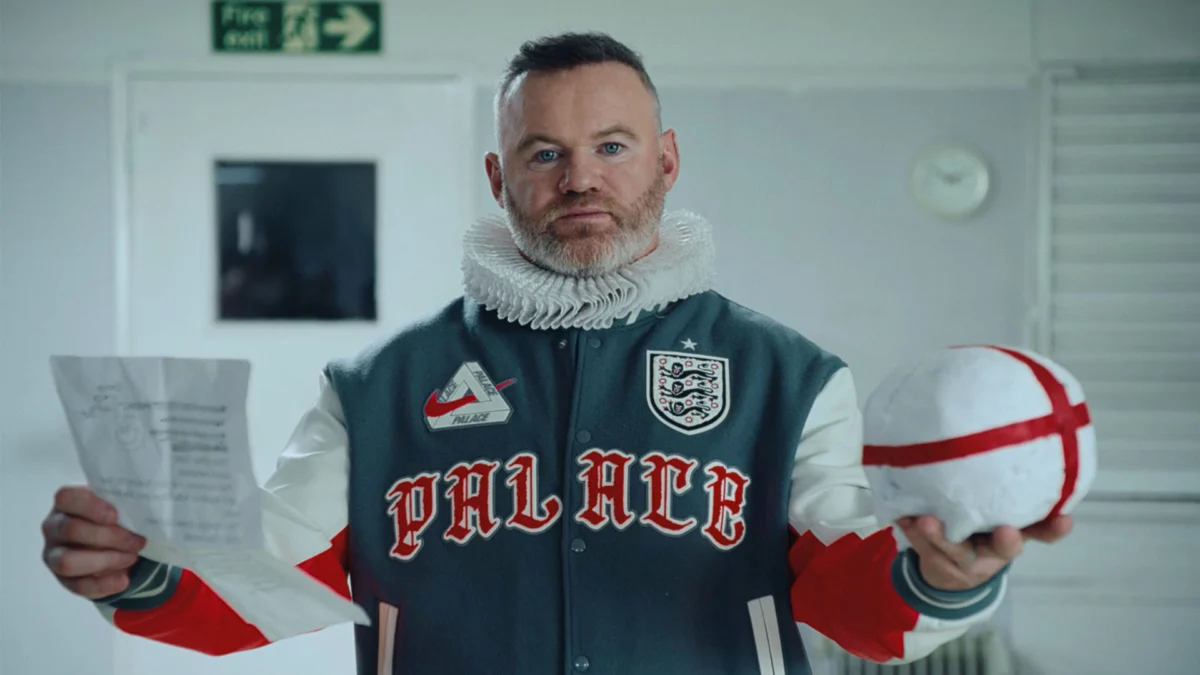
Directed by the visionary duo Burnermunde through the production powerhouse Stink UK, the campaign features a performance that few saw coming. Wayne Rooney, the former England captain and a man whose career has been synonymous with the grit and drama of the national game, takes center stage not as a striker, but as a Shakespearean orator. The resulting film is a visceral, visually arresting exploration of what it means to be English in the 21st century, blending the high art of the Bard with the raw energy of the terraces.
Main Facts: A Triple-Threat Collaboration
The campaign serves as the official launch for the England x Nike x Palace collection, a partnership that signals a significant shift in how national team merchandise is positioned. By bringing Palace Skateboards—a brand rooted in London’s Southbank skate scene and known for its irreverent, "lad-culture" aesthetic—into the fold, Nike is targeting a demographic that demands authenticity over traditional corporate gloss.

The centerpiece of the campaign is a two-minute film that opens with Wayne Rooney dressed in a surreal yet striking ensemble: an Elizabethan ruff paired with a bespoke England x Nike x Palace varsity jacket. In a nod to Hamlet, Rooney clutches a skull, though this one is daubed with the red cross of St. George. He proceeds to recite the "This royal throne of kings" soliloquy from William Shakespeare’s Richard II.
The production credits reflect a "who’s who" of contemporary creative talent:
- Creative Direction: Stuart Hammond (Palace)
- Production: Stink UK
- Director: Burnermunde (Musti)
- VFX: Finn Rabbitt Dove
- Cinematography: Jack Hamilton
The film’s primary objective is to "reclaim" the St. George’s flag—a symbol that has, in recent decades, been fraught with political tension and associations with exclusionary nationalism. By placing the flag within a multicultural, intergenerational, and artistically elevated context, the campaign attempts to redefine Englishness as an evolving, inclusive identity.

Chronology: The Evolution of the Nike-Rooney Partnership
To understand the weight of this campaign, one must look at the long and storied history between Nike and Wayne Rooney. For nearly two decades, Rooney has been the "raw nerve" of Nike’s English marketing strategy, often used to represent the unbridled passion and occasional controversy of the English game.
- 2006: The "Bloody Cross" Controversy: Ahead of the World Cup in Germany, Nike released a poster of a shirtless Rooney, arms outstretched in a messianic pose, with the St. George’s cross painted across his chest in what looked like blood. The image caused a national stir, with some praising its intensity and others condemning it as aggressive or even sacrilegious. It established Rooney as the ultimate symbol of English "warrior" spirit.
- 2010: The Caravan and the Baked Beans: During a period of intense media scrutiny, Nike took a more humorous, self-deprecating approach. A famous ad depicted a "what if" scenario where a disgraced Rooney lived in a caravan, cooking baked beans, having lost everything after a poor tournament performance. This showcased Rooney’s willingness to engage with the public’s perception of him.
- 2024: The Elder Statesman and the Bard: The current campaign represents the final stage of this evolution. No longer the "enfant terrible" or the fallen hero, Rooney is presented as a cultural icon—a man capable of bridging the gap between the rough-and-tumble of the pitch and the high-minded ideals of English literature. His delivery of Shakespeare is sincere and surprisingly nuanced, marking a transition from physical athlete to a symbol of national heritage.
Supporting Data: Cultural Context and Visual Symbolism
The decision to use Richard II is not merely an aesthetic choice; it is deeply rooted in the English psyche. The lines spoken by the dying John of Gaunt—"This blessed plot, this earth, this realm, this England"—are often cited as the definitive expression of romanticized national pride. However, in the context of the 2024 World Cup, Nike and Palace have updated the imagery to reflect a modern reality.
The film utilizes a "montage of Englishness" that contrasts sharply with the traditional, often sterile imagery used by the FA. Key visual elements include:

- Multiculturalism: Scenes of "EastEnders-style" weddings and South Asian "uncles" in sharp suits highlight the diverse fabric of the nation.
- The Lionesses’ Influence: Former England star Jill Scott appears in a deified role, depicted as the "architect of Stonehenge." This not only acknowledges the massive impact of the women’s game following their Euro 2022 victory but also positions women at the very foundation of English football history.
- VFX and Surrealism: The work of Finn Rabbitt Dove adds a layer of "giddy reverie" to the film. Stonehenge is reimagined not just as a monument, but as a site of footballing origin, blending ancient history with modern sport.
Statistically, the "hypebeast" transition of football kits has proven to be a lucrative market. Previous collaborations between football clubs and streetwear brands (such as Palace’s 2019 link-up with Juventus or Nike’s work with PSG and Jordan Brand) have seen merchandise sell out within minutes and resale values skyrocket. By applying this "drop" culture to the national team, Nike is tapping into a global market that views the football shirt as a high-fashion statement rather than just fan gear.
Official Responses: The Creative Vision
The creative team behind the project has been vocal about the need to move away from "cliché" patriotism. Musti, one half of the directing duo Burnermunde, emphasized that the goal was to capture the "vibe" of England rather than a sanitized version of it.
"At its core, we wanted to reimagine what England means," Musti stated in a post-release interview. "Not in a grand, patriotic way. More like: this is what it is. England isn’t one thing. It’s always changing. It’s a shared experience that spans generations and backgrounds."

Stuart Hammond, who led the concept and creative direction for Palace, noted that the collaboration was designed to be "unapologetically British." The inclusion of the Elizabethan ruff and the varsity jacket was a deliberate attempt to mash together different eras of British history, suggesting that the "modern" and the "ancient" are constantly in dialogue.
The FA has also signaled its support for the campaign, viewing it as a way to engage a younger, more diverse audience that may feel alienated by traditional displays of nationalism. By "reclaiming" the flag through a lens of creativity and inclusion, the FA hopes to foster a sense of unity ahead of what is expected to be a high-pressure tournament.
Implications: A New Era for Sports Marketing
The England x Nike x Palace campaign carries significant implications for the future of sports marketing and national identity.

First, it marks the end of the "ironic" era of advertising. For years, brands have approached national pride with a wink and a nod, fearing the backlash associated with earnest patriotism. Nike’s decision to embrace Shakespeare and the St. George’s flag "sincerely and without irony" suggests that there is a growing appetite for a genuine, albeit progressive, national narrative.
Second, the campaign reinforces the "lifestyle-ification" of football. The sport is no longer confined to the 90 minutes on the pitch; it is a 24/7 cultural ecosystem involving fashion, music, and digital art. By partnering with Palace, Nike has ensured that the England kit will be seen in skate parks, nightclubs, and fashion weeks, far beyond the confines of the stadium.
Finally, the film sets a new bar for athlete-led content. Wayne Rooney’s performance proves that retired legends can be utilized in ways that go beyond simple testimonials or "legend" matches. By casting him as a Shakespearean figure, Nike has elevated his brand from "former player" to "cultural monument."

As the first whistle of the World Cup approaches, this campaign stands as a bold declaration. It suggests that while the "sceptred isle" may be changing, its passion for the game—and its ability to reinvent itself—remains as potent as ever. Whether England brings the trophy home or not, Nike and Palace have already succeeded in one major victory: they have made the St. George’s flag look like the future, rather than just the past.

Leave a Comment