Roald Dahl’s Prescient Vision: "The Great Automatic Grammatizator" as a Harbinger of the AI Revolution
A seemingly whimsical tale from the beloved children’s author foresaw the profound impact of automated text generation, resonating with uncanny accuracy in our current era of ChatGPT and advanced AI.
Introduction: The Unforeseen Prophet of the Digital Age
Roald Dahl, a name synonymous with fantastical creatures, mischievous protagonists, and often darkly humorous narratives, is primarily celebrated for his indelible contributions to children’s literature. From the eccentric Willy Wonka to the formidable Matilda Wormwood, his characters have enchanted generations. However, a deeper dive into his extensive bibliography reveals a writer whose imagination extended far beyond the realm of childhood whimsy, venturing into territories that, decades later, appear remarkably prescient. This is particularly true for his short story, "The Great Automatic Grammatizator," a tale published in 1954 that, with startling clarity, anticipates the rise of artificial intelligence and its implications for creative industries.
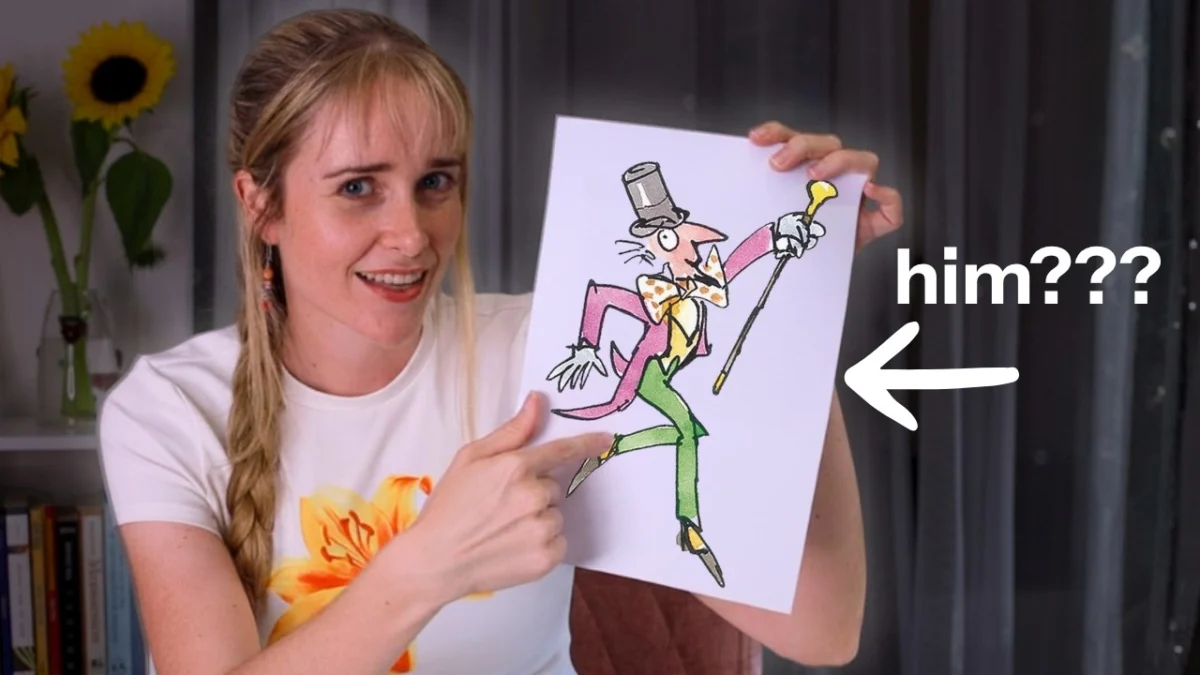
While Dahl’s forays into adult fiction, such as the darkly comedic collections Kiss Kiss and Switch Bitch, have garnered attention for their mature themes, his engagement with the burgeoning field of automated text generation has remained a lesser-explored facet of his genius. The posthumously published collection The Great Automatic Grammatizator (1991), specifically its titular story, offers a profound commentary on the potential for machines to mimic and even supplant human creativity. This narrative, brought to wider public attention by a recent analysis in a Tibees video, serves as a compelling artifact, demonstrating Dahl’s foresight in understanding the disruptive power of technology on art and authorship.
The Genesis of the Grammatizator: A Tale of Revenge and Automation
"The Great Automatic Grammatizator," first appearing in the Saturday Evening Post in 1954, is set in a world where the ambition of a struggling writer, Adolph Knipe, collides with the nascent possibilities of mechanical computation. Knipe, a disillusioned corporate employee by day and an aspiring fiction writer by night, is driven by a burning resentment towards the literary establishment that has consistently rejected his work. His frustration fuels the development of an extraordinarily complex, entirely analog machine: the Grammatizator.
Dahl masterfully crafts the machine as a physical manifestation of Knipe’s desire to bypass the human element of writing, which he perceives as flawed and inefficient. The Grammatizator is envisioned as an intricate contraption, a far cry from the sleek interfaces of modern AI, yet its underlying principle is remarkably similar to contemporary text-generation models. Knipe’s inspiration stems from a successful electric calculator he previously designed, a device that impressed his boss, Mr. Bohlen, with its ability to perform complex calculations with speed and accuracy. This success leads Knipe to theorize that a similar mechanical logic could be applied to the arrangement of words, rather than numbers.
In Dahl’s narrative, Knipe explains his vision to Bohlen: "It stands to reason that an engine built along the lines of the electric computer could be adjusted to arrange words (instead of numbers) in their right order according to the rules of grammar. Give it the verbs, the nouns, the adjectives, the pronouns, store them in the memory section as a vocabulary, and arrange for them to be extracted as required. Then feed it with plots and leave it to write the sentences." This conceptualization of a machine capable of assembling text based on predefined grammatical rules and a stored vocabulary is a direct precursor to the algorithms that power today’s artificial intelligence.
The Economic Calculus of Automation: Quality vs. Cost
The immediate appeal of Knipe’s invention to Mr. Bohlen lies not in its artistic merit, but in its immense commercial potential. Bohlen, initially skeptical of the machine’s literary viability, is quickly swayed when Knipe outlines the financial incentives. He reveals that major publications like the Saturday Evening Post, Collier’s, and Ladies’ Home Journal were willing to pay substantial sums, upwards of $2,500 (a figure that translates to nearly $40,000 in today’s currency), for short stories. This revelation shifts Bohlen’s perspective from artistic innovation to market dominance.
Knipe’s chillingly pragmatic argument to Bohlen encapsulates the core of many automation debates: "The quality may be inferior, but that doesn’t matter. It’s the cost of production that counts." This statement underscores a fundamental tension that has persisted throughout the history of technological advancement: the trade-off between human craftsmanship and the efficiency and cost-effectiveness of machines. In Dahl’s narrative, the Grammatizator is designed not to elevate literature, but to flood the market with inexpensive, easily produced content, thereby disrupting the existing economic landscape for writers.
The machine itself is depicted as a colossal, clanking entity, bristling with an array of dials, buttons, and levers. Each component is meticulously designed to allow the operator to control variables such as theme, style, tension, humor, and passion. This detailed, albeit analog, description of human control over machine-generated narrative foreshadows the parameters and prompts that users provide to contemporary AI models. The Grammatizator, despite its mechanical nature, is presented as a sophisticated tool that requires human direction to achieve its output, mirroring the intricate dance between AI and its human operators.
Echoes in the Digital Present: From Analog Gears to Algorithmic Networks
The most striking aspect of "The Great Automatic Grammatizator" is its uncanny resonance with our current technological reality. The story was penned in 1954, a time when the concept of artificial intelligence was largely confined to the realm of science fiction and theoretical computer science. Yet, Dahl’s narrative anticipates a future where machines can generate text with remarkable fluency, a future that has now arrived with the widespread adoption of AI language models like ChatGPT.
The transformation of the publishing industry that Dahl envisioned – with its promise of mass-produced, low-cost content – has, in many ways, come to pass. While the specific magazines mentioned have largely ceased to exist in their original forms, the economic pressures and the pursuit of efficiency in content creation are more pronounced than ever. The ease with which AI can generate articles, marketing copy, and even creative writing has democratized content production but also raised critical questions about authorship, originality, and the economic viability of human writers.
The original article aptly notes, "All of us now possess Grammatizators of our own, far faster, cheaper, more versatile, and easier to use than anything Roald Dahl could have imagined." This statement highlights the profound shift from a single, colossal, analog machine to the ubiquitous, highly sophisticated, and accessible digital tools we interact with daily. The concept of feeding "plots and leaving it to write the sentences" has evolved into sophisticated prompt engineering, where users guide AI to produce desired narratives, poems, or essays.
Thematic Resonance and Literary Significance
Beyond its technological prescience, "The Great Automatic Grammatizator" delves into deeper thematic concerns:
- The Nature of Creativity: The story prompts reflection on what constitutes genuine creativity. Is it the algorithmic arrangement of words based on patterns, or does it require the lived experience, emotional depth, and unique perspective that only a human can possess?
- The Devaluation of Art: Dahl’s narrative implicitly critiques a society that prioritizes profit and efficiency over artistic integrity and human expression. The Grammatizator’s success hinges on its ability to produce content cheaply, regardless of its intrinsic artistic value.
- Authorship and Identity: Knipe’s desire to become a recognized author through his machine raises questions about intellectual property and the very definition of an author. If a machine generates the text, who is the true creator?
- The Future of Work: The story serves as an early cautionary tale about technological unemployment and the potential for automation to displace human workers in creative fields.
The story’s inclusion in The Great Automatic Grammatizator collection, published posthumously, suggests that Dahl himself may have recognized its enduring relevance. The title story, in particular, stands as a testament to his ability to weave profound social commentary into seemingly fantastical narratives.
Supporting Data: The Evolution of Text Generation
To understand the depth of Dahl’s foresight, it’s crucial to consider the technological landscape of his time versus today:
- 1954: The era of early computing. Machines were large, expensive, and primarily used for complex calculations and scientific research. The concept of natural language processing was in its infancy. Early attempts at machine translation were rudimentary and rule-based.
- Present Day: The era of advanced AI and deep learning. Large language models (LLMs) like GPT-3, GPT-4, and their successors are trained on vast datasets of text and code. They can generate human-like text, translate languages with remarkable accuracy, write different kinds of creative content, and answer your questions in an informative way. These models are accessible through user-friendly interfaces, making sophisticated text generation available to millions.
The core principle Dahl described – feeding a machine vocabulary, grammatical rules, and plot elements to generate text – has been exponentially amplified by modern AI. Instead of discrete mechanical components, LLMs utilize complex neural networks that learn intricate patterns and relationships within language, enabling them to produce outputs that are often indistinguishable from human writing.
Official Responses and Industry Implications
While "The Great Automatic Grammatizator" is a fictional narrative, its themes have elicited a range of "responses" from the real-world literary and technological communities:
- Literary Critiques: Many contemporary literary critics and scholars are now re-examining Dahl’s work through the lens of AI. The story is frequently cited in discussions about the impact of AI on creative writing, with some viewing it as a pioneering exploration of a topic that has become central to our cultural discourse.
- Technological Development: The very existence of AI text generators can be seen as a realization of Dahl’s speculative fiction. Developers of these technologies, while not directly referencing Dahl in their designs, are operating within the conceptual framework he so astutely outlined.
- Industry Adaptations: The publishing industry is grappling with the implications of AI-generated content. Some publishers are exploring ways to use AI for tasks like content summarization, translation, and even initial drafting, while others are implementing policies to ensure transparency about AI involvement and to protect the value of human authorship.
- Ethical Debates: The rise of AI writing has ignited widespread ethical debates concerning plagiarism, copyright, the potential for misinformation, and the future of human creativity. Dahl’s story provides a historical anchor for these contemporary discussions.
The Enduring Question: The Future of Human Creativity
As the original article concludes, "Yet how many of us can hope to be read more than 70 years in the future?" This poignant question, posed in the context of our current AI-saturated world, encapsulates the ultimate concern. Roald Dahl’s "The Great Automatic Grammatizator" serves not only as a prescient warning but also as a powerful reminder of the enduring value of human imagination, experience, and the unique spark that ignites true artistic expression. While machines may excel at mimicry and efficiency, the soul of storytelling, with all its imperfections and profound insights, remains a distinctly human endeavor. Dahl’s story, therefore, is not just a literary curiosity; it is a vital commentary on the evolving relationship between technology, creativity, and the very essence of what it means to be human in an increasingly automated world.