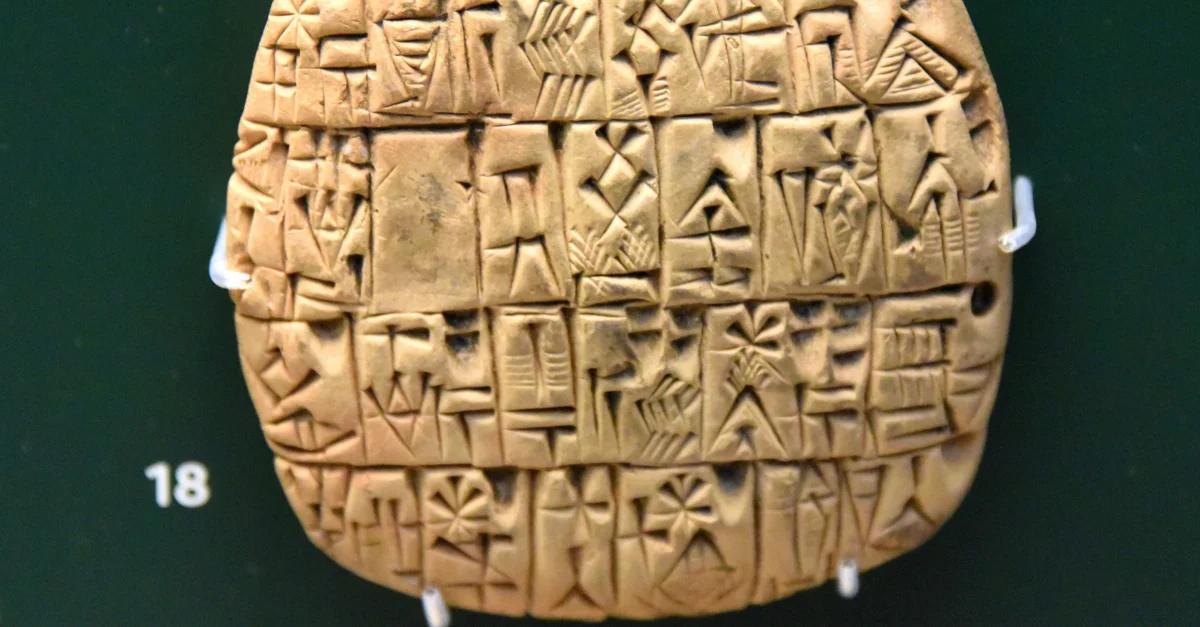
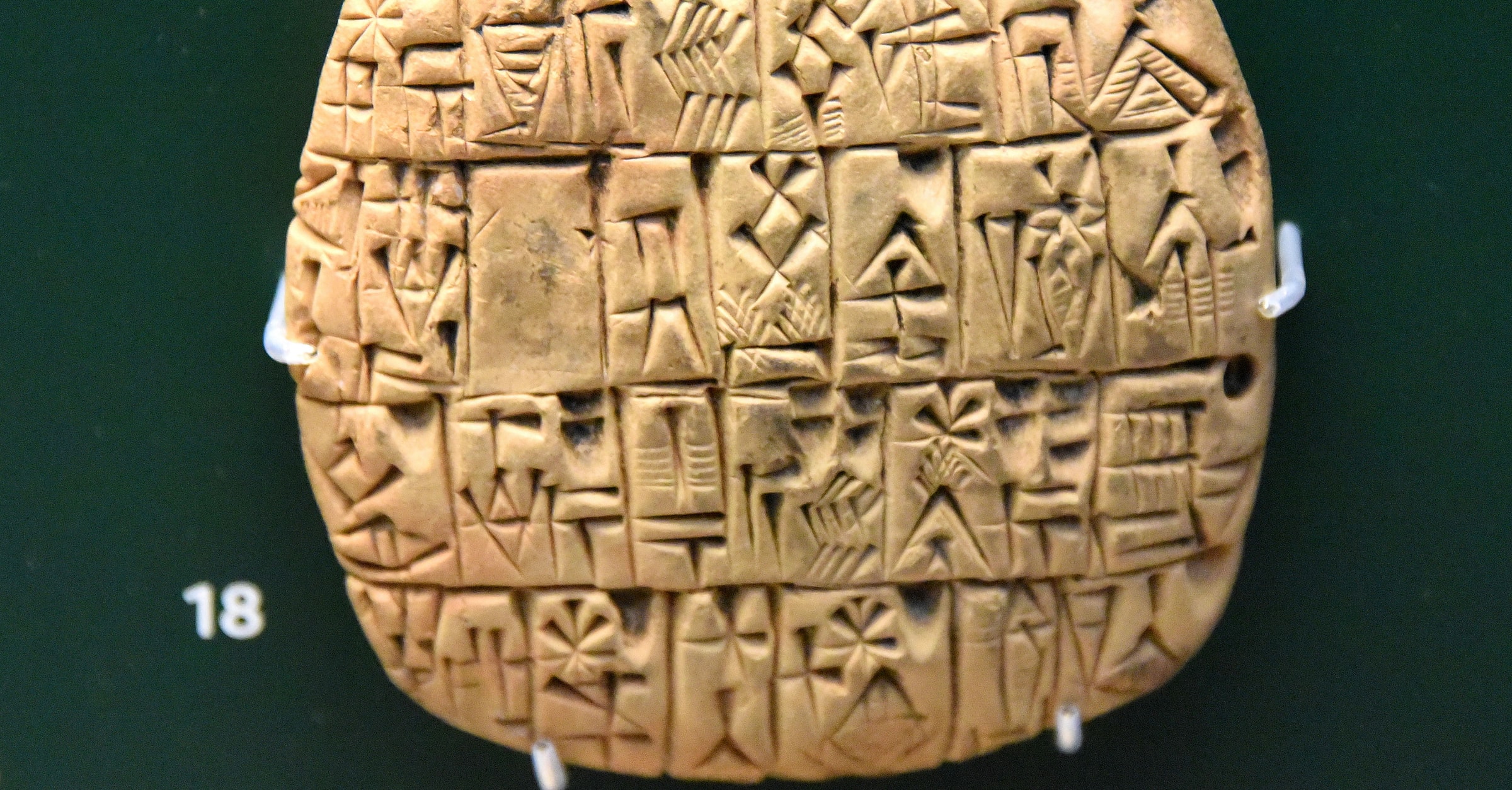
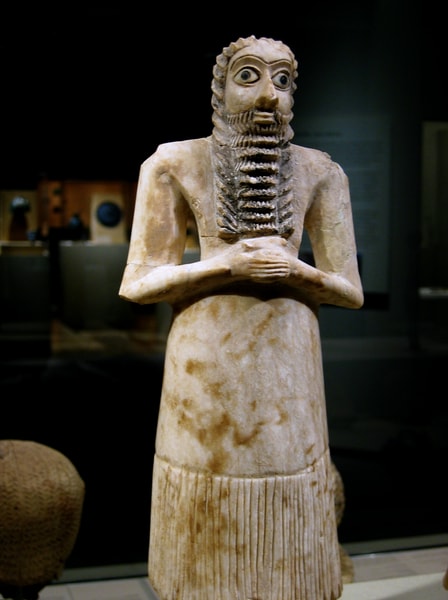
Eridu, Mesopotamia – In the cradle of civilization, where the first written words etched humanity’s thoughts onto clay, stood Nisaba, the revered Sumerian goddess of writing, accounts, and the divine scribe of the gods. A testament to her profound influence, the Hymn to Nisaba, dating back to the 3rd millennium BCE, offers a luminous window into the spiritual and administrative heart of ancient Mesopotamia. Though officially dedicated to Enki, the god of wisdom, the hymn’s essence overwhelmingly celebrates Nisaba, detailing her multifaceted attributes and indispensable role in a society built upon the twin pillars of agriculture and burgeoning literacy.
Main Facts: Unveiling Nisaba’s Ancient Significance
Nisaba, known by various names including Naga, Se-Naga, Nissaba, and Nidaba, was a deity whose importance transcended mere divine patronage; she was the very bedrock of organized society. Her primary domains encompassed writing and meticulous record-keeping, making her the celestial accountant responsible for the accuracy of all divine and earthly transactions. Crucially, Nisaba’s origins trace back to an even earlier role as a grain goddess, intrinsically linked to fertility and agricultural abundance. This dual identity—from ensuring bountiful harvests to inspiring literary works—highlights a fascinating evolution of divine power, where the ability to "engender and increase" extended from the physical growth of crops to the intellectual proliferation of written knowledge.
Her popularity soared during the Early Dynastic period in Mesopotamia (circa 2900-2350/2334 BCE), a time when city-states were formalizing their governance and economic structures. As scholar Jeremy Black notes, "Without her, harvests could not be calculated, nor bread and beer offerings apportioned since she was the goddess of accounts who made sure records were accurate." This underscores her practical necessity in a complex agrarian economy. The Hymn to Nisaba, almost certainly performed with musical accompaniment, served as a core act of worship, sung in her sanctuaries—places of learning often adjoined to libraries and scribal houses—rather than in grand temples of her own. Her veneration was inherently tied to the very act of writing, making scribal activity a form of sacred devotion. Though her status waned during the Old Babylonian period, ultimately seeing her replaced by the male deity Nabu, the hymn endured, albeit repurposed as a pedagogical tool, offering invaluable insights into Sumerian language and culture until its rediscovery by 19th-century archaeologists.
A Chronological Journey: The Rise and Fall of a Divine Scribe
Origins and the Dawn of Literacy
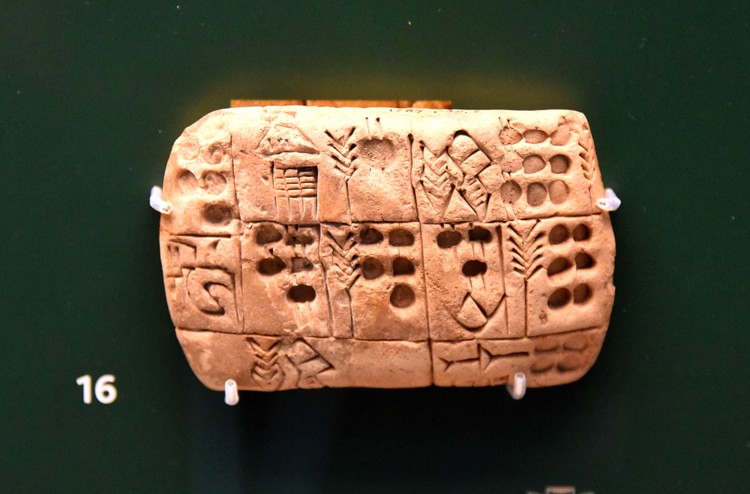
The story of Nisaba is inextricably linked to the genesis of writing itself in Sumer, widely believed to have emerged circa 3600/3500 BCE. This revolutionary innovation was born out of practical necessity, primarily to facilitate long-distance trade. As merchants exchanged vast quantities of grain, livestock, and other commodities, a reliable system for clear communication and record-keeping became paramount. Early pictographs, simple visual representations of objects, gradually evolved into more sophisticated phonograms—symbols representing sounds—around 3200 BCE in the bustling city of Uruk.
It was within this crucible of burgeoning literacy and complex trade that Nisaba’s divine portfolio solidified. Her initial association with grains, a staple commodity and the very subject of countless early written records, naturally cemented her connection to written accounts of grain shipments, and subsequently, to the act of writing itself. This transition from a deity of agricultural yield to the patroness of intellectual output reflects Sumerian society’s growing sophistication and its recognition of the profound power inherent in the written word.
Nisaba’s divine lineage further amplified her prestige. While often depicted as the daughter of Enlil, the king of the gods, and his consort Ninlil during the Ur III period (circa 2112 to circa 2004 BCE), other accounts, notably within the hymn’s opening lines, identify her as the progeny of Anu, the ancient sky god, and Uras (or Unas), the earth goddess. This latter connection places her among the primordial deities, granting her an esteemed position within the Sumerian pantheon. The flexibility in her parentage highlights the dynamic nature of ancient mythologies but consistently places her among the most powerful and revered cosmic forces. Early iconography beautifully illustrates her evolution: initially, she was represented simply as an ear of grain, symbolizing her agricultural roots. Over time, as her role expanded, she was depicted as a majestic woman holding a tablet inscribed with the heavens and a gleaming gold stylus, embodying her mastery over knowledge and the cosmos. Her influence also extended geographically, first associated with the city of Ur during the Ur III period, she later became the revered patron goddess of Eresh (also Eres) during the Isin-Larsa period (circa 2025-1763 BCE).
The Golden Age of Nisaba: Patroness of the Written Word
During her zenith, Nisaba was far more than a patroness; she was the very "spark of inspiration" that ignited the creative and administrative faculties of scribes. Her presence was invoked at the commencement of any significant written work, and a deeply ingrained tradition saw students in scribal schools concluding their compositions with a heartfelt "Praise be to Nisaba!" This ritualistic acknowledgement cemented her role as the ultimate source of intellectual acumen and literary skill.
The Hymn to Nisaba itself was a cornerstone of her worship. Imagine the scene: within the hushed sanctity of a scribal house, the air thick with the scent of clay and reed, a choir of voices, perhaps accompanied by lyres, drums, or reed pipes, would have sung praises to the goddess. These sanctuaries, often integrated with libraries, were not merely centers of learning but vibrant hubs of devotion. The act of transcription, the careful etching of cuneiform symbols into wet clay, was itself a sacred offering to Nisaba, a direct communion with the divine source of literacy.
Nisaba’s administrative reach was extensive, reflecting the practical applications of writing in Sumerian society. She was instrumental in the meticulous accounting required for the construction of grand monuments and temples, ensuring that resources were accurately tracked and allocated. This role draws striking parallels with the Egyptian goddess Seshat, who also presided over writing, construction, and accounts, suggesting a shared understanding of the vital link between literacy and societal order across ancient cultures. Furthermore, Nisaba served as the divine record-keeper for Nanshe, the Sumerian goddess of social justice. Nisaba’s precise accounts determined which mortals merited Nanshe’s assistance and which deserved her wrath, underscoring her role in maintaining cosmic balance and ethical governance.
The Shifting Sands of Divinity: Nisaba’s Decline
The trajectory of Nisaba’s divine prominence began its descent during the Old Babylonian period (circa 1894-1595 BCE). This era witnessed a significant reorganization of the Mesopotamian pantheon, largely driven by political and social shifts. The most notable change occurred during the reign of Hammurabi (1792-1750 BCE), the legendary king of Babylon. As Babylon rose to preeminence, its patron god Marduk was elevated to the status of chief deity, and a broader trend saw male deities increasingly supersede female ones across the religious landscape.
In this new divine order, Nisaba’s role as the goddess of writing was gradually usurped by Nabu, Marduk’s son. Nabu inherited and expanded upon many of Nisaba’s attributes, becoming the supreme god of writing, wisdom, learning, and prophecy, as well as the patron of scribes and even the divine force behind agricultural growth. With Nabu’s ascent, the Hymn to Nisaba transitioned from a vibrant devotional piece to a more academic artifact. It became a primary writing exercise for students in scribal schools, particularly within the "Tetrad" curriculum – a collection of four hymns designed to teach simple Sumerian grammar, serving as a steppingstone to the more complex "Decad" texts. While its original spiritual purpose faded, the hymn inadvertently secured its survival through its continued use in pedagogy.
Nisaba’s name and legacy persisted in these educational contexts until the fall of Babylon to Cyrus II (the Great) in 539 BCE, marking the end of the Neo-Babylonian Empire and the beginning of Achaemenid Persian rule. Her precise fate and the extent of her veneration during the subsequent Achaemenid and Hellenistic periods (including the Seleucid Empire, 312-63 BCE) remain somewhat obscure. However, by the close of the Seleucid era, her name and stories largely faded from active memory. It wasn’t until the mid-19th century, amidst a flurry of European archaeological excavations across ancient Mesopotamia, that the cuneiform tablets containing the Hymn to Nisaba were unearthed from the ruins of the sacred temple precinct of Lagash. The painstaking decipherment of these ancient scripts finally resurrected Nisaba’s story and her once-popular hymn, bringing her back into the light of modern historical understanding.
Supporting Data: The Hymn’s Narrative and Mesopotamian Context
Anatomy of Praise: Deconstructing the Hymn to Nisaba
The Hymn to Nisaba is a richly layered poem that, despite its brevity, encapsulates the profound reverence Sumerians held for their goddess of wisdom and writing. Translated by scholars such as Jeremy Black, the text provides vivid imagery and intricate mythological connections.
The hymn opens with a majestic description of Nisaba (lines 1-6):
"Lady colored like the stars of heaven, holding a lapis-lazuli tablet! Nisaba, great wild cow born of Uras, wild sheep nourished on good milk among holy alkaline plants, opening the mouth for seven…reeds! Perfectly endowed with fifty great divine powers, my lady, most powerful in E-Kur!"
This introduction immediately establishes her celestial grandeur, symbolized by the lapis-lazuli tablet—a stone highly prized for its beauty and rarity, often associated with divinity and royalty. Her epithet "born of Uras" links her to the earth goddess, emphasizing her deep connection to the land and its fertility, while being "most powerful in E-Kur" associates her with Enlil’s temple in Nippur, a pivotal religious center. The "fifty great divine powers" hint at her possession of the meh, the fundamental decrees of civilization, further aligning her with Enki’s domain of wisdom.
Lines 7-13 further elaborate on her prestigious connections and administrative prowess:
"Dragon emerging in glory at the festival, Aruru of the Land…from the clay, calming…lavishing fine oil on the foreign lands, engendered in wisdom by the Great Mountain! Good woman, chief scribe of An, record-keeper of Enlil, wise sage of the gods!"
Here, she is identified with "Aruru of the Land," a name often associated with the Mother Goddess Ninhursag, whose epithet "Lady of the Great Mountain" reinforces this link. Her roles as "chief scribe of An" (the sky god) and "record-keeper of Enlil" unequivocally position her at the apex of divine bureaucracy, the ultimate administrative authority in the heavens.
The hymn then transitions to highlight her evolving divine portfolio (lines 14-20):
"In order to make barley and flax grow in the furrows, so that excellent corn can be admired; to provide for the seven great throne-daisies by making flax shoot forth and making barley shoot forth at the harvest, the great festival of Enlil – in her great princely role she has cleansed her body and has put the holy priestly garment on her torso."
This passage explicitly references her former role as a grain goddess, responsible for agricultural abundance (where "corn" should be understood as general grain). The poetic imagery of her putting on a "holy priestly garment" signifies her transition into her current, more elevated role as the goddess of writing and accounts, a divine transformation from agrarian nurturer to intellectual guardian.
Lines 21-26 depict her delegating her past responsibilities:
"In order to establish bread offerings where none existed, and to pour forth great libations of alcohol, so as to appease the god of grandeur, Enlil, and to appease merciful Kusu and Ezina she will appoint a great en priest and will appoint a festival; she will appoint a great en priest of the Land."
Here, Nisaba ensures the continuity of agricultural blessings by appointing an en-priest (high priest), likely an accountant, to manage the affairs of Kusu and Ezina—two names or aspects of the grain goddess Ashnan—who have now assumed her agricultural duties. This demonstrates a clear division of labor within the pantheon, orchestrated by Nisaba.
The hymn then delves into Enki’s pivotal role in Nisaba’s divine empowerment (lines 27-35):
"He (Enki (?)) approaches the maiden Nisaba in prayer. He has organized pure food-offerings; he has opened up Nisaba’s house of learning, and has placed the lapis-lazuli tablet on her knees, for her to consult the holy tablet of the heavenly stars. In Aratta he has placed E-zagin at her disposal. You have built up Eres in abundance, founded from little…bricks, you who are granted the most complex wisdom!"
This section underscores Enki’s patronage, portraying him as opening the "house of learning" and bestowing upon Nisaba the sacred lapis-lazuli tablet, the instrument of her wisdom. The mention of Aratta, a mythical land often associated with knowledge and Inanna (who is sometimes Enki’s daughter), further reinforces the deep connection between Enki’s wisdom and Nisaba’s intellectual domain. The E-zagin, the "lapis lazuli house," becomes her sacred intellectual sanctuary.
Lines 36-50 offer a rich depiction of Enki in his city of Eridug:
"In the Abzu, the great crown of Eridug, where sanctuaries are apportioned, where elevated…are apportioned – when Enki, the great princely farmer of the awe-inspiring temple, the carpenter of Eridug, the master of purification rites, the lord of the great en priest’s precinct, occupies E-Engur, and when he builds up the Abzu of Eridug, when he takes counsel in Hal-an-kug when he splits with an axe the house of boxwood; when the sage’s hair is allowed to hang loose, when he opens the house of learning, when he stands in the street of the door of learning; when he finishes (?) the great dining-hall of cedar, when he grasps the date-palm mace, when he strikes (?) the priestly garment with that mace, then he utters seven…to Nisaba, the supreme nursemaid:"
This elaborate passage paints a picture of Enki in his realm, the Abzu (the freshwater abyss beneath the earth, source of life), deliberating and preparing. The "Hal-an-kug," his council house or temple, is where he takes counsel, culminating in a powerful, albeit incomplete, declaration of praise for Nisaba, signifying his deep respect and admiration for her.
The hymn concludes with direct praises for Nisaba (lines 50-55):
"O Nisaba, good woman, fair woman, woman born in the mountains! Nisaba, may you be the butter in the cattle-pen, may you be the cream in the sheepfold, may you be keeper of the seal in the treasury, may you be a good steward in the palace, may you be a heaper up of grain among the grain piles and in the grain stores!"
These lines are a cascade of blessings, invoking her continued presence in every aspect of prosperity and administration, from agricultural bounty to meticulous treasury management. The final lines (56-57) serve as a dedication: "Because the Prince [Enki] cherished Nisaba, O Father Enki, it is sweet to praise you!" This formally credits Enki for his patronage, even as the preceding verses overwhelmingly focus on Nisaba’s intrinsic virtues.
The Cultural Tapestry of Mesopotamian Hymns
The Hymn to Nisaba is part of a broader tradition of devotional literature in Mesopotamia. These hymns were not merely poetic verses but integral components of religious life, serving to articulate praise, express gratitude, and solidify theological doctrines. As scholar Stephen Bertman eloquently states:
"Most of the hymns were probably composed by priests, and they were set down in writing as an act of piety. Once transcribed, the words of praise could then be copied and recited by others… Such songs of praise may have been accompanied by musical instruments… The hymns provide us with the names of the major divinities the Mesopotamians worshiped and tell us where their chief temples were located… The most elaborate hymns are like spiritual kaleidoscopes, radiant with divine epithets and attributes and illuminated with colorful shards of myth."
This description perfectly fits the Hymn to Nisaba, a vibrant "spiritual kaleidoscope" that unveils her divine epithets, attributes, and the mythological narratives surrounding her. Music was deeply embedded in Mesopotamian culture, and the Akkadian word for music, nigutu, also encompassed concepts of joy and spiritual elevation. Historian Samuel Noah Kramer linked the cadence of hymns to this concept, arguing that they were performed with musical accompaniment—drums, lyres, reed pipes—during religious ceremonies, royal events, and even for communal entertainment, all intended to elevate the spirit of the participants.
Beyond pure devotion, some hymns served practical purposes. The Hymn to Ninkasi, the Sumerian goddess of beer, famously doubled as a brewing recipe. Brewers would chant this hymn during the brewing process, not only as an act of worship but also as a mnemonic device, ensuring the recipe’s accurate transmission across generations. While the Hymn to Nisaba primarily served to praise, its later adaptation as a scribal exercise also imbued it with a practical, educational function, albeit distinct from its original devotional intent.
Scholarly Interpretations and Ancient Institutional Roles
Interpreting Divine Lineage and Influence
The fluctuating accounts of Nisaba’s parentage—daughter of Enki, or Enlil and Ninlil, or even Anu and Uras—offer fertile ground for scholarly interpretation. Rather than contradictions, these variations likely reflect regional cultic differences or evolving theological frameworks. Paul Kriwaczek’s insights into Enki illuminate why his patronage, if not paternity, was so significant:
"Mesopotamians recognized Enki as the god who brings civilization to humankind. It is he who gives rulers their intelligence and knowledge; he ‘opens the doors of understanding’…he is not the ruler of the universe but the gods’ wise counsellor and elder brother… Most importantly, Enki was the custodian of the meh, which the great Assyriologist Samuel Noah Kramer explained as the ‘fundamental, unalterable, comprehensive assortment of powers and duties, norms and standards, rules and regulations, relating to civilized life.’"
Whether father or patron, Enki’s association with Nisaba fundamentally linked her—and by extension, writing itself—to the very meh, the essential elements and underlying wisdom of Sumerian civilization. This connection elevated writing beyond a mere craft to a divine art, imbued with cosmic significance. Jeremy Black’s analysis of the hymn’s place within the "Tetrad" curriculum highlights its practical role in shaping future scribes, demonstrating how theological texts were repurposed to serve the educational institutions that underpinned Sumerian intellectual life. The discovery of much older compositions dedicated to Nisaba from sites like Suruppag and Abu Salabikh further attests to her deep roots and enduring presence in the earliest phases of Sumerian literacy.
The Scribe’s Sanctuary: Nisaba’s Domain
Nisaba’s unique cultic centers—her sanctuaries—were not standalone temples but were invariably "attached to libraries and scribal houses." This architectural and functional integration speaks volumes about the nature of her worship. For the Sumerians, the "act of writing" itself was a primary form of worship for Nisaba. Every stroke of the stylus on a clay tablet, every carefully copied text, was an offering to the goddess who bestowed the gift of literacy.
These scribal houses were the intellectual powerhouses of Sumerian society. Here, scribes, administrators, and scholars honed their craft, preserved knowledge, and conducted the myriad accounting tasks essential for the functioning of city-states. Nisaba’s direct association with the construction of monuments and temples underscores her administrative significance; such colossal projects demanded precise accounting, inventory management, and contractual documentation—all under her divine purview. The scribal schools, therefore, functioned as direct extensions of her divine will, places where her influence was tangibly felt, and her teachings were rigorously imparted. It was through these institutions that the traditions of writing, record-keeping, and the veneration of Nisaba were perpetuated for centuries.
Implications: Nisaba’s Enduring Echo in History
The Legacy of Literacy and Administration
Nisaba’s story offers profound implications for understanding the values and priorities of ancient Sumerian civilization. Her dual role as a goddess of grain and writing perfectly encapsulates the pragmatic yet intellectually sophisticated nature of early Mesopotamian society. It illustrates how the fundamental need to manage agricultural resources directly spurred the invention and development of abstract thought and systematic record-keeping. The reverence shown to Nisaba underscores the immense value Sumerians placed on literacy, not just as a tool for trade or administration, but as a divine gift, essential for order, prosperity, and even spiritual connection. Her influence helped lay the groundwork for sophisticated bureaucracies, legal systems, and educational institutions, shaping the very fabric of governance and knowledge dissemination for millennia to come.
Gender and Divinity in Ancient Mesopotamia
The decline of Nisaba and other female deities during the Old Babylonian period, particularly under Hammurabi, carries significant implications for understanding the dynamics of gender and divine authority in ancient Mesopotamia. This shift, from a pantheon that often featured powerful goddesses (like Inanna, Ninhursag, and Nisaba) to one increasingly dominated by male figures (like Marduk and Nabu), reflects profound societal transformations. It suggests a move towards more patriarchal structures, both in the divine realm and, by extension, within human society. While the precise reasons are complex, involving political consolidations and shifts in cultural values, Nisaba’s replacement by Nabu serves as a stark illustration of how religious beliefs could be reshaped to reflect and reinforce changing power structures and gender roles within a civilization.
The Unbroken Thread: From Cuneiform to Modern Knowledge
The rediscovery and decipherment of the Hymn to Nisaba in the 19th century represent a monumental achievement in human intellectual endeavor. It is a testament to the enduring power of archaeological and linguistic scholarship to resurrect lost narratives and forgotten deities. Nisaba’s story, once confined to the dust of ancient ruins, now stands as a vibrant reminder of the richness and complexity of Sumerian culture. Through her, we gain deeper insights into the origins of writing, the evolution of religious thought, the interplay between practical necessity and divine inspiration, and the fundamental human impulse to record, learn, and pass on knowledge. The enduring echo of Nisaba’s hymn, bridging millennia, continues to inform our understanding of the very foundations of human civilization and the timeless quest for wisdom.
A groundbreaking work by the late scholar and magician Ioan P. Couliano, "Eros and Magic in the Renaissance," offers a profound re-evaluation of Western intellectual history, fundamentally c
London, UK – In a literary landscape often dominated by new narratives, the enduring power of classic folklore continues to captivate, offering timeless wisdom and enchantment. Acclaimed author Laura
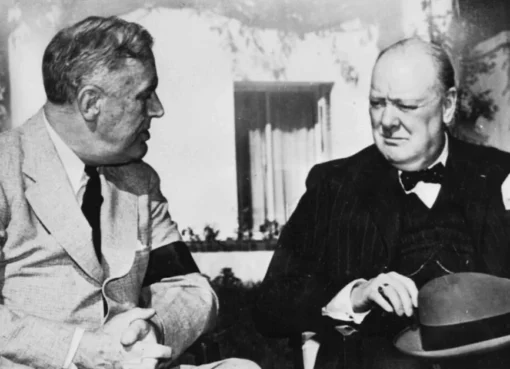
Casablanca, French Morocco – January 1943 – As the brutal winter of 1943 gripped Europe, the strategic landscape of World War II was at a critical juncture. From January 14 to 24, 1943, the clandestin