Unveiling the Seven-Century Struggle: Adrian Goldsworthy’s "Rome and Persia" and the Imperative of Accessible History
FOR IMMEDIATE RELEASE
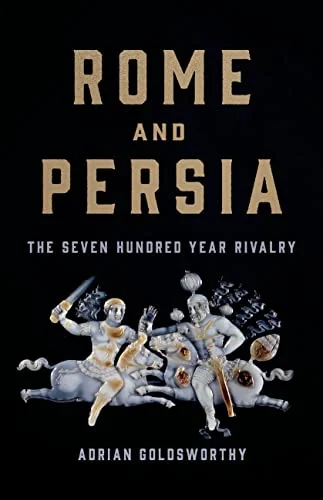
LONDON, UK – [Current Date] – The World History Encyclopedia, a leading non-profit organization dedicated to providing free, high-quality historical content, is proud to feature a compelling review of Adrian Goldsworthy’s latest magnum opus, Rome and Persia: The Seven Hundred Year Rivalry. This meticulously researched volume, lauded for its sweeping narrative and even-handed approach, offers an unprecedented examination of the protracted geopolitical dance between two of antiquity’s most formidable empires. The review arrives as the World History Encyclopedia continues its vital "Server Costs Fundraiser 2026," appealing to its global audience for support in sustaining its extensive digital archives and educational initiatives.
The ongoing fundraiser underscores the significant operational costs involved in hosting a vast repository of carefully vetted historical information. With an annual server cost of $20,000, the organization has currently raised $9,391, highlighting the community’s commitment to open access knowledge. The publication of reviews like that of Goldsworthy’s Rome and Persia exemplifies the World History Encyclopedia’s mission to curate and disseminate expert historical analysis, making complex scholarship digestible and available to a broad international readership.
A Monumental Undertaking: Adrian Goldsworthy’s Scholarly Journey
Adrian Goldsworthy, a name synonymous with rigorous classical scholarship, once again demonstrates his mastery of ancient history with Rome and Persia: The Seven Hundred Year Rivalry. Holding a DPhil in ancient history from Oxford, Goldsworthy has dedicated the past three decades to an impressive output of both academic and historical fiction works, solidifying his reputation as one of the most consistently prolific and respected classical antiquarians of our time. His previous contributions have significantly enriched our understanding of the Roman world, from military campaigns to biographical studies of its emperors.
With Rome and Persia, Goldsworthy ventures into a complex and often overlooked geopolitical arena, tracing the intricate contact and conflict between Rome and its eastern counterpart over a span of nearly a thousand years, focusing specifically on the intense rivalry between roughly 100 BCE and 700 CE. His ability to synthesize vast amounts of information, coupled with a nuanced understanding of ancient societies, positions this work as a crucial contribution to the study of imperial interactions. His commitment to drawing on sources from both empires, with an admirable striving for impartiality, sets a high standard for comparative historical analysis. The book is presented as a medium-difficulty read for the general public, published by Basic Books in 2023, and spans a substantial 592 pages, reflecting the depth of its inquiry.
The Enduring Rivalry: A Chronological Odyssey
Goldsworthy’s narrative embarks on a chronological journey, meticulously charting the ebb and flow of power, diplomacy, and warfare between Rome and Persia. The book’s scope is ambitious, commencing with the initial, albeit sporadic, interactions between the nascent Roman Republic (circa 509 – 27 BCE) and the twilight years of the Seleucid Empire (312 – 63 BCE). The Seleucid Empire, a formidable Hellenistic successor state to Alexander the Great’s brief but expansive Macedonian Empire, represented the westernmost frontier of Persian cultural and political influence before the rise of later, more direct, Persian powers. This early period sets the stage for the persistent eastward expansion of Roman ambition and the inherent tension with established Eastern empires.
As the narrative progresses, Goldsworthy seamlessly transitions to the direct confrontation between the mighty Roman Empire and the two great Persian dynasties that successively dominated the East: the Parthians (247 BCE – 224 CE) and the Sasanians (224-651 CE). The Parthian Empire, renowned for its formidable cavalry and unique blend of Hellenistic and Persian traditions, frequently challenged Roman legions, inflicting significant defeats and establishing a precedent for enduring resistance. The Sasanian Empire, which supplanted the Parthians, ushered in a new era of Persian resurgence, often presenting an even more formidable and centralized challenge to Roman authority. The Sasanians viewed themselves as the inheritors of the ancient Achaemenid Persian Empire, imbuing their conflicts with Rome with a strong ideological dimension, frequently framing them as a struggle for global dominion.
What Goldsworthy masterfully illuminates throughout this nearly 700-year rivalry is the compelling duality between constancy and change. While the specific dynasties and political configurations on both sides evolved dramatically over the centuries—from Republican Rome to the Principate and eventually the late Roman Empire, and from the Seleucids to the Parthians and Sasanians—the fundamental nature of the conflict remained remarkably consistent. It was a struggle for geopolitical dominance, control of vital trade routes, buffer states, and regional prestige. Despite countless battles, treaties, and shifting borders, no clear victor ever truly emerged, leaving an indelible mark on the historical trajectory of both empires until the advent of new global forces reshaped the ancient world.
Beyond the Battlefield: Unpacking Goldsworthy’s Methodology
A significant strength of Rome and Persia, as highlighted in the review by Tommy Sandford, lies in Goldsworthy’s meticulous and transparent methodology. He undertakes the challenging task of drawing on sources from both empires, striving for as much evenness as the surviving records allow. This commitment to a balanced perspective is crucial, particularly given the inherent biases and discrepancies in historical documentation from the ancient world. Goldsworthy’s impartiality is not merely stated; it is demonstrably woven into the fabric of his analysis, ensuring that respect for this complex period in history is maintained without favoritism.
The reviewer, Tommy Sandford, an independent historian with a B.A. (Hons) in History and a B.A. in English from Cornell University, alongside minors in Classics, Medieval Studies, Near Eastern Studies, and Global Asian Studies, brings a robust academic background to his assessment. Sandford particularly commends Goldsworthy for openly addressing the considerable discrepancy in available source materials. While Roman sources largely stem from extensive primary accounts by authors such as Tacitus, Suetonius, Cassius Dio, and Velleius Paterculus, the Persian components often rely on secondary sources, such as Parvaneh Pourshariati’s The Decline and Fall of the Sasanian Empire (2008). Goldsworthy’s candid acknowledgement of this imbalance, and his careful navigation of it, underscores his scholarly integrity. He does not shy away from detailing when his analysis is directly rooted in primary evidence versus when he is extrapolating due to the relative dearth of concrete data, a vital distinction for serious historical inquiry.
Beyond textual sources, Goldsworthy expertly integrates a rich array of supplementary materials, notably maps. These visual aids are integral to understanding the dynamic and ever-shifting borders and spheres of influence between the two colossal entities. They provide a crucial spatial context that complements the chronological narrative, allowing readers to grasp the geographical implications of diplomatic maneuvering and military campaigns. By striking a judicious balance between interpretation and transliteration, Goldsworthy ensures that both the "what happened" and the "why it mattered" are presented with equal rigor and respect for both Roman and Persian perspectives.
The Duality of History: Constancy, Change, and Hindsight
One of the most profound contributions of Goldsworthy’s Rome and Persia is its incisive exploration of the "duality between constancy and change." This theme underpins the entire narrative, demonstrating how, despite the vast temporal span and the evolution of political actors, certain patterns of imperial interaction and conflict persisted. The rivalry, while featuring different emperors, kings, and battlefields, retained a fundamental character defined by strategic competition and a reluctance to concede dominance.

Equally compelling is Goldsworthy’s emphasis on the "benefit of hindsight." He dedicates a significant portion of the book to cautioning readers against the trap of historical determinism, stressing that events did not unfold with an inherent predictability that might seem obvious in retrospect. This critical methodological point challenges readers to shed modern perspectives and appreciate the contingency of historical events. Goldsworthy eloquently articulates this notion: "Meagre though our sources are, there is little sense that what happened was inevitable, still less that it could have been predicted by anyone. Human beings—and empires—tend to live in the here and now. They assume that things are as they should be, and perhaps always will be, in spite of the lessons of history" (p. 225).
This quote serves as a powerful reminder that ancient leaders, diplomats, and soldiers operated within their immediate contexts, often lacking the broader perspective that historians now possess. Their decisions, triumphs, and failures were products of their contemporary realities, not predetermined outcomes. By highlighting this, Goldsworthy not only enhances the reader’s understanding of the specific rivalry but also offers a valuable lesson in historical empathy and the complexities of human agency within grand historical narratives. It encourages a more nuanced appreciation of the choices made by historical figures, devoid of anachronistic judgments.
A Comparative Masterpiece: Setting Goldsworthy Apart
The field of ancient history is rich with scholarship, and Goldsworthy’s work stands out through its distinct comparative lens. The reviewer thoughtfully positions Rome and Persia within the broader context of contemporary historical writing. While works such as Mary Beard’s Emperor of Rome (2023) and Tom Holland’s In the Shadow of the Sword (2012) offer remarkable individual analyses of the Roman and early Islamic empires respectively, often acknowledging their neighbors, Goldsworthy’s unique contribution lies in its comparative nature.
Unlike studies that focus primarily on one empire and its external relations, Goldsworthy’s project is built on the simultaneous and intertwined narratives of both Rome and Persia. This approach allows for a deeper understanding of how each empire shaped the other, not merely through direct conflict but also through cultural exchange, diplomatic strategies, and shared geopolitical challenges. The review draws a compelling parallel between Goldsworthy’s work and Eric H. Cline’s acclaimed "Late Bronze Age" duology, 1177 B.C. (2014). Despite being set in vastly different eras, both Cline and Goldsworthy excel at weaving together multiple threads of distinct civilizations to present a holistic, interconnected historical tapestry. This comparative methodology elevates Goldsworthy’s book from a mere chronicle of events to a profound exploration of inter-imperial dynamics, offering insights into the universal patterns of power, rivalry, and coexistence between great civilizations. It provides a model for future scholarship aiming to transcend national or imperial boundaries in historical analysis.
The Verdict: Teachability, Pleasure, and Historical Insight
Tommy Sandford’s review concludes with an emphatic endorsement of Rome and Persia, underscoring its dual strengths of "teachability and pleasurability." Goldsworthy’s ability to articulate complex historical processes with clarity and engaging prose ensures that the book is not only informative but also genuinely enjoyable to read, appealing to both seasoned scholars and enthusiastic amateurs.
Goldsworthy’s ultimate findings, that the seven-century rivalry between Rome and Persia did not appear to be a major source of inherent weakness for either empire, nor did it conclusively benefit them, represent a crucial re-evaluation of long-held assumptions. This conclusion, supported by "well-established reasoning and clearly articulated prose," is presented with conviction and persuasiveness. The book’s capacity to challenge preconceptions while offering fresh perspectives is a testament to its scholarly rigor and accessible presentation.
For anyone with a serious interest in Roman or Persian imperial history, Goldsworthy’s Rome and Persia is unequivocally recommended. It offers a comprehensive, balanced, and insightful narrative that significantly enriches our understanding of this pivotal period in world history. The book serves as a vital resource for appreciating the complexities of ancient geopolitics and the enduring legacy of these two titans of antiquity. Its detailed exploration of cultural, political, and military interactions provides a robust foundation for further study and reflection.
Supporting Scholarship and Sustaining Knowledge: The World History Encyclopedia’s Mission
The review of Adrian Goldsworthy’s Rome and Persia is more than just an academic appraisal; it is an example of the World History Encyclopedia’s broader commitment to fostering historical understanding and making quality scholarship accessible to all. As a non-profit organization, the World History Encyclopedia publishes free history content that has been carefully researched and reviewed by experts. This mission requires continuous support from its global community of readers and enthusiasts.
The "Server Costs Fundraiser 2026" is a direct appeal to this community. The $20,000 annual cost to maintain the servers that host this invaluable resource is a tangible measure of the financial commitment required to provide free, open-access historical content. With $9,391 already raised, the momentum is positive, but continued contributions are essential. Readers are encouraged to consider donating at www.worldhistory.org/donate/ to help bridge the remaining gap. Furthermore, by purchasing books through the World History Encyclopedia’s website, such as Rome and Persia: The Seven Hundred Year Rivalry, readers indirectly support the organization, as it operates as an Amazon Associate and earns a commission on qualifying book purchases.
For those who wish to go a step further, becoming a supporting member at www.worldhistory.org/membership/ not only helps sustain the encyclopedia’s work but also removes promotional messages from printouts, offering an enhanced experience. The ability to cite works using APA, Chicago, or MLA styles, as provided on the website, further underscores its utility as a reputable academic resource. By championing works like Goldsworthy’s and providing a platform for their dissemination, the World History Encyclopedia ensures that the lessons and narratives of the past remain vibrant, accessible, and critically examined for present and future generations.
###