Rhea Seehorn Unpacks Pluribus’s Existential Dilemmas and Teases Season 2’s Dark Horizon
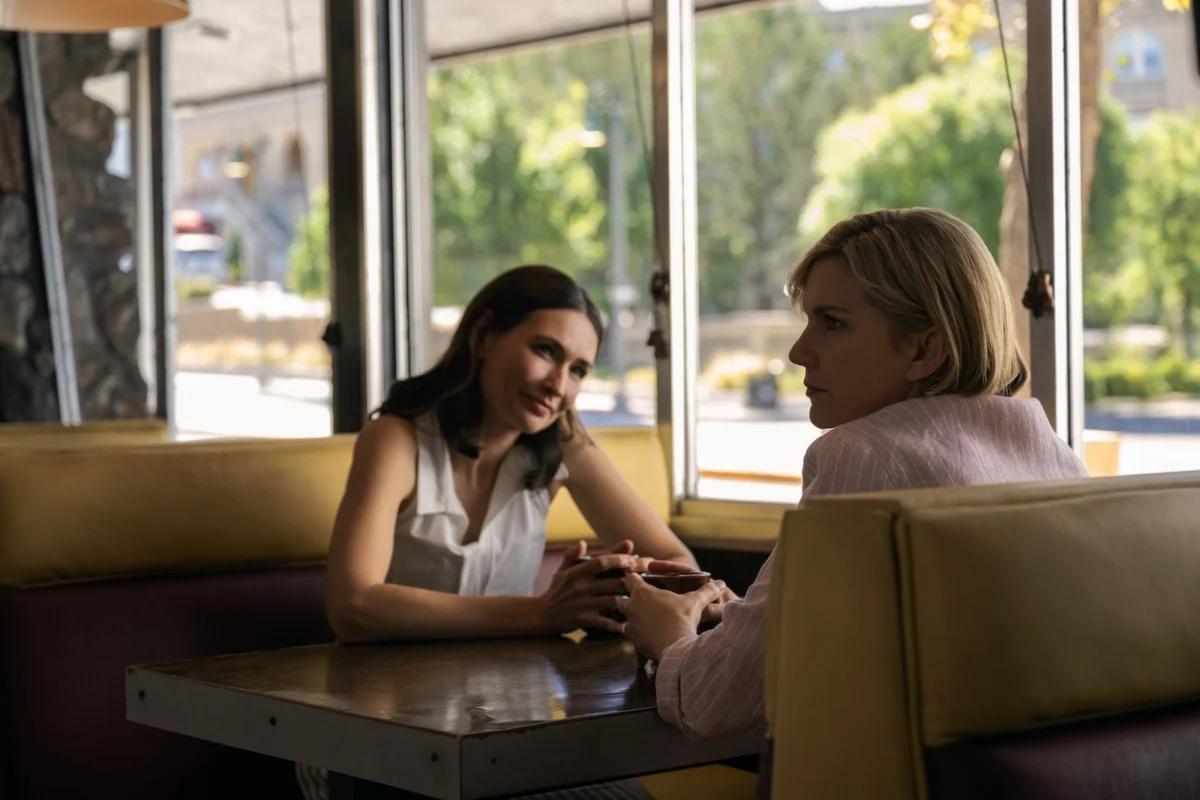
Los Angeles, CA – The critically acclaimed sci-fi drama Pluribus, from the visionary mind of Vince Gilligan, left audiences grappling with profound questions after its riveting first season finale. Topping the list for many eager fans: the elusive release date for Season 2. While Emmy-nominated star Rhea Seehorn remains tight-lipped on that crucial detail, a recent interview with Deadline has offered a tantalizing glimpse into the show’s intricate character dynamics and the philosophical quandaries set to define its future. Seehorn, known for her nuanced performances, provided a thoughtful breakdown of Pluribus‘s inaugural season and hinted at the morally complex journey awaiting viewers. Her insights particularly focused on the fraught relationship between her character, Carol, and the enigmatic Zosia, revealing a perspective that challenges conventional notions of love and agency within the show’s unique collective consciousness.
The interview underscores the show’s commitment to exploring the darker, more unsettling aspects of human connection when confronted with a world-altering paradigm. For those still clinging to the hope of a simple reconciliation between Zosia and Carol, Seehorn’s candid remarks suggest a significant recalibration of expectations may be in order, questioning the very definition of a "healthy" relationship in the face of existential threats and profound violations of personal autonomy.
The Genesis of Pluribus: A Chronological Overview
Vince Gilligan, the creative force behind television titans Breaking Bad and Better Call Saul, ventured into the realm of science fiction with Pluribus, a move that immediately piqued the interest of critics and audiences alike. Known for his meticulous character development, morally ambiguous narratives, and slow-burn tension, Gilligan’s foray into sci-fi was met with high expectations, particularly with Rhea Seehorn, a celebrated alumna of Better Call Saul, in a leading role. Her casting brought an immediate gravitas and a promise of the intricate psychological drama Gilligan’s work is known for.
Pluribus debuted to critical acclaim, lauded for its innovative take on collective consciousness and its chilling exploration of identity, free will, and the meaning of humanity. The series quickly established itself as a thought-provoking entry in the contemporary sci-fi landscape, drawing comparisons to classic genre touchstones while forging its own distinct path. Season 1 meticulously built a world where individual agency clashed with the seductive — and terrifying — promise of unity. The narrative culminated in a shocking finale that left protagonist Carol facing an impossible choice, holding the literal power of an atom bomb, and reeling from the ultimate betrayal by Zosia, a member of the collective she had grown to care for.
Seehorn’s recent interview served as the first significant "official response" since the finale, providing an invaluable interpretive lens from one of the show’s central figures. It arrived amidst fervent fan speculation, offering much-needed, albeit challenging, context to the show’s most controversial relationship.
Unraveling Zosia and Carol: Love, Manipulation, and the Hive Mind
At the heart of Pluribus‘s narrative is the complex and increasingly disturbing relationship between Carol and Zosia. Seehorn’s interview delved deep into this dynamic, revealing the stark realities that underpin what some fans perceive as a romantic pairing.
The "Red Flag" Heard ‘Round the Fandom
Rhea Seehorn expressed a degree of surprise at the passionate segment of the fanbase hoping for a conventional reunion between Zosia and Carol. "I’m a little surprised by the number of people that have told me, ‘I hope Zosia…’ There’s a lot of people that love Zosia and Carol together, which I love as well and I’m so thrilled about that," Seehorn remarked. However, her follow-up question to these hopeful viewers cut straight to the core of the show’s ethical quandaries: "But when they say, ‘I hope that they get back together and stay together,’ I always say, ‘Do you mean if Zosia becomes a real person and not part of the hive mind?’ They’re like, ‘No, no, no, just as they are.’ I’m like, ‘Did you see the finale?’"
This exchange highlights the profound disconnect between audience desire for romantic resolution and the chilling reality presented by the show. The "finale" Seehorn refers to, of course, involves Zosia’s egregious act of stealing Carol’s frozen eggs, with the explicit intent of using them to convert Carol into a member of the collective against her will. This isn’t merely a relationship disagreement; it’s an act of profound violation, a blatant disregard for Carol’s bodily autonomy and individual consciousness.
Seehorn minced no words in her assessment: "I feel like there was a big line crossed with the stealing of the eggs thing. That’s just me. I feel like it’s a big flag." Indeed, in any conventional human relationship, such an act would transcend the typical "red flag" and move squarely into the territory of unforgivable psychological and physical abuse. The show deliberately pushes these boundaries, forcing viewers to confront what "love" truly means when one party fundamentally seeks to erase the other’s independent existence. The humorous, yet telling, reference to Reddit’s "Am I the Asshole?" subreddit underscores just how clear-cut this ethical transgression is, even within a fantastical sci-fi context. It invites the audience to apply real-world moral frameworks to extraordinary circumstances, exposing the deep discomfort that arises when perceived affection is inextricably linked with forced assimilation. The question is not whether Zosia is "the asshole," but rather, how can one reconcile such an act with any notion of a consensual, loving relationship?
Vince Gilligan’s Parental Paradox
Adding another layer of complexity to Zosia’s motivations, Seehorn revealed an intriguing perspective shared by Vince Gilligan himself. Gilligan suggested that Zosia possesses a kind of "parental love" for Carol, which, paradoxically, drives her manipulative actions. This comparison is startling yet sheds significant light on the collective’s ideology. As Seehorn elaborated, "Because Zosia believes she is doing what is best, Seehorn doesn’t believe that Carol can simply ask her to stop."
This concept resonates deeply with classic dystopian literature and philosophical debates on free will versus perceived benevolence. Is a parent who forces a child to eat vegetables or wear a coat, believing it’s for their ultimate good, truly manipulative? Most would argue it’s a necessary act of care. However, when applied to an adult’s fundamental right to self-determination, especially concerning their very consciousness, the analogy becomes chilling. Zosia, representing the collective, views Carol’s individuality as a form of suffering or incompleteness, and assimilation as the ultimate form of betterment or salvation.
"I don’t think I could just demand the eggs back, and I did ask about that, because their imperative is to infect — the coarse way to say it," Seehorn explained, encapsulating the core conflict. "That’s the argument that Carol keeps having with Zosia. ‘If you’re saying I have agency and you love me, then don’t do this.’ She’s saying, ‘It’s because I love you that I have to.’"
This exchange is the thematic crux of Pluribus. It explores the terrifying possibility that true love, from the perspective of an alien or radically different intelligence, might manifest as the forced eradication of the beloved’s independent self. Gilligan’s "parental love" theory elevates Zosia beyond a simple villain, portraying her as a being operating under a completely different moral imperative, one that prioritizes a collective ideal over individual autonomy. This makes Zosia’s actions not malevolent in a human sense, but rather a manifestation of a profoundly alien, yet internally consistent, form of care. The show, therefore, forces us to question our anthropocentric definitions of love and morality.
Carol’s Lingering Affection: A Quest for Belief?
Despite the overwhelming evidence of Zosia’s manipulative and invasive "love," Seehorn believes Carol harbors genuine feelings for Zosia. However, these feelings are not born of a reciprocal, healthy connection, but rather from a "desire to believe in something that isn’t really there." This insight offers a poignant look into Carol’s psychological state and her profound loneliness.
"She knows this is not a person with agency," Seehorn states, referring to Carol’s understanding of Zosia’s nature as part of a hive mind. "You love me as much as you love that dog over there. You know what I mean? And you see her freak out when she’s saying, ‘I love you the same as Manousos.’ And when she starts asking about her partner and being jealous, what would be the point of jealousy at that point? She loves everybody."
This highlights Carol’s deep-seated need for connection and individuality, even in the face of Zosia’s universal, impersonal "love." The collective’s love is indiscriminate, valuing all life equally as potential components of itself. For Carol, a human being wired for specific, intimate attachments, this universal love is inherently dehumanizing. Her jealousy is a desperate attempt to assert her unique value, to carve out a singular space in Zosia’s affections, even when she intellectually understands its futility. The moment "something snapped in her, obviously at the end," signifies Carol’s breaking point – the realization that her desire for genuine, reciprocal love from Zosia is fundamentally incompatible with Zosia’s very being. This emotional rupture sets the stage for the dramatic cliffhanger.
The Atom Bomb and the Future of Agency: Implications for Season 2
The first season of Pluribus concluded with Carol in possession of an atom bomb, a dramatic and terrifying escalation of her struggle against the collective. This ultimate cliffhanger left audiences breathless and wondering about Carol’s ultimate intentions.
The Ultimate Cliffhanger
When asked about Carol’s plans for the atom bomb, Seehorn candidly admitted, "I also don’t know what Carol will do with the atom bomb." This shared uncertainty between actor and audience further amplifies the tension and unpredictability of Season 2. However, Seehorn did offer crucial insight into Carol’s character, noting her "tendency to make rash decisions" and wondering if asking for the bomb was merely her way of "showing how hurt she is."
This interpretation opens a spectrum of possibilities for Carol’s future actions. Is the bomb a tool for genuine self-defense, a last resort against an encroaching assimilation? Or is it a desperate, emotionally charged gesture, a cry for attention and acknowledgement of her profound pain and betrayal? If it’s the latter, the implications are terrifying, suggesting Carol might be capable of self-destruction or an act of indiscriminate violence, driven by grief and a shattered sense of self.
The acquisition of such a weapon elevates the stakes beyond individual survival; it becomes a symbolic representation of the ultimate choice between individual annihilation and the preservation of agency. Carol, a lone human against a collective, now wields power on a scale that could devastate both herself and the very entity that seeks to consume her. This pivotal moment positions Season 2 to explore themes of desperate resistance, the ethics of war, and the profound psychological toll of fighting for one’s own identity. Will Carol use the bomb to bargain, to threaten, or to make a statement? Her decision will undoubtedly shape the philosophical core of the series, delving into whether individual freedom is worth any price, even global devastation.
Beyond the Interview: Pluribus‘s Place in Sci-Fi Lore
Pluribus is not merely an entertaining sci-fi show; it is a profound philosophical inquiry into what it means to be human in an increasingly interconnected and complex universe. The series positions itself within a rich tradition of science fiction that explores themes of collective consciousness, identity, and the perils of assimilation.
Comparisons to works like Jack Finney’s Invasion of the Body Snatchers, with its chilling portrayal of a gradual, insidious loss of individuality, are apt. However, Pluribus distinguishes itself by delving deeper into the motivation behind the collective’s actions, moving beyond simple conquest to explore a perceived benevolent imperative. This nuanced approach aligns it with the more philosophical leanings of Star Trek‘s Borg, who famously declare, "Resistance is futile," yet genuinely believe they are improving life through assimilation. Even more so, it echoes the existential dilemmas posed by works such as The Matrix, where the illusion of individual choice is maintained within a larger, controlled reality.
Vince Gilligan’s distinct authorial voice—his unwavering focus on character psychology, moral ambiguity, and the slow unraveling of human choices under pressure—sets Pluribus apart. Unlike many action-oriented sci-fi narratives, Pluribus thrives on the internal conflicts of its characters, particularly Carol. Rhea Seehorn’s performance is central to this success. Her ability to convey deep emotional turmoil, intellectual struggle, and fierce determination grounds the speculative elements of the show in relatable human experience. Her portrayal of Carol’s loneliness, her desperate quest for genuine connection, and her ultimate breaking point imbues the character with a tragic heroism that resonates deeply with audiences.
The show, therefore, is not just about a hive mind or an atom bomb; it is about the agonizing choices individuals make when their very essence is under threat. It asks fundamental questions: Can true love exist without true agency? Is a "better" existence worth the cost of individuality? And when pushed to the brink, what extreme measures might one take to reclaim their selfhood?
Conclusion
Rhea Seehorn’s insights into Pluribus Season 1 have not only fueled anticipation for its follow-up but have also solidified the show’s standing as a challenging and thought-provoking piece of contemporary science fiction. While the question of a Season 2 release date remains unanswered, the discussion around Zosia and Carol’s fractured relationship, Gilligan’s "parental love" concept, and Carol’s terrifying possession of an atom bomb provide ample material for speculation and analysis.
Pluribus continues to probe the intricate dance between love and control, individual autonomy and collective unity, forcing its audience to confront uncomfortable truths about what it truly means to exist. As Carol stands on the precipice of an unimaginable decision, the implications of her actions, driven by a profound sense of hurt and a desperate fight for agency, promise a second season that will be as emotionally resonant as it is existentially terrifying. The questions raised by Seehorn’s interview confirm that Pluribus is not merely entertainment; it is an ongoing, vital conversation about the very nature of humanity in an evolving universe.