Rogue Human Sabotages Interstellar Corporation to Protect Alien Species on Resource-Rich Planet Endymion
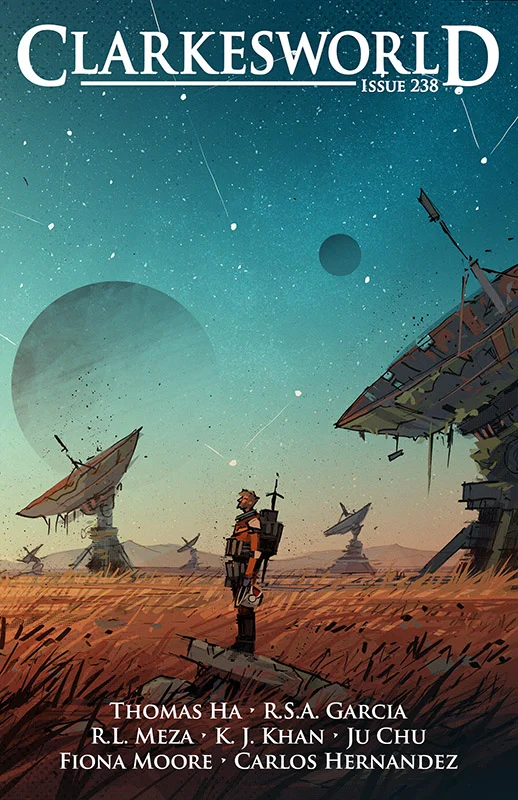
Endymion, Far Reaches of the Galaxy – A lone human pollen collector, isolated on the verdant, alien world of Endymion, has reportedly made a profound discovery about the planet’s indigenous sentient species and subsequently chosen to betray his corporate employer, Wyland Inc., in an unprecedented act of interstellar defiance. Isaac, a low-tier employee tasked with harvesting a highly valuable anti-aging pollen, has reportedly halted his collection efforts and is now actively seeking to collaborate with the enigmatic "potoos" — homines raniformes in corporate parlance — to nullify the pollen’s effect on humans, thereby crippling Wyland’s lucrative operations.
This extraordinary turn of events comes after Isaac’s prolonged immersion in Endymion’s unique ecosystem and a deep, unexpected bond formed with a potoo he named Dave. His discoveries paint a stark picture of corporate exploitation threatening an entire alien civilization, whose very life cycle is intertwined with the pollen Wyland seeks to commodify. The implications of Isaac’s actions could send shockwaves through the interstellar community, raising critical questions about xenological ethics, corporate responsibility, and the definition of sentience.
Chronological Account of a Planetary Awakening
The Lure of Endymion’s Luminescent Pollen
Isaac’s journey to Endymion began like many others: a desperate escape from a society that deemed him "unsuitable." Employed by the colossal Wyland Corporation, Isaac was sent on a solo mission to collect the planet’s bioluminescent blue pollen. This pollen, once refined, yields an extract capable of pausing the human aging process for six months per dose, selling for an astronomical $94,000 per swallow. Wyland’s interest in Endymion was purely commercial, viewing the planet as a vast, untapped resource.
Endymion itself is a world of breathtaking and daunting scale. Its old-growth forests boast trees that dwarf terrestrial counterparts, forming a layered canopy that divides the ecosystem into distinct zones. The lower canopy, where Isaac operated, consisted of herbaceous giants with enormous leaves, while the true tree canopy unfurled miles overhead like green cirrus clouds. Between these layers, strange, often predatory, megafauna floated and flew, casting ominous shadows. To navigate this potentially perilous environment, Isaac relied on a specialized camp lantern designed to deter predators and a mandatory neural implant providing Wyland with a live feed of his movements and observations.
However, a month into his mission, Isaac’s implant catastrophically malfunctioned after what felt like a lightning strike. With his internal camera, AI communications (ARGONAUT), and GPS fried, he was plunged into a profound, isolating silence. Attempts to reach a Wyland checkpoint proved futile, as it too had been rendered inoperable, suggesting a wider system failure – perhaps a solar flare or sabotage. Left truly alone, Isaac was forced to rely on a physical map and his own wits, the prospect of completing his route completely unassisted looming large.
First Contact: An Unlikely Friendship Forged in Isolation
It was in this state of acute isolation, five days after his technological failure, that Isaac encountered Dave. The initial meeting was jarring; a singsong voice chirped "Hello?" from the jungle dark, startling Isaac into a strangled scream. From the shadows emerged a creature of long, froggish shape, with a head disproportionately large for its spindly body, a characteristic attributed to Endymion’s lighter gravity. These beings, scientifically designated homines raniformes by Wyland but affectionately known as "potoos" by ground workers, quickly revealed a startling intelligence and an insatiable curiosity.
Dave, as Isaac named him, was unlike any alien Isaac had been warned about. Far from the "social head lice" his coworkers described, Dave was a conversationalist, absorbing human language with remarkable speed and genuine interest. He inquired about Isaac’s tent, jacket, shoelaces, and even his facial hair. This interaction offered Isaac a much-needed respite from the "ringing, empty silence" of his own head, a stark contrast to the programmed chatter of his defunct AI, ARGONAUT.
A poignant exchange about a borrowed ushanka hat and a gifted bucket hat underscored the potoos’ unique cultural practices and their lack of a material economy. Dave’s profound reverence for simple human gestures and objects, and his earnest desire to understand concepts like "laughter" and "money," began to chip away at Isaac’s preconceived notions, fostering a genuine connection that transcended species.
Unveiling Endymion’s Profound Secrets
As their journey continued, Dave became Isaac’s "Rosetta stone," offering context and insight into the bewildering beauty of Endymion. Isaac’s perception of the planet softened, transforming from a source of fear to a realm of wonder. It was during these shared moments that the true nature of the potoos and their world began to unfold.
One afternoon, they encountered a cluster of translucent green gourds, warm to the touch. Dave revealed these were not merely pods, but the "fetal state" of his species. Potoos, at the end of their approximately four-month lifespan, lie down, and a pod forms around them, recycling their matter into a "new person." This new individual inherits the knowledge of their ancestors but is a distinct entity, a profound form of reincarnation.
The most critical revelation, however, concerned the very object of Wyland’s greed: the pollen. Dave explained that the potoos are the "animalia sex" of their species, while the towering, pollen-producing trees represent the "plantae sex." The potoos’ constant migration facilitates their reproduction, as they absorb DNA particles from the trees they pass and shed embedded particles from their skin. The glowing blue pollen, so coveted by Wyland, was not merely a resource; it was the lifeblood of the potoo species, essential for their reproductive cycle. This discovery horrified Isaac, leading him to immediately cease his pollen collection, fearing he was irreparably harming Dave’s people.
Adding another layer of complexity, Isaac later discovered the potoos’ ability to shapeshift. Dave, initially hesitant, revealed his true form: a thirty-foot-tall, slender being with iridescent ebony skin that seemed to contain rolling auroras, beak-like features, six limbs, and gossamer orange "wings" that defied earthly descriptions. This awe-inspiring form, however, was deliberately concealed from humans. Potoos, understanding the potential for fear, adopted their smaller, froggish appearance specifically for human comfort, an act of profound empathy and strategic diplomacy.
A Brief Life, A Profound Loss, A New Purpose
Dave’s lifespan, a mere four months, meant their friendship was destined to be fleeting. Two months into their shared journey, Isaac woke to find Dave’s health rapidly deteriorating. His skin grayed, his movements became sluggish, and his eyes glazed over. Despite Isaac’s desperate attempts to offer human medicine, Dave explained it was simply "the end of its lifespan," not an illness.
Isaac was devastated, his stoic facade crumbling into uncontrolled sobs. He mourned the brevity of their connection, the loss of a friend he had only just found. Dave, however, faced his end with serene contentment, reminding Isaac, "My life has been so nice, every day of it. I’m very pleased with it." In a final, poignant exchange, Dave offered a profound perspective on human longevity, shivering at the thought of "years and years and years," calling it "a hard lot you’ve been given." He reassured Isaac, "No, Eye-zik—we were lifelong friends."
As Dave’s life ebbed, his skin reverted to its natural ebony, the internal auroras fading. He curled into a tight ball, and the orange light of his being extinguished. Within minutes, the green secretion began, and the outer shell dropped away, revealing the smooth, silicone egg-pod. Isaac, though heartbroken, left Dave’s gifted bucket hat on the pod, a silent farewell, before continuing his journey. He couldn’t bear to meet a new potoo that was not his Dave.
Supporting Data and Context
Wyland’s Immortality Trade: A Moral Calculus
Wyland Corporation’s relentless pursuit of the Endymion pollen extract highlights a disturbing moral calculus. The promise of immortality, even if temporary and costly, drives a multi-trillion-dollar industry. At $94,000 per dose for six months of paused aging, the pollen extract represents immense profit, justifying Wyland’s minimal investment in employee welfare (as evidenced by Isaac’s faulty equipment and isolation protocols) and absolute disregard for the planet’s indigenous life. The corporate directive, "Wyland was there for the pollen," explicitly dismisses any other biological or ethical considerations.
Potoo Biology: A Paradigm Shift in Life and Sentience
The potoos represent a remarkable and deeply complex form of alien life. Their short, four-month adult lifespan is counterbalanced by a unique reproductive cycle that involves the recycling of biological matter into a new individual, inheriting collective knowledge. This form of "reincarnation" ensures the continuity of their species, not through individual immortality, but through a shared wisdom passed down through generations. Their migration, a fundamental part of their existence, is intrinsically linked to the planetary pollen, underscoring the delicate balance Wyland’s extraction threatens.
Their ability to absorb language almost instantaneously through a neural tendril, and their conscious choice to adopt a less intimidating form for human interaction, speaks volumes about their advanced intelligence, adaptability, and peaceful nature. They possess no concept of "money" or material "need," their society seemingly based on observation, migration, and the pursuit of knowledge. This stark contrast with human motivations sets the stage for inevitable conflict.
Isaac’s Transformation: From Outcast to Protector
Isaac’s personal history is crucial to understanding his radical decision. Labelled "unsuitable" due to perceived low IQ and learning disabilities, and rejected by his home city-sphere, he was an outcast, forced into an off-world contract with Wyland. His job was a last resort, a path he signed up for "almost without reading." This background of feeling worthless and without purpose makes his transformation all the more powerful.
His implant’s failure, initially a source of panic, inadvertently freed him from constant corporate surveillance and the "immersive game" he pretended Endymion was. His friendship with Dave, the genuine curiosity and acceptance he received, and the profound revelations about potoo life, provided him with a sense of purpose he had never known. From a disposable employee, Isaac has become an informed and committed defender of an entire alien species, a testament to the transformative power of empathy and shared experience.
Official Responses and Anticipated Reactions
Currently, there are no direct official responses to Isaac’s actions, as he remains isolated and his plan has only just begun. However, Wyland Inc.’s established protocols and motivations allow for strong predictions.
Wyland’s Corporate Stance: Profit Over Planet
Wyland’s prior statements regarding Endymion’s safety — "Not to our knowledge" being hazardous, and claims of "employee safety" being a "first priority" — are revealed as corporate platitudes, thinly veiling their singular focus on profit. The company has shown no interest in the potoos themselves, viewing them as mere "bonus sightseeing" rather than sentient inhabitants of a resource they are exploiting.
Upon discovery of Isaac’s sabotage, Wyland’s response is likely to be swift and severe. Given the multi-million-dollar value of the pollen, Isaac will undoubtedly be branded a rogue agent, a saboteur, and a traitor. Wyland will likely deploy search and retrieval teams, not for Isaac’s well-being, but to secure their valuable assets and prevent further disruption. They will likely attempt to discredit Isaac, citing his "unsuitable" background and implant malfunction as evidence of instability, rather than acknowledging the ethical implications of their own practices. Legal action, character assassination, and increased security measures to protect their "property" on Endymion are all highly probable.
The Silence of Oversight
The story implicitly highlights a critical gap in interstellar governance: the apparent lack of independent ethical oversight for corporate resource extraction on alien worlds. Isaac’s experience suggests that Wyland operates with near impunity, its contractual agreements heavily weighted in its favor and its activities unmonitored by external bodies concerned with xenological welfare or ecological impact. This absence of checks and balances has allowed Wyland to treat Endymion and its inhabitants purely as means to an end.
Implications and Future Outlook
Isaac’s radical decision carries immense implications, not just for himself and the potoos, but for the broader landscape of interstellar resource management and human-alien relations.
Ecological and Ethical Crisis on Endymion
The most immediate implication is the potential for an ecological and existential crisis for the potoo species. If Wyland’s pollen extraction continues unchecked, it directly threatens the potoos’ unique reproductive cycle, effectively endangering their continued existence. Isaac’s intervention is a desperate attempt to prevent this slow, corporate-driven genocide. His plan to help the potoos nullify the pollen’s effect on humans is a strategic move to render the resource worthless to Wyland, thereby removing the incentive for exploitation.
Redefining Human-Alien Interaction
Isaac’s actions challenge the prevailing anthropocentric model of xenocontact, where alien worlds are primarily viewed through the lens of human utility and profit. His deep empathy and respect for the potoos, exemplified by his willingness to use himself as a "test subject" for pollen nullification, represent a radical shift towards a collaborative, rather than exploitative, approach to alien species. This could set a precedent for future interstellar encounters, forcing humanity to confront its ethical responsibilities towards non-human civilizations.
Corporate Accountability and Interstellar Law
Should Isaac succeed, Wyland Corporation faces significant financial losses and reputational damage. This event could trigger a wider debate about corporate accountability in space, potentially leading to the establishment of stricter interstellar regulations regarding resource extraction, environmental impact assessments, and the protection of indigenous alien life. Isaac’s defiance could become a rallying cry for environmental and xenological rights movements, pushing for a more ethical framework for humanity’s expansion into the cosmos.
Isaac’s Newfound Purpose
For Isaac, the "unsuitable" citizen, this act of rebellion is a profound reclamation of agency and purpose. No longer defined by his academic failures or societal rejection, he has found a cause greater than himself. His internal monologue, recalling his former proctor’s dismissive question, "How do you plan to accomplish anything worthwhile?", underscores his transformation. His whispered retort, "Just watch, Mr. Conrad. Hope you aren’t invested in Wyland stock," signifies his unwavering commitment and newfound strength.
As Isaac extends an invitation to a new, mustard-toned potoo emerging from the underbrush, "Come on over. We’ve got a lot to talk about," it marks the beginning of a potentially pivotal alliance. The fate of Endymion, the potoos, and perhaps even Wyland’s interstellar ambitions, now rests on the shoulders of an unlikely hero and his newfound alien friends.