Ryan Condal Unveils Vision for House of the Dragon’s Climactic Final Season: A "World War II Movie" Approach to the Dance of the Dragons
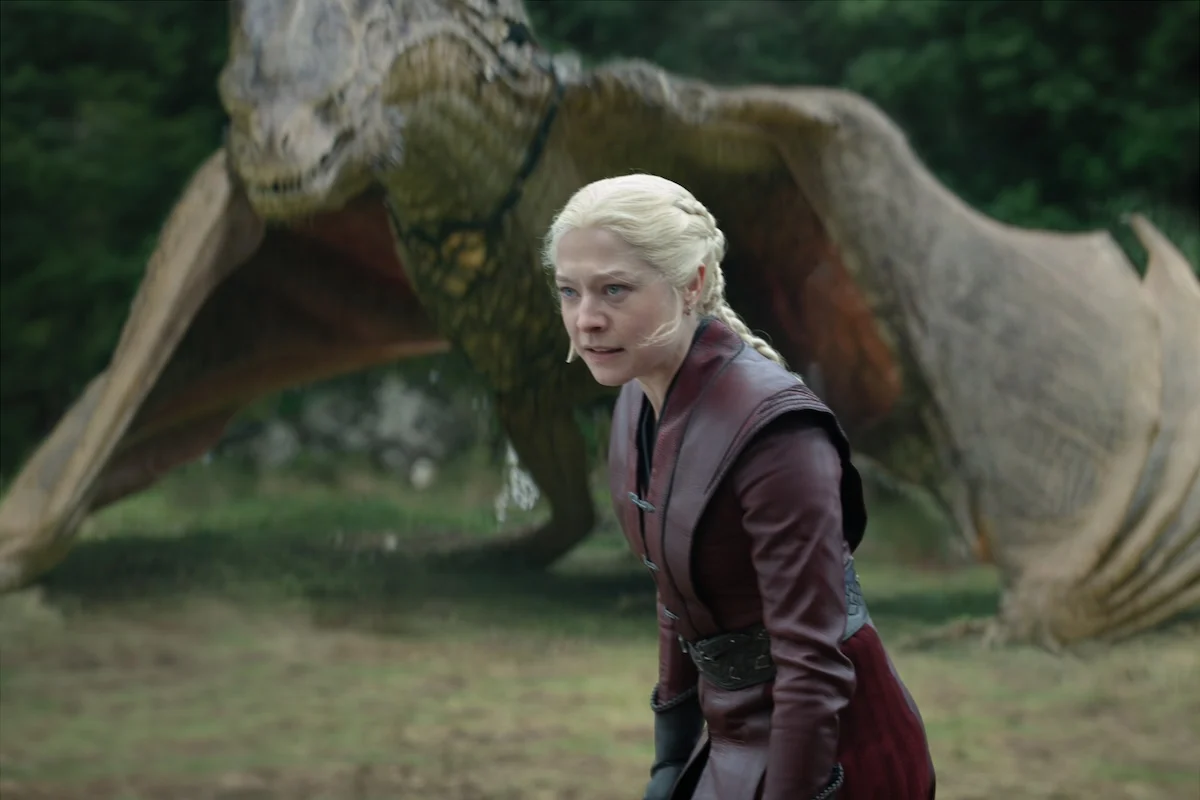
Los Angeles, CA – As the echoes of House of the Dragon‘s third season finale reverberate through the fandom, showrunner Ryan Condal has offered an intriguing glimpse into his creative philosophy for the forthcoming fourth and final season. In a candid interview with Business Insider, Condal, while carefully guarding specific plot details, laid out a compelling vision for "landing the plane" on one of Westeros’ most brutal and pivotal conflicts, the Dance of the Dragons. His approach promises a narrative that is both "satisfying" and "complete," yet acknowledges the relentless march of history, aiming for an ending that is "totally inevitable, but completely surprising." The highly anticipated final season is not expected to grace screens until 2028, setting the stage for a prolonged period of speculation and anticipation among dedicated viewers.
Main Facts: The Curtain Call for the Dance of the Dragons
Ryan Condal, the creative force steering House of the Dragon, has confirmed that the upcoming fourth season will mark the definitive conclusion of the acclaimed HBO fantasy series. With a mere "eight hours – eight chapters" remaining, the stakes for delivering a resonant and impactful finale are exceptionally high, particularly in the wake of the polarizing reception to Game of Thrones‘ own conclusion.
Condal articulated his guiding principle for the series’ ending through a striking analogy: "We’ve talked about this being kind of a World War II movie. There are plenty of World War II movies that exist where you tell the story within this greater war, but the curtain drops at some point in the story, and it’s not necessarily with Japan’s surrender or Hitler dying in the bunker… I think that was the trick. Because Fire & Blood is a decades-spanning history, the question is really more, ‘Where do you drop the curtain on this particular story?’"
This metaphor suggests a deliberate choice to conclude the narrative not at the absolute historical end of the Dance of the Dragons, as chronicled in George R.R. Martin’s Fire & Blood, but rather at a point that provides thematic closure for the series’ central conflict and characters. The objective, as Condal elaborated, is to craft a "satisfying" and "complete" story that nevertheless respects the notion that "history marches on," implying that not every loose end will be neatly tied, mirroring the messy reality of historical events.
The showrunner candidly acknowledged the monumental challenge ahead, describing the task as "landing the plane." He envisions an ending that "ties up as many of the threads as we’re able to, but also leaves with sort of wistful open-endedness at the end of it to make you yearn for more, in a good way." The ultimate aspiration, he revealed, is to achieve the "gold standard" of storytelling: an ending that feels "totally inevitable, but completely surprising."
Fans, however, face a considerable wait. The final season of House of the Dragon is not slated to air until 2028, an announcement that underscores the intricate and time-consuming nature of producing a high-calibre fantasy epic.
Chronology: From Whispers to War – The Dance’s Trajectory
House of the Dragon premiered in August 2022, immediately captivating audiences with its intricate portrayal of the Targaryen dynasty’s internal strife, set nearly two centuries before the events of Game of Thrones. Season 1 meticulously laid the groundwork for the impending civil war, introducing key players like Princess Rhaenyra Targaryen and Queen Alicent Hightower, whose childhood friendship gradually curdled into bitter rivalry fueled by ambition, patriarchal expectations, and dynastic succession disputes. The season culminated in the tragic death of Lucerys Velaryon, Rhaenyra’s son, at the hands of Aemond Targaryen and his dragon Vhagar, a pivotal moment that irrevocably ignited the Dance of the Dragons.
Season 2, which followed the initial success, delved deeper into the burgeoning conflict, showcasing the initial skirmishes, strategic alliances, and the brutal reality of dragon warfare. The narrative meticulously tracked the escalation of hostilities between the "Blacks" (supporters of Rhaenyra) and the "Greens" (supporters of Alicent’s son, King Aegon II). Characters were forced to make difficult choices, and the human cost of the war began to mount, setting a grim tone for the seasons to come.
The recently concluded Season 3 is understood to have pushed the conflict to new heights, likely featuring more intense battles, political machinations, and devastating personal losses that further solidified the chasm between the warring factions. Condal’s interview, coming after the Season 3 finale, positions the upcoming Season 4 as the ultimate and decisive chapter in this bloody civil war.
The original source material, George R.R. Martin’s Fire & Blood, covers the entirety of the Dance of the Dragons and its subsequent aftermath, spanning several years of intense fighting, betrayals, and ultimately, the reshaping of the Targaryen line. Condal’s challenge is to condense and adapt this sprawling historical account into the remaining eight episodes, ensuring a cohesive and impactful narrative conclusion for the television series. The long gap until 2028 indicates a thorough and intricate production process, likely involving extensive visual effects, complex battle choreography, and careful narrative crafting to do justice to the saga’s conclusion.
Supporting Data: The Weight of Source Material and Past Endings
The discussion surrounding House of the Dragon‘s final season cannot be divorced from the broader context of George R.R. Martin’s intricate world-building and the legacy of Game of Thrones. Fire & Blood, Martin’s "fake history" of the Targaryen dynasty, is a chronicle, not a traditional novel. It details events in a largely objective, often fragmented manner, offering various "historical" accounts and leaving room for interpretation. This narrative style provides adapters like Condal both freedom and significant challenges. Unlike Game of Thrones, which eventually outpaced Martin’s published novels, House of the Dragon benefits from a complete historical blueprint for the Dance of the Dragons. However, the sheer breadth of events described in Fire & Blood – major battles, political maneuvering, and character fates – requires careful selection and pacing to fit into eight hours of television.
Condal’s "World War II movie" analogy is particularly insightful here. Many historical dramas choose a specific, impactful segment of a larger conflict to tell a complete story, rather than attempting to cover every single event until the absolute end. For instance, a film about D-Day doesn’t need to show Hitler’s death or Japan’s surrender to be a complete narrative about that specific turning point. Applying this to House of the Dragon, it implies that while the series will portray the resolution of the main "Dance," it might not delve into every minute detail of the subsequent regencies or political fallout that Martin details as the "aftermath." This allows for a focused, character-driven ending to the series, even if the history of Westeros continues beyond the final frame.
The shadow of Game of Thrones‘ final season, which concluded in 2019 to widespread fan dissatisfaction, looms large over any discussion of House of the Dragon‘s ending. Critics and fans alike cited rushed pacing, illogical character developments, and an unsatisfying resolution to long-running plotlines as major failings. Condal is undoubtedly acutely aware of these criticisms. His emphasis on a "satisfying" and "complete" story, coupled with the desire for an ending that is "inevitable but surprising," can be seen as a direct response to the need for careful, deliberate storytelling that respects both established lore and character arcs. The extended production timeline until 2028 further suggests a commitment to avoiding the pitfalls of rushed production that some believe plagued Game of Thrones‘ later seasons.
Moreover, the show has already demonstrated a willingness to diverge from the precise details of Fire & Blood where dramatic necessity dictates. For example, the circumstances surrounding Laena Velaryon’s death were altered to provide a more active and tragic end for the character. These creative liberties suggest that while the broad strokes of the Dance of the Dragons are likely to remain intact, Condal and his team are prepared to make "slight twists on the established events in the name of surprising those who know them best," as the article notes. This balancing act – honoring the source material while crafting compelling television – is crucial for satisfying both long-time book readers and new viewers alike.
Official Responses: Dissecting Condal’s Philosophy
Ryan Condal’s comments provide a rare and valuable insight into the mindset of a showrunner tasked with concluding a beloved epic. His choice of words offers clues to the narrative strategies being employed for House of the Dragon‘s final eight hours.
The "World War II movie" analogy is perhaps the most significant. It explicitly tells us that the show’s ending will be a thematic one, not necessarily a historical one that covers every last detail documented in Fire & Blood. This means the narrative will likely focus on the decisive turning points, major battles, and the ultimate fates of the central Targaryen players, concluding when their personal stories reach a climax, rather than continuing through the entire political rebuilding phase that follows in the book. This approach can prevent a feeling of narrative exhaustion and allow for a tighter, more focused conclusion. It implies that the series will end, but the world will continue, aligning with the idea that "history marches on."
Condal’s desire for a "satisfying" and "complete" story is a promise to deliver narrative closure for the main plotlines and character arcs. This is paramount for any finale, particularly after the lessons learned from Game of Thrones. However, pairing this with "wistful open-endedness" is key. This suggests that while core conflicts will be resolved, some elements might be left to the audience’s imagination, or hint at the enduring consequences of the Dance without explicitly showing them. It’s a nuanced approach that seeks to avoid a definitive, simplistic "happily ever after" or a totally bleak, all-encompassing tragedy. Instead, it aims for an emotional resonance that lingers, encouraging thought about the future of Westeros without requiring another season to explain it.
The phrase "landing the plane" perfectly encapsulates the high-stakes execution required. It speaks to the technical and artistic precision needed to bring such a complex narrative to a successful close. It implies a steady hand, careful planning, and a clear destination.
Finally, Condal’s embrace of the quote (paraphrased) that "the best endings are totally inevitable, but completely surprising" sets an incredibly high bar. "Inevitable" suggests that upon reflection, the ending should feel earned and consistent with everything that has come before, flowing logically from character choices and established lore. "Surprising" implies that despite its inevitability, the audience shouldn’t have seen it coming exactly as it unfolds, offering moments of genuine shock or revelation. Achieving this dual quality is the hallmark of truly masterful storytelling and would undoubtedly secure House of the Dragon‘s place in the pantheon of great fantasy adaptations.
Implications: The Future of Westeros and Fandom Expectations
The implications of Condal’s articulated philosophy for House of the Dragon‘s final season are multifaceted, affecting the narrative, the fandom, and potentially the broader Game of Thrones universe.
For the Narrative: The "World War II movie" approach fundamentally shapes how the Dance of the Dragons will conclude on screen. It strongly suggests that the series will focus on the climax of the war itself – the decisive battles, the ultimate fates of Rhaenyra, Aegon II, and other principal Targaryens and their allies. While Fire & Blood continues to detail the regency council that follows and the slow healing of the realm, the show may choose to end at a point of significant, immediate consequence, leaving the slower historical aftermath largely to the audience’s knowledge of the books or their own imaginations. This could mean a more impactful, dramatic conclusion rather than a drawn-out epilogue. The potential for "slight twists" also keeps book readers on their toes, ensuring that even those intimately familiar with Fire & Blood will find moments of surprise and fresh interpretation.
For the Fandom: Condal’s statements serve as both reassurance and a challenge. The emphasis on a "satisfying" and "complete" story is likely to assuage fears of another rushed or disappointing finale, a sentiment deeply ingrained after Game of Thrones. However, the "wistful open-endedness" might not appeal to all, particularly those who crave definitive answers for every character and every plot thread. Fans will inevitably engage in intense speculation about the precise "curtain drop" moment and how the show will balance fidelity to the source material with its own creative interpretations. The long wait until 2028 will undoubtedly fuel a vibrant online discourse, with theories and predictions dominating discussions for years to come.
For HBO and the Westeros Universe: A well-received finale for House of the Dragon is crucial for the continued health and expansion of the Game of Thrones franchise. It would rebuild trust with audiences and demonstrate that the world of Westeros can still deliver compelling, high-quality storytelling. A "wistful open-endedness" could also subtly lay groundwork for future spin-offs, by acknowledging that history continues, but without explicitly setting up a direct sequel. This leaves creative freedom for other projects, such as the rumored Aegon’s Conquest series or adaptations of Dunk and Egg’s adventures, to explore different eras and aspects of Westerosi history without being constrained by an overly definitive HotD ending. The success of House of the Dragon is a litmus test for HBO’s strategy to expand its most valuable IP.
Broader Industry Implications: The challenges faced by House of the Dragon reflect a wider trend in high-budget, serialized fantasy television. Adapting sprawling literary works, managing massive fan expectations, and executing complex visual effects on a consistent basis are immense tasks. Condal’s transparent discussion of his philosophical approach provides a valuable case study in how showrunners grapple with these pressures, particularly when concluding a series with such a rich and detailed legacy. The lengthy production cycle for Season 4 also highlights the increasing time and resources required to meet the demanding standards of modern fantasy epics.
Ultimately, Ryan Condal is striving for an ending that respects the grandeur of the Dance of the Dragons while delivering a deeply personal and emotionally resonant conclusion for its tragic figures. The aspiration for an ending that is both "inevitable" and "surprising" is a lofty goal, one that, if achieved, will cement House of the Dragon‘s legacy as a worthy successor and a powerful narrative in its own right. The journey to 2028 promises to be a long one, but the anticipation for this climactic final act is already palpable.