Scott Lynch Discusses The Thorn of Emberlain, New Ventures, and the Enduring Burdens of Authorship
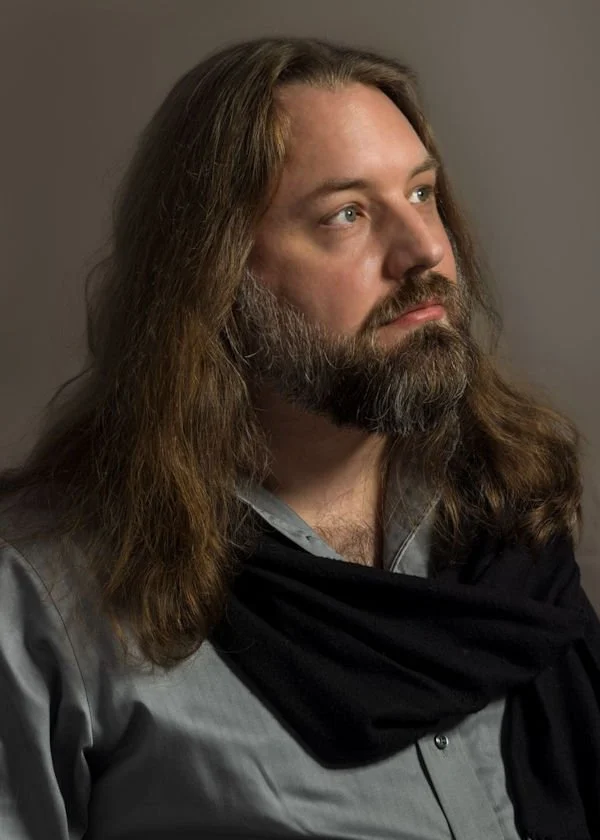
BOSTON, MA – July 2024 – Acclaimed fantasy author Scott Lynch recently offered a rare glimpse into his creative process, ongoing projects, and deeply personal struggles during an exclusive interview at ReaderCon, a prominent writing-centric science fiction and fantasy convention held just north of Boston. Known for his critically lauded Gentleman Bastard Sequence, Lynch candidly discussed the long-awaited fourth installment, The Thorn of Emberlain, his innovative Free Fiction Archive, a burgeoning career in performance art, and the profound impact of depression and anxiety on his life and work.
The interview painted a picture of an author navigating the complex demands of a demanding industry while bravely confronting personal challenges. It offered valuable insights not only into Lynch’s current endeavors but also into the broader landscape of modern authorship, reader engagement, and the imperative of mental health awareness within creative fields.
The Evolution of an Author: A Decade of Change
Twelve years after their initial encounter at a WorldCon in London, the interviewer noted a significant transformation in Scott Lynch. Once a "confident young man riding high" on the success of The Republic of Thieves, Lynch now presented as "careworn," his eyes betraying a deeper burden despite his quick wit and thoughtful demeanor. This shift underscores the often-unseen pressures that can accumulate over a successful but demanding career, a theme that would recur throughout their conversation.
Lynch’s enduring qualities as a "deep thinker" and a master of language, evident in his expletive-laden yet articulate responses, remain intact. However, the interview delved into the profound personal journey that has shaped his recent years, particularly his open dialogue about depression and anxiety. This transparency, while deeply personal, has resonated with a significant portion of his readership, fostering a unique connection built on shared understanding and empathy.
Bridging the Gap: The Free Fiction Archive and Reader Connection
One of the key announcements from the interview was Lynch’s forthcoming Free Fiction Archive, a centralized online repository for his previously published short stories. This initiative stems from a deliberate philosophy of accessibility and reader engagement, challenging traditional commercial models for short-form content.
"I don’t make my money screwing it ¢30 at a time out of people by charging for short stories," Lynch explained, emphasizing his belief that such practices amount to "gatekeeping to the maximum possible financial exclusiveness." He posits that if readers are inclined to seek out free versions or even pirate his work, he might as well facilitate access, making it "nice and easy, under one banner, one place." This approach, he noted, serves as a crucial act of reciprocity in the writer-reader relationship, a necessary "give in the give and take."
This strategy aligns with contemporary trends in author-fan interaction, where direct engagement and perceived authenticity often translate into stronger community bonds and commercial success. Lynch drew parallels to authors like Matt Dinniman and Brandon Sanderson, who actively cultivate parasocial relationships with their audiences through various online platforms. He acknowledged the need for boundaries in public life, stating that while authors should strive for authenticity, the public presentation is inherently "edited." "What you see is real," he clarified, "but it’s also edited." This pragmatic view acknowledges the curated nature of public personas while rejecting the performative extremes often seen on platforms like TikTok.
Lynch’s initiative also serves as a subtle challenge to other authors, many of whom keep extensive back catalogs of short fiction "under lock and key." He argued that "a story that’s sitting in a vault, even an electronic vault, not doing anything, is doing you no good, it’s doing readers no good, it’s doing the world no good." By making his work freely available, Lynch hopes to inspire a similar generosity among his peers, enriching the literary landscape for all.
From Page to Stage: The Tower of the Wizard
Beyond his literary endeavors, Lynch has embarked on an intriguing foray into live performance with "The Tower of the Wizard," an adaptation of his short story "The Fall and Rise of the House of the Wizard Malkuril." This venture reflects his fascination with the historical tradition of author readings, particularly the electrifying stage presence of 19th-century figures like Charles Dickens, who famously packed theaters for hours-long readings.
"I’m just weirdly fascinated by the thought of this," Lynch confessed, marveling at a time "before movies, before video games," when "listening to a guy talk was really all you had." His exploration of performance art began during the early days of the pandemic, prompting a deep reflection on what aspects of artistic creation are "irreducible," elements that "machines can never replace." He found his answer in "the uncertainty and the excitement of a live performance."
Influenced by contemporary stage magic, particularly Derek DelGaudio’s "In and of Itself," Lynch seeks to infuse his readings with a similar "sense of playfulness, that sense of excitement, that sense of tension." He envisions elevating the traditional convention reading, often relegated to "acoustically poor bookstores," into a genuine theatrical experience with proper lighting and acoustics. While acknowledging his lack of formal training—joking about a "really unsatisfactory encounter with the theater teacher" in high school—Lynch credits eight years of live-action role-playing (LARP) for honing his public speaking and improvisational skills.
He describes his performance as largely scripted, following the text, but incorporating dynamic gestural elements, timing, and cadence. A highlight of "The Tower of the Wizard" is a climactic moment where he discards the tablet and "declaims straight to the audience," walking and pointing, transforming the reading into a direct, unmediated address. This blend of structured narrative and spontaneous theatricality is a deliberate attempt to push the boundaries of literary performance.
Looking ahead, Lynch plans to evolve his performance style, hinting at a future show that combines spoken word, card trickery, and mentalism. This ambitious concept would involve telling a story of thieves in a "shadow world of crime and nightclubs," with the narrative order determined by a deck of cards, ensuring a unique experience for every audience. This experimental approach, he admits, carries the risk of failure, a reality he embraces as a necessary part of the creative process. "You’re gonna make a fucking fool of yourself," he stated plainly, but stressed that "the recovery process from that… It’s a useful, healthy mental exercise."
The Long Road to Emberlain: A Saga of Patience and Overhaul
The conversation inevitably turned to The Thorn of Emberlain, the long-awaited fourth novel in The Gentleman Bastard Sequence. Lynch acknowledged the "truly embarrassing length of time" since the last installment, The Republic of Thieves, was published over a decade ago.
To bridge this gap, Lynch is working on the "Road to Emberlain Trilogy" of novellas: More Than Fools Fill Graves, The Mad Baron’s Mechanical Attic, and The Choir of Knives. These stories will chronicle the adventures of Locke Lamora and Jean Tannen between books three and four, offering "travelogue blending into misadventure." Crucially, Lynch assured readers that these novellas are supplementary, not essential, to understanding the main series, a deliberate choice to avoid the "comic book effect" of requiring readers to purchase numerous tie-in works to follow the primary narrative. "Be better at writing," he declared, "that’s how you fix this."
Regarding The Thorn of Emberlain itself, Lynch revealed a significant overhaul. A draft completed in 2019 was ultimately deemed "not so hot" after introspection during the pandemic. Influenced by television series like Succession, he decided to shift the novel’s focus from large-scale battles to intricate political maneuvering and interpersonal conflict. "Less about armies meeting on the battlefield and more about people in smoke-filled rooms being really bitchy to each other," he explained, believing this approach will resonate more deeply with readers, akin to the memorable character interactions in Game of Thrones.
The book is now "almost in a place where I’m happy with it," with only "twenty thousand to twenty-five thousand words to stitch together, and finish the ending off." Lynch recognizes the immense reader anticipation and the comparisons drawn between him and other famously delayed authors like Patrick Rothfuss and George R.R. Martin. However, he noted that his openness about his struggles with mental health has often garnered him more "grace" from his fandom.
The Unfair Game: Authorship, Algorithms, and Mental Health
Lynch offered candid advice to aspiring authors, emphasizing the critical importance of "sticking around long enough" for the "long tail effect" to work. This means not only consistently producing work but also maintaining a professional demeanor, honoring contracts, and critically, adhering to a schedule. He highlighted the example of the New York Philharmonic, whose bookings soared after simply publishing a consistent season schedule.
"Keeping to a schedule is one of the primary elements of building awareness, building a brand, and maintaining it," Lynch asserted, calling it "the most important thing in the world." He admitted to being "stung by my inability to keep to a schedule," acknowledging the disappointment caused to readers and colleagues. While recognizing that mental health issues, such as his own depression and anxiety, can interfere with consistency, he stressed that "there are reasons for failing, but they should not become excuses."
Lynch lamented the "unfair" and "algorithmically controlled" media landscape, where organic reach has been supplanted by opaque systems that can arbitrarily amplify or suppress content. He recalled a time when a good tweet could garner "thirty-five thousand retweets," but now, despite similar content, reach is unpredictable. This forces authors to find "more intelligent ways to fight," emphasizing direct, personal connection with readers as "the only valid commercial approach." He concluded that "our humanity is special… it’s also a selling point."
The discussion culminated in a deeply personal reflection on his struggles with depression and anxiety. Lynch shared how an accidental moment of honesty during a 2010 radio interview in the UK led to him openly discussing his clinical depression and divorce. This initial candor, though unplanned, proved "liberating" and beneficial, allowing him to confront his issues rather than conceal them. He realized the difference between "a little bit eccentric and totally fucking dysfunctional," a distinction that empowered him to seek help.
His former editor’s response was particularly impactful: "Do you think you’re the first depressive author I’ve ever had? Do you think you’re the tenth? Welcome to a commonplace condition for people who are in this situation." This revelation helped Lynch understand that his struggles were not unique, fostering a sense of solidarity with countless others. He noted how his openness has encouraged many readers and peers to share their own experiences, creating a "mutually supporting thing."
Lynch acknowledged the burden of the long delay for The Thorn of Emberlain, particularly the memory of a 79-year-old fan who hoped to live long enough to finish the series. "Statistically speaking, I have probably already failed that guy," he admitted, a sentiment that drives his current push to complete the novel. Despite the pressure, he expressed confidence in the current direction of Thorn, believing it will "have people foaming at the mouth and pounding their desks."
Implications for Authors and Readers
Scott Lynch’s interview offers a profound commentary on the modern author’s journey. His Free Fiction Archive and embrace of theatrical performance highlight a growing trend among authors to diversify their engagement strategies, moving beyond traditional publishing to foster direct, authentic connections with their readership. This adaptability is increasingly crucial in an evolving media landscape where algorithmic gatekeepers and changing consumption habits present constant challenges.
Moreover, Lynch’s courageous transparency regarding his mental health has broader implications for the creative community. By openly discussing his battles with depression and anxiety, he contributes to destigmatizing these conditions, particularly within professions often romanticized for their solitary nature. His experience underscores the importance of self-awareness, professional support, and the recognition that mental health issues are not a sign of failure but a common human condition that requires proactive management.
The anticipation for The Thorn of Emberlain remains high, a testament to the enduring power of Lynch’s storytelling. His commitment to delivering a polished, emotionally resonant narrative, even after significant delays and overhauls, speaks to a dedication to craft that many readers value above swift releases. As Lynch strives to bring The Gentleman Bastard Sequence to its next chapter, his journey serves as a powerful reminder of the resilience, vulnerability, and sheer determination required to thrive in the world of authorship.
Beyond the Bookshelf: Future Endeavors
In addition to his literary work and performance art, Scott Lynch is also developing two board games, "We Are Rich in Opportunity" (currently in open playtesting) and "Happy Hives." Fans can anticipate more updates on these projects and his future appearances, including his role as Guest of Honor at JordanCon in Atlanta, GA in 2027, by subscribing to his Substack.
For those struggling with depression or anxiety, please remember that help is available. In the US, the Suicide & Crisis Lifeline can be reached by calling or texting 988. In the UK, the NHS Hotline is 111.
Featured image background by Fadi Al Shami.